Introduction: Exploring Our Neighbourhood
In this chapter, we will learn about the different places and services in our neighbourhood that help us every day.
- We will follow a girl named Navya and her grandfather as they walk around and discover things like communication, transportation, hospitals, banks, and how to read directions.
- These things are very important because they make our life easier and help people stay connected.
On Our Way Back Home
The school bell rang, marking the end of classes. The students were excited about the books they saw in the library. School buses and e-rickshaws were waiting outside the school. Navya saw her grandfather at the school gate and ran to him.
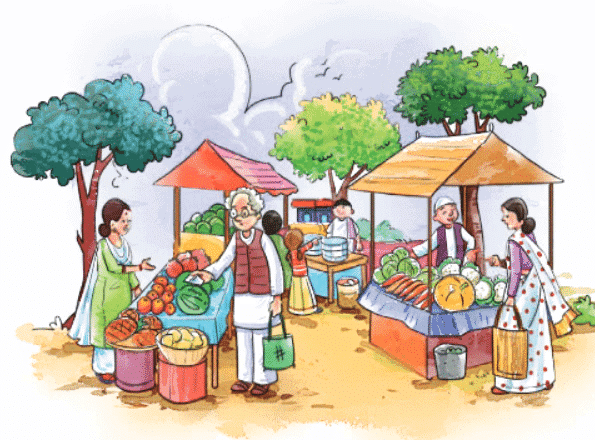
- She suggested, “Let’s take the market route today!”
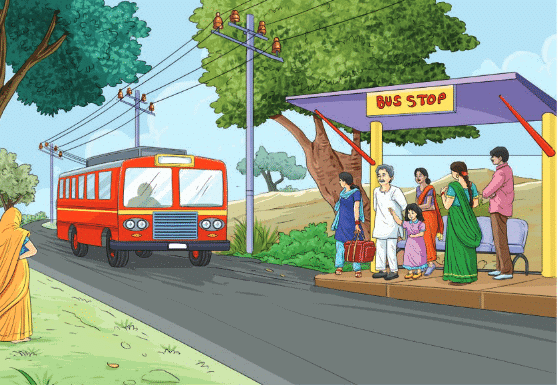
- They walked to the bus stop, where people were already waiting.
- A bus arrived, and everyone boarded one by one.
- Navya found a seat by the window and watched the people outside.
Postbox and Letters
- As the bus passed a red postbox, Navya pointed it out and asked her grandfather about it.
- Dada ji explained how people used to write letters and drop them in the postbox.
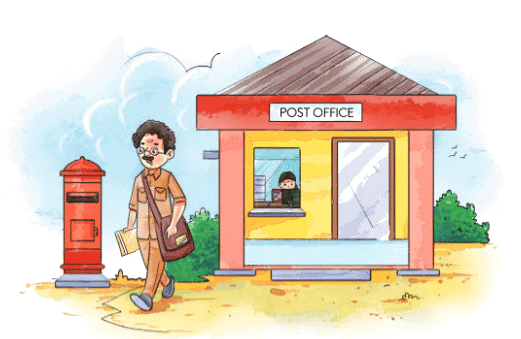
- The postman would take the letters to the post office, where they would be sorted and sent to their destination.
- In the past, it could take weeks to get a reply, unlike today with mobile phones and emails, which make communication faster.
- Navya was surprised and thought weeks was a long time!
- Dada ji said, “Even though communication is quicker now, sometimes he misses the joy of writing and receiving letters.”
Do You Know?
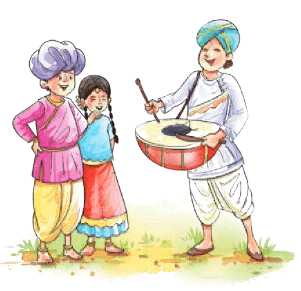
- Long ago, people communicated using drumbeats and carvings on rocks.
- Later, they started sending letters with the help of messengers and pigeons.
- With time, new inventions like the telephone, radio, and television made communication easier.
- The postal service was also created to send letters, parcels, and important documents.
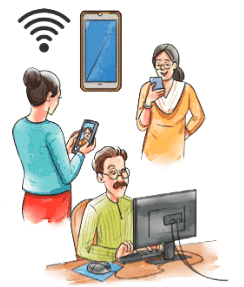
- Today, we use mobile phones and the internet to connect with anyone, anywhere, instantly!
Metro Trains and Flyovers
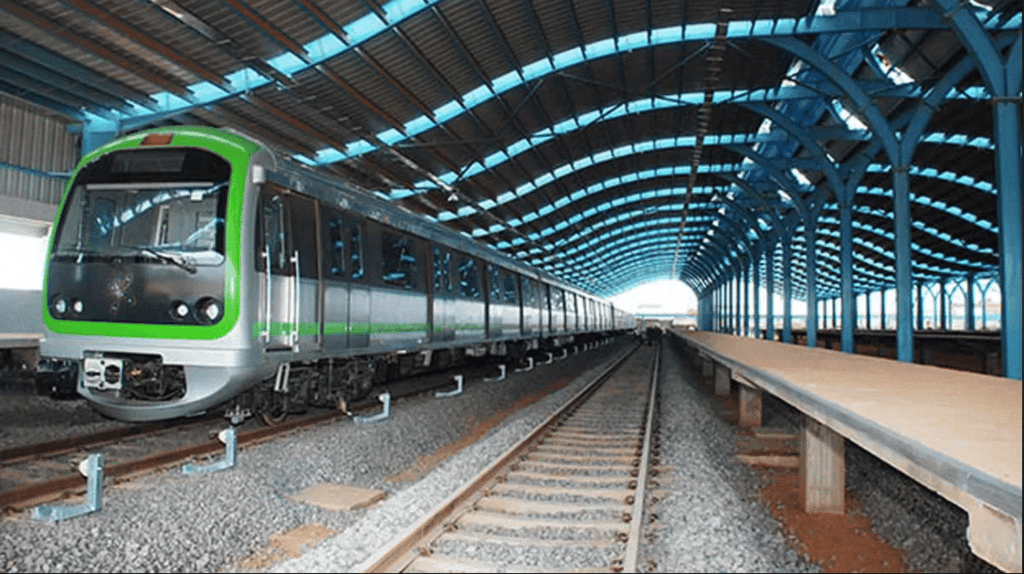
- As the bus turned, Navya noticed a metro train passing by.
- Dada ji explained that metro trains travel very fast and that flyovers help vehicles move above the busy roads and save time.
- Dada ji shared that these modern developments, like metros and flyovers, make life easier.
- However, animals, birds, and trees have disappeared because of these changes.
- Navya wondered if it was possible to have development and still protect the environment.
- Dada ji replied, “Yes, we can create a balance by planting trees to keep our environment safe.”
 Metro Train
Importance of the Hospital
- As they neared a hospital, Navya noticed a banner that said, “Eye Check-up Camp.”
- Navya asked why so many people were visiting the hospital.
- Dada ji explained that people come to the hospital when they are unwell. He shared how he took Navya’s grandmother there for an eye operation a few years ago, which helped her see better.
- The hospital is an important part of the community and offers services like the eye check-up camp to help people.
Try yourself:
What did Dada ji say about the metro trains?
- A.They run on a different schedule.
- B.They are always crowded.
- C.They travel very fast.
- D.They are only for tourists.
View SolutionSavings for the Future
Navya and Dada ji get off the bus near their home and walk past a bank with an ATM (Automated Teller Machine). Navya asks Dada ji what the ATM is for.
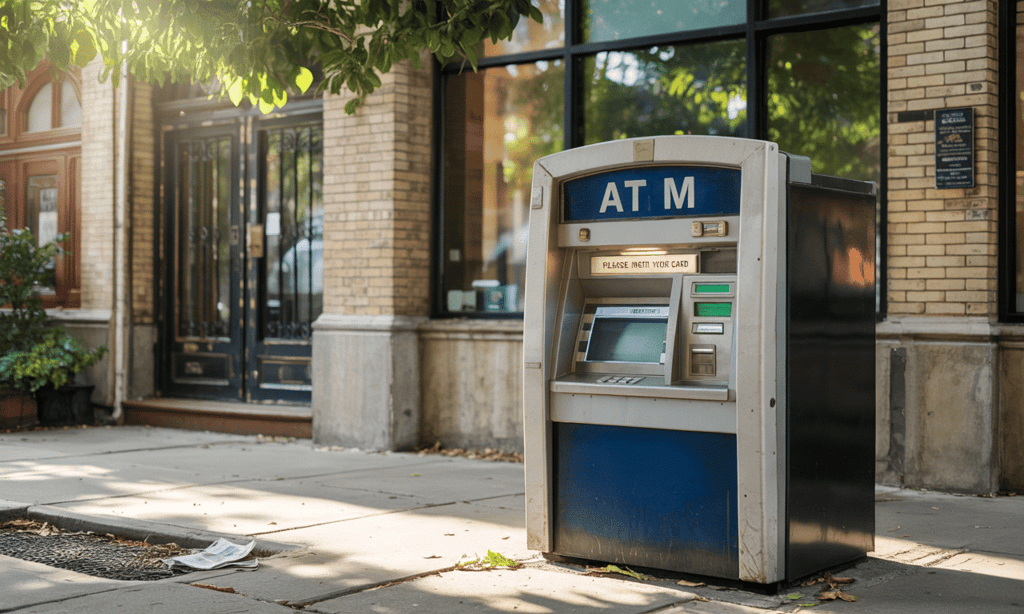
- Dada ji explains that an ATM is a machine that allows people to withdraw money anytime they need it.
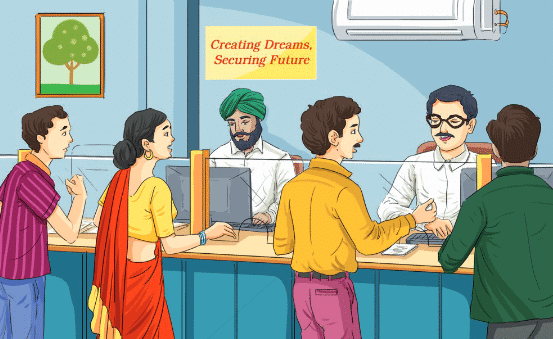
- Dada ji explains that banks are safe places to keep money and save for future needs.
- Dada ji remembers when he was young, there were no ATMs.
- People had to wait in long queues at the bank.
- In the past, people used money orders sent through the post office to send money to others.
- Navya remembers how her uncle sent money to her mother using a mobile phone for Raksha Bandhan gifts, showing how technology has improved.
- Dada ji agrees that technology has made it much faster and easier to send money today.
- This shows the big difference between the old ways and new ways of sending money.
Looking Around the Neighbourhood
As soon as Navya reached home, she ran to her brother to share her experiences.
- Public places provide important services related to health, safety, cleanliness, and the environment, such as hospitals, banks, post offices, police stations, public libraries, and bus stations.
- Navya grabbed a pencil and paper and sat down to draw her neighborhood.
Drawing the Neighbourhood
Navya got a pencil and paper to draw her neighbourhood. She used the rising sun to find the east direction.
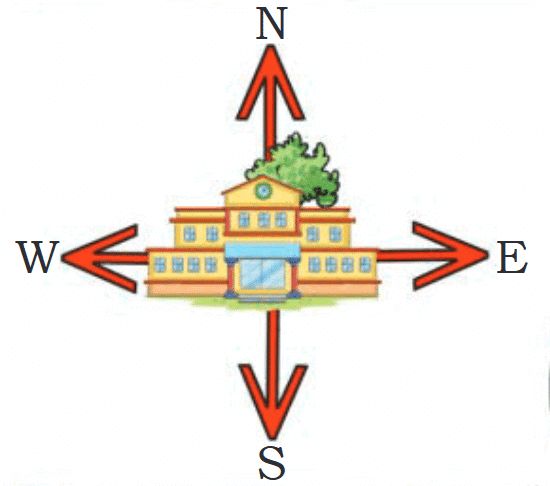
- The places towards the east appeared on the right side of the paper.
- The places towards the north were shown at the top of the paper.
- The places in the south were placed at the bottom.
- The places in the west were on the left side of the paper.
Directions on a Map
On a map, the directions are shown as follows:
- North is shown at the top.
- South is at the bottom.
- East is on the right.
- West is on the left.
Difficult Words
- Neighbourhood: The area around your home with places like shops and schools.
- Postbox: A box where you put letters to send them.
- Communication: The act of sharing information by talking or writing.
- Flyover: A bridge that lets cars go over busy roads.
- ATM: A machine that gives you cash from your bank.
- Money Transfer: Sending money to someone, often through the post office.
- Landmark: A place or object that helps you find your way.
- Map: A drawing showing places and directions.