Multiple Choice Questions
Q1: What is the primary goal of science as mentioned in the chapter?
a) To memorize facts
b) To explore the world through curiosity and experiments
c) To study historical events
d) To prove theories
Answer: b) To explore the world through curiosity and experiments View Answer

ExperimentingQ2: Which of the following is an example of a reversible change?
a) Burning of paper
b) Breaking of a rock
c) Melting of ice
d) Rusting of iron
Answer: c) Melting of ice View Answer
Q3: What inspired the early scientific exploration of flight?
a) Observing the movement of the sun
b) Experimenting with electricity
c) Watching planes fly
d) Studying the wings of birds
Answer: b) Studying the wings of birds View Answer
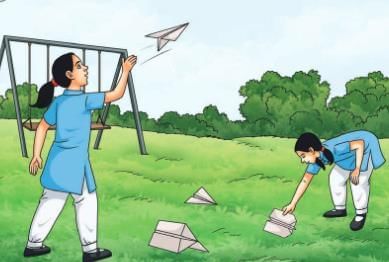
Exploration of FlightQ4: What does science help us do according to the chapter?
a) Answer only factual questions
b) Develop new technologies
c) Understand and explore the environment
d) Memorize important dates
Answer: c) Understand and explore the environment View Answer
Q5: What does the chapter suggest about human activities and nature?
a) They are not connected
b) They are linked and affect the environment
c) Human activities have no impact on nature
d) Human activities only affect animals
Answer: b) They are linked and affect the environment View Answer
Fill in the Blanks
Q1. Science is not just about discovering facts but also about _______ curiosity and asking questions.
Answer: welcoming View Answer
Q2. The process of light and shadows helped early humans to measure _______.
Answer: time View Answer
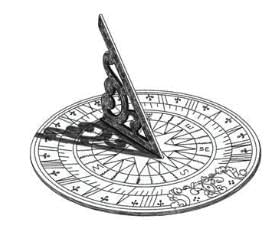
Measuring TimeQ3. Materials are classified based on their _______ such as conductivity or malleability.
Answer: properties View Answer
Q4. Animals breathe and circulate _______ to all parts of their body for survival.
Answer: nutrients View Answer
Q5. The phenomenon of eclipses is caused by the _______ cast by Earth or Moon.
Answer: shadows View Answer
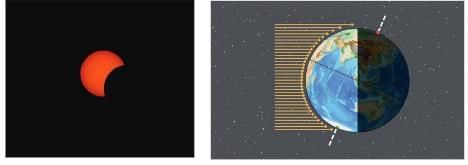
Eclipse and Tilt of EarthTrue/False Questions
Q1: Science is about memorizing facts and repeating them.
Answer: False
Science is not just memorizing facts; it is about observing, experimenting, asking questions, and understanding how things work in the natural world.
Q2: Human activities are connected to the natural world and impact the environment.
Answer: True
Human actions like farming, building, and pollution affect the environment, showing that humans and nature are closely linked.
Q3: The chapter encourages only studying the properties of materials and not asking any questions.
Answer: False
The chapter encourages curiosity and asking questions to explore and understand the properties of materials, not just studying them passively.
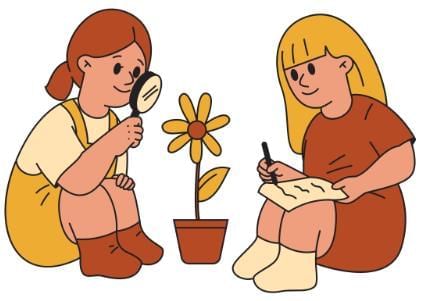
Science is about CuriosityQ4: The position of shadows in the Sun was used by early humans to measure time.
Answer: True
Early humans observed how shadows changed position during the day to estimate time before clocks were invented.
Q5: The study of light and shadows does not help in understanding the Earth’s movements.
Answer: False
Light and shadows help us understand Earth’s rotation and revolution because the changes in sunlight cause day and night and seasons.
Short Answer Questions
Q1. Explain how science is a continuous process of discovery.
Answer: Science is ongoing because every discovery leads to new questions and experiments. It never stops as we keep exploring deeper into nature.
Q2. What is the difference between reversible and irreversible changes?
Answer: Reversible changes can be undone and return to their original form, like ice melting and then freezing again. Irreversible changes cannot be undone, like a fruit ripening or a battery running out of power.
Q3. Why is it important to step outside the classroom to learn science?
Answer: Experiencing the world through activities and experiments helps us understand science better than just reading, making learning hands-on and meaningful.
Q4. How do human activities link to environmental challenges?
Answer: Human actions affect nature and society, and science helps us understand this connection to work toward a sustainable future.
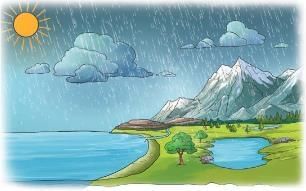
Our EnvironmentQ5. What role do light and shadows play in our daily life and in science?
Answer: Light and shadows help us see, tell time, and explain natural phenomena like eclipses and day-night cycles.Long Answer Questions
Q1. Explain why science is considered both a process and a way of thinking.
Answer:
- Science is not just a collection of facts but a continuous process of asking questions and seeking answers.
- It involves curiosity, experiments, observations, and logical reasoning.
- Scientists observe patterns in nature and try to understand why and how things happen.
- This method of thinking encourages openness to new ideas and revising old ones based on evidence.
- Hence, science helps us develop critical thinking and problem-solving skills.
Q2. Describe how different fields of science are interconnected and why this is important.
Answer:
- Fields like physics, chemistry, biology, and earth sciences often overlap in their studies.
- For example, biology uses chemistry to understand life processes, while earth science involves physics to explain natural phenomena.
- Discoveries in one field can lead to questions and new findings in others.
- This interconnectedness helps provide a more complete understanding of the world.
- It encourages collaborative learning and innovation across disciplines.
Q3. Why is hands-on learning through experiments and activities emphasized in science education?
Answer:
- Experiments help students experience scientific concepts practically rather than just reading theory.
- Hands-on learning develops observation, analysis, and critical thinking skills.
- It allows learners to see results firsthand and understand cause-effect relationships.
- Such activities spark curiosity and make learning enjoyable and memorable.
- They also prepare students to think like scientists and solve real-world problems.
Q4. Discuss the role of science in addressing environmental challenges and promoting sustainability.
Answer:
- Science helps us understand how human activities impact the environment.
- It provides tools and knowledge to reduce pollution and conserve natural resources.
- Through science, we can develop renewable energy, waste management, and eco-friendly technologies.
- It raises awareness about climate change and biodiversity loss.
- Ultimately, science guides us toward creating a sustainable and balanced relationship with nature.
Q5. How do light and shadows help us understand time and natural phenomena like eclipses?
Answer:
- Early humans used the length and position of shadows cast by the Sun to measure time during the day.
- Light enables us to see objects, and shadows show the shape and position of these objects.
- The Earth and Moon cast shadows that cause eclipses, which are important astronomical events.
- Studying light and shadows helps explain day and night cycles caused by Earth’s rotation.
- This understanding connects everyday experiences with larger cosmic events.