Q1. Mention different aspects of life in which women are discriminated or disadvantaged in India.
Ans: The different aspects of life in which women are discriminated or disadvantaged in India are:
- Sex-ratio: In India, sex-selective abortions occur due to a preference for male children, with a sex ratio of 927 girls to 1000 boys, and even lower in some areas. A girl child is aborted due to the preference for a male child among several Indian parents and the assumption that a girl child will be a burden on the economic wealth of the parents.
- Literacy: The literacy rate for women is 54% compared to 76% for men, as many girls drop out of school. Financially weak parents often prioritise sons’ education or save for daughters’ dowries instead of their education.
- High-paid jobs: Women form a small portion of highly paid and valued jobs. Many girls are not able to pursue higher education in India due to early marriage, inaccessibility to higher education institutes or lack of money to pursue higher education. Therefore, they do not have the qualifications to apply for high-paying jobs.
- Safety: Many women face sexual harassment and domestic violence, which makes it hard for them to follow their dreams. This happens because people often see women as physically weaker, there is not enough support from the police, and society is largely male-dominated.
Q2. State different forms of communal politics with one example each.
Ans: Different forms of communal politics:
- The expression of communal superiority in everyday beliefs.
Example: Militant religious groups. - The desire to form a majoritarian dominance or a separate state.
Example: Separatist leaders and political parties in Jammu and Kashmir and Central India. - The use of religious symbols and leaders in politics to appeal to the voters.
Example: Hate speeches against particular minorities during elections. - Communal politics can take the form of communal violence and riots.
Example: The riots in Gujarat in 2002.
Q3. State how caste inequalities are still continuing in India.
Ans: Caste inequalities are still continuing in India in the following ways:
- Most people still marry within their own caste or tribe, and inter-caste marriages are often discouraged, especially by upper castes.
- Despite being banned by the Constitution, untouchability persists, particularly in rural areas.
- Groups with historical access to education continue to excel, while those previously excluded still lag behind.
- Caste contributes to economic inequality, as it affects access to resources. Upper castes are best off, Dalits and Adivasis are worst off, with the backwards classes in between.
- Although every caste has some poor members, the proportion of people living in extreme poverty is much higher for the lowest castes. Lower caste people, like rural landless labourers, are generally poor and are exploited even today. The percentage of the population living below the poverty line between 1999-2000 was 45.8% (STs) 35.9%, (SCs) and 27% (OBCs) in the rural areas.
Q4. State two reasons to say that caste alone cannot determine election results in India.
Ans: Caste alone cannot determine election results in India because:
- No parliamentary constituency has a clear majority of a single caste. Hence, every candidate and party needs to win the support of more than one caste/community to win elections.
- No party wins all the votes of a particular caste. When it is said that caste is a ‘vote bank’ of one party, it means that a large proportion of the voters from that caste vote for that party.
Q5. What is the status of women’s representation in India’s legislative bodies?
Ans: The status of women’s representation in India’s legislative bodies is very less as mentioned below:
- In Lok Sabha, the percentage of elected women members has never reached even 10 per cent of its total strength.
- Their share in the state assemblies is less than 5 per cent. India is among the bottom group of nations in the world in this respect.
- Thus, the proportion of women in legislative bodies has been very low. Women’s organisations and activists have been demanding reservation of at least one-third of seats in the Lok Sabha and State Assemblies for women.
Q6. Mention any two constitutional provisions that make India a secular state.
Ans: Two constitutional provisions that make India a secular state are:
- The Constitution provides all individuals and communities freedom to profess, practice and propagate any religion, or not to follow any.
- The Constitution prohibits discrimination on the grounds of religion.
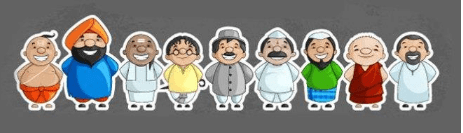
Secular India
Q7. When we speak of gender divisions, we usually refer to:
(a) Biological difference between men and women
(b) Unequal roles assigned by society to men and women
(c) Unequal child sex ratio
(d) Absence of voting rights for women in democracies
Ans: (b) Unequal roles assigned by society to men and women
Gender division usually refers to the societal assignment of unequal roles, responsibilities, and expectations to men and women, which often leads to inequality and discrimination.

Unequal Roles Assigned
Q8. In India, seats are reserved for women in
(a) Lok Sabha
(b) State Legislative Assemblies
(c) Cabinets
(d) Panchayati Raj bodies
Ans: (d) Panchayati Raj bodies
In India, seats are reserved for women in Panchayati Raj bodies, which are the rural local government institutions. This reservation aims to promote women’s participation in local governance.
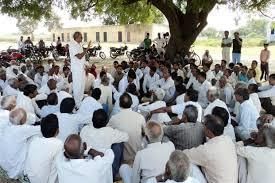
Panchayati Raj Bodies
Q9. Consider the following statements on the meaning of communal politics. Communal politics is based on the belief that:
Α. One religion is superior to that of others.
Β. People belonging to different religions can live together happily as equal citizens.
C. Followers of a particular religion constitute one community.
D. State power cannot be used to establish the domination of one religious group over others.
Which of the statements is/are correct?
(a) A, B, C and D
(b) A, B and D
(c) A and C
(d) B and D
Ans: (c) A and C
Communal politics is based on the belief that one religion is superior to others and followers of a particular religion form one community. Statements Β and D represent principles of secularism and equal citizenship, which are contrary to communal politics.
Q10. Which among the following statements about India’s Constitution is wrong? It
(a) prohibits discrimination on grounds of religion
(b) gives official status to one religion
(c) provides to all individuals freedom to profess any religion
(d) ensures equality of citizens within religious communities
Ans: (b) gives official status to one religion
India’s Constitution does not give official status to any religion; it promotes secularism and prohibits discrimination based on religion.
Q11. Social divisions based on ______________ are peculiar to India.
Ans: Social divisions based on caste are peculiar to India.
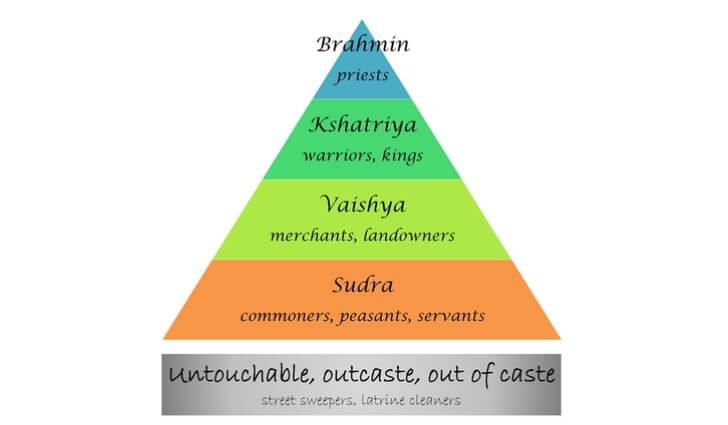
Caste
Q12. Match List I with List-II and select the correct answer using the codes given below the Lists:
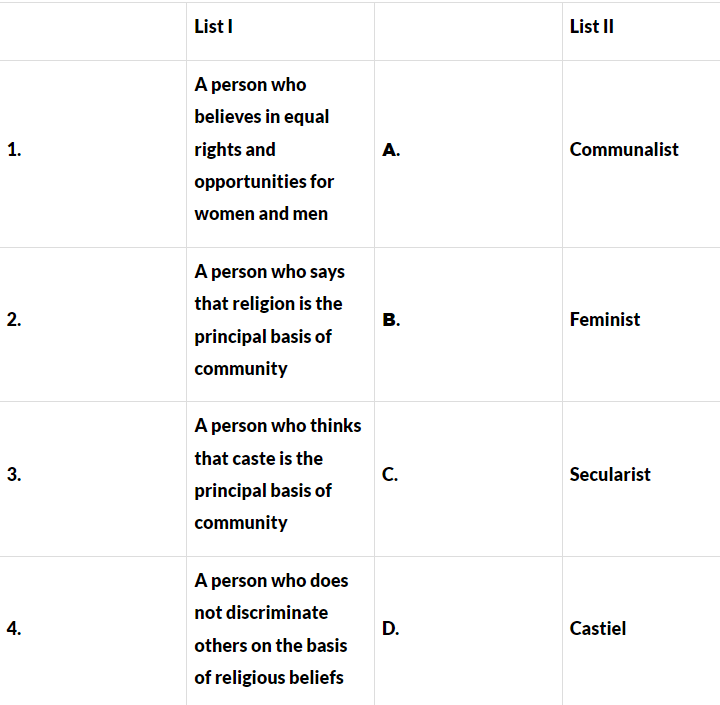
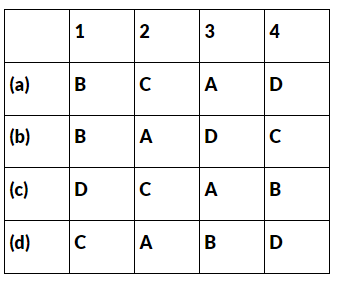
Ans: (b) B, A, D, C is the correct answer.