Page No. 58
Activity 1
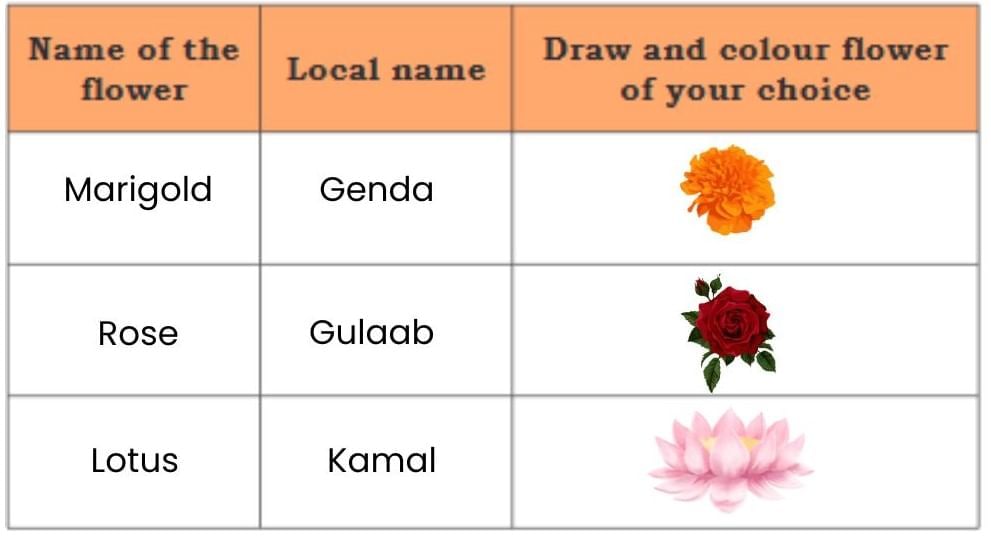
Q: Write names of five colourful flowers in your area.
Ans: You can try to find the names of five colourful flowers that grow in your area by looking around your garden, park, or neighborhood. You may also ask your parents, grandparents, or teachers to help you. Here is the table for your reference.
Page No. 60
Activity 2
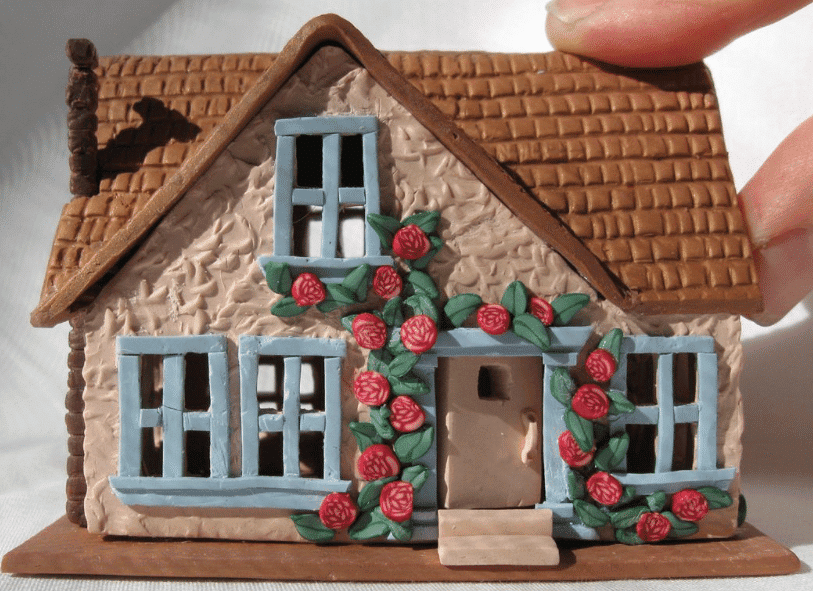
Q: Make the model of a house using materials from nature such as clay, wooden sticks, hay, grass, leaves, etc. Decorate it with an art form of your choice.
Ans: Here is the model of a house made using Clay.
Clay House
Activity 3
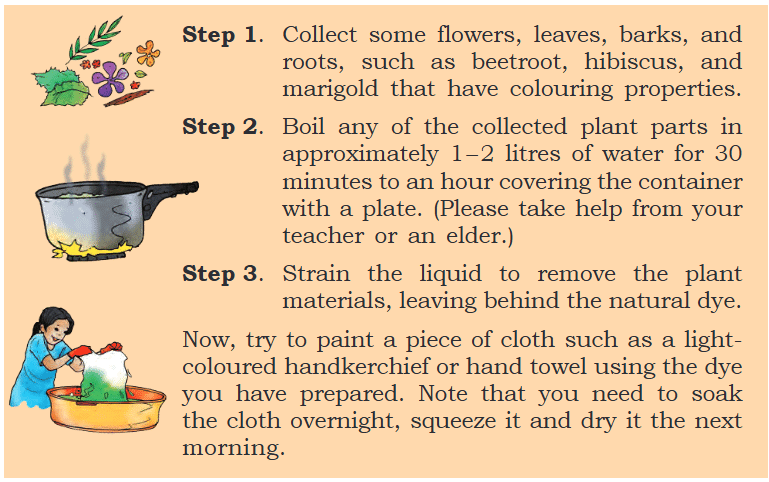
Q: Let us prepare a natural dye.
Ans: Students are encouraged to try it on their own, with the guidance of elders. Below is an image of a piece of cloth decorated using dye.
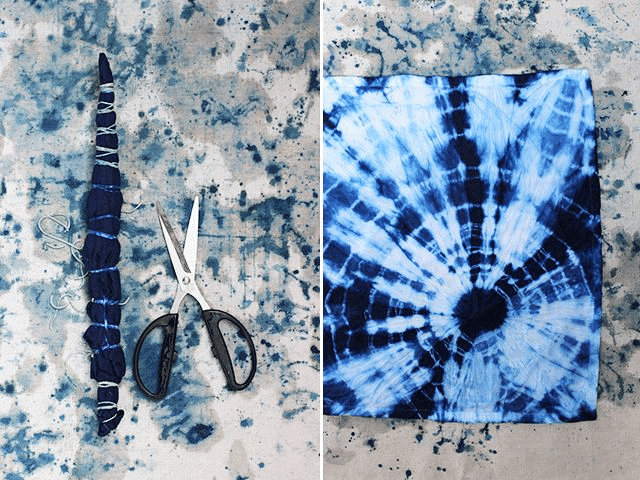
Cloth decorated using dye
Page No. 62
Activity 4
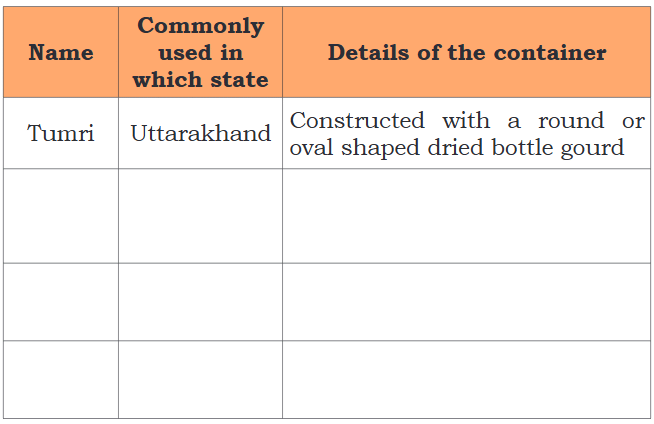
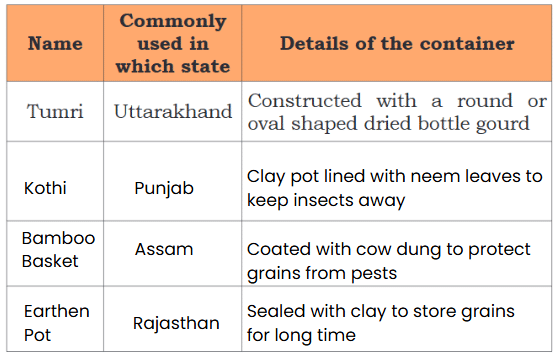
Q: Find out some traditional ways of preserving grains and vegetables at your place, and fill the following table.
Ans:
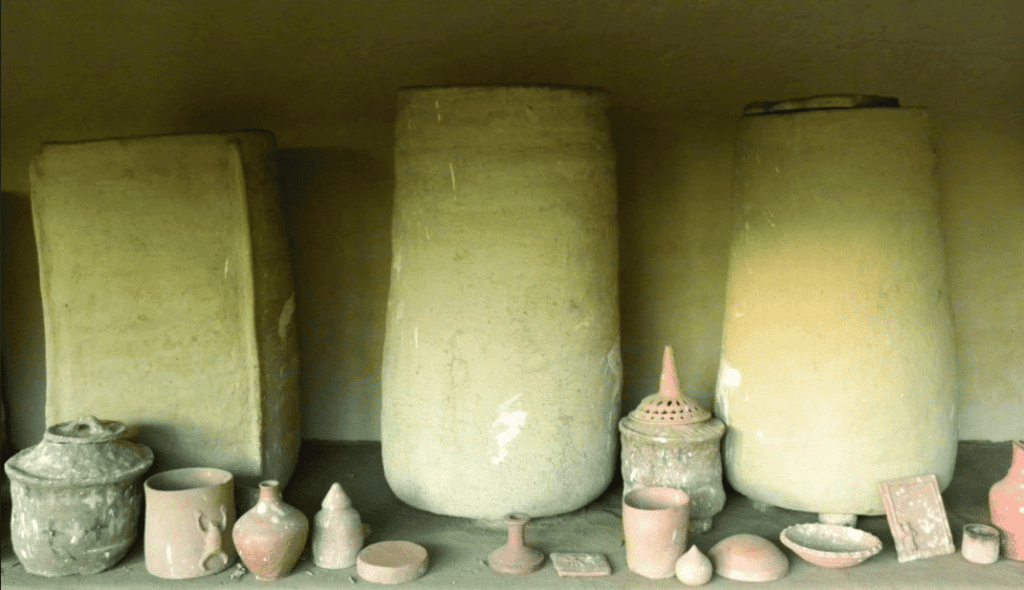
Kothi for preserving grains
Page No. 63
Activity 5
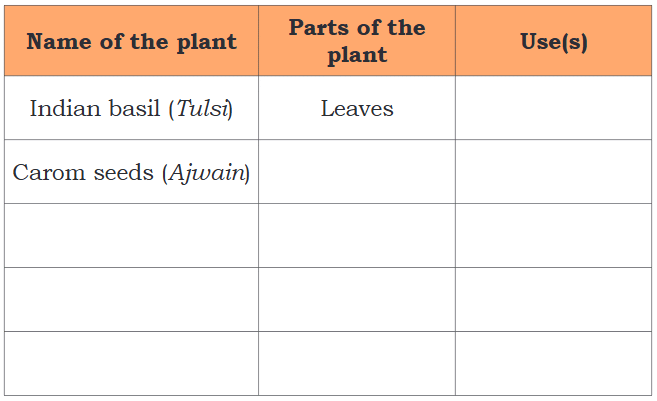
Q: Discuss with the elders in your family and write the name of the plant, its parts, and its uses, in the table given below.
Ans:
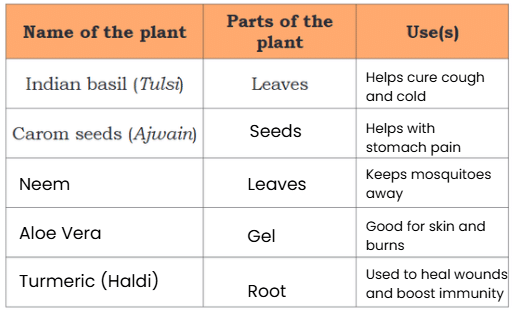
Discuss
Q1: What things should be kept in a first-aid box?
Ans: A first-aid box should have the following items:
- Band-aids
- Antiseptic cream
- Gauze
- Scissors
- Medical tape
- Disinfectant
- Bandages
- Antibiotic ointment

First aid box
Q2: Why do you think providing first-aid is important if someone gets injured?
Ans: Providing first-aid is important because it helps in reducing pain, preventing further harm, and providing immediate care until medical professionals can attend to the injury.
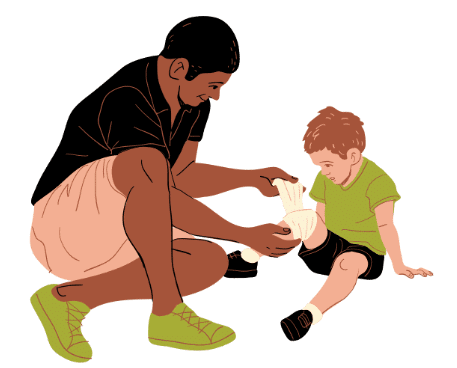
Providing First Aid
Page No. 65
Activity 6
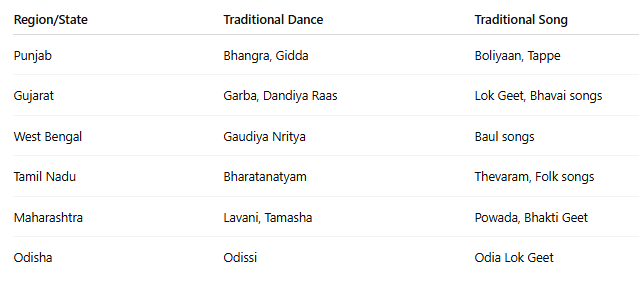
Q: Find out the traditional dances and songs of your region. Perform a traditional dance with the help of your classmates and teachers for the Annual Day of your school.
Ans: Here’s a simple table showing traditional dances and songs from 6 regions of India,
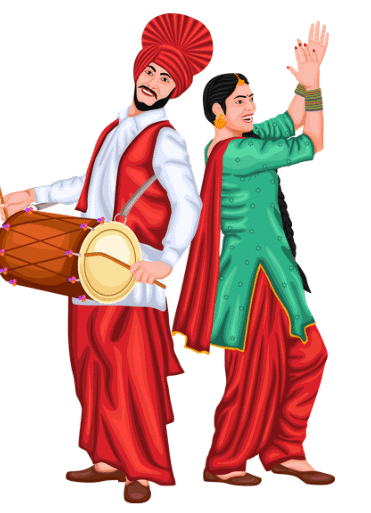
Bhangra DanceDiscuss
Q: Imagine if there is no light in your area for two days. What changes will you see in your life?
Ans: If there is no light for two days:
- We cannot study or read at night.
- It will be hard to cook or move around safely.
- We might use candles or torches, but they are not as bright.
- Daily work, like using fans or charging phones, will stop.
Page No. 66
Activity 7
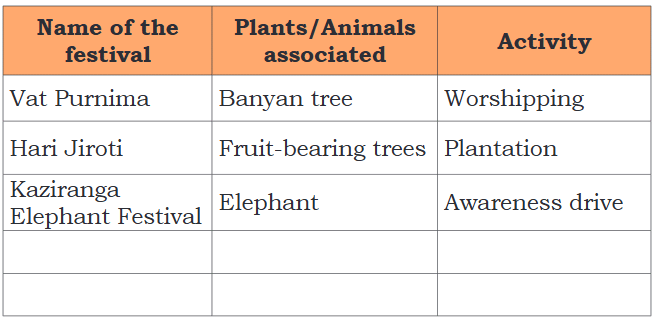
Q: Talk to your elders and find out the rituals in connection to animals and plants which are celebrated in your locality. A few examples are given below.
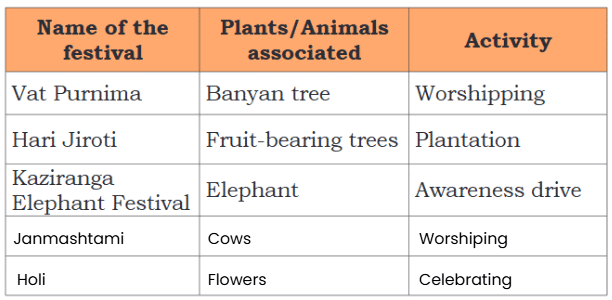
Ans:
Page No. 67 – 68
Let us reflect
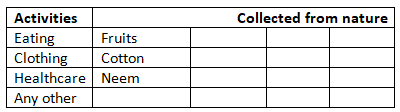
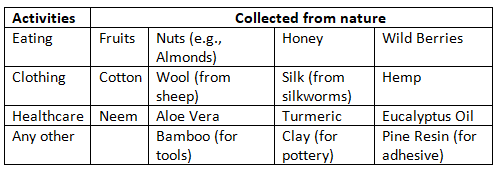
Q1: What are the things that we use from nature in our daily life?
Ans:
Q2: What challenges arise when we overuse natural resources?
For example, if we overuse wood from nature, our forests deplete.
Water: __________________________________________________
Soil: _________________________________________________
Sea products: ___________________________________________
Any other: ______________________________________________
Ans:
Water: If we overuse water, rivers and wells dry up, and we face water shortages.
Soil: Overusing soil makes it less fertile, so crops don’t grow well.
Sea Products: Overfishing reduces fish in the sea, affecting food supply.
Any Other: Overusing coal or oil causes pollution and energy shortages.
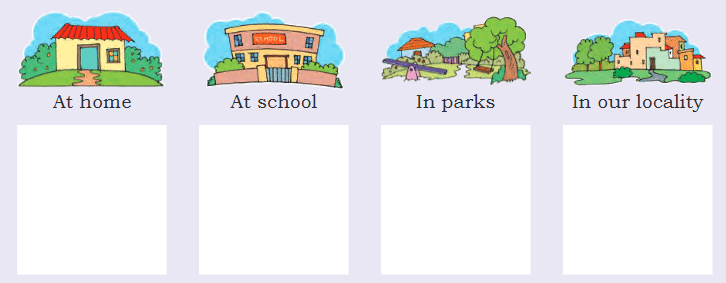
Q3: How can we protect the natural environment around us?
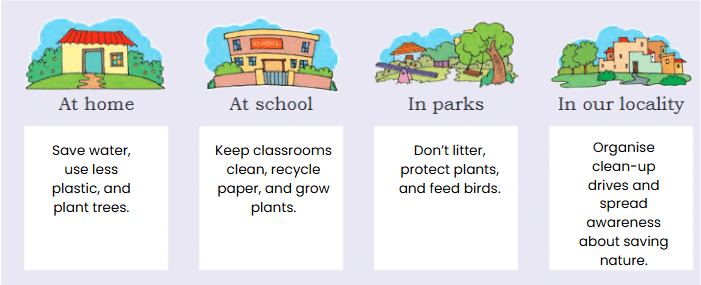
Ans:
Q4: Design your herbal garden
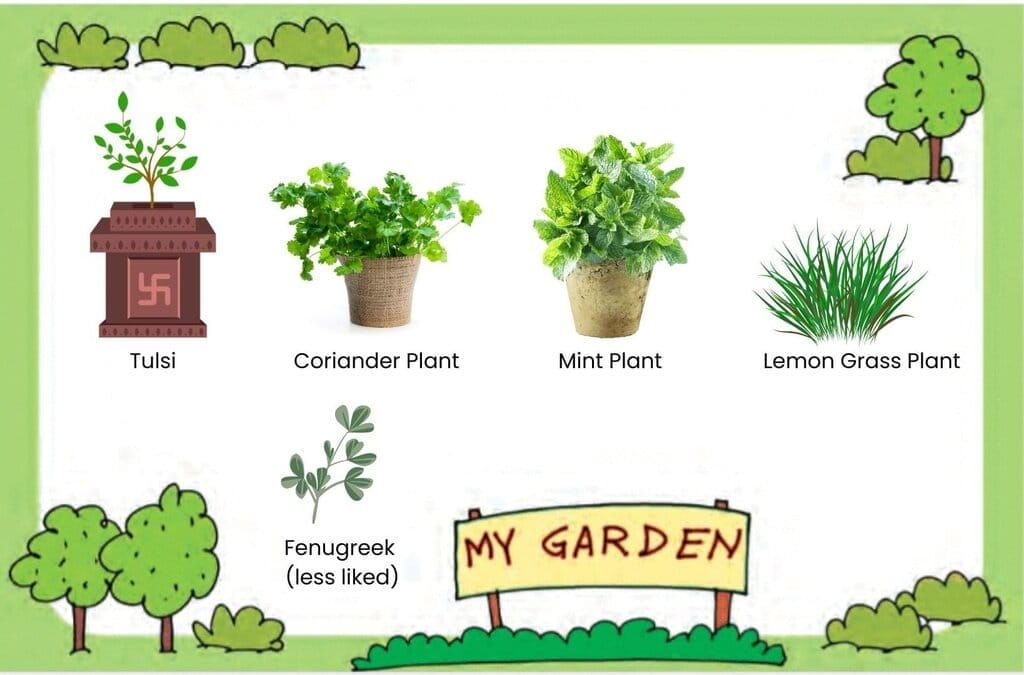
Here is a space for your herbal garden. Draw pictures of your favorite herbs in different parts of the garden and write down their names. Are there some herbs that you like less? Draw them too!
Ans: I have drawn my herbal garden with my favorite herbs like Tulsi, Mint, Coriander, and Lemongrass. I wrote their names near each plant in the garden.
I also drew Fenugreek (Methi), which I like less because it tastes a little bitter.