Multiple Choice Questions (MCQs)
Q1: What does the term ‘Second Urbanisation’ refer to?
a) Growth of cities during the British era
b) Rebuilding of Harappan cities
c) Growth of new cities in the 1st millennium BCE
d) Urban development in the Gupta period
Ans: c) Growth of new cities in the 1st millennium BCE
The Second Urbanisation marks the emergence of new cities after the Harappan civilisation.
Q2: Which ancient capital was located in the mahajanapada of Magadha?
a) Ujjain
b) Rajagriha
c) Kausambi
d) Pataliputra
Ans: b) Rajagriha
Rajagriha was the capital of Magadha, one of the strongest mahajanapadas.
Q3: What was the role of the sabhā or samiti in janapadas?
a) They collected taxes
b) They conducted rituals
c) They advised the raja
d) They built fortifications
Ans: c) They advised the raja
The sabhā or samiti was a council of elders advising the ruler.
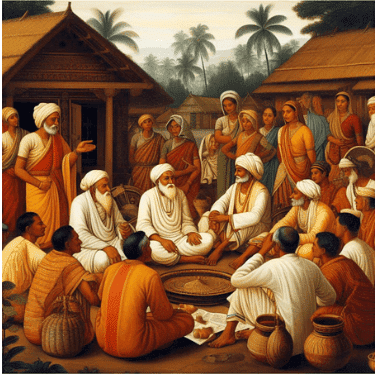
Samiti
Q4: Which of the following was a gana or sangha rather than a monarchy?
a) Magadha
b) Kosala
c) Vajji
d) Avanti
Ans: c) Vajji
Vajji had a republican form of government with decision-making councils.
Q5: What helped the mahajanapadas grow in the Ganga plains?
a) Lack of enemies
b) Coastal trade
c) Fertile land and iron tools
d) Influence of Harappan cities
Ans: c) Fertile land and iron tools
Fertile plains and access to iron tools supported agriculture and defense.
Q6: Which of these was a key innovation in the economic system of the mahajanapadas?
a) Use of bronze coins
b) Stone seals
c) Punch-marked coins
d) Gold jewellery
Ans: c) Punch-marked coins
These silver coins with symbols were used for trade.
Q7: Which southern kingdom was known for trade in spices and precious stones?
a) Mauryas
b) Cheras
c) Guptas
d) Kushanas
Ans: b) Cheras
The Cheras, along with Cholas and Pandyas, traded valuable goods in south India.
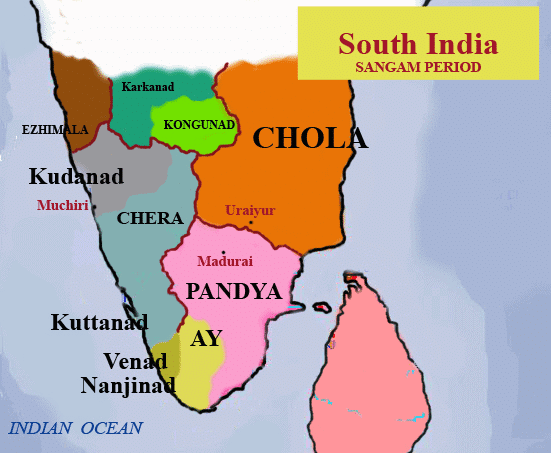
Cholas, Cheras, and Pandyas.
Q8: What term describes the social group associated with a specific job passed through families?
a) Varna
b) Samiti
c) Jāti
d) Sabha
Ans: c) Jāti
Jātis were job-based social groups inherited by families.
Q9: Which trade route connected the Ganga plains with south India?
a) Uttarapatha
b) Dakshinapatha
c) Silk Route
d) Spice Route
Ans: b) Dakshinapatha
Dakshinapatha was the southern trade route of ancient India.
Q10: Which of the following varnas included traders and farmers?
a) Brahmins
b) Kshatriyas
c) Vaishyas
d) Shudras
Ans: c) Vaishyas
Vaishyas were involved in trade, farming, and generating wealth.
Fill in the Blanks
Q1: The term janapada means “where people __________.”
Ans: Set foot
It refers to territories settled by early groups or clans.
Q2: The __________ was a council of elders that advised the raja.
Ans: Sabha
Sabha or samiti was part of early democratic governance.
Q3: Fortified cities often had __________ and narrow gateways for defense.
Ans: Moats
Moats added an extra layer of protection to city walls.
Q4: The capital of Vatsa mahajanapada was __________.
Ans: Kausambi
Kausambi was one of the prominent cities during this time.
Q5: __________ coins were early silver coins stamped with symbols.
Ans: Punch-marked
These coins supported trade within and beyond regions.
Q6: In a __________, the raja’s power passed to his son.
Ans: Monarchy
Monarchies were hereditary systems of rule.
Q7: __________ is the term for a job-based group in society.
Ans: Jāti
Jātis were often tied to occupations and social customs.
Q8: The term varna comes from __________ texts.
Ans: Vedic
Vedic literature describes the four varnas.
Q9: The __________ kingdom in south India is mentioned in ancient Tamil texts.
Ans: Chola
The Cholas were one of the three major southern kingdoms.
Q10: __________ connected northwest India with the Ganga plains.
Ans: Uttarapatha
Uttarapatha was a key trade and travel route in early India.
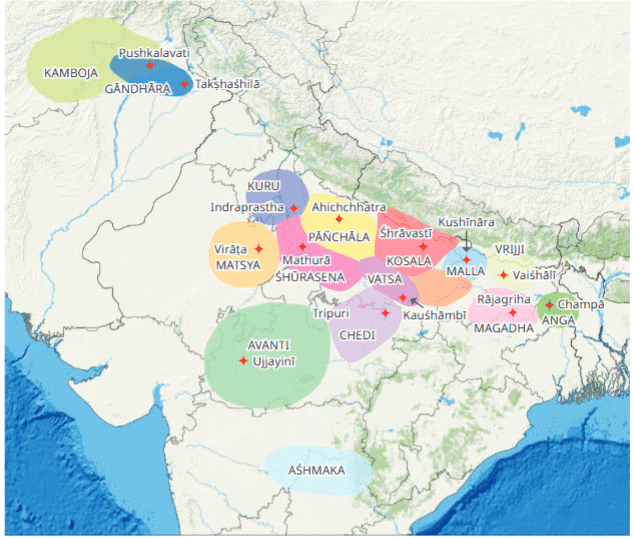
Map of 16 Mahajanpadas
Very Short Answer Questions
Q1: What does the word janapada literally mean?
Ans: Where people set foot.
Q2: Name any one mahajanapada with a republican form of government.
Ans: Vajji.
Q3: What metal became common for tools and weapons in this period?
Ans: Iron.
Q4: What were early Indian coins called?
Ans: Punch-marked coins.
Q5: Which ancient capital is now near modern-day Patna?
Ans: Rajagriha.
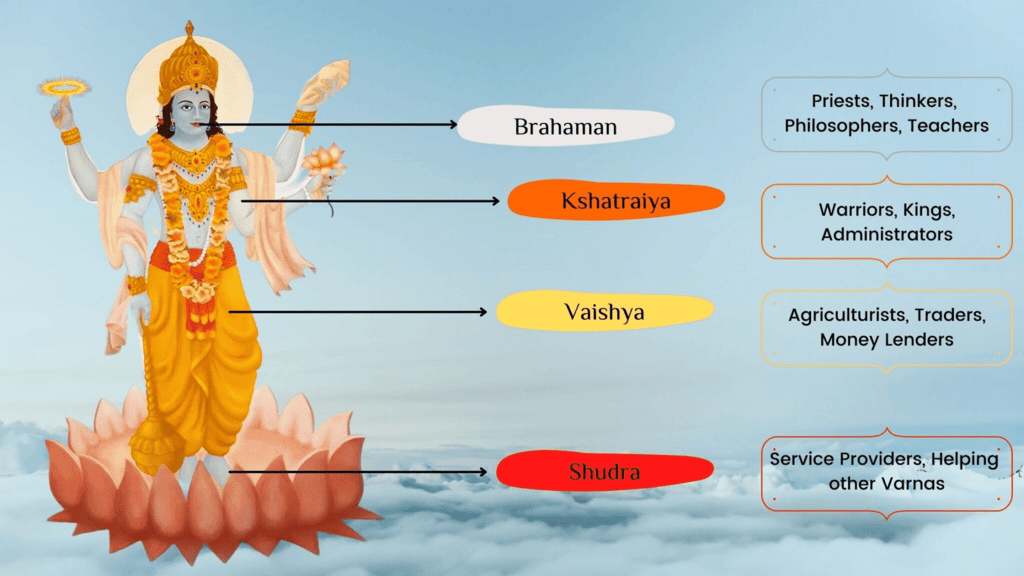
Varna System
Short Answer Questions
Q1: What were mahajanapadas and why were they important?
Ans: Mahajanapadas were large states formed from janapadas. They marked India’s Second Urbanisation with cities, trade, and governance.
Q2: What was the role of sabhā and samiti in governance?
Ans: They were councils of elders who advised or even elected rulers, especially in ganas and sanghas with democratic traditions.
Q3: How did iron tools impact agriculture?
Ans: Iron tools were stronger and sharper, making farming more efficient and supporting larger food production.
Q4: Describe the social structure based on varnas.
Ans: Vedic society had four varnas – Brahmins (priests), Kshatriyas (warriors), Vaishyas (traders), and Shudras (workers).
Q5: What was Dakshinapatha and why was it significant?
Ans: It was a major route from central to south India, helping trade, military, and cultural exchange.
Match the Following
(Match Column A with the correct option in Column B)
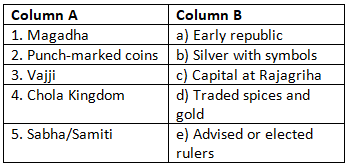
Ans: Matched Pairs and Explanations:
- 1 → c: Magadha’s capital was Rajagriha, a strong fortified city.
- 2 → b: Punch-marked coins were made of silver and used in trade.
- 3 → a: Vajji was a gana with a republican government.
- 4 → d: The Cholas in south India traded spices and precious stones.
- 5 → e: Sabha and samiti were councils that guided or chose rulers.