Q1: What is an empire?
Ans: An empire is a large area ruled by a powerful emperor who controls many smaller kingdoms.
Q2: What is the Sanskrit term for an emperor?
Ans: In Sanskrit, emperors were called samraj, adhiraja, or rajadhiraja.
Q3: What did tributary kingdoms offer to the emperor?
Ans: Tributary kingdoms gave tribute like gold, grain, or goods as a sign of loyalty.
Q4: What was the role of the capital city in an empire?
Ans: The capital city was the center of administration and economy for the empire.
Q5: Why did emperors build fortified cities?
Ans: Fortified cities protected borders and served as strong defense points.
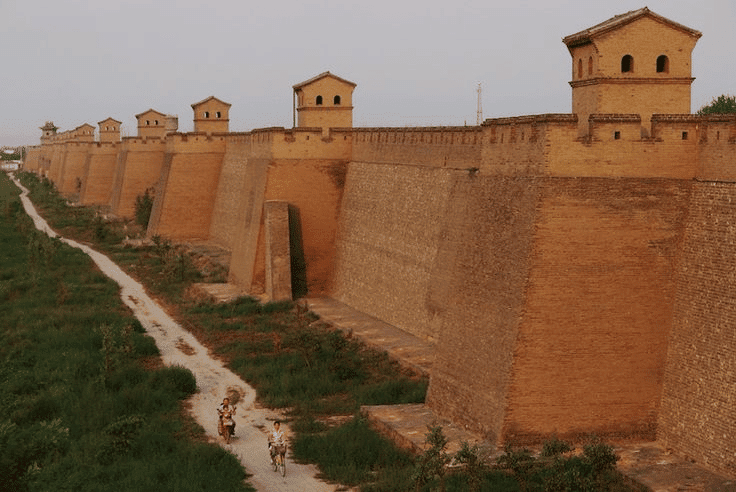
Fortified Citites
Q6: What kind of armies did emperors use?
Ans: Emperors used trained armies with elephants, horses, and iron weapons.
Q7: How did emperors maintain control over diverse groups?
Ans: Emperors used fair laws and local governance to manage diverse people.
Q8: What is one reason emperors expanded their empires?
Ans: Emperors expanded for fame and to be remembered by future generations.
Q9: What are guilds also known as?
Ans: Guilds were also known as shrenis.
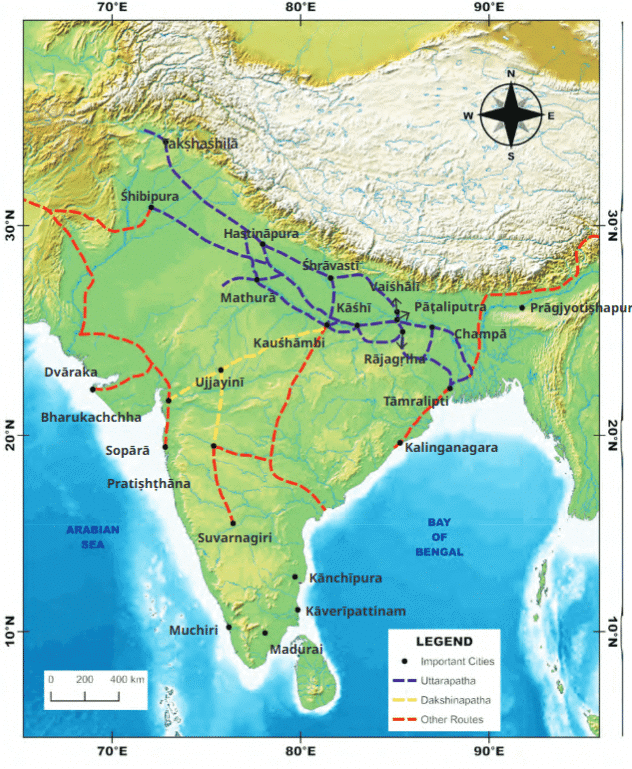
Trade Routes
Q10: Who led the guilds?
Ans: Guilds were led by elected leaders and officers.
Q11: What was the main purpose of trade routes?
Ans: Trade routes helped move goods and increased taxes for the empire.
Q12: What were two important trade routes in ancient India?
Ans: Uttarapatha and Dakshinapatha were major trade routes.
Q13: What was the capital of the Magadha kingdom?
Ans: The capital of Magadha was Pataliputra.
Q14: Name the king who founded the Nanda dynasty.
Ans: Mahapadma Nanda founded the Nanda dynasty.
Q15: Who defeated the Nanda Empire?
Ans: Chandragupta Maurya defeated the Nanda Empire.
Q16: Who was Alexander the Great?
Ans: Alexander was a Greek king who invaded India in 327–325 BCE.
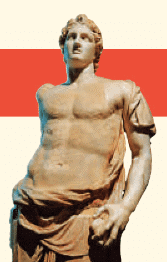
Alexander the Great
Q17: Which Indian king did Alexander fight?
Ans: Alexander fought King Porus of the Pauravas in Punjab.
Q18: Who was Kauṭilya?
Ans: Kauṭilya was Chandragupta Maurya’s mentor and advisor.
Q19: What is the Arthashastra?
Ans: The Arthashastra is a book by Kauṭilya on governance and economics.
Q20: What does Saptanga mean?
Ans: Saptanga means “seven parts” of a kingdom according to Kauṭilya.
Q21: Who wrote the book Indika about India?
Ans: Megasthenes, a Greek ambassador, wrote Indika.
Q22: Which war changed Aśhoka’s views on violence?
Ans: The Kalinga War made Aśhoka turn to peace and non-violence.
Q23: What script was used in Aśhoka’s edicts?
Ans: Aśhoka’s edicts were written in Brahmi script.
Q24: What is a stūpa?
Ans: A stūpa is a dome-shaped structure used for worship and housing relics.
Q25: What symbol from Mauryan art became India’s national emblem?
Ans: The Sarnath lion capital with the dharmachakra became India’s national emblem.