Tens and Ones
Hello kids!
Let’s understand grouping and the mathematical concept of ones and tens with the help of Raj and Maya.
- Raj and Maya, two friends who love making beautiful bracelets.

- Each bracelet they make has 10 flowers on it, and sometimes they give some extra flowers along with the bracelet.
- Let’s see how we can use grouping to understand addition with ones and tens.
- Raj and Maya made three bracelets together.
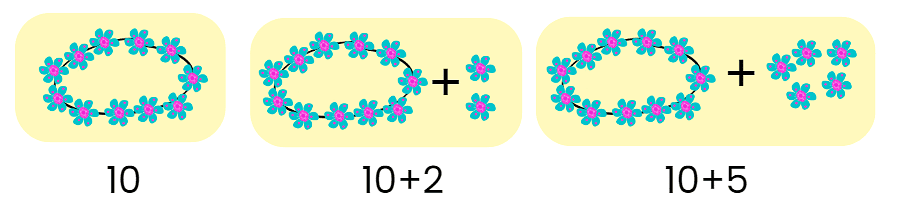
- The first bracelet had 10 flowers, the second bracelet had 10 flowers plus 2 extra flowers, and the third bracelet had 10 flowers plus 5 extra flowers.
Understanding Ones and Tens:
- Ones: Ones refer to single units or individual items. For example, single (extra) flowers, like the extra flowers Raj and Maya gave with the bracelets.
- Tens: Tens are groups of ten items or objects. For example, groups of 10 flowers, like the 10 flowers on each bracelet.
For example: for the bracelet in which there 10 flowers in bracelet & 2 extra flowers, there will be 1 tens and 2 ones.
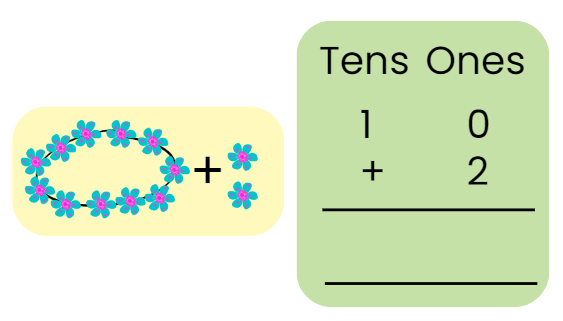
1 tens means 10 flowers and 2 ones means 2 flowers.
Counting the Flowers
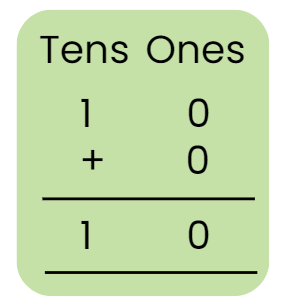
First Bracelet: 10 flowers (10 in tens, 0 in ones).
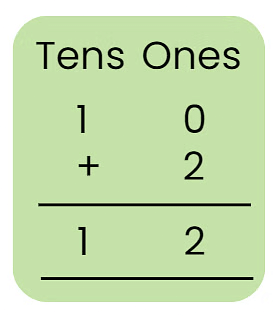
Second Bracelet: 10 flowers (10 in tens, 0 in ones) + 2 extra flowers (0 in tens, 2 in ones) = 12 flowers (10 + 2).
Third Bracelet: 10 flowers (10 in tens, 0 in ones) + 5 extra flowers (0 in tens, 5 in ones) = 15 flowers (10 + 5).
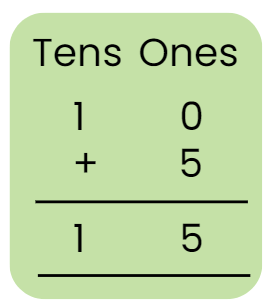
Adding Ones and Tens
- Adding Ones: Raj and Maya gave 2 extra flowers with the second bracelet and 5 extra flowers with the third bracelet. So, 2 ones (from the second bracelet) + 5 ones (from the third bracelet) = 7 ones.
- Adding Tens: Raj and Maya made 3 bracelets, each with 10 flowers. So, 3 tens (10 + 10 + 10) = 30.
By grouping the flowers into tens and ones, we can easily add them together. In total, Raj and Maya gave 7 extra flowers (7 ones) and made 30 flowers in bracelets (3 tens). Grouping helps us understand addiction better and makes counting and adding more fun!
Let’s Learn about Numberline now! Imagine a number line as a magical road that helps us understand numbers better. It’s like a big ruler, but instead of measuring length, it shows us how numbers go from small to big or big to small.
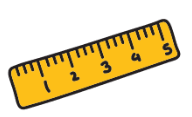
What is a Number Line?
A number line is like a long path with numbers written on it. The numbers start from the smallest on the left and get bigger as we move to the right.

Number Line
Fruits on the Table
Imagine you have a line of fruits on a table:
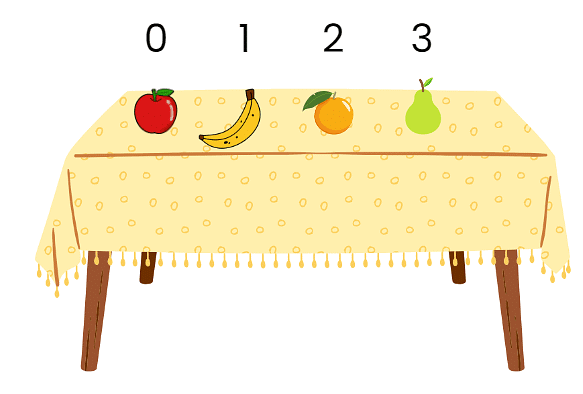
- At one end, there’s an apple (0).
- Next to it, there’s a banana (1).
- Then, an orange (2).
- Followed by a pear (3).
If you point your finger at apple and more 2 steps ahead,
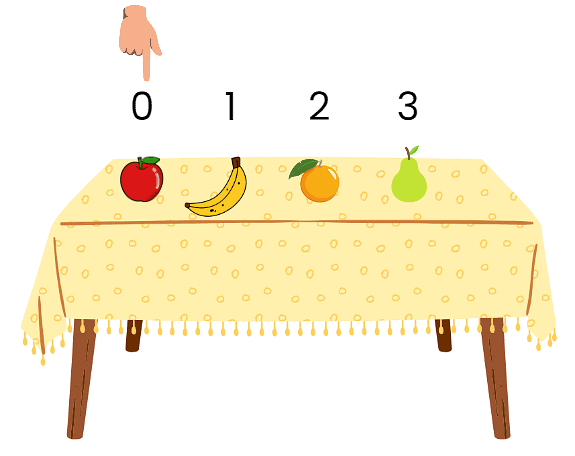
you will end up on orange.
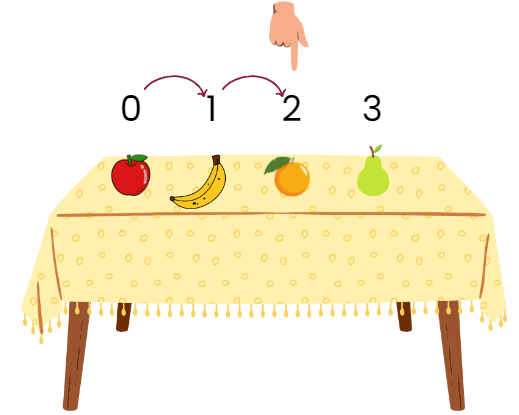
The fruit line helps us understand how numbers go in order. It’s like taking a tasty journey through math!
when we jumped from apple , with number 0, to orange, with number 2, we added numbers on our imaginary fruit number line. 0+2=2 and that’s where our finger was pointed when we jumped 2 steps ahead.
If we take 1 step back from where we are now, let’s see where we land now.
When we took back a step, we ended up on banana, which is at number 1. we can also say 2-1 = 1. That’s how we subtract numbers on number line.
Adding and Subtracting Tens on the Number Line
Imagine you have a special number line with big steps, each step representing ten numbers:
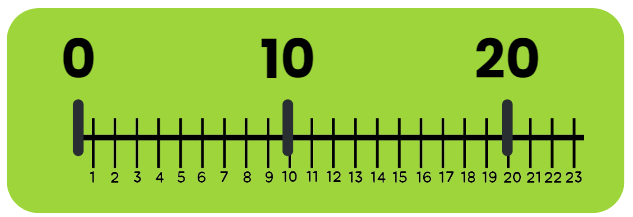
- At the start of the number line, there’s a sign for 0 tens (0).
- One big step ahead, there’s a sign for 1 ten (10).
- Two big steps ahead, there’s a sign for 2 tens (20).
- And so on, with each big step representing ten more numbers.
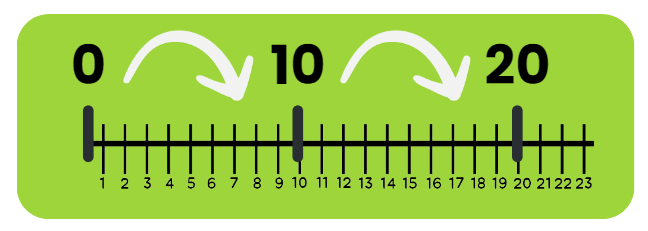
- If you start at the sign for 0 tens (0) and take two big steps ahead, you’ll land on the sign for 2 tens (20).
Adding Tens
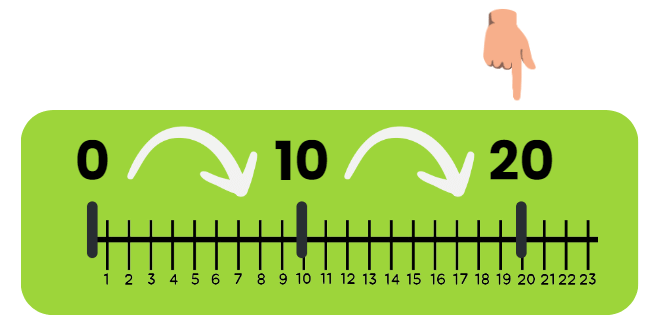
When we took two big steps from 0 tens to 2 tens, we added numbers on our big-step number line. 0 + 2 = 2 tens (20), and that’s where we landed after taking two big steps ahead.
Subtracting Tens
Now, let’s go back one big step from where we are, from 2 tens (20) to 1 ten (10).
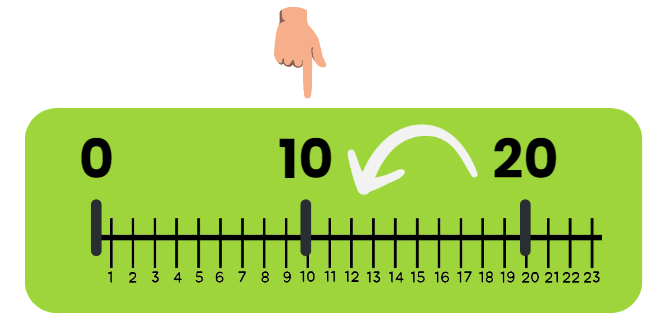
- When we took one big step back, we ended up on the sign for 1 ten (10).
- We can also say 20 – 10 = 10, which is 1 ten.
- That’s how we subtract numbers on the big-step number line.
The big-step number line helps us see how numbers change when we add or subtract tens. It’s like taking big leaps in math and exploring numbers in a fun way!
Now that we understand how ones and tens work, let’s practice adding and subtracting them.
Let’s Learn Addition by Practicing
Imagine Ram has 24 coins in his collection, with each coin worth 1 rupee. He receives an additional 32 coins.
Understanding Ones and Tens
- Ones: Ram starts with 24 coins, which means he has 2 tens (20 coins) and 4 ones (4 coins).
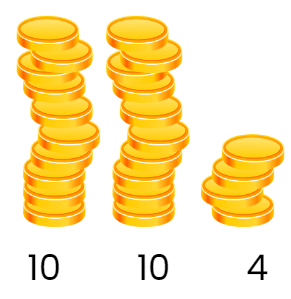
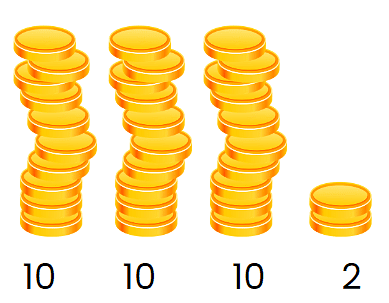
- Adding More Coins: Ram receives 32 additional coins, which means he’s adding 3 tens (30 coins) and 2 ones (2 coins) to his collection.
Calculating Total Coins
- Original coins: 2 tens (20 coins) + 4 ones (4 coins) = 24 coins
- Additional coins: 3 tens (30 coins) + 2 ones (2 coins) = 32 coins
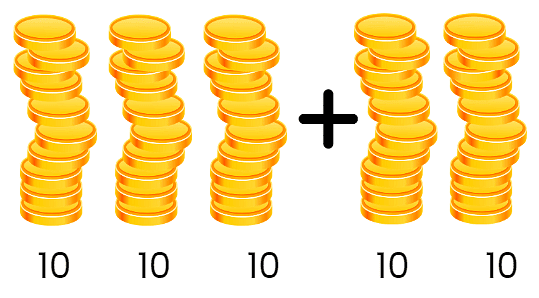
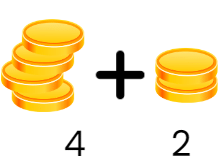
He added additional 3 tens into 2 tens he had and similarly added additional 2 ones to 4 ones he had
After adding the new coins, Ram has 5 tens (50 coins) and 6 ones (6 coins) in his collection, having total of 56 Rs. This way, he learns how to count and add tens and ones when receiving additional coins!
Now, let’s explore Subtraction.
Let’s Learn Subtraction by Practicing
Imagine Ram has a collection of coins. He has 37 coins in total, with each coin worth 1 rupee. Ram decides to buy himself a snack from the store, which costs 23 coins.
Understanding Ones and Tens
- Ones: Ram starts with 37 coins, which means he has 3 tens (30 coins) and 7 ones (7 coins).
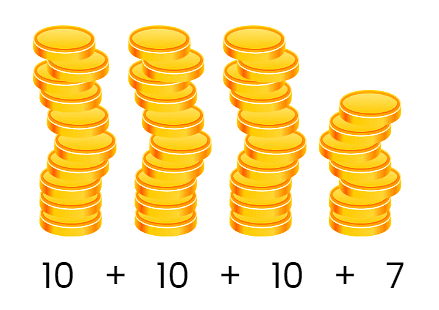
- Buying the Snack: The snack costs him 23 coins. This means he’s spending 2 tens (20 coins) and 3 ones (3 coins) on the snack.
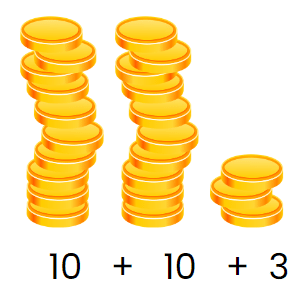
Calculating Remaining Coins
To find out how many coins Ram has left, he subtracts the coins spent on the snack from the coins he had originally:
- Original coins: 3 tens (30 coins) + 7 ones (7 coins) = 37 coins
- Coins spent on snack: 2 tens (20 coins) + 3 ones (3 coins) = 23 coins
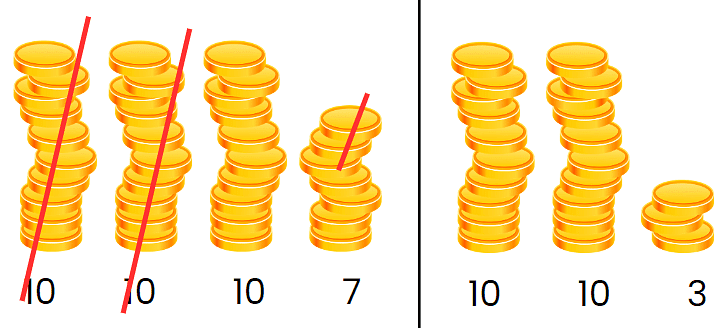
He subtracted 2 tens from 3 tens and then subtracted 3 ones from 7 ones
- Remaining coins: 1 ten (10 coins) + 4 ones (4 coins) = 14 coins
After buying the snack, Rama has 1 ten (10 coins) and 4 ones (4 coins) left in his collection. This way, he understands how to count and subtract tens and ones when dealing with money!
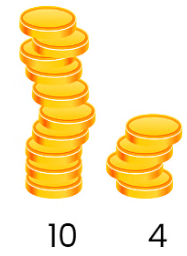
Remaining coins
Addition Pyramid
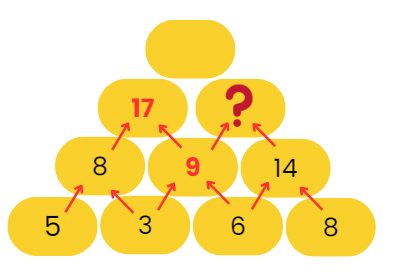
Let’s Practice and learn addition with help of a pyramid. Observe the following pyramid:
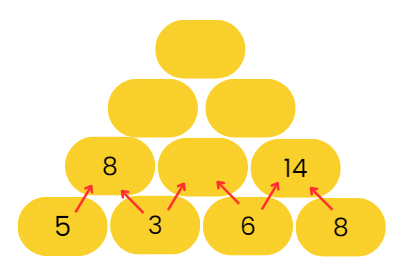
Here, the 2 numbers at the base are getting added to form the number above them.
- 5 and 3 are added to make 8.
- Similarly 6 and 8 are added to make 14.
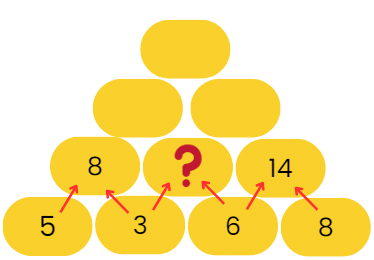
- To find the missing number above 3 and 6, we must follow the pattern we have observed and add 3 and 6.
- 3 + 6 make 9, so the missing number above 3 and 6 will be 9.
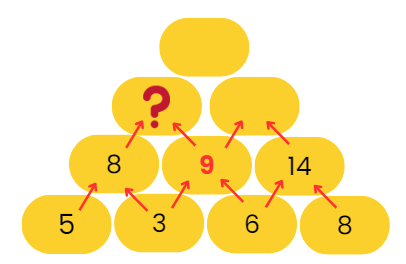
- Now let’s guess next number.
- Number above 8 and 9 will be their sum, so 8 + 9 = 17, thus the number is 17.
- Similarly, number above 14 and 9 will be 14 + 9 = 23, thus the nuber is 23.
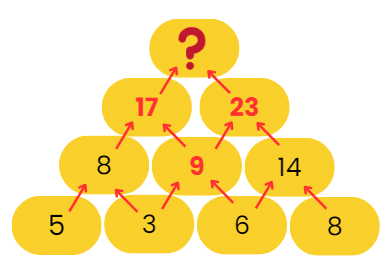
- Now its time to find the top of the pyramid.
- To find it, we will again follow the pattern and add 17 and 23.
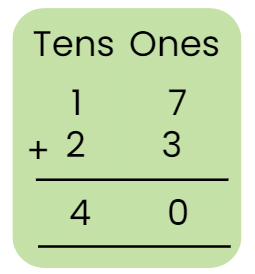
- 17 + 23 = 40, thus top of pyramid is 40.
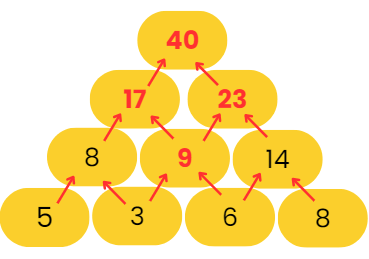
Great Job! kuddos we have completed the pyramid ✨
Subtraction Pyramid
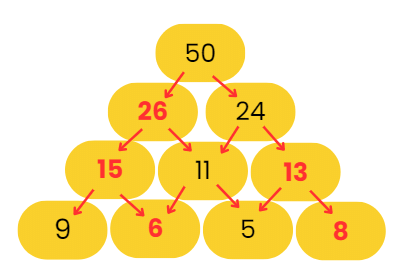
Let’s Practice and learn subtraction with help of a pyramid like we practiced addition. Observe the following pyramid:
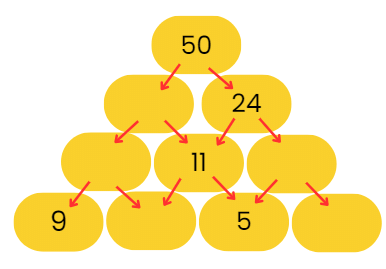
Here, number below the bigger number is being subtracted from the number above it.
To find the 1st missing number, we need to subtract 24 from 50. Thus the number is 26.
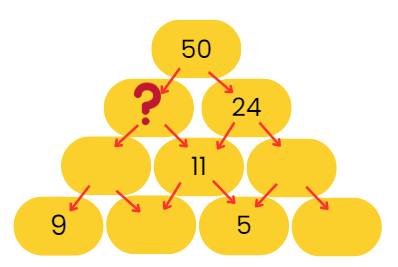
To find next missing number, we need to subtract 11 from 26. Thus 26 – 11 = 15. making the missing number 15.
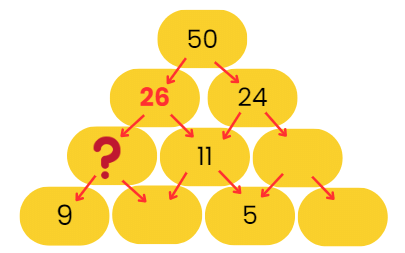
To find next number we will repeat the same process , 24 – 11 = 13.
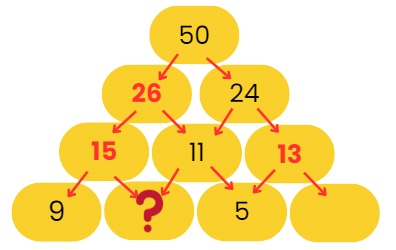
- Great job! we are almost there, let’s find last missing numbers.
- Subtract 9 from 15, so the missing number is 15 – 9 = 6.
and to find last number, subtract 5 from 13, thus 13 – 5 = 8, so last missing number is 8.
With all the Practice we have now learned how ones and tens work and how they make addition and subtraction easy.