Multiple Choice Questions (MCQs)
Q1: Who is the author of the play “Mary’s Mistake”?
a) Natalie Joan
b) G.C. Thornley
c) Hugh Lofting
d) Helen Keller
Ans: b) G.C. Thornley
The play is written by G.C. Thornley.
Q2: Why does Mrs. Shaw want the house tidy for the guests?
a) To impress Mrs. Harding and Mrs. Lee
b) To prepare for a party
c) To sell the house
d) To teach Mary a lesson
Ans: a) To impress Mrs. Harding and Mrs. Lee
Mrs. Shaw asks Mary to tidy up, like putting away a coat, to make a good impression on Mrs. Harding and Mrs. Lee.
Q3: What does Mary mistakenly say about Mrs. Harding’s children?
a) They are rude
b) They are beautiful
c) They are at school
d) They don’t exist
Ans: b) They are beautiful
Mary compliments Mrs. Harding’s “beautiful children,” unaware that Mrs. Harding has no children, causing an awkward moment.
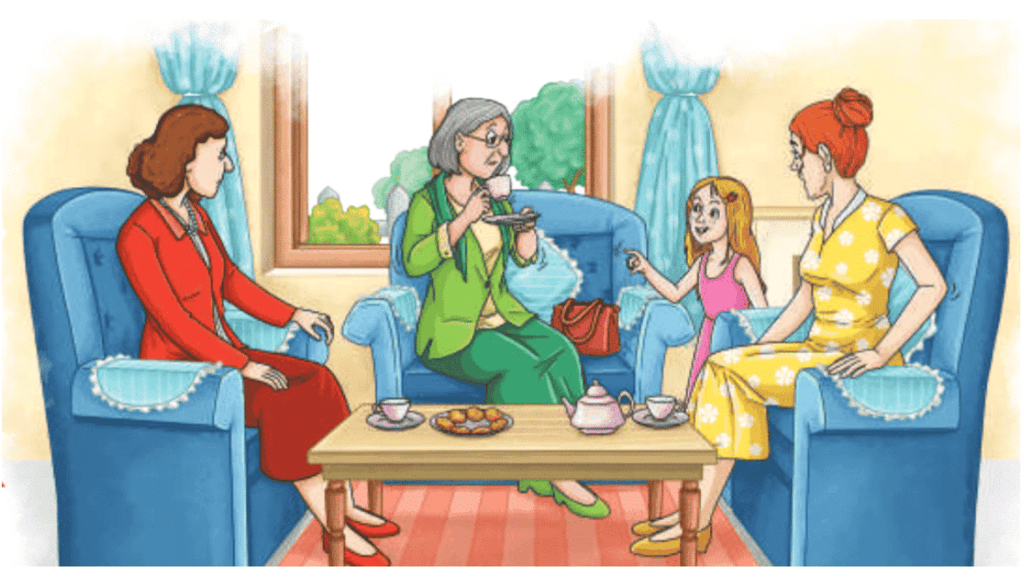
Q4: What does Mary say when the guests try to leave?
a) “Please stay longer!”
b) “Must you stay? Can’t you go?”
c) “Come back tomorrow!”
d) “Thank you for coming!”
Ans: b) “Must you stay? Can’t you go?”
Mary mistakenly says, “Must you stay? Can’t you go?” when the guests prepare to leave, reversing her mother’s advice to ask them to stay longer.
Q5: What does the word “blunders” mean in the play?
a) Kind compliments
b) Careless mistakes
c) Polite greetings
d) Funny stories
Ans: b) Careless mistakes
The word “blunders” is defined in the play as careless mistakes, referring to Mary’s errors during the visit.
Fill in the Blank
Q1: Mrs. Shaw teaches Mary to say _______ things to make guests happy.
Ans: kind
Q2: Mary compliments Mrs. Harding’s _______ that don’t exist.
Ans: children
Q3: Mrs. Harding’s brother is a _______.
Ans: banker
Q4: Mary criticises _______ that belongs to Mrs. Harding.
Ans: a dog
Q5: The word “awkward” describes an _______ situation.
Ans: uncomfortable
True or False
Q1: Mrs. Shaw wants Mary to stay quiet during the guests’ visit.
Ans: False
Mrs. Shaw allows Mary to stay and talk but advises her to be polite and kind.
Q2: Mary’s mistakes make the guests feel uncomfortable.
Ans: True
Mary’s errors, like mentioning non-existent children, create awkward moments for the guests.
Q3: Mrs. Lee is Mrs. Harding’s mother.
Ans: False
Mrs. Lee is Mrs. Harding’s sister, not her mother, as stated in the play.
Q4: The play teaches the importance of speaking kindly and carefully.
Ans: True
The moral emphasizes speaking kindly and carefully, as Mary’s mistakes show.
Q5: The word “wealthy” means having little money.
Ans: False
“Wealthy” means having a lot of money, as defined in the play.
Very Short Answer Questions
Q1: Who are the two guests visiting the Shaws?
Ans: Mrs. Harding and Mrs. Lee
Q2: What does Mrs. Shaw tell Mary to do if the conversation pauses?
Ans: Start a conversation
Q3: What hobby does Mary mock that the Harding family enjoys?
Ans: Horse riding
Q4: What is the meaning of the word “compliments” in the play?
Ans: Kind words to praise
Q5: What is one moral of the play?
Ans: Think before speaking
Long Answer Questions
Q1: How does Mrs. Shaw prepare Mary for the guests’ visit, and why is she hesitant to let her stay?
Ans: Mrs. Shaw prepares Mary by teaching her to be polite, advising her to say kind things that make guests happy, laugh to keep the mood light, start conversations if there’s silence, and ask guests to stay longer when they leave, like “Must you go? Can’t you stay?” She ensures Mary changes into a clean dress to look presentable. Mrs. Shaw is hesitant because she worries Mary might say the wrong things, as she’s young and inexperienced, potentially ruining her chance to befriend Mrs. Harding, the wife of a wealthy man, which is important for social connections.
Q2: Describe two mistakes Mary makes during the visit and their impact on the guests.
Ans: First, Mary compliments Mrs. Harding’s “beautiful children,” unaware that Mrs. Harding has no children, causing an awkward and upsetting moment as Mrs. Harding looks distressed. Second, Mary mocks bankers, not knowing Mrs. Harding’s brother is a banker, which offends the guests and creates discomfort. These mistakes make the guests feel embarrassed and unwelcome, turning the visit tense and straining the conversation, as Mrs. Shaw must quickly change topics to ease the situation.
Q3: Explain how Mary’s final mistake when the guests leave adds humour to the play.
Ans: Mary’s final mistake occurs when the guests prepare to leave, and instead of politely asking them to stay longer as her mother advised, she says, “Must you stay? Can’t you go?” This reversal of the polite phrase is humorous because it bluntly suggests the guests should leave, completely undermining her mother’s efforts to make them feel welcome. The unexpected blunder, combined with the guests’ likely shock, adds a comedic climax to the play, highlighting Mary’s innocent misunderstanding in a light-hearted way.
Q4: What is the moral of the play, and how do Mary’s actions illustrate it?
Ans: The moral of the play is that we should think before speaking and choose kind, respectful words to avoid hurting others. Mary’s actions illustrate this through her series of blunders, such as praising non-existent children, mocking bankers, and insulting hobbies like horse riding, all of which upset Mrs. Harding and Mrs. Lee. Her final mistake of asking the guests to leave instead of stay shows her failure to follow her mother’s advice. These errors demonstrate how careless words can create discomfort, emphasising the need for thoughtful and polite conversation.
Q5: Discuss how the play uses Mary’s blunders to teach a lesson about polite conversation.
Ans: The play uses Mary’s blunders to teach that polite conversation requires care and awareness to make others feel valued. Mary’s mistakes, like assuming Mrs. Harding has children, criticising bankers unaware of Mrs. Harding’s brother’s profession, and mocking hobbies the guests enjoy, show how thoughtless remarks can offend and create awkwardness. Her final blunder, saying “Can’t you go?” instead of asking the guests to stay, humorously underscores her failure to apply her mother’s advice. These errors highlight the importance of listening, choosing kind words, and being mindful of others’ feelings, teaching that polite conversation builds positive relationships and avoids unintended harm.