About the Poet
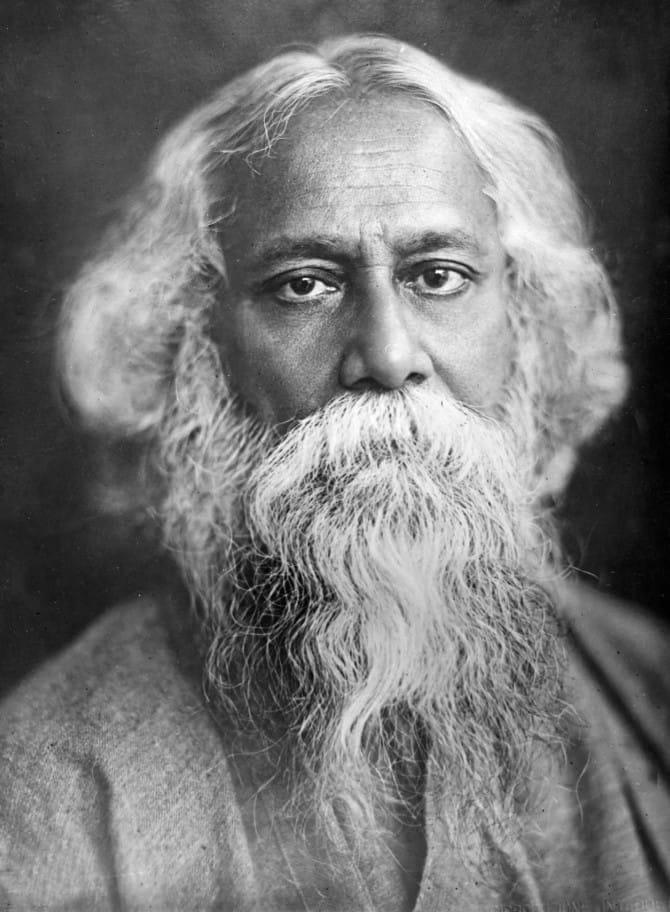
Rabindranath Tagore, who was born in 1861 in Calcutta (now Kolkata), India, experienced early tragedy with his mother’s death when he was just fourteen years old. He studied at home and briefly in England but left without completing a degree. Tagore married Mrinalini Devi and they had five children, many of whom he tragically outlived. He became a world-renowned poet, writer, composer, philosopher, and painter while living in Bengal, where he was celebrated for his deep observations of nature, human emotions, and spirituality. Despite facing many personal losses, Tagore continued to create and became the first non-European to win the Nobel Prize in Literature in 1913 for Gitanjali. His legacy, marked by simple yet profound themes of love, memory, and connection with nature, continues to inspire readers around the globe.
Key Points of the Poem
- In “I Cannot Remember My Mother,” the poet reflects on the absence of direct memories of his mother but discovers her presence through sensory experiences triggered during play, in nature, and while gazing at the sky.
- Although he cannot recall her face, three powerful senses bring her back: the sound of a lullaby (auditory), the fragrance of shiuli flowers (olfactory), and the stillness of her gaze spread across the sky (visual).
- He recognises that both everyday moments and nature keep her memory alive. The poet uses a repeated refrain to emphasise the theme of nostalgic remembrance.
- Looking back on his childhood, he realises that his mother’s love lingers in subtle, beautiful ways even though he cannot remember her directly. Through this poem, the poet explores the theme of sensory memory and the everlasting bond between mother and child.
Detailed Summary
I cannot remember my mother
only sometimes in the midst of my play
a tune seems to hover over my playthings,
the tune of some song that she used to hum
while rocking my cradle.
The poet says he cannot clearly remember his mother, but certain moments bring her back to him. While he is playing with his toys, a soft tune seems to hover around him. This tune reminds him of the lullaby his mother used to hum while rocking his cradle. Though he lacks a clear memory of her face, this auditory memory keeps her presence alive. It shows how small, familiar sounds can connect a person to deep emotions and childhood memories

I cannot remember my motherbut when in the early autumn morning
the smell of the shiuli flowers floats in the air
the scent of the morning service in the temple
comes to me as the scent of my mother.
Again, the poet repeats that he cannot remember his mother directly. However, in the early autumn mornings, when the sweet fragrance of shiuli flowers fills the air, it reminds him of temple rituals. This scent becomes closely linked with his mother’s presence. The poet uses smell (olfactory imagery) to show how memories can be triggered by natural elements. Even without seeing her, he feels her presence through these gentle and familiar experiences.
I cannot remember my mother
only when from my bedroom window
I send my eyes into the blue of the distant sky,
I feel that the stillness of my mother’s gaze on my face
has spread all over the sky.
In this stanza, the poet describes a visual and emotional memory of his mother. When he looks out of his window at the vast blue sky, he feels that his mother’s calm and loving gaze is spread across it. The sky becomes a symbol of her endless love and presence. Though she is no longer physically there, her affection surrounds him everywhere. This creates a peaceful and comforting feeling, showing that a mother’s love is infinite and everlasting.
Theme/Message
Theme
The poem explores the theme of love, memory, and the eternal presence of a mother. Even though the poet cannot clearly remember his mother, her presence lives on through sensory memories like sound, smell, and sight. It shows how deep emotional bonds do not fade with time but remain in subtle forms. The poem also highlights how nature and everyday experiences act as reminders of loved ones. The mother is not physically present, yet her love surrounds the poet constantly. Overall, the theme suggests that a mother’s love is timeless, infinite, and deeply rooted in a child’s heart, existing beyond memory and physical absence.
Message
- The poem’s message highlights that a mother’s love never truly disappears — it lives on in the smallest sensory experiences of life.
- It reassures readers that even if we cannot remember faces clearly, the essence of our loved ones remains with us through nature and daily moments.
- Moreover, it conveys that the bond between mother and child is timeless and can be felt in the tune of a lullaby, the fragrance of flowers, and the vastness of the sky
- Emotional Implications — The refrain and sensory symbols create a serene, nostalgic tone that touches the reader’s heart.
- Key imagery such as “a tune seems to hover,” “the smell of the shiuli flowers,” and “the stillness of my mother’s gaze… spread all over the sky” helps readers understand the themes of nostalgia and eternal connection.
- In the end, the poem leaves us with the comforting realisation that “I cannot remember my mother” does not mean she is gone — she is everywhere.
Literary Devices
- Refrain / Anaphora — ‘I cannot remember my mother’ begins each stanza, functioning as both a refrain (repeated line) and anaphora (repetition at the start of successive stanzas).
- Imagery — The poem is full of sensory imagery: auditory (tune, hum), olfactory (smell of shiuli and temple service), and visual (blue sky and mother’s gaze).
- Symbolism — The hovering tune symbolises the mother’s lullaby and care; shiuli flowers and temple scent symbolise purity and daily rituals; the vast sky symbolises the infinite and calming presence of the mother’s gaze.
- Alliteration — Repetition of initial consonant sounds, e.g. “stillness … spread … sky” (s sound) and “some song she used to hum”
- Rhyme Scheme — The poem has no regular rhyme scheme (free verse), yet it is enjoyable because of its beautiful imagery and emotional depth.
Difficult Words
- Hover = linger or remain near a place
- Hum = sing a tune with your lips closed
- Cradle = a small bed for a baby
- Shiuli = a type of flower (coral jasmine)
- Morning service = rituals conducted in a temple
- Gaze = look steadily for a long time
- Midst = in the middle of
- Playthings = toys
- Rocking = moving gently back and forth
- Floats = moves slowly through the air
- Scent = pleasant smell
- Stillness = quiet and calm state
- Spread = extended or covered over