Draw (Page – 100)
Draw pictures of your favourite homemade food dishes and name them.
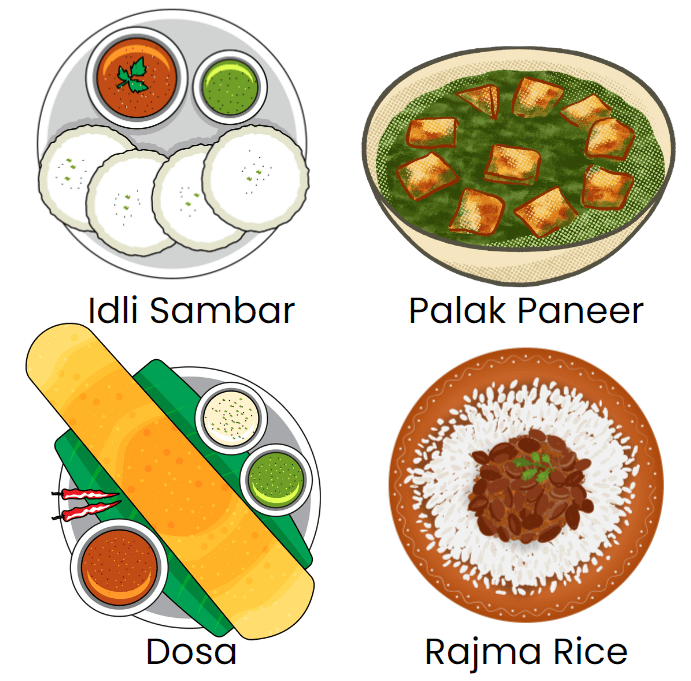
Ans:
Activity 1 (Page – 101)
Share your reasons for why you like the food items you have drawn.
We all like to eat and drink different things. Some of these food items are sweet, some are sour, some are spicy and some are bitter. We eat fruits, we eat vegetables and we eat rice, dal or roti. We drink milk, lassi or juice. Have you wondered why we eat and drink?
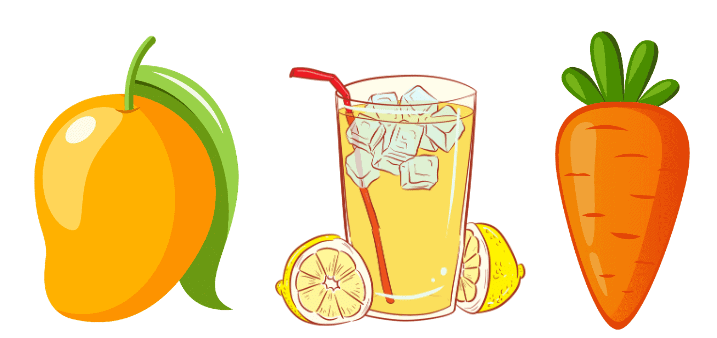
Ans: I like the food items I have drawn because they are tasty and make me feel happy. For example, I like eating mangoes because they are sweet, and I like drinking lemonade because it is refreshing in the summer. These foods give me energy and help me stay healthy. I enjoy eating vegetables like carrots because they are crunchy and good for my body. Eating different foods helps me stay strong and active.
Discuss (Page 103)
Q1: Why do we need to eat healthy food?
Ans: We need to eat healthy food to stay strong and feel good. Healthy food gives us the important stuff our bodies need to grow and be healthy. It helps us not get sick and have lots of energy to play and learn.Activity 2
Tick the food items you eat regularly from the pictures given Below.
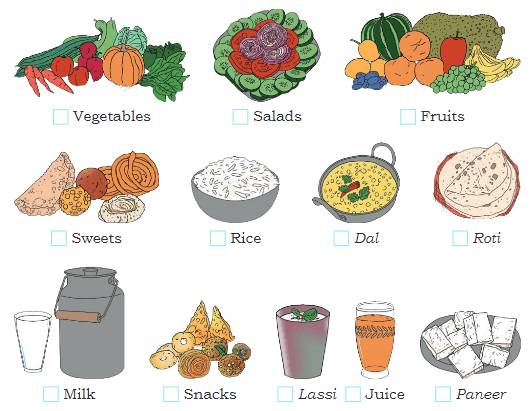
Which foods above do you think should be part of a balanced diet?
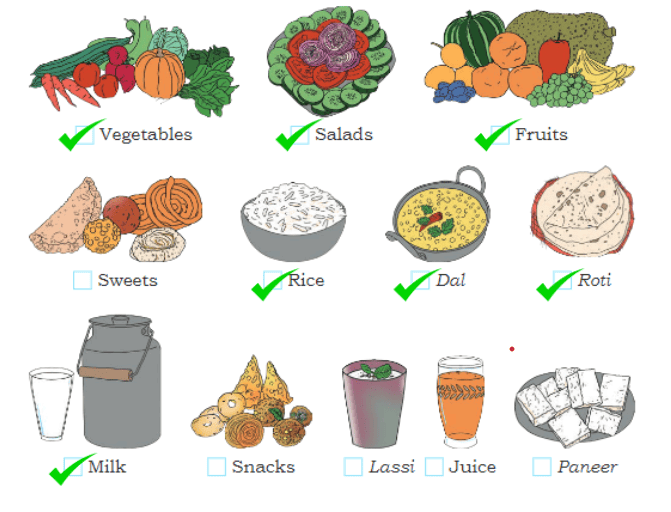
Ans:
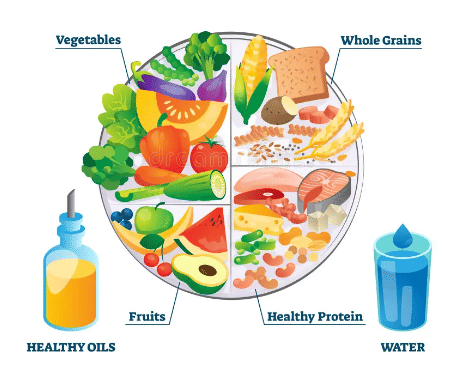
I think Vegetables, Salads, Fruits, Rice, Dal, Roti, Milk, Lassi , Paneer should be a part of balanced diet.
We Eat Different Things (Page- 104 )
1. Make a list of fruits and vegetables available and special food items that are prepared in the summer and in the winter.
Ans: Summer Fruits and Vegetables:
- Mango
- Watermelon
- Cucumber
- Bitter Gourd
Special Summer Foods:
- Kulfi
- Ice Cream
- Aam Panna
- Sugarcane Juice
Winter Fruits and Vegetables:
- Apple
- Orange
- Carrot
- Spinach
Special Winter Foods:
- Gajar ka Halwa
- Hot Soups
- Stews
- Hot Chocolate
Where do food com from (Page – 105)
1. Do you know which foods are grown in the fields? Write a few names of such crops.
Ans: Foods grown in the fields:
- Rice
- Wheat
- Maize (corn)
- Pulses (like lentils, chickpeas)
- Vegetables (like potatoes, carrots, tomatoes)
2. Discuss and write down in what form some of these foods are cooked.
Ans: Forms in which these foods are cooked:
- Rice is boiled and served as plain rice or used in dishes like pulao or biryani.
- Wheat is ground into flour and used to make chapatis, bread, and biscuits.
- Maize (corn) is boiled, roasted, or made into corn flour to cook items like cornbread or tortillas.
- Pulses are cooked as dal or used in soups and stews.
- Vegetables like potatoes are boiled, fried, or made into curries, while carrots can be eaten raw, boiled, or made into salads and soups.
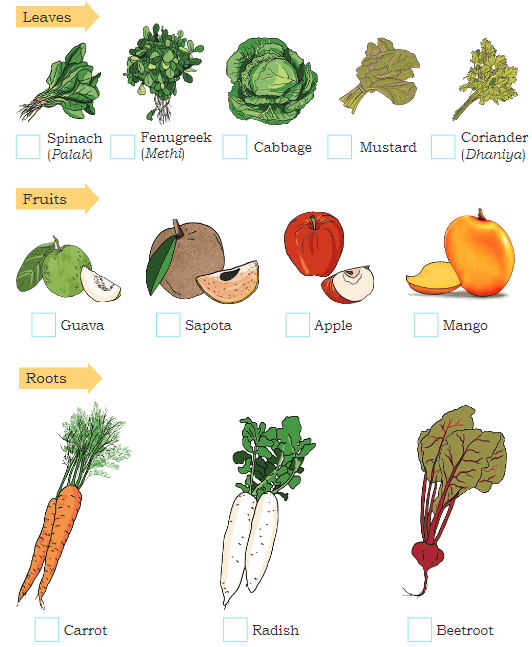
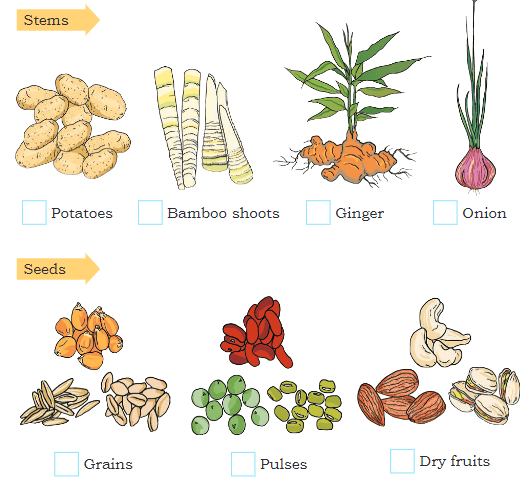
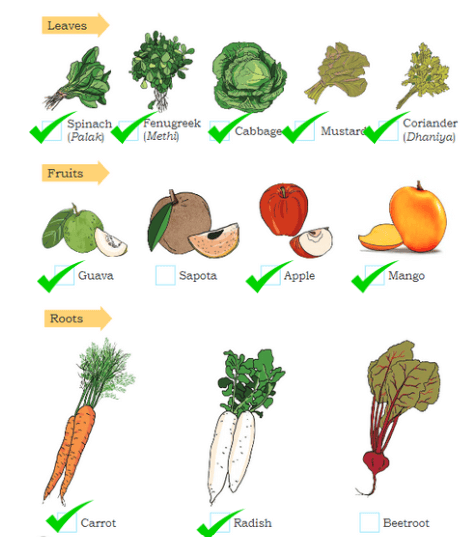
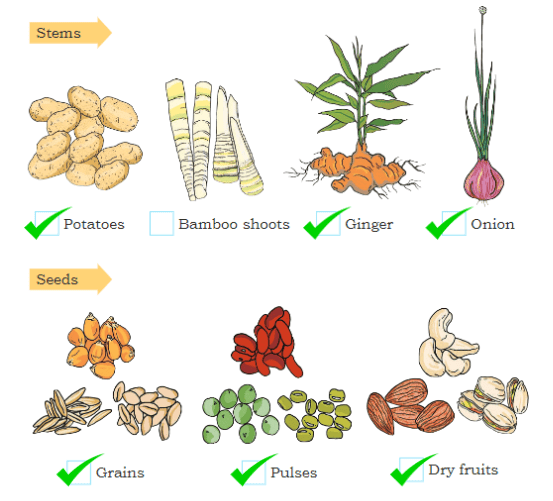
3. We eat different parts of plants. Some examples are given below. Put a tick against the items you eat.
Ans:
Let us reflect (Page 108)
A. Discuss
Q1: Why do we need different kinds of food?
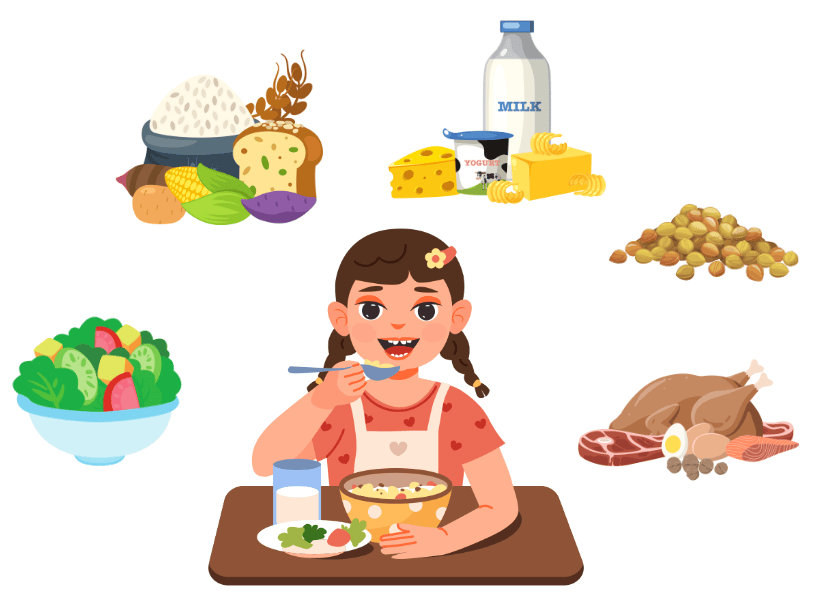
Ans: We need different kinds of food to get all the nutrients our body requires to stay healthy and strong. Different foods provide vitamins, minerals, proteins, carbohydrates, and fats.
Q2: Why do we eat seasonal foods?
Ans: We eat seasonal foods because they are fresher, more nutritious, and taste better. Seasonal foods are also more readily available and often cheaper.
Q3: How can you tell if a food is healthy or unhealthy?
Ans: Healthy foods are fresh, less processed, and rich in nutrients like vitamins and minerals. Unhealthy foods are often high in sugar, salt, and unhealthy fats, and are heavily processed.
Q4: Why is it important to avoid wasting food? Can you think of some ways to reduce food waste at home?
Ans: It is important to avoid wasting food because it conserves resources, saves money, and helps feed others. Ways to reduce food waste include planning meals, storing food properly, using leftovers creatively, and composting scraps.
B. Write
Q1: List the fruits and vegetables eaten in your family.
Ans:
- Fruits: Apple, Banana, Mango, Orange, Grapes
- Vegetables: Carrot, Potato, Spinach, Tomato, Cabbage
Q2: Write the recipe of your favourite dish.
Ans: Recipe for Vegetable Pulao:
- Ingredients: 1 cup basmati rice, 1 cup mixed vegetables (carrot, peas, beans), 1 onion (sliced), 2 tomatoes (chopped), 2 tbsp oil, 1 tsp cumin seeds, 1 bay leaf, 2-3 cloves, 1-inch cinnamon stick, 1 tsp ginger-garlic paste, salt to taste, water.
- Method: Wash the rice and soak it for 20 minutes. Heat oil in a pan, add cumin seeds, bay leaf, cloves, and cinnamon stick. Add sliced onion and sauté until golden brown. Add ginger-garlic paste and sauté for a minute. Add chopped tomatoes and cook until soft. Add mixed vegetables, salt, and soaked rice. Mix well. Add 2 cups of water and bring it to a boil. Cover and cook on low flame until the rice is done. Serve hot with raita.
Q3: Write a name of a food item that includes both plant and animal-based ingredients. For example, lassi includes yogurt/curd which is prepared from milk (animal-based ingredient) and sugar which is prepared from sugarcane (a plant-based ingredient).
Ans: Chicken Salad: It includes chicken (animal-based ingredient) and lettuce, tomatoes, and cucumber (plant-based ingredients).
C. Draw
Q1. Draw three plates or thalis with various food items in your notebook.
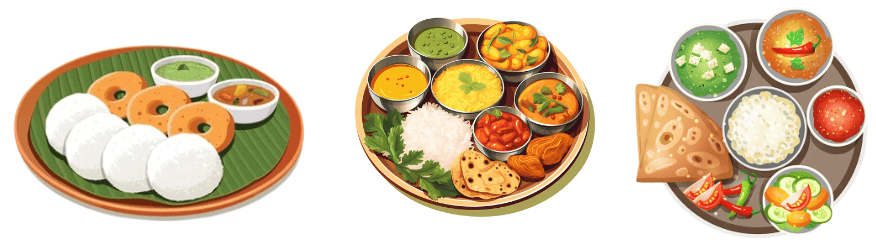
Ans:
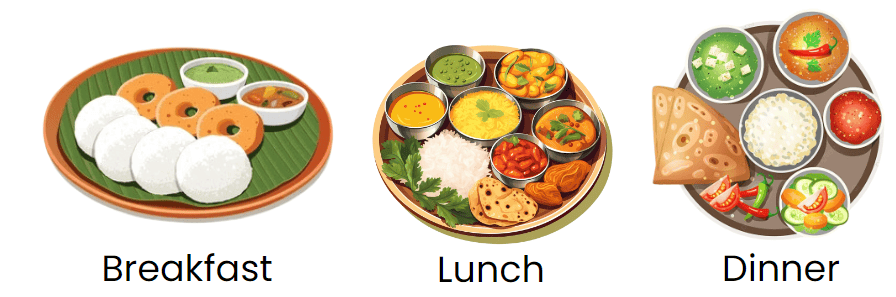
Q2. In these plates draw and label food items that you eat in the morning, afternoon and at night.
Ans.
D. Eating Together
Bring any fruit to the class. Prepare a fruit chaat or salad with the help of your teacher. Share it with your home.
Ans: Student is advised to try these at home.
E. Think
Imagine you suddenly have a guest visiting your home. What kind of food would you serve them and why?
Ans: Student is advised to try these at home.