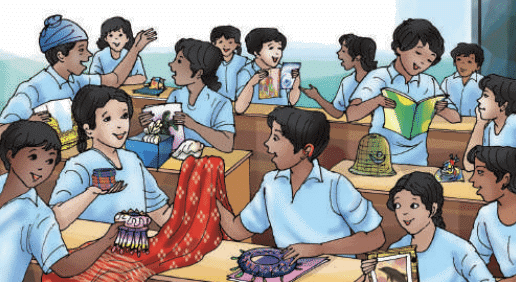
The classroom was full of joy and chatter as the children shared stories about their holidays. Their desks had colourful pictures and things from the places they had visited.
The teacher asked everyone to talk about their trips:
Chandni talked about visiting a beach in Odisha.
Ritika shared her experience of the desert in Rajasthan.
Gurpreet told stories about his trip to Amritsar, Punjab, where his grandparents live.
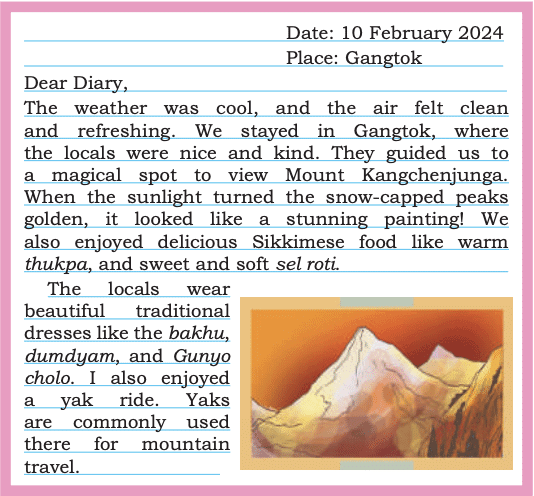
Nayan read from his diary about his visit to the beautiful mountains of Sikkim.
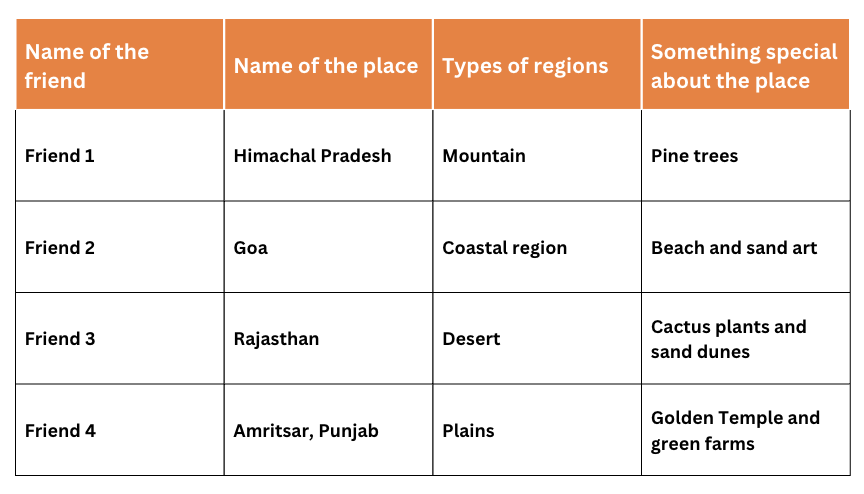
The children were tasked with writing down the names of the places they had visited and something unique about each. They were also encouraged to ask two or three friends about their travels and make the table.
Try this out with your friends!
Students who spent the holiday at home were invited to join the conversation. They were asked to share their experiences of nearby places, including local culture, food, and activities.In the Land of Agriculture, with Gurpreet
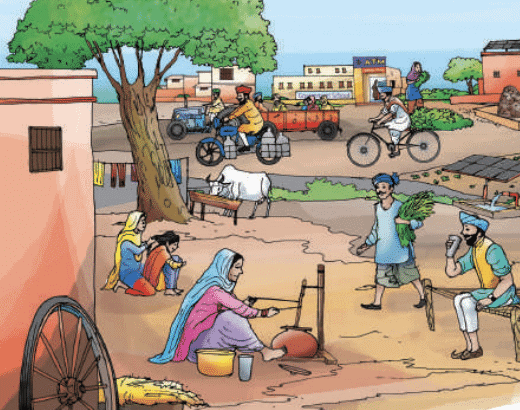
Gurpreet visited Amritsar, a flat area in Punjab where the soil is rich and fertile, making it ideal for farming. Many locals are involved in agriculture. Gurpreet mentioned that his grandmother greeted him warmly.
Gurpreet observed:
Big green fields all around — the land is flat and very good for farming.
Rich soil helps in growing many crops like wheat, maize, and mustard.
Farmers were working in the fields. Some were sowing seeds, while others were watering crops.
What Do People Eat There?
Gurpreet told his friends about his favourite meal:
Makki di roti – a flatbread made with corn flour
Sarson da saag – a dish made with mustard leaves
A big glass of lassi – a cool and sweet drink made from curd
He said, “Jee aayan nu puttar!” — this means Welcome, my dear child! That’s how his grandmother greeted him with love.
A Special Place – The Golden Temple
Gurpreet also visited the Golden Temple, also called Sri Harmandir Sahib.
It is covered with gold and has a beautiful water tank (sarovar) around it.
There is a langar – a free kitchen where food is cooked and served to everyone.
Many people volunteer to help — they cook, serve, and even wash the plates together.
The langar at the Golden Temple is one of the biggest in the world
In the Land of Endless Sand, with Ritika
Ritika visited the desert in Rajasthan, a dry area with very little rainfall.What is a Desert?
A desert is a very dry place where very little rain falls.
Only a few plants grow here because there is not much water.
Plants in the Desert
Some special plants like cactus, khejri, and babool can survive in deserts.
Cactus stores water in its stem to survive long dry periods.
These plants look different from the ones you see in your area because they don’t need much water.
Animals in the Desert
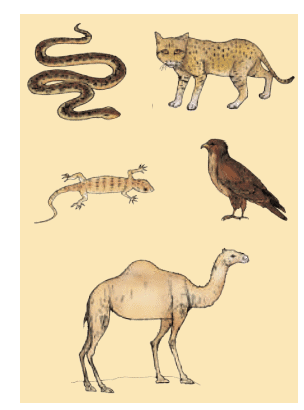
Animals like camels, lizards, wild cats, pythons, and eagles live in deserts.
The camel is called the “ship of the desert” because it carries people and goods across the sand.
People and Culture
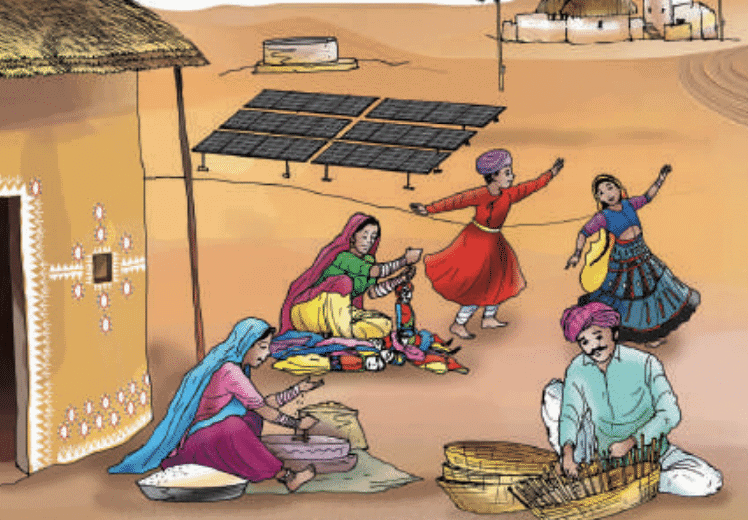
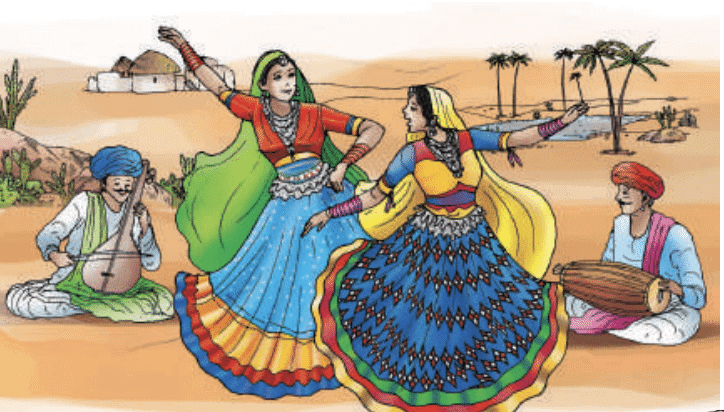
Ritika showed colourful bangles and a bandhini dupatta she brought from Rajasthan.
Women wear these with ghaghras when dancing.
Men wear colourful turbans and play traditional instruments like khartal and sarangi.
Houses and Water
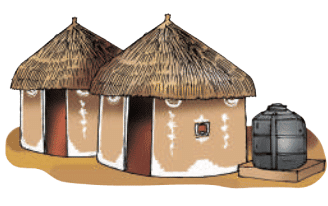
Desert houses are made from mud and have thatched roofs.
Many houses are made of mud and have tankas (water tanks) to store water for dry days.
Food of the Desert
Popular foods include dal-bati-churma and ker sangri.
Famous Desert Fort
The Jaisalmer Fort is a famous desert fort made of golden sandstone.
It has tall, thick walls and is still lived in today.
It was featured in the movie “Sonar Kella” by Satyajit Ray.
On the Seashore, with Chandni
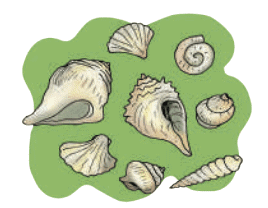
Chandni visited Puri, a seaside city in Odisha famous for its sandy beaches and the renowned Shree Jagannath Temple. She returned with seashells and shared her findings:
Activities of People
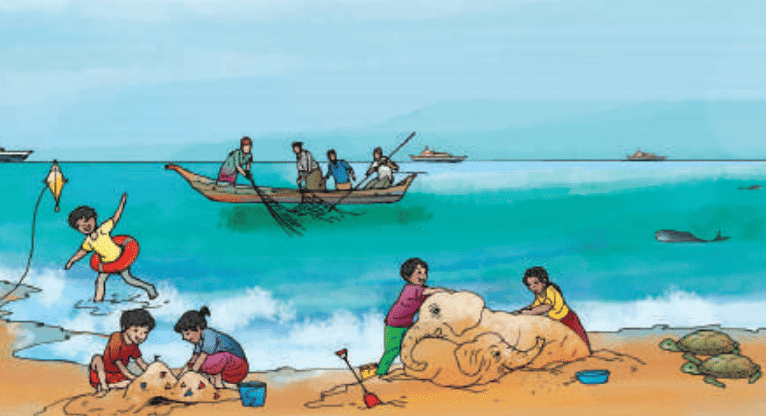
Fishermen go out to sea in boats to catch fish.
Artists make beautiful sand art on the beaches.
People collect sea shells along the shore.
Visitors enjoy boat rides and watch sea creatures like turtles.
People watch traditional Odissi dance performances.
Trees and Plants
Coastal areas have trees like coconut palms that grow near the sea.
These trees are different from those in deserts and plains because they need salty air and sandy soil.
Fun Beach Activities
Collecting shells
Making sand art
Swimming or playing by the shore
Boat rides and watching sea animals
Clothing in Coastal Regions
People wear light and comfortable clothes suited for warm weather.
Women may wear sarees like the Sambalpuri saree, famous in Odisha.
Famous Places
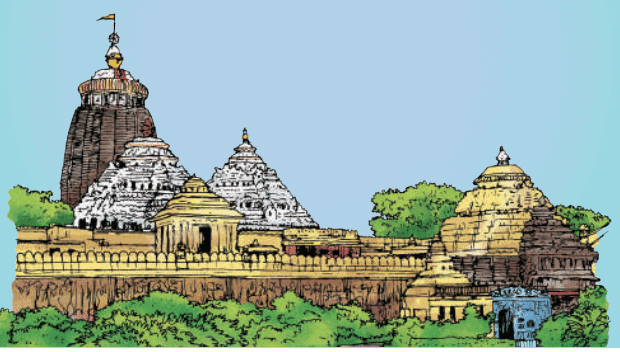
Shree Jagannath Temple is a beautiful temple in Puri with huge gates and carvings.
The city is famous for Rath Yatra, a colourful festival where people pull huge chariots of deities — Jagannath, Subhadra, and Balabhadra.
Living with Challenges
People in coastal areas face many challenges. Strong winds and cyclones frequently strike the coastal regions of Odisha, negatively impacting the lives of people, animals, and trees. Research on cyclones helps find ways to protect lives and resources. Recently, the Government of Odisha has received national and international recognition for successfully safeguarding people during cyclones through early warnings, advanced preparations, and effective management.
Did You Know?
Effects of Cyclones: Cyclones can damage homes, crops, and roads, and can harm both people and animals.
Preparation: Communities can construct sturdier homes, store food and water, and heed government warnings to ensure safety.
In the Mountains, with Nayan
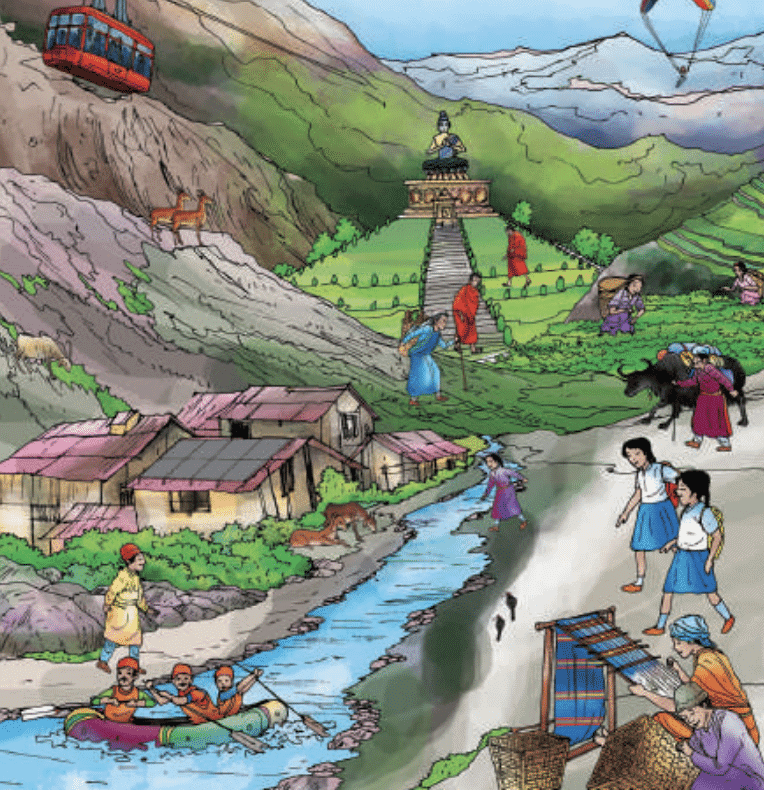
Nayan visited Sikkim, located in the Himalayan mountains, where many peaks are covered in snow. He stayed in Gangtok, where the locals were friendly and kind. He wrote in his diary about his trip:
What Are Mountains?
Mountains are high and rocky landforms that rise above the land.
They are usually cold and often covered with snow in places like the Himalayas.
Mountains have steep slopes and are surrounded by valleys.Narayan’s Diary Entry
Nayan’s Visit to Sikkim
Sikkim is a state in the Himalayan mountains with beautiful plants and animals.
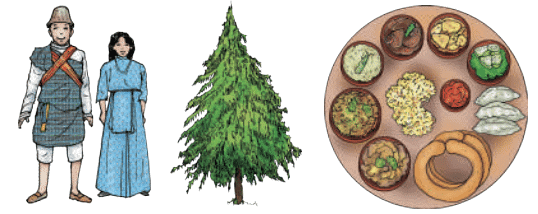
Trees like oak, pine, walnut, and chestnut grow well here because they can survive the cold weather.
The area is famous for its rich culture, colourful clothes, and lively festivals like Loosong and Namsoong.
Animals in the Mountains
Animals like the yak live in cold mountain areas.
Yaks have thick fur that keeps them warm in the cold climate.
Clothing and Lifestyle
People in the mountains wear warm clothes like the bakhu, a traditional dress that protects them from the cold.
This is different from the clothes people wear in warmer places.
Living in the Mountains – Houses and Safety
Traditional houses in Sikkim are made of wood because it is easy to find and helps keep the house warm in cold weather.
The roofs are slanting so that rain and snow can slide off easily, preventing water from collecting on the roof.
Landslides happen often in the mountains during the rainy season because heavy rain makes the soil loose.
Steep slopes cause the soil and rocks to slide down, which can be dangerous.
To keep people safe during landslides, communities:
Build strong walls to hold the soil.
Avoid building houses in risky areas.
Use early warning systems to alert people.
Help people move to safer places if needed.
When natural disasters happen, communities help by:
Providing food, clothes, and shelter.
Rebuilding houses and roads.
Supporting each other with kindness and sharing.
Did You Know?
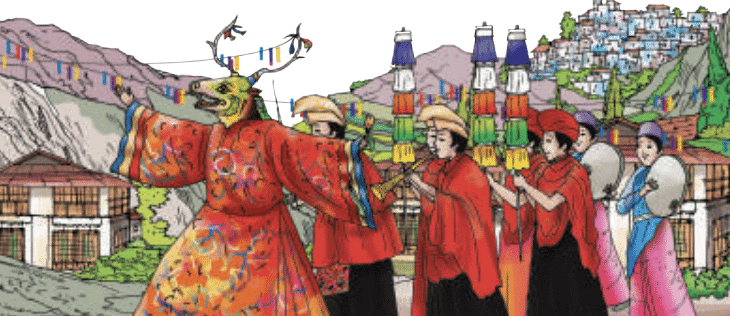
Loosong and Namsoong festival marks the Sikkimese New Year, celebrated with dances, games, and local food. It is an occasion to celebrate the hard work of the farmers. People enjoy the festival with various local dishes, traditional games, and a mask dance called chaam.
Difficult Words
Fertile: Land that is suitable for growing crops.
Langar: A free community kitchen in a Gurudwara that provides meals to everyone. The langar at the Golden Temple is one of the largest community services in the world, where volunteers cook, serve, and clean up.
Sarovar: A holy water tank around a Gurudwara, important for spiritual cleansing and meditation.
Cyclone: A powerful storm with strong winds and heavy rain that can greatly affect people, animals, and trees in coastal areas.
Bandhini: A vibrant fabric featuring tie-dye designs.
Ghaghra: A long skirt worn by women in Rajasthan.
Tanka: A water storage tank used in homes in desert regions.
Shankh: A conch shell used during prayers.
Landslide: The movement of soil and rocks down a slope.
Thukpa: A hot noodle soup from Sikkim, usually enjoyed in cold weather.
 Cactus stores water in its stem to survive long dry periods.
 Animals like camels, lizards, wild cats, pythons, and eagles live in deserts.
 Women wear these with ghaghras when dancing.
 Many houses are made of mud and have tankas (water tanks) to store water for dry days.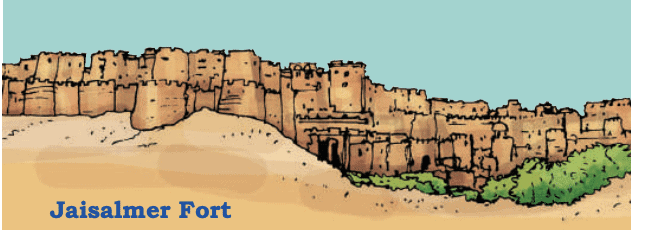
 Collecting shells
 Shree Jagannath Temple is a beautiful temple in Puri with huge gates and carvings.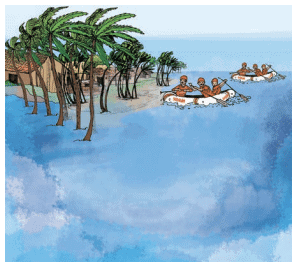
 Mountains have steep slopes and are surrounded by valleys.Narayan’s Diary Entry
  The area is famous for its rich culture, colourful clothes, and lively festivals like Loosong and Namsoong.
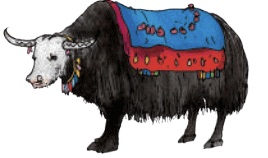 Animals like the yak live in cold mountain areas.
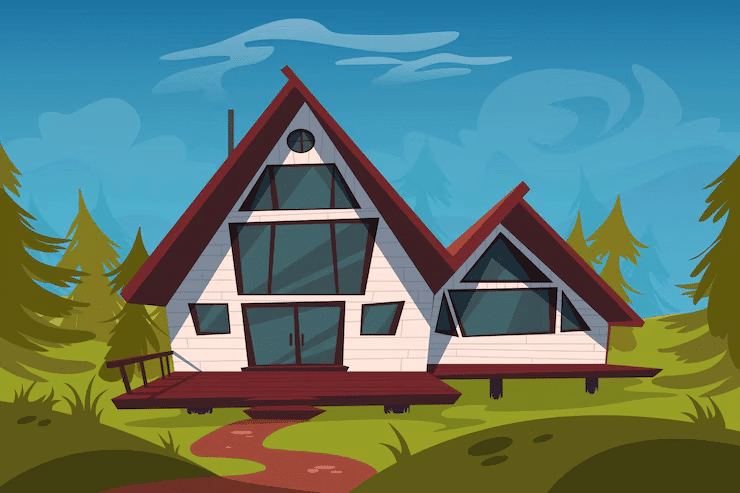 The roofs are slanting so that rain and snow can slide off easily, preventing water from collecting on the roof.