Page No.148- 149
Write
Q. Can you think of something that takes a long time to change, maybe over the years?
Answer: Long-term changes: Mountains growing, trees becoming very big.
Q. What about something that changes within a few years?
Answer: A few years change: Building a new house, learning to ride a bicycle.
Q. Are there changes that happen every year?
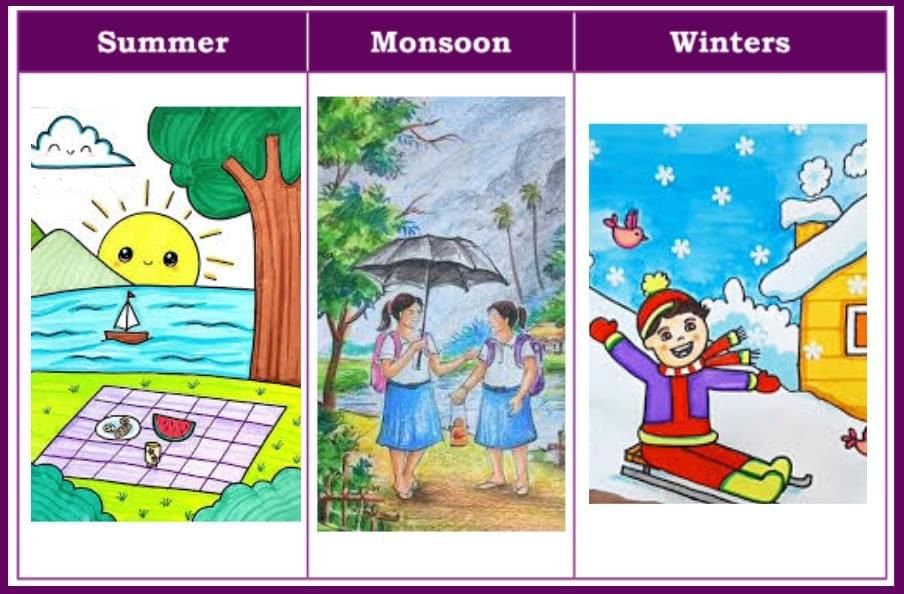
Answer: Yearly changes: Festivals, seasons, school exams.
Q. What changes in just a few minutes or seconds?
Answer: Minutes/seconds changes: Sky turning dark when clouds cover the sun, lights turning on at dusk.
Page Nos. 150
Activity
Answer / Steps:
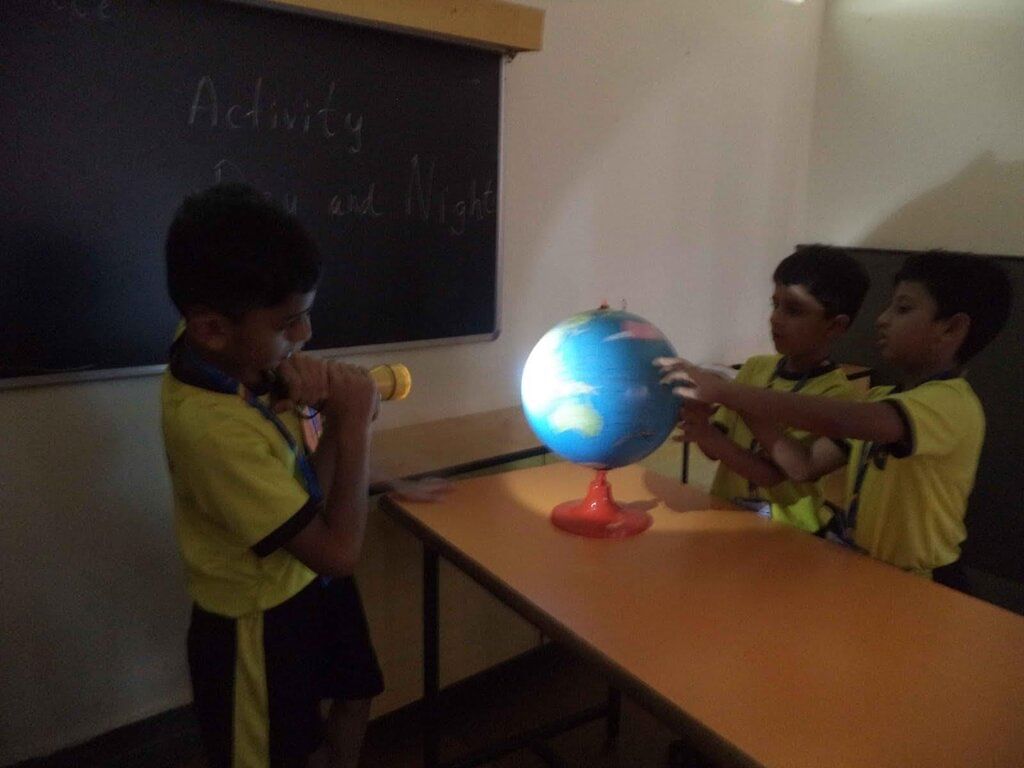
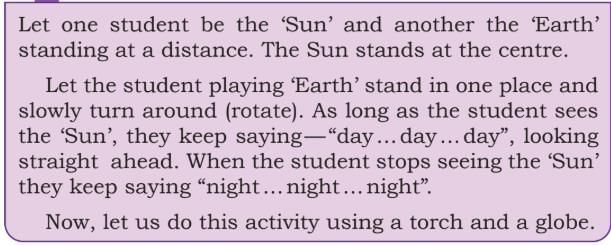
- Place a globe on a table, shine a torch on one side. The lit side is day; the shadow side is night.
- Slowly rotate the globe to see how day changes to night.
- Role-play: One student acts as the ‘Sun’ (torch) and another as the ‘Earth’, rotating and saying “day, day” when facing the sun, and “night, night” when facing away.
Page Nos. 151
Write
Q. Study the globe and write in the space given below, when it is daytime in India, which countries will have night?
Answer: When it is daytime in India, countries located roughly on the opposite side of the Earth experience nighttime due to the Earth’s rotation. For example, when India has daylight, countries like the United States, Canada, Brazil, Mexico, and parts of South America, as well as some regions in Australia and South Africa, will have night. This happens because the Earth rotates on its axis, so the side facing the Sun has day, and the opposite side has night. Thus, while India is in daytime, many Western countries in the Americas are in nighttime.
Page No. 157
Write
Q. How do you feel when the season changes? Would you like one season to continue all year? Why or why not?
Answer (Sample): All students should write their opinions about how they feel
- I feel happy when seasons change because it brings new things like different clothes and foods.
- I would not want one season all year because change makes life interesting and helps plants and animals grow properly.
Discuss
Q. Winter in Kerala is different from winter in Kashmir. Monsoon in Assam is different from Rajasthan. Why?
Answer:
- Kerala is near the equator, so its winters are warm and rainy. Kashmir is in the mountains, so winter is very cold and snowy there.
- Assam gets heavy monsoon rains because of its hills and location, but Rajasthan is a desert with very little rain due to its dry climate.
Page No.: 159- 160
Let us reflect
Q1. Narrate your experiences with season changes.
Answer (Sample): I notice summer is very hot, so we eat cold foods and wear light clothes; in winter, we wear woollens and eat hot soups.
Q2. Ask family about seasonal changes over the years and write about differences and possible reasons.
Answer (Sample): My grandparents say winters were longer when they were young, but now it is shorter, possibly due to climate change or urbanisation.
Q3. Find local names for seasons (Spring, Summer, Monsoon, Autumn, Pre-winter, Winter).
Answer (Sample): Local names I found:
Spring: Basant
Summer: Grishma
Monsoon: Varsha
Autumn: Sharad
Pre-winter: Hemant
Winter: Shishir
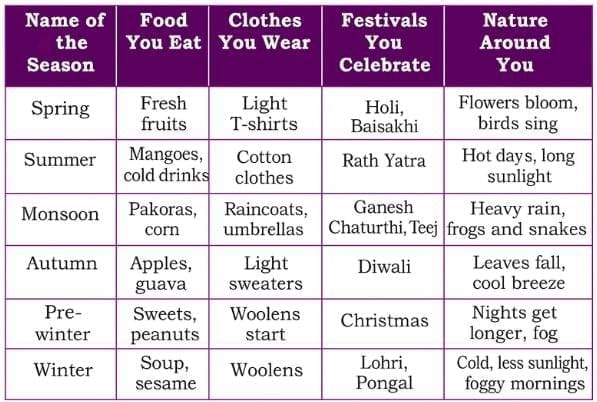
Q4. Fill the table with your observations about food, clothes, festivals, and nature for each season.
Q5. Share your experience of keeping a season’s journal.
Answer (Sample): I enjoyed watching how plants and animals changed each month. In summer, butterflies were everywhere, and in monsoon, I saw more frogs and mushrooms in the garden.