Table of contents
Multiple Choice Questions
Q1: Romanticism refers to
(a) cultural movement
(b) religious movement
(c) political movement
(d) literary movement
Ans: (a)
Romanticism was a cultural movement that originated in the late 18th century in Europe. It emphasized emotion, individualism, nature, and glorified the past, especially the medieval era, opposing the rationalism of the Enlightenment.
Q2: In Prussia, who was referred to as ‘Junkers’?
(a) Military officials
(b) Large landowners
(c) Factory owners
(d) Aristocratic nobles
Ans: (b)
The term ‘Junkers’ was used for the wealthy, conservative landowning class in Prussia. They held significant political power and supported the monarchy and military traditions.
Q3: Who among the following was proclaimed the first King of United Italy?
(a) Nicholas II
(b) King George II
(c) Wilhelm IV
(d) Victor Emmanuel II
Ans: (d)
Victor Emmanuel II was the King of Sardinia-Piedmont and became the first King of a unified Italy in 1861. He played a key role in the Italian unification movement.
Q4: A large number of people were hostile to the Napoleonic code because
(a) it was not suitable for all.
(b) it destroyed the special privileges of the rulers.
(c) administrative changes did not go hand-in-hand with political freedom.
(d) none of the above.
Ans: (c)
Although the Napoleonic Code introduced modern laws and administrative reforms, it often ignored democratic principles. People resented the lack of political freedom and imposition of French control.
Q5: Who, among the following, hosted the Congress at Vienna in 1815?
(a) King of the Netherlands
(b) Giuseppe Mazzini
(c) Duke Metternich
(d) Otto von Bismarck
Ans: (c)
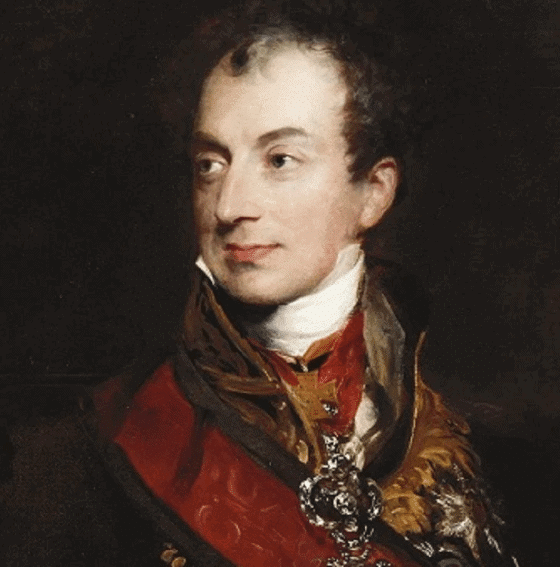
The Congress of Vienna was hosted by Duke Metternich. It aimed to restore monarchies and balance power in Europe after Napoleon’s defeat.
Very Short Answer Questions
Q1: Who remarked, “When France sneezes, the rest of Europe catches a cold”.
Ans: Duke Metternich.
Q2: Name the Treaty of 1832 that recognised Greece as an independent nation.
Ans: Treaty of Constantinople (1832).
Q3: What was the main aim of the revolutionaries of Europe during the years following 1815?
Ans: To oppose monarchical forms of government.
Q4: Who was proclaimed German Emperor in a ceremony held at Versailles in January 1871?
Ans: Kaiser William I of Prussia was proclaimed German Emperor in a ceremony held at Versailles in January 1871.
Q5: Name the event that mobilised nationalist feelings among the educated elite across Europe in 1830-1848.
Ans: The Greek War of Independence in 1821.
Short Answer Type Questions
Q1: Explain the contribution of Otto von Bismarck to German unification.
Ans: Otto von Bismarck played a significant role in the German unification process as nationalist sentiments gained traction among middle-class Germans in 1848. During this period, there was a concerted effort to unite various regions of the German Confederation into a single nation-state, aiming for a government with elected representatives. Unfortunately, this liberal movement faced suppression from a coalition of monarchy and military forces, backed by Prussian landowners.
Q2: Describe any three reforms introduced by Napoleon in the territories he conquered.
Ans: Napoleon implemented three key reforms in the territories he conquered:
- The Napoleonic Code: This legal framework eliminated birth-based privileges, ensuring equality before the law and safeguarding property rights.
- Administrative Simplification: Napoleon streamlined administrative divisions, abolished the feudal system, and emancipated peasants from serfdom and manorial dues.
- Standardization Measures: He established uniform laws, standardized weights and measures, and introduced a common national currency to facilitate the seamless movement and exchange of goods and capital across different regions.
Q3: How did nationalism develop through culture in Europe? Explain.
Or
Describe the role of culture in shaping the feelings of nationalism in Europe from 1830 to the end of the 19th century.
Ans:(i) Culture played a pivotal role in fostering nationalist sentiments, with art, poetry, and music serving as mediums for expressing such feelings. The cultural movement of Romanticism, which prioritized emotions over reason, played a significant role in shaping nationalist ideals.
(ii) Language also played a crucial role in nurturing nationalism. In the face of Russian occupation, the Polish resistance adopted language as a tool of national defiance after an armed rebellion against Russian rule in 1831.
(iii) Additionally, music and dance played a role in popularizing the spirit of the nation. Romantics like the German philosopher Herder emphasized the importance of discovering true national culture among the common people, or “das volk,” through folk songs, poetry, and dances.
Q4: Explain the conditions that were viewed as obstacles to the economic exchange and growth by the new commercial classes during the nineteenth century in Europe.
Ans:
- Liberalism in the economic sphere championed free markets and the removal of state-imposed restrictions on the movement of goods and capital.
- In the 19th century, Napoleon’s administrative measures consolidated numerous small principalities into a confederation of 39 states.
- Each state had its currency, weights, and measures, creating a fragmented economic landscape.
- Merchants travelling from Hamburg to Nuremberg, for example, encountered 11 custom barriers, with a 5% duty at each checkpoint.
- Diverse regional systems of weights and measures added complexity, requiring time-consuming calculations.
- The new commercial classes saw these conditions as impediments to economic growth and exchange.
- Advocates argued for the establishment of a unified economic territory to enable the free movement of goods, people, and capital.
Q5: Describe three economic hardships faced by Europe in the 1830s.
Ans: In the 1830s, Europe faced significant economic hardships, which can be summarised as follows:
- Widespread Unemployment: Many countries experienced a surplus of job seekers, leading to high levels of unemployment. Urban areas became overcrowded as people migrated from rural regions in search of work.
- Intense Competition: Small producers struggled against cheap, machine-made goods imported from England. The rapid industrialisation in England, particularly in textile production, outpaced the capabilities of local producers on the continent.
- Feudal Burdens: In areas where the aristocracy held power, peasants were burdened by feudal dues and obligations. Rising food prices and poor harvests worsened their situation, contributing to widespread poverty.
Long Answer Type Questions
Q1: Describe the ideology of liberalism during the early 19th century.
Ans: Liberalism in the early 19th century represented a significant shift in political thought, particularly for the new middle classes. It was characterised by several key principles:
- Individual Freedom: Liberalism advocated for the freedom of the individual and equality before the law.
- Government by Consent: It emphasised that governments should operate with the consent of the governed.
- End of Autocracy: The ideology called for the abolition of autocratic rule and clerical privileges.
- Property Rights: It upheld the inviolability of private property and supported free markets without state restrictions.
The term ‘liberalism’ comes from the Latin word liber, meaning ‘free’. For the middle classes, it symbolised:
- A demand for political rights, although initially limited to property-owning men, excluding the lower classes and women.
- Inspiration from the French Revolution, which highlighted the need for constitutional and representative government.
Despite its focus on equality, liberalism did not advocate for universal suffrage. The right to vote was primarily reserved for men with property, reflecting the social hierarchies of the time. Overall, early 19th-century liberalism laid the groundwork for modern democratic principles, influencing future movements for broader political rights.
Q2: What was the status of France as a state before 1789? Which two political and constitutional changes came in the wake of the French Revolution?
Ans. Before 1789, France was a territorial state governed by an absolute monarch.
- The French Revolution shifted power from the monarchy to the citizens of France.
- It established that the people would now form the nation and determine its future.
The revolutionaries introduced several key changes:
- They fostered a sense of collective identity among the French.
- They promoted the ideas of la patrie (the fatherland) and le citoyen (the citizen), highlighting equal rights.
- A new national flag, the tricolour, replaced the royal standard.
- The Estates General was reformed into the National Assembly, elected by active citizens.
- New hymns and oaths were created, commemorating martyrs in the name of the nation.
- A centralised administration was established, implementing uniform laws across the territory.
- Internal customs duties were abolished, and a standard system of weights and measures was adopted.
- Regional dialects were discouraged, promoting the use of French as the common language.
Q3: What happened during the year following 1815 when the fear of repression drove many liberal nationalists underground? Explain.
Ans: (i) Secret societies sprang up in many European states to train revolutionaries and spread their ideas.
(ii) To be revolutionary at this time meant a commitment to oppose monarchical forms that had been established after the Vienna Congress, and to fight for liberty and freedom.
(iii) Most of these revolutionaries also saw the creation of nation-states as a necessary part of this struggle for freedom. One such individual was the Italian revolutionary Giuseppe Mazzini.
(iv) He subsequently founded two more underground societies, first, Young Italy in Marseilles, and then, Young Europe in Berne, whose members were like-minded young men from Poland, France, Italy, and the German states.
(v) Mazzini believed that God had intended nations to be the natural units of mankind. So, Italy could not continue to be a patchwork of small states and kingdoms. It had to be forged into a single unified republic within a wider alliance of nations.
(vi) This unification alone could be the basis of Italian liberty. Following his model, secret societies were set up in Germany, France, Switzerland, and Poland.
(vii) Mazzini‘s relentless opposition to monarchy and his vision of democratic republics frightened the conservatives. Metternich described him as ‘the most dangerous enemy of our social order’.
Q4:Explain the process of unification of Italy.
Ans:
- Italy had a history of political fragmentation, with Italians scattered across dynastic states and the Habsburg Empire.
- The country was divided into seven states, and the Italian language lacked a common form.
- Giuseppe Mazzini played a key role in unification, forming the secret society ‘Young Italy’ to promote his goal of a unified republic.
- Mazzini believed that Italy should not remain a patchwork of small states and needed to be forged into a single, unified republic.
- After unsuccessful uprisings in 1831 and 1848, the responsibility for unification shifted to Sardinia-Piedmont under Emmanuel II.
- Chief Minister Cavour, under Emmanuel II’s rule, successfully defeated Austrian forces in 1859.
- Cavour, through diplomatic alliances with France, overcame Austrian forces, and Giuseppe Garibaldi also joined the cause.
- In 1860, they marched towards South Italy and the Kingdom of the Two Sicilies, with local peasant support, driving out the Spanish rulers.
- In 1861, Victor Emmanuel II was proclaimed the King of a United Italy.
Q5: Describe the process of the Unification of Britain.
Or
How has Britain come into existence? Explain.
Ans: Nationalism in Britain differed from that in the rest of Europe in several key aspects:
- Gradual Evolution: Unlike many European nations, British nationalism did not emerge suddenly through uprisings or revolutions but developed over an extended period.
- Ethnic Diversity: Before the 18th century, there was no unified British nation; instead, the British Isles housed distinct ethnic groups such as the English, Welsh, Scots, and Irish. The English, gaining wealth and influence, gradually extended their dominance over other nations, including Scotland.
- English Dominance: The British Parliament, largely composed of English members, sought to suppress Scotland’s unique culture and political institutions. This led to restrictions on language, dress, and the expulsion of many Scots.
- Bloodless Revolution: In 1688, a bloodless revolution saw the English Parliament wrest power from the monarchy, establishing itself as the focal point of a nation-state.
- Incorporation of Scotland and Ireland: The Act of Union in 1707 brought Scotland into the United Kingdom, while Ireland, despite opposition, was forcibly incorporated in 1801.
- Parliamentary Action: The formation of the British nation was achieved primarily through parliamentary actions rather than through revolutions or wars.
- Cultural Propagation: The creation of a new ‘British Nation’ involved the promotion of English culture. Symbols like the Union Jack, the national anthem “God Save Our Noble King,” and the English language were emphasized, with the older nations becoming subordinate partners in the Union.
Passage
Q6: Read the extract and answer the questions that follow.
By the last quarter of the nineteenth century, nationalism no longer retained its idealistic liberal democratic sentiment of the first half of the century but became a narrow creed with limited ends. During this period nationalist groups became increasingly intolerant of each other and ever ready to go to war. The major European powers, in turn, manipulated the nationalist aspirations of the subject peoples in Europe to further their imperialist aims. The most serious source of nationalist tension in Europe after 1871 was the area called the Balkans. The Balkans was a region of geographical and ethnic variation comprising modern-day Romania, Bulgaria, Albania, Greece, Macedonia, Croatia, Bosnia-Herzegovina, Slovenia, Serbia and Montenegro, whose inhabitants were broadly known as the Slavs. A large part of the Balkans was under the control of the Ottoman Empire. The spread of the ideas of romantic nationalism in the Balkans, together with the disintegration of the Ottoman Empire, made this region very explosive. All through the nineteenth century the Ottoman Empire had sought to strengthen itself through modernization and internal reforms but with very little success. One by one, its European subject nationalities broke away from its control and declared independence. The Balkan peoples based their claims for independence or political rights on nationality and used history to prove that they had once been independent but had subsequently been subjugated by foreign powers. Hence the rebellious nationalities in the Balkans thought of their struggles as attempts to win back their long-lost independence. As the different Slavic nationalities struggled to define their identity and independence, the Balkan area became an area of intense conflict. The Balkan states were fiercely jealous of each other and each hoped to gain more territory at the expense of the others. Matters were further complicated because the Balkans also became the scene of big power rivalry. During this period, there was intense rivalry among the European powers over trade and colonies as well as naval and military might. These rivalries were very evident in the way the Balkan problem unfolded. Each power – Russia, Germany, England, and Austro-Hungary – was keen on countering the hold of other powers over the Balkans and extending its control over the area. This led to a series of wars in the region and finally the First World War.
Questions: (i) Why did the major European powers manipulate the nationalist aspirations of the subject peoples in Europe by the last quarter of the nineteenth century?
(ii) What was the basis of the Balkan people regarding their claim for independence?
(iii) State any two reasons that led to a series of wars in the Balkan region and finally the First World War.
Ans. (i) The major European powers manipulated the nationalist aspirations of the subject people in Europe by the last quarter of the nineteenth century to fulfill their imperialistic aims.
(ii) The Balkan peoples based their claims for independence or political rights on nationality and used history to prove that they had once been independent but had subsequently been subjugated by foreign powers. Hence, the rebellious nationalities in the Balkans thought of their struggles to win back their long-lost independence.
(iii) Two major reasons that led to a series of wars in the Balkan region and finally the
First World War:
(a) The Balkan area had become an area of intense conflict. The Balkan states were fiercely jealous of each other and each hoped to gain more territory at the expense of the others. Matters were further complicated because the Balkans also became the scene of big power rivalry.
(b) During this period, there was intense rivalry among the European powers over trade and colonies as well as naval and military might. These rivalries were very evident in the way the Balkan problem unfolded. Each power was keen on countering the hold of other powers over the Balkans and extending its control over the area.