Introduction
In this chapter, we will explore the fascinating world of numbers through the lens of wildlife conservation. India is home to some of the most magnificent endangered animals – elephants, tigers, and leopards. As we learn about these majestic creatures, we’ll also discover interesting mathematical concepts like number patterns, addition techniques, and place value.
Let’s begin our adventure with elephants, tigers, and leopards while sharpening our mathematical skills!
NIM Game (2 Player Game)
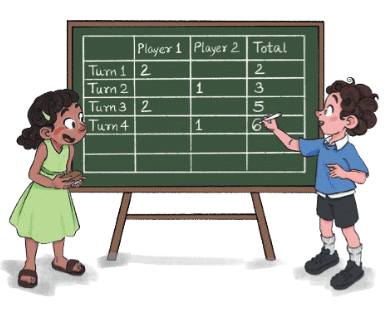
The NIM Game is a fun and easy math game where two players take turns adding numbers to reach a target number. In this version, the target number is 10.
How to Play:
- Player 1 starts the game by choosing either 1 or 2.
- Player 2 then chooses 1 or 2, and adds it to Player 1’s number.
- Players keep taking turns, adding 1 or 2 to the total.
- The player who makes the total reach exactly 10 is the winner.
Example:
- Player 1 starts with 1.
- Player 2 adds 2 → total becomes 3.
- Player 1 adds 1 → total becomes 4.
- Player 2 adds 2 → total becomes 6.
- Player 1 adds 2 → total becomes 8.
- Player 2 adds 2 → total becomes 10 and wins!
Addition Chart
Mathematics is full of patterns! Let’s explore some fascinating patterns in addition.
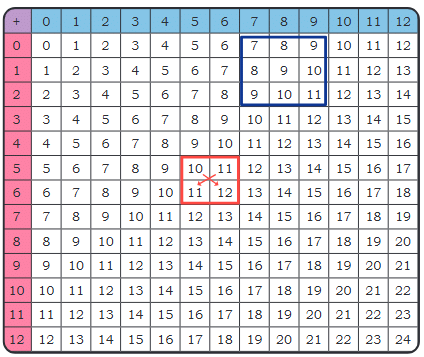
This is an Addition Chart. It helps you add numbers quickly and spot interesting patterns in math.
How to Use It:
- Look at the pink numbers on the left and the blue numbers on the top.
- These are the numbers you want to add.
- To find the answer, go across the row and down the column — where they meet is your answer!
Example:
To add 3 + 4:
- Find 3 on the left (pink row).
- Find 4 at the top (blue column).
- Where they meet, the number is 7.
So, 3 + 4 = 7
What Can You Discover?
1. Patterns in the Chart
- The numbers go up by 1 in each row and each column.
- The diagonal from top left to bottom right shows: 0, 2, 4, 6, 8, 10…
These are even numbers — a fun pattern!
2. Find the Number 9
- Look carefully — how many times can you see 9 in the chart?
- You will find 4 nines:
- 0 + 9
- 1 + 8
- 2 + 7
- 3 + 6
And also 4 + 5
- This shows there are many ways to make the same number by adding different numbers!
3. Even and Odd Patterns
- Some rows and columns show even numbers (like 2, 4, 6…).
- Some show odd numbers (like 1, 3, 5…).
- When you add:
- Even + Even = Even
- Odd + Odd = Even
- Even + Odd = Odd
Try yourself:
What is the target number players aim to reach in the NIM Game?
- A.7
- B.10
- C.12
- D.5
View Solution
Reverse and Add
Let’s play with numbers in a different way! What happens when we reverse digits and add them?
a) Take a 2-digit number say, 27. Reverse its digits (72). Add them (99). Repeat for different 2-digit numbers.
Example:
- 27 → Reverse → 72
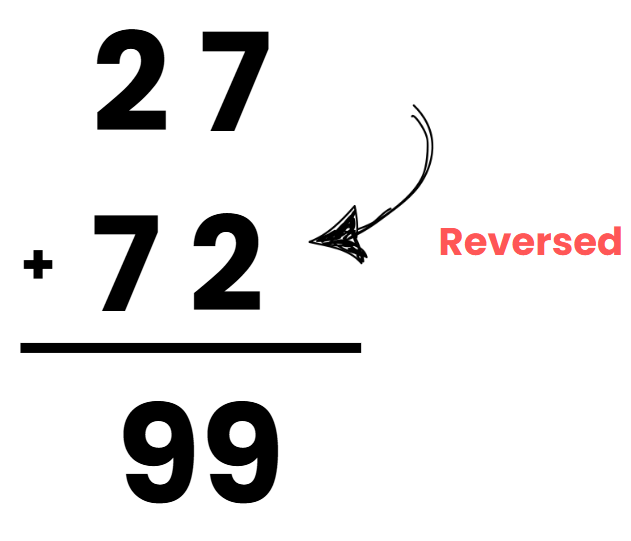 27 + 72 = 99
Try with other numbers:
- 36 → Reverse → 63
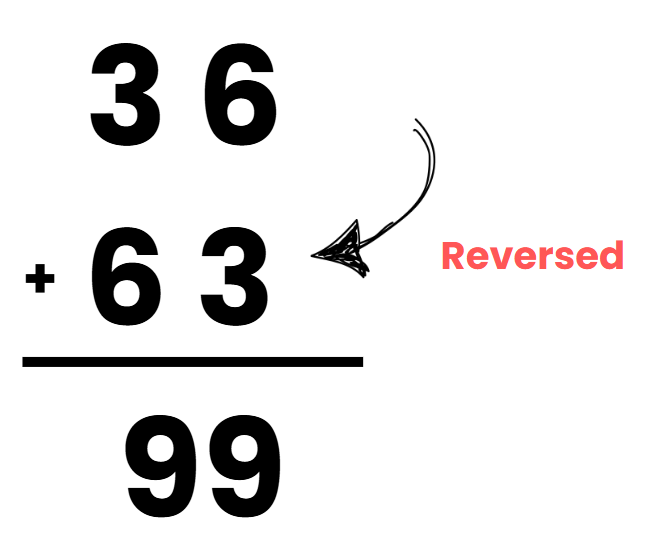 36 + 63 = 99
b) Can we get a 3-digit sum? What is the smallest 3-digit sum that we can get?
Let’s try:
- 45 + 54 = 99 (not 3 digits)
- 46 + 64 = 110 (3 digits!)
- 50 + 05 = 55 (not 3 digits)
So the smallest 3-digit sum we can get is 100, from adding 19 + 81 or 29 + 92 or 39 + 93, etc.
How Many Animals?
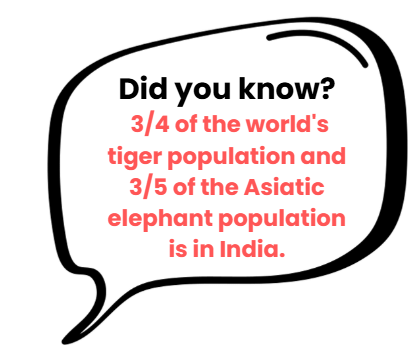
India is rich in biodiversity. It is home to some of the endangered wildlife, like elephants, tigers and leopards.
Elephant Population
- The population of elephants in Karnataka is 6049 and in Kerala is 3054. How many total elephants are there in these two states?
Sol: 6049 + 3054
= 9 Th + 9 T + 13 O
= 9 Th + 1 H + 0 T + 3 O
= 9103
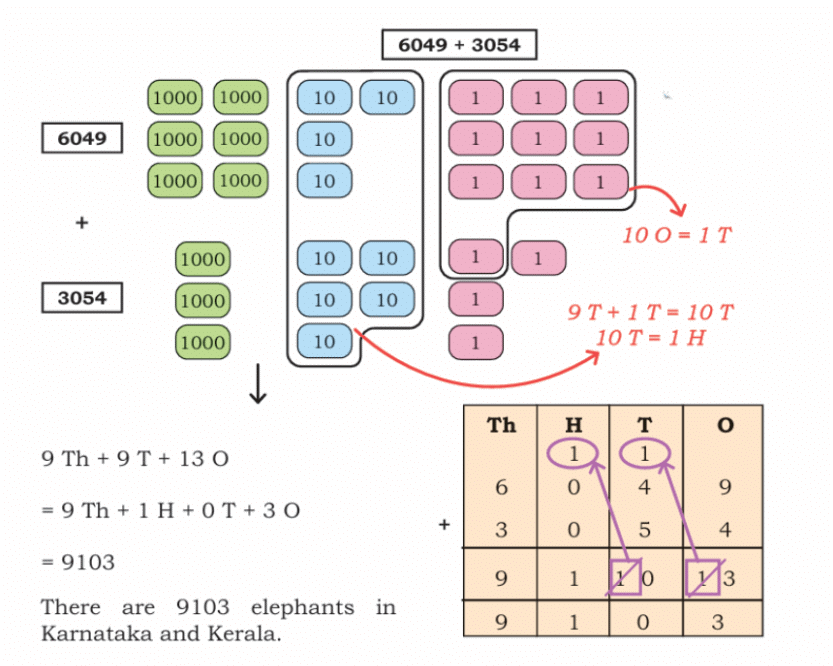
There are 9103 elephants in Karnataka and Kerala.
This activity teaches you how to add large numbers using place value and regrouping (carrying).
- You add numbers starting from the ones place, then move to tens, hundreds, and thousands.
- If the sum in one place is 10 or more, you carry to the next place.
- Place value blocks help you understand how numbers group together (like 10 ones = 1 ten).
Leopard Population
- The highest number of leopards are found in three states. Gujarat has 1355, Karnataka has 1131 and Madhya Pradesh has 1817. How many total leopards are there in these states?
Sol: 1355 + 1131 + 1817
= 3 Th + 12 H + 9 T + 13 O
= 4 Th + 2 H + 10 T + 3 O
= 4 Th + 3 H + 0 T + 3 O
= 4303
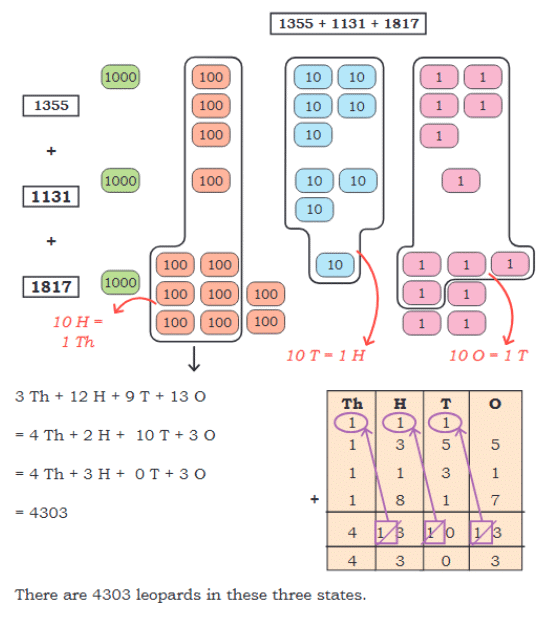
There are 4303 leopards in these three states.
More or Less?
We are going to learn how to subtract big numbers using place value blocks and regrouping (borrowing).
1. Assam has 5719 elephants. It has 3965 more elephants than Meghalaya.
We want to find out how many elephants are in Meghalaya.
To find this, we do: 5719 − 3965 = ?
Sol: We use place value blocks to show the numbers:
- Thousands (Th)
- Hundreds (H)
- Tens (T)
- Ones (O)
Step 1: Start from Ones
- 9 − 5 = 4 → No borrowing needed.
Step 2: Go to Tens
- We have 1 ten but need to take away 6 tens.
- So, we borrow 1 hundred → now we have 11 tens.
Step 3: Subtract Hundreds
- After borrowing, hundreds change from 7 to 6
- But 6 − 9 is not possible → borrow 1 thousand.
Step 4: Subtract Thousands
- After borrowing, subtract easily
So, we finally get:5719 − 3965 = 1754
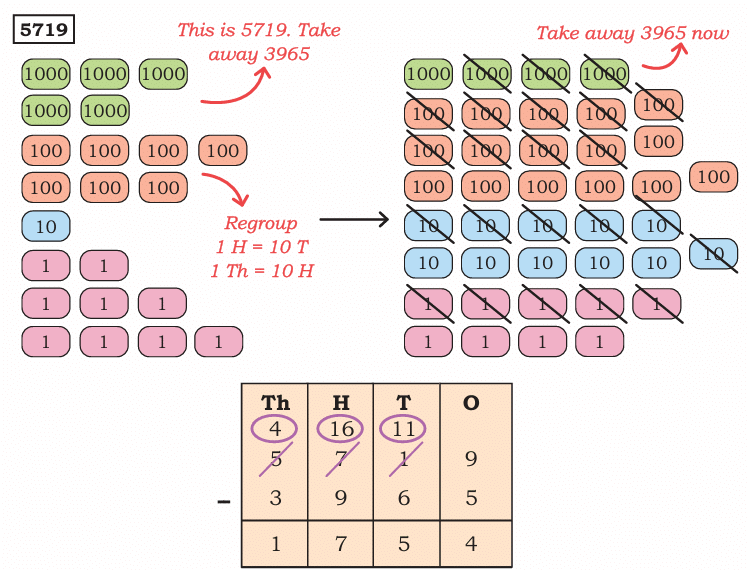
That means there are 1754 elephants in Meghalaya.
Try yourself:
What is the smallest 3-digit sum that can be obtained by reversing and adding numbers?
- A.110
- B.99
- C.100
- D.105
View Solution
ConclusionIn this chapter, we went on a math safari with elephants, tigers, and leopards!
We used real information about animals in India to learn how to:
- Add and subtract big numbers
- Use place value to solve problems
- Play with number patterns and reversing digits
- Think ahead using strategy games like NIM
We also learned how math helps in real life, like counting animals and understanding data about wildlife.
So next time you see a number, a tiger fact, or even a puzzle — remember:
Math is not just in books… it’s all around us!
Some Solved Examples
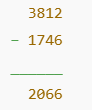
Example 1: There were 3812 parrots in a sanctuary. After migration, 1746 parrots flew away.
How many parrots are still there?
Sol:
2066 parrots are still in the sanctuary.
Example 2: Find a 2-digit number and its reverse that give a 3-digit sum.
Sol: Try: 46 and 64
46 + 64 = 110 → This is a 3-digit number.
Example 3: Look at this number pattern:
5, 10, 15, ___, 25, ___
Fill in the blanks.
Sol: The pattern increases by 5.
So, missing numbers are: 20 and 30.
⇒ 5, 10, 15, 20, 25, 30.