Reflect and Respond
I. Work in pairs. Discuss the difference between Olympics, Special Olympics, and Paralympics.

Ans:
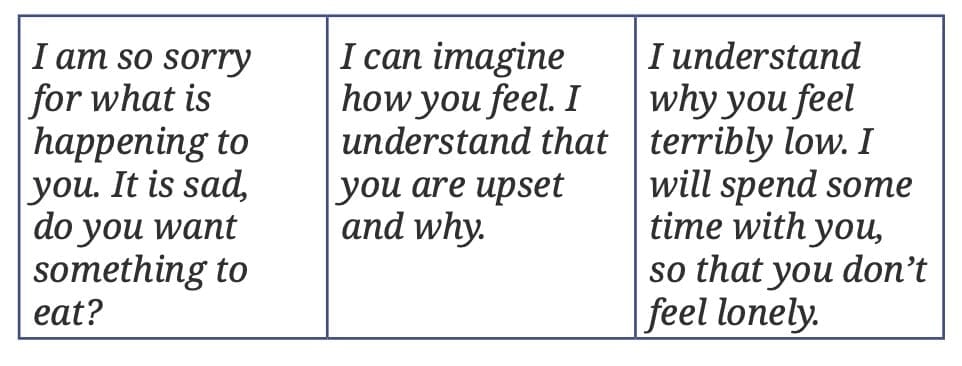
II. Work in pairs to match the words ’empathy’, ‘sympathy’, and ‘compassion’ to the sentences given in the table.

Ans:
III. Work in pairs. List the words you associate with ’empathy’. Share your responses with your classmates and teacher.
Ans:
Words associated with empathy: understanding, compassion, kindness, sensitivity, care, consideration, awareness, warmth, acceptance, patience, solidarity, inclusion, support, listening, humanity, and selflessness.
Check Your Understanding
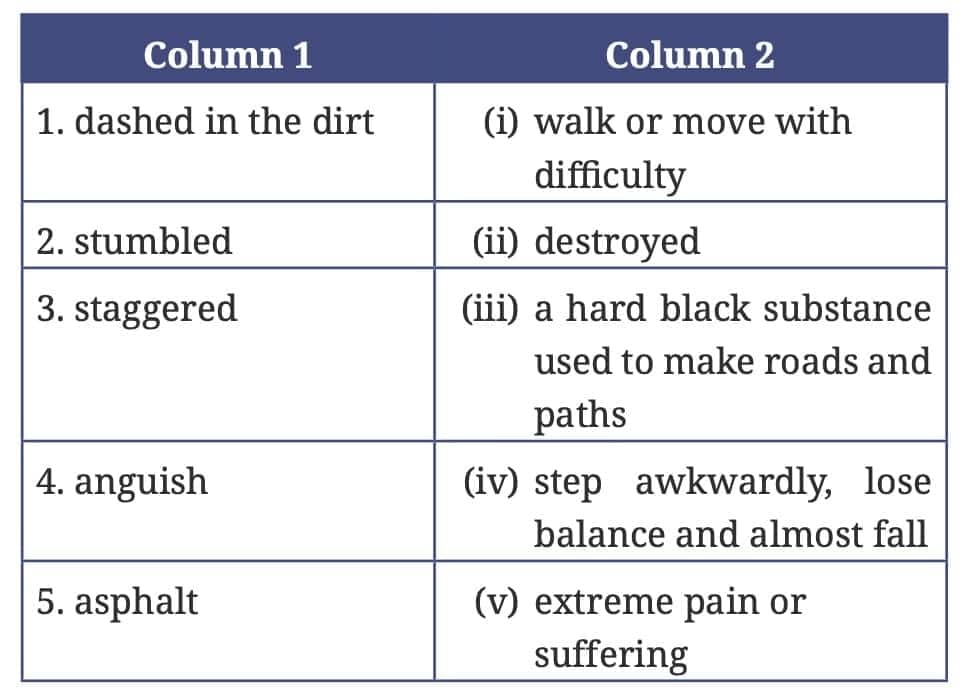
I. Work in pairs. Match the words and phrases in Column 1 with their meanings in Column 2.
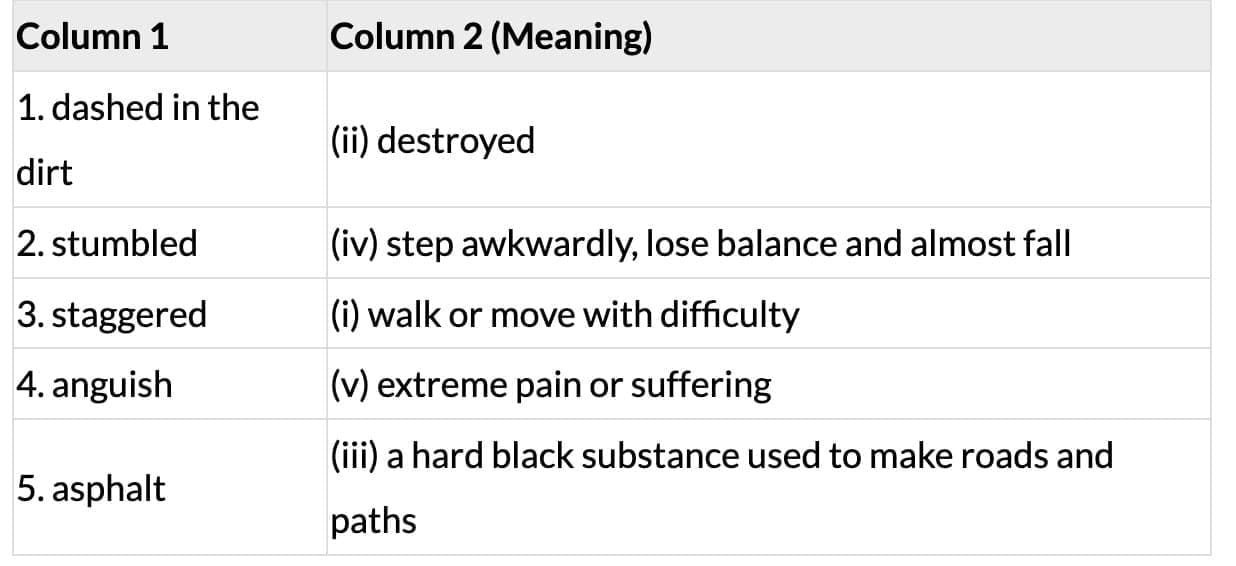
Ans:
II. Identify the gist of each stanza. Write the number of the stanza in the boxes given.
Ans:
Gist 1 → Stanza 2
Gist 2 → Stanza 4
Gist 3 → Stanza 8
Gist 4 → Stanza 3
Gist 5 → Stanza 1
Gist 6 → Stanza 6
Gist 7 → Stanza 7
Gist 8 → Stanza 5
III. Let us appreciate the poem.
1. Two examples of alliteration from the poem are (i) __________ and (ii) __________.
Ans:
(i) “stumbled and staggered” — repetition of the ‘s’ sound, mimicking the unsteady movement of the fallen runner.
(ii) “gold… games” — repetition of the ‘g’ sound in the first stanza. (Other valid examples: “resolved… runners,” “beaming… banner”)
2. Give three examples of visual imagery from the poem.
Ans:
- (i) “Nine resolved athletes in the back of the starting line / Poised for the sound of the gun” — athletes crouched at starting blocks, tense and focused.
- (ii) “The smallest among them, he stumbled and staggered / And fell to the asphalt instead” — a small figure crashing to the hard road surface.
- (iii) “They came to the finish line holding hands still / And a standing ovation and nine beaming faces” — nine athletes crossing hand-in-hand while the crowd rises to applaud.
3. Give an example of auditory imagery from the poem.
Ans:
“The signal was given, the pistol exploded” — the word “exploded” evokes the sharp, sudden crack of the starting pistol. (Also valid: “He gave out a cry of frustration and anguish.”)
4. How does the use of imagery make the poem more appealing?
Ans:
Imagery transforms the poem from a simple narrative into an immersive sensory experience. Visual imagery (athletes at the blocks, the fall onto asphalt, nine beaming faces) lets the reader see the events as if watching in real time. Auditory imagery (the pistol exploding, the cry of anguish) makes the scene feel urgent. Together, the images help the reader not just understand but feel the poem — making the central message of empathy and inclusion deeply moving rather than merely stated.
5. How does the poet’s tone change from the beginning to the end of the poem?
Ans:
The tone begins anticipatory and energetic — building competitive excitement as athletes prepare to race. It shifts to tense and sympathetic when the smallest runner falls. As the eight others return to help, the tone becomes warm and uplifting. By the final stanza, the tone is celebratory and reverential — filled with quiet awe at what the nine athletes have demonstrated together.
6. What is the overall mood created by the poem?
Ans:
The overall mood is warmly inspiring and emotionally uplifting. Despite a brief moment of sadness when the young athlete falls, the dominant mood is hope, compassion, and joy — the kind produced when human beings set aside personal ambition to care for one another. There is also quiet wonder at the unexpected turn, and deep admiration for the collective humanity shown. The victory is not competitive but spiritual — the victory of kindness over competition.
7. What is the message being conveyed by the poem?
Ans:
The central message is that empathy, compassion, and collective support are more valuable than individual achievement. The eight athletes who abandon their chance at gold to help their fallen competitor show that true sportsmanship lies in lifting others up, not defeating them. The poem also celebrates the spirit of the Special Olympics — where inclusion and shared humanity take priority over rankings. The greatest victories are not won alone, but together.
Critical Reflection
I. Read the extracts given below and answer the questions that follow.
Extract 1
The eight other runners pulled up on their heels
The ones who had trained for so long to compete
One by one they all turned round and went back to help him
And brought the young boy to his feet.
(i) Select the correct option to complete the sentence. The phrase ‘pulled up on their heels’ means that the runners _______.
- A. moved aside
- B. stopped running
- C. tried to run faster
- D. jumped ahead
Ans: B. stopped running.
“Pulled up on their heels” means they abruptly stopped — pulling back onto one’s heels is the physical action of halting suddenly.
(ii) Mention one character trait common to all the eight other runners.
Ans:
Empathy / compassion / selflessness. Despite months of training and the goal of winning, each runner chose to abandon their personal ambition and return to help — a spontaneous, unanimous act of fellow-feeling that placed another’s dignity above their own.
(iii) What is the tone of the poet in these lines?
Ans:
The tone is warm, admiring, and deeply moved. The measured, deliberate narration (“one by one they all turned round”) conveys immense respect for what the runners spontaneously chose to do, with a gentle tenderness in the final image of the young boy being brought back to his feet.
(iv) How might the young athlete have felt on being helped by the others?
Ans:
Initially overcome with frustration and anguish at his fall, the young athlete would have experienced a rapid shift when he saw the eight others stop and return for him — feeling a surge of gratitude, relief, and deep emotional warmth. The kindness of competitors reaching down to lift him would have transformed his moment of greatest humiliation into one of the most memorable experiences of his life. He likely felt valued, included, and no longer alone.
(v) Would you consider this incident as a turning point in the poem? If yes, why? If no, why not?
Ans:
Yes, this is undoubtedly the central turning point. Before it, the poem follows the expected arc of a competitive race. The moment the eight runners stop and return redefines the entire poem — from that point, it is no longer about a race but about human connection and collective compassion. Without this turning point, the poem would be an ordinary description of a race; because of it, it becomes a profound reflection on empathy and the true spirit of sport.
Extract 2
That’s how the race ended, with nine gold medals
They came to the finish line holding hands still
And a standing ovation and nine beaming faces
Said more than these words ever will.
(i) How did the nine contestants feel when they reached the finishing line together?
Ans:
The nine contestants felt joyful, fulfilled, and united — their “beaming” faces suggest radiant, uncontained happiness. It was not the competitive joy of defeating others but the deeper joy of completing the race as one, with compassion and shared purpose. They experienced a collective triumph far richer than any individual gold medal.
(ii) Why do you think all the nine contestants were given gold medals?
Ans:
All nine were given gold medals because they all demonstrated the highest qualities sport can aspire to — courage, perseverance, empathy, and selflessness. The fallen boy showed resilience; the eight others showed extraordinary compassion and sacrifice. In the Special Olympics, where inclusion and shared joy are paramount, all nine were equally deserving. The medals recognised not a finishing position but a quality of character — and all nine possessed that quality fully.
(iii) Complete the sentence appropriately. The holding of hands signifies a feeling of ___________________.
Ans:
…unity, solidarity, mutual support, and collective belonging — a shared recognition that they faced the race not as rivals but as companions, completing it together rather than separately.
(iv) Choose the correct option to complete the sentence. The spectators giving a ‘standing ovation’ indicates that they were _________.
- A. amazed
- B. speechless
- C. distracted
- D. thoughtful
Ans: A. amazed.
A standing ovation expresses deep admiration and emotional engagement — the crowd rose because what they witnessed exceeded all ordinary expectations of a sports event and touched something universal in them.
(v) Explain the last line of the extract.
Ans:
The line “Said more than these words ever will” is both an admission of the limits of language and a testament to the power of human action. The poet says that the standing ovation and beaming faces communicated something so profound that no words — not even the poem itself — can fully capture it. It is the poet’s act of stepping back and acknowledging that at the highest moments of human compassion, language becomes inadequate. The reader is invited to feel what words cannot say.
II. Answer the following questions.
1. Describe how the setting established in the first two stanzas of the poem creates a vivid atmosphere for the events that follow.
Ans:
Stanza 1 establishes that athletes have come from “all over the country” after “many weeks and months of training” — creating a sense of enormous personal investment and high stakes. Stanza 2 adds the watching community — spectators gathered, this is the “final event of the day,” with “excitement… high.” By establishing both the athletes’ inner ambition and the crowd’s collective anticipation, the poet creates an atmosphere of heightened tension that makes the compassion that follows feel all the more surprising and humanly significant by contrast.
2. How do you think the youngest athlete might have felt when he fell?
Ans:
The fall onto asphalt was physically painful, but the emotional pain was far greater. After months of training, he saw those efforts collapse in a single stumble — in front of a watching crowd. He would have felt humiliated, helpless, and defeated. The poem captures this: he “gave out a cry of frustration and anguish” and felt his “dreams and his efforts dashed in the dirt.” This depth of despair makes the compassion that followed all the more transformative.
3. Why were the athletes eager to begin the race?
Ans:
The athletes had invested “many weeks and months of training” and travelled from “all over the country” — the hundred-yard dash was the culmination of everything they had worked for. The poem describes them as “nine resolved athletes,” showing intense determination and focus. For athletes with intellectual disabilities competing at a Special Olympics event, the race also carried the additional emotional significance of being recognised and celebrated as sportspersons — making their readiness even more poignant.
4. What does the transformation of the hundred-yard dash to a walk symbolise?
Ans:
- Victory of compassion over competition: The race, which existed to find the fastest runner, was willingly transformed into a shared journey completed in solidarity.
- Inclusion over exclusion: By slowing to the pace of the one who could not run, the others ensured no one was left behind — the very ethos of the Special Olympics.
- How we treat others matters more than how fast we move: The dash — speed and individual achievement — was surrendered in favour of the walk — patience, togetherness, shared purpose.
- Metaphor for life’s journey: We do not always sprint alone; sometimes we walk alongside others and find that the walk is richer than any race.
5. How might the poem be different if the focus was solely on individual achievement rather than collective support?
Ans:
The poem would describe a single winner crossing first, with the fallen boy as a runner who simply failed — unfortunate but irrelevant to the outcome. The nine gold medals would not exist, nor would the standing ovation or the beaming faces. A poem about an individual winner in a race is ordinary; a poem about nine human beings choosing each other over victory is extraordinary. It is the transformation from competition to compassion that makes “Nine Gold Medals” not just a poem about sport but a poem about what it means to be human.
6. How does the poet’s use of language and tone enhance the reader’s engagement with the poem?
Ans:
- Narrative directness: Simple, accessible language makes the poem feel immediate and sincere — like a story told by an eyewitness.
- Emotionally charged vocabulary: Words like “anguish,” “stumbled,” “staggered,” “dashed in the dirt,” and “beaming” place the reader inside the scene.
- Tone shifting: The tone moves from energetic to sympathetic to warmly celebratory — guiding the reader through the same emotional journey as the event itself.
- The closing admission: “Said more than these words ever will” invites the reader to feel beyond the poem, amplifying its impact through restraint.
- Imagery: Vivid sensory images (the pistol exploding, the asphalt, nine hands at the finish line) keep the reader visually and emotionally anchored throughout.
7. What might be the poet’s purpose of writing this poem?
Ans:
- Celebrating the Special Olympics spirit: By immortalising this extraordinary act of empathy in verse, Roth ensures the moment of collective compassion is remembered and honoured.
- Challenging conventional success: In a world that rewards individual achievement, the poem argues that the highest victories are those of the heart — choosing to be with others rather than ahead of them.
- Advocacy for inclusion and dignity: The poem presents athletes with disabilities not as objects of sympathy but as individuals capable of extraordinary moral and sporting greatness.
- A reminder for every reader: The moments in life when we truly win are the moments when we help someone else to their feet.
Vocabulary in Context
I. The phrase ‘standing ovation’ is an example of an adjective–noun collocation. Identify two other similar examples from the poem.

Ans:
Other valid examples: “final event,” “resolved athletes,” “young boy.”
II. Complete the table given below by writing four nouns in Column 2 that collocate with the adjectives in Column 1.
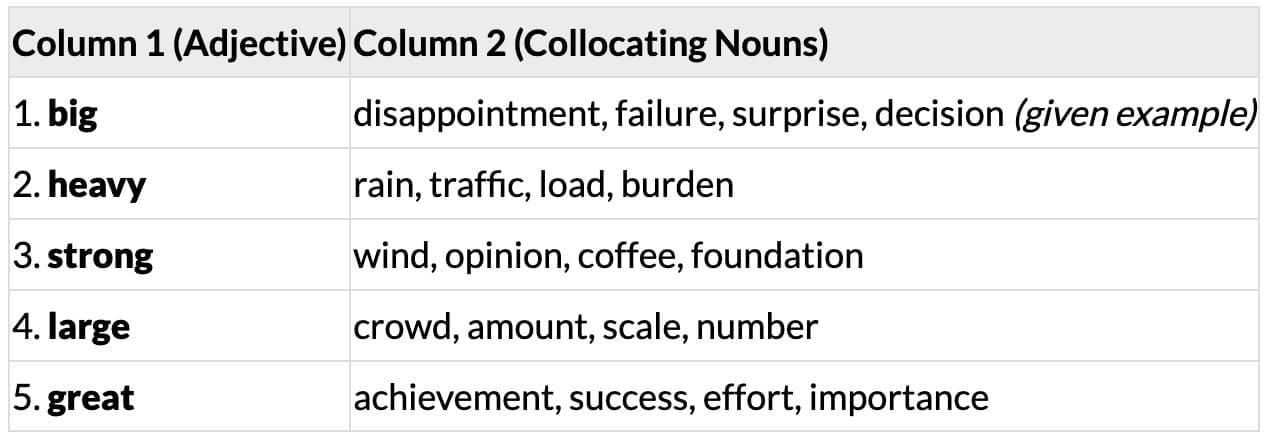
Ans:

III. Choose the correct adjectives from those given in the box for the underlined words given in the sentences below. Ensure you do not use the same adjective twice.
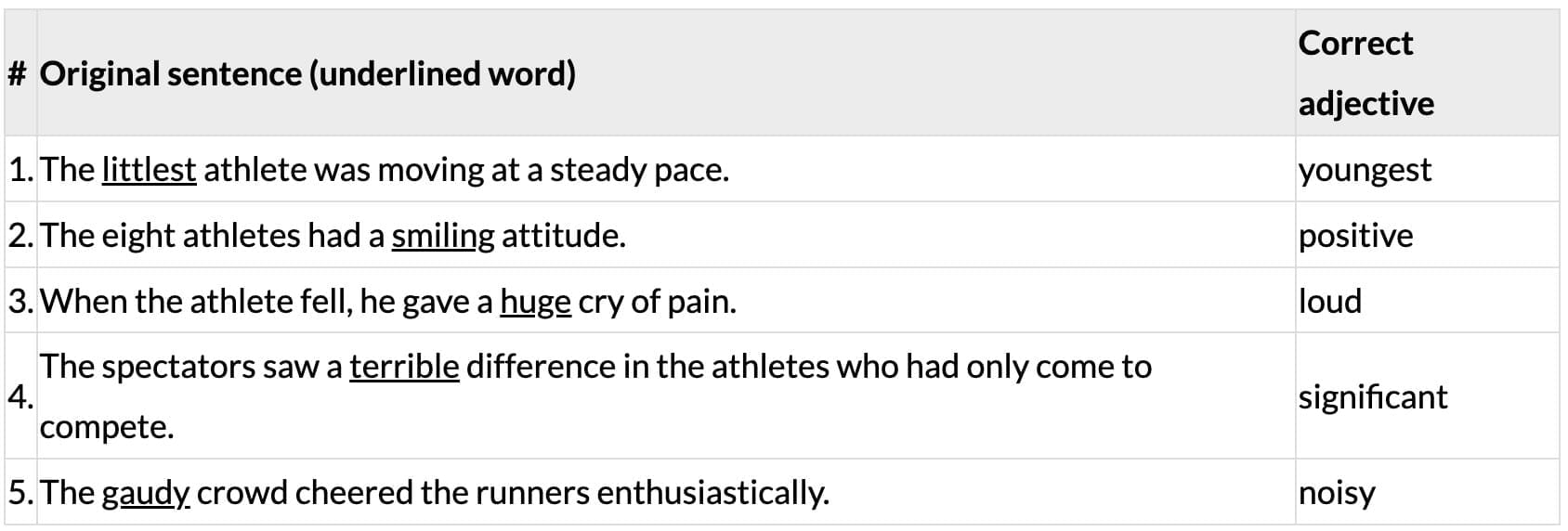
Ans:
️ Speaking Activity
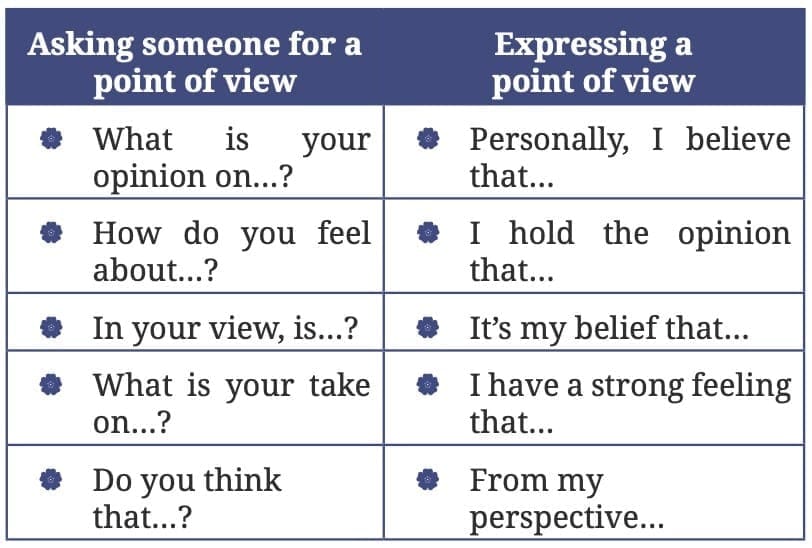
I. Work in pairs. Take turns to express your points of view regarding Special Olympics. Use the key points and sentence starters given.
Ans: Sample Conversation
Student A: What is your opinion on the importance of Special Olympics in today’s world?
Student B: Personally, I believe that the Special Olympics is one of the most important sporting events in the world. It gives athletes with intellectual disabilities the opportunity to train, compete, and be recognised as the capable, talented individuals they are. From my perspective, this does more for inclusion and social acceptance than any awareness campaign could.
Student A: I hold the opinion that the Special Olympics has a transformative impact on the athletes themselves. How do you feel about its effect on sportspersons with special abilities?
Student B: I have a strong feeling that participating in Special Olympics gives athletes a sense of identity, pride, and belonging that they may not always find in everyday social settings. It builds confidence, physical fitness, and lifelong friendships. In your view, is there enough awareness about Special Olympics in our schools and communities?
Student A: It’s my belief that we need to do much more. Most people know about the Olympics and even the Paralympics, but Special Olympics is far less discussed. We could create awareness by inviting Special Olympics athletes to our school, organising inclusive sports days, and sharing stories like the one in the poem.
Writing Task
I. Work in pairs to write three creative slogans on Special Olympics.
Ans: Sample Slogans
Slogan 1: “Every Stride Counts — Special Olympics: Run Your Race!”
Slogan 2: “Different Abilities, One Heart — Win Together.”
Slogan 3: “Special Olympics: Where Every Finish Line Is a Victory.”
Now, create a poster based on the inspiration you have drawn from the poem. (Steps and guidance below)
Ans: Sample Poster Outline
Title (large, bold): NINE GOLD MEDALS — The Race We Run Together
Slogan (central, prominent): Every Stride Counts — Special Olympics: Run Your Race!
Key message: When one of us falls, all of us turn back. Special Olympics celebrates the courage, compassion, and determination of every athlete — because winning is not just crossing the line first; it is crossing it together.
Illustration suggestion: Nine athletes running hand-in-hand toward a finish line, with a cheering crowd and gold medals gleaming above them; the Special Olympics logo centred at the top.
Call to action: Support, Participate, Include — Be a Champion of Change.
Footer: Inspired by “Nine Gold Medals” by David Roth | Special Olympics: Igniting a Universe of Potential
(Students should colour, decorate, and present this as a box-item poster on an A3 sheet, using the Steps to Design a Poster guidelines provided in the textbook.)