Introduction
What if nature itself was part of a family—Sun like a father, Earth as a mother, and Rain as a gentle friend?
In “Harvest Hymn” by Sarojini Naidu, the poet gives voice to grateful villagers who sing in praise of the forces that make life and harvests possible. Through rich and poetic language, the villagers express their thanks to Surya (Sun), Varuna (Rain), Prithvi (Earth), and the Supreme Lord for their roles in giving light, rain, soil, and spirit. It is a song of prayer, unity, and thanksgiving that shows how deeply connected human life is to nature.
About the Poet
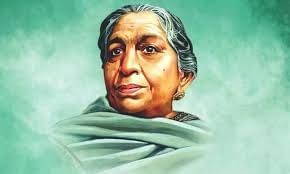
Sarojini Naidu (1879–1949), known as the “Nightingale of India,” was a gifted poet, freedom fighter, and the first woman Governor of an Indian state. She wrote lyrical poems about nature, love, Indian traditions, and national pride. Her poetry is known for its melody, emotional depth, and cultural richness. In “Harvest Hymn,” she blends spiritual devotion with the everyday lives of farmers, showing the beauty of rural India and its dependence on natural forces.Sarojini Naidu
Key Points of the Poem
- The poem is a hymn of gratitude offered by villagers for a successful harvest.
- It praises different natural forces—Sun (Surya), Rain (Varuna), and Earth (Prithvi)—each of which plays a vital role in farming.
- The poem shows how deeply connected farming is to nature, and how grateful people are for these blessings.
- The villagers offer songs, flowers (garlands), and the fruits of their labour as tribute to these divine forces.
- The poem uses rich language and musical instruments (cymbals, flutes, drums, pipes) to show how joyful and respectful the villagers are.
- Both men and women participate in the hymn, and in the end, all voices join together to praise the Supreme Lord who is the giver and protector of life.
- The poem highlights the Indian cultural tradition of treating nature as sacred and alive.
- It encourages respect, unity, and devotion, reminding us to stay connected to the earth and be thankful for its gifts.
Try yourself:
What do the villagers offer to show gratitude for the harvest?
- A.Songs and flowers
- B.Money and gifts
- C.Food and drinks
- D.Books and toys
View Solution
Explanation of the Poem
Stanza 1
Men’s Voices:
Lord of the lotus, lord of the harvest,
Bright and munificent lord of the morn!
Thine is the bounty that prospered our sowing,
Thine is the bounty that nurtured our corn.
We bring thee our songs and our garlands for tribute,
The gold of our fields and the gold of our fruit;
O giver of mellowing radiance, we hail thee,
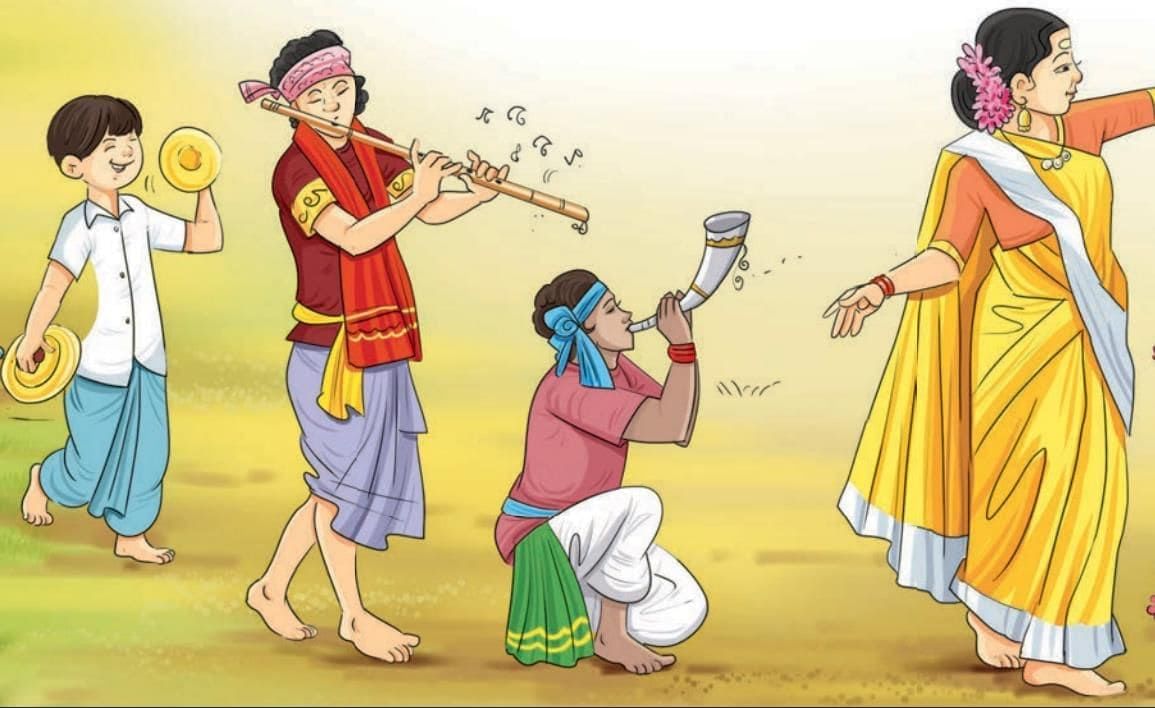
We praise thee, O Surya, with cymbal and flute.
Explanation:
The villagers begin by thanking Surya, the Sun God, who gives light and warmth to the earth. They call him “bright and munificent” because he generously shines every day, helping seeds grow into plants. Without the Sun, there would be no crops. The villagers say that the sunshine “prospered” (helped) their sowing and “nurtured” their corn, meaning the sunlight helped their seeds sprout and grow strong. They offer him songs, garlands, and their golden fields of crops and fruits. The use of musical instruments like cymbals and flutes shows joy and celebration. This stanza shows that Surya is seen not just as a source of light but also as a giver of life.
Stanza 2
Lord of the rainbow, lord of the harvest,
Great and beneficent lord of the main!
Thine is the mercy that cherished our furrows,
Thine is the mercy that fostered our grain.
We bring thee our thanks and our garlands for tribute,
The wealth of our valleys, new-garnered and ripe;
O sender of rain and the dewfall, we hail thee,
We praise thee, Varuna, with cymbal and pipe.
Explanation:
Next, they praise Varuna, the god of rain and water. He is called “lord of the rainbow” and “lord of the main,” meaning the ocean. Rain is shown as a kind and gentle force his “mercy” helps ploughed fields (furrows) and crops to grow. The villagers thank him for watering the earth, helping the grains to ripen. They offer him garlands and the fresh produce from their valleys. The phrase “new-garnered and ripe” means freshly gathered and fully grown crops. They celebrate him with cymbals and pipes, grateful for the rainfall that made the harvest possible.
Stanza 3
Women’s Voices:
Queen of the gourd-flower, queen of the harvest,
Sweet and omnipotent mother, O Earth!
Thine is the plentiful bosom that feeds us,
Thine is the womb where our riches have birth.
We bring thee our love and our garlands for tribute,
With gifts of thy opulent giving we come;
O source of our manifold gladness, we hail thee,
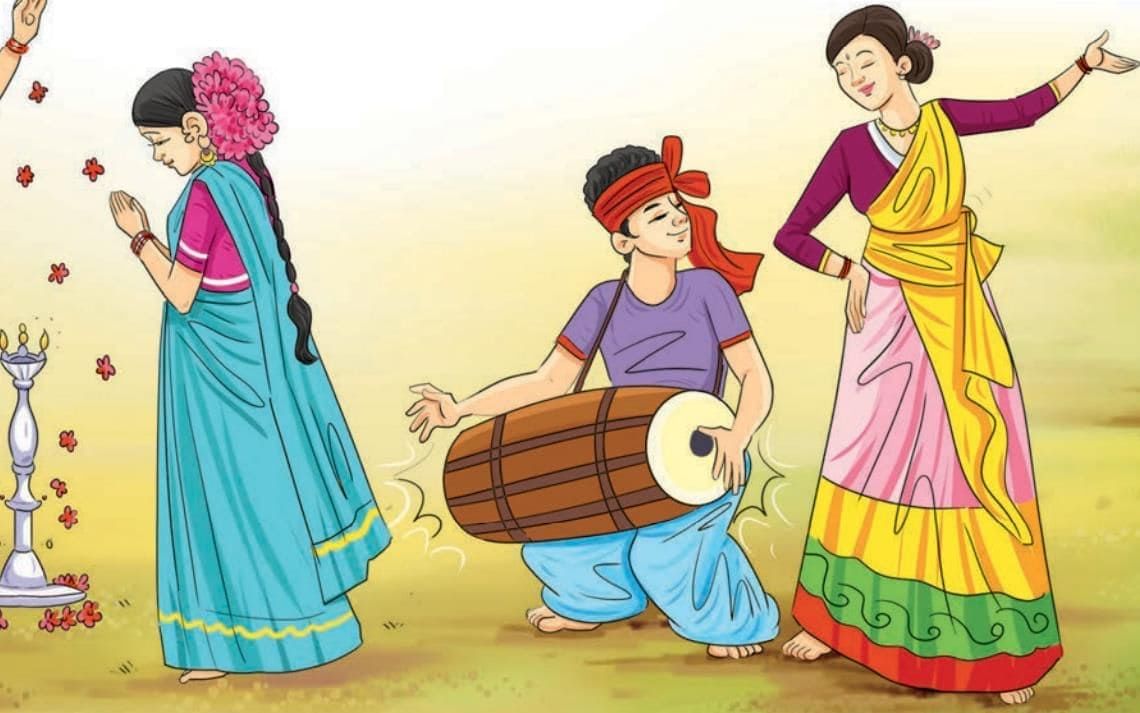
We praise thee, O Prithvi, with cymbal and drum.
Explanation:
Now, the women offer praise to Prithvi, Mother Earth. She is described lovingly as the “queen of the gourd-flower” and the “sweet and omnipotent mother.” The earth is shown as full of life-giving power. Her “plentiful bosom” (chest) feeds all people, and her “womb” (symbol of birth) gives birth to all the riches of the land. This imagery makes us feel how nurturing and important the earth is—like a mother who feeds, protects, and gives life. The women come with garlands and gifts of the harvest, praising her with cymbals and drums. This part of the poem reminds us to love and care for the land that supports us.
Stanza 4
All Voices:
Lord of the Universe, Lord of our being,
Father eternal, ineffable Om!
Thou art the Seed and the Scythe of our harvests,
Thou art our Hands and our Heart and our Home.
We bring thee our lives and our labours for tribute,
Grant us thy succour, thy counsel, thy care.
O Life of all life and all blessing, we hail thee,
We praise thee, O Lord, with cymbal and prayer.
Explanation:
In the final stanza, everyone comes together to pray to the Supreme Lord, called “Lord of the Universe” and “Father eternal.” He is too great to describe (ineffable) and is the source of all life. He is called both the “Seed” (beginning) and “Scythe” (end) of the harvest—meaning he controls all stages of life and death. The villagers offer not just crops, but their own lives and hard work. They ask for his succour (help), counsel (guidance), and care (protection). The poem ends with cymbals and prayer, showing respect, faith, and the idea that God lives in everything nature, work, and people.
Theme /Message
Theme
- Gratitude to Nature: The poem celebrates nature’s role in human life and farming.
- Unity of Men, Women, and Nature: Everyone joins in devotion, showing unity and respect for natural forces.
- Divine Presence in Daily Life: Nature is not just physical—it is divine and deserves our prayers and offerings.
- Balance and Harmony: The poem shows the harmony between humans and nature when people work with care, prayer, and gratitude.
Message
- We should be thankful for the natural forces—sun, rain, and earth—that make life and food possible.
- Hard work, prayer, and respect must go together in life.
- Nature is sacred and should not be taken for granted.
- If we respect the land, water, and sky, they will continue to bless us in return.
Try yourself:
What is the main theme of the text?
- A.Nature
- B.Learning
- C.Adventure
- D.Friendship
View Solution
Difficult Words
- Harvest: Collecting ripe crops
- Munificent: Very generous or kind
- Bounty: Gifts or blessings of nature
- Prospered: Helped something grow well
- Nurtured: Cared for and developed
- Radiance: Bright light or glow
- Cymbal: A round metal instrument that makes a clashing sound
- Beneficent: Kind and helpful
- Furrows: Long, narrow cuts in soil made for planting seeds
- Garnered: Gathered or collected
- Opulent: Rich and full
- Omnipotent: All-powerful
- Womb: The part of the body where life begins (used symbolically for Earth)
- Manifold: Many and varied
- Ineffable: Too great to be described
- Scythe: A curved tool used to cut crops
- Succour: Help or support
- Counsel: Advice or guidance
- Hail: To greet with respect