Q1. What are the changing shapes of the Moon’s bright portion called?
Ans: They are called the phases of the Moon.
Q2. What is the Indian term for the waning period of the Moon?
Ans: It is called Krishna Paksha.
Q3. On which day is the Moon not visible at all?
Ans: On the new Moon day (Amavasya) the Moon is not visible.
Q4. What is the Indian term for the waxing period of the Moon?
Ans: It is called Shukla Paksha.
Q5. How long does it take the Moon to complete one full cycle of phases?
Ans: It takes about one month.
Q6. What is the term for a Moon that is more than half but not fully lit?
Ans: Such a Moon is called a gibbous Moon.
Q7. What is the term for a Moon that is less than half lit?
Ans: Such a Moon is called a crescent Moon.
Q8. On a full Moon day, where is the Moon when the Sun rises in the east?
Ans: It is almost setting in the west.
Q9. When is a waxing Moon best seen?
Ans: A waxing Moon is best seen at sunset.
Q10. By how much does the moonrise time change each day?
Ans: Moonrise occurs about 50 minutes later each day.
Q11. Why can we sometimes see the Moon during the daytime?
Ans: Because the Moon can rise in the afternoon before sunset.
Q12. Does the Moon produce its own light?
Ans: No, it reflects sunlight.
Q13. At any moment, what fraction of the Moon is illuminated by sunlight?
Ans: Half of the Moon is illuminated by sunlight at any moment.
Q14. What actually causes the phases of the Moon?
Ans: They are caused by the changing positions of the Moon, Earth, and Sun.
Q15. When can a lunar eclipse occur?
Ans: It can occur only on a full Moon day.
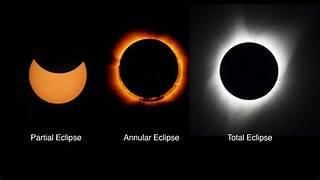
Q16. When can a solar eclipse occur?
Ans: It can occur only on a new Moon day.
Q17. Why don’t eclipses happen every month?
Ans: Because the Moon’s orbit is tilted compared to Earth’s orbit.
Q18. What is a mean solar day?
Ans: It is the time from one noon to the next, about 24 hours.
Q19. How long is one lunar month?
Ans: About 29.5 days.
Q20. How many days does Earth take to revolve once around the Sun?
Ans: About 365¼ days.
Q21. How many days are there in a lunar year of 12 months?
Ans: About 354 days.
Q22. What is the first month in the Indian National Calendar?
Ans: The first month is Chaitra.
Q23. On which date does the Indian National Calendar begin in a normal year?
Ans: It begins on 22 March.
Q24. Who headed the Calendar Reform Committee that designed the Indian National Calendar?
Ans: It was headed by Meghnad Saha.
Q25. Who is known as the Father of the Indian Space Programme?
Ans: Vikram Sarabhai is known as the Father of the Indian Space Programme.