Multiple Choice Questions (MCQs)
Q1: Who is the poet of “Travel”?
a) Ruskin Bond
b) Edna St. Vincent Millay
c) Rabindranath Tagore
d) Anita Rau Badami
Q2: What does the speaker imagine hearing during the day?
a) Friends talking
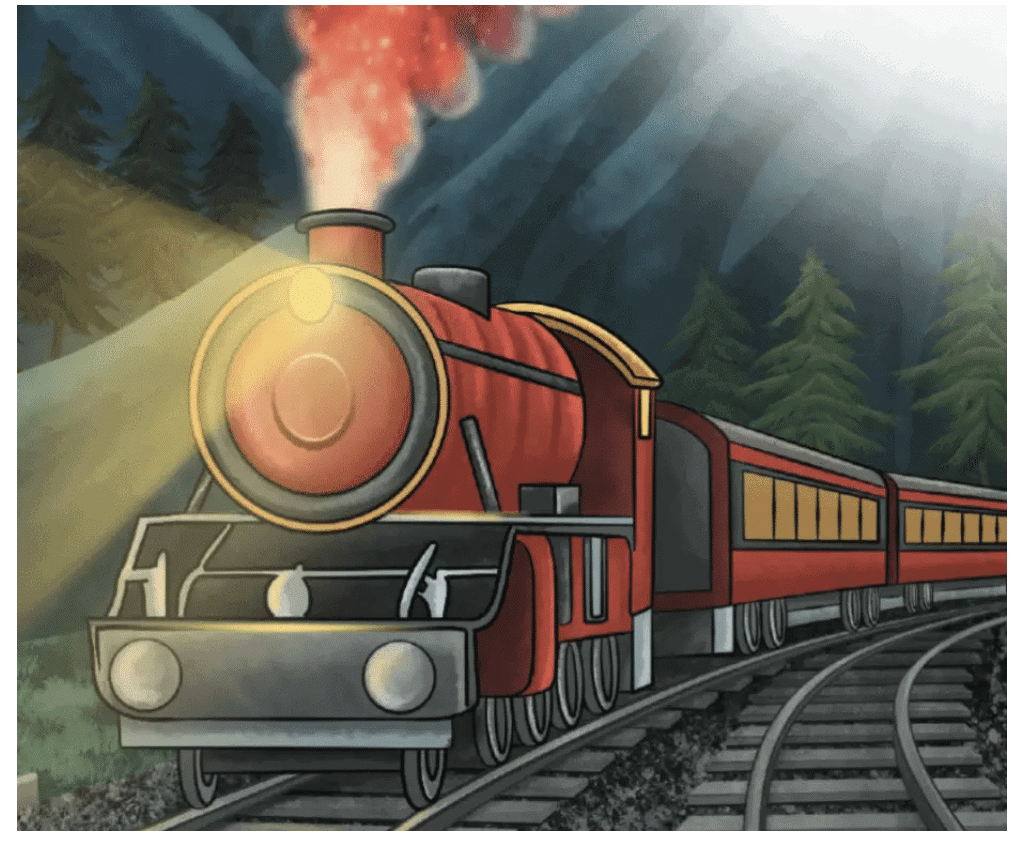
b) A train’s whistle
c) The engine steaming
d) Cinders falling
Q3: What does the speaker see in the sky at night?
a) Stars
b) Red cinders
c) Clouds
d) Birds
Q4: What does the speaker say about their friends?
a) They travel with them
b) They are warm and the best
c) They don’t like trains
d) They are far away
Q5: What does the word “shrieking” mean in the poem?
a) A soft sound
b) A loud, high-pitched sound
c) A quiet hum
d) A glowing spark
Fill in the Blank
Q1: The railroad track is _______ away from the speaker.
Q2: The speaker hears the train’s _______ shrieking all day.
Q3: At night, the speaker sees red _______ on the sky.
Q4: The speaker’s heart is _______ with the friends they make.
Q5: The word “cinders” refers to small pieces of burnt _______ or wood.
True or False
Q1: The speaker only thinks about trains during the day.
Q2: The night is described as a time for sleep and dreaming.
Q3: The speaker would only take a train to a specific place.
Q4: The poem shows the speaker’s love for adventure.
Q5: The word “warm” means feeling cold and distant.
Very Short Answer Questions
Q1: What does the speaker hear in the day, even though no train is nearby?
Q2: What does the speaker imagine the train’s engine doing at night?
Q3: What does the speaker say they would take, no matter the destination?
Q4: What is the meaning of the word “steaming” in the poem?
Q5: What is one moral of the poem?
Long Answer Questions
Q1: How does the speaker’s imagination bring trains to life in the first two stanzas?
Q2: Describe the contrast between the speaker’s feelings for friends and their urge to travel.
Q3: Explain how the poem captures the excitement of travel and exploration.
Q4: What is the moral of the poem, and how does the speaker’s attitude reflect it?
Q5: Discuss how the poem uses vivid imagery to express the speaker’s love for trains.