Multiple Choice Questions (MCQs)
Q1: Who is the poet of “Travel”?
a) Ruskin Bond
b) Edna St. Vincent Millay
c) Rabindranath Tagore
d) Anita Rau Badami
Ans: b) Edna St. Vincent Millay
The introduction clearly states that the poem is written by Edna St. Vincent Millay.
Q2: What does the speaker imagine hearing during the day?
a) Friends talking
b) A train’s whistle
c) The engine steaming
d) Cinders falling
Ans: b) A train’s whistle
In stanza 1, the speaker imagines hearing the train’s whistle shrieking during the day, despite the tracks being far away.
Q3: What does the speaker see in the sky at night?
a) Stars
b) Red cinders
c) Clouds
d) Birds
Ans: b) Red cinders
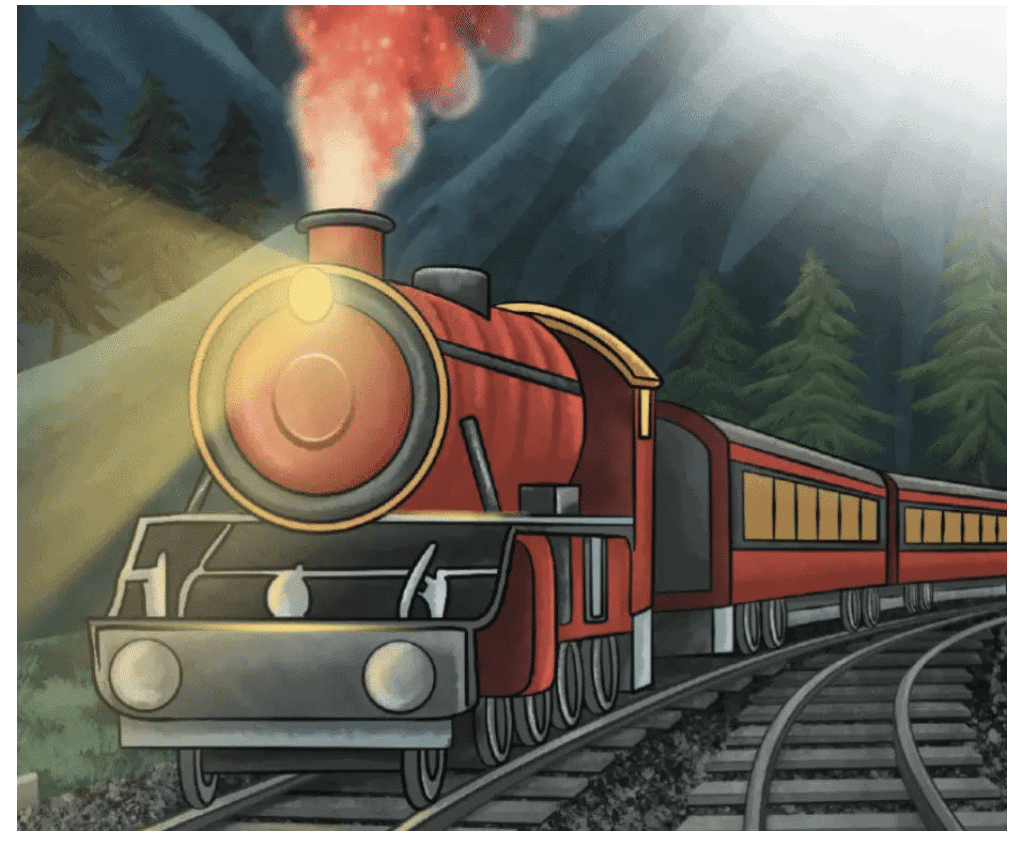
In stanza 2, the speaker imagines seeing red cinders from the train’s engine on the night sky.
Q4: What does the speaker say about their friends?
a) They travel with them
b) They are warm and the best
c) They don’t like trains
d) They are far away
Ans: b) They are warm and the best
In stanza 3, the speaker says their heart is warm with the friends they make and that they’ll not know better friends, indicating affection and high regard.
Q5: What does the word “shrieking” mean in the poem?
a) A soft sound
b) A loud, high-pitched sound
c) A quiet hum
d) A glowing spark
Ans: b) A loud, high-pitched sound
The word “shrieking” is defined as a loud, high-pitched sound, describing the train’s whistle.
Fill in the Blank
Q1: The railroad track is _______ away from the speaker.
Ans: miles
Q2: The speaker hears the train’s _______ shrieking all day.
Ans: whistle
Q3: At night, the speaker sees red _______ on the sky.
Ans: cinders
Q4: The speaker’s heart is _______ with the friends they make.
Ans: warm
Q5: The word “cinders” refers to small pieces of burnt _______ or wood.
Ans: coal
True or False
Q1: The speaker only thinks about trains during the day.
Ans: False
The speaker thinks about trains both day and night, as described in stanzas 1 and 2.
Q2: The night is described as a time for sleep and dreaming.
Ans: True
Stanza 2 states the night is still for sleep and dreaming, contrasting with the speaker’s train thoughts.
Q3: The speaker would only take a train to a specific place.
Ans: False
The speaker says they would take any train, “no matter where it’s going,” in stanza 3.
Q4: The poem shows the speaker’s love for adventure.
Ans: True
The speaker’s eagerness to take any train reflects their love for adventure and exploration.
Q5: The word “warm” means feeling cold and distant.
Ans: False
“Warm” means full of love or affection, as used to describe the speaker’s feelings for friends.
Very Short Answer Questions
Q1: What does the speaker hear in the day, even though no train is nearby?
Ans: Train’s whistle
Q2: What does the speaker imagine the train’s engine doing at night?
Ans: Steaming
Q3: What does the speaker say they would take, no matter the destination?
Ans: Any train
Q4: What is the meaning of the word “steaming” in the poem?
Ans: Giving off steam
Q5: What is one moral of the poem?
Ans: Embrace curiosity
Long Answer Questions
Q1: How does the speaker’s imagination bring trains to life in the first two stanzas?
Ans: The speaker’s imagination brings trains to life in the first two stanzas by vividly conjuring their sounds and sights despite their physical distance. In stanza 1, during a noisy day filled with voices, the speaker hears the train’s whistle “shrieking,” a sharp, exciting sound that cuts through the chatter, showing their fixation on trains. In stanza 2, in the quiet night meant for sleep, the speaker envisions red cinders glowing against the sky and hears the engine “steaming,” creating a dynamic image of movement and energy. These sensory details—sound, light, and motion—make the trains feel real and present, reflecting the speaker’s deep passion for the idea of travel.
Q2: Describe the contrast between the speaker’s feelings for friends and their urge to travel.
Ans: The speaker shows a deep and warm love for their friends in stanza 3, saying their heart feels “warm” and that they’ll never have better friends. This shows they feel happy and close to them. But at the same time, the speaker feels a strong urge to travel, saying they would get on any train “no matter where it’s going.” This shows that their desire for adventure is stronger than their wish to stay with friends. The difference between these feelings shows how the speaker is torn between the comfort of friendship and the excitement of new experiences. It highlights their deep wish to explore the world, even if it means leaving loved ones behind.
Q3: Explain how the poem captures the excitement of travel and exploration.
Ans: The poem shows the excitement of travel and adventure through lively pictures and an eager voice. The train’s loud “shrieking” whistle in stanza 1 creates a feeling of energy and excitement. In stanza 2, the “red cinders” and “steaming” engine make the train seem magical and full of life. In stanza 3, the speaker says they would hop on any train, no matter where it’s going, showing their brave and carefree love for exploring new places. All these details together make travel feel fun, thrilling, and full of endless possibilities.

Q4: What is the moral of the poem, and how does the speaker’s attitude reflect it?
Ans: The moral of the poem is that being curious and open to new experiences can make life richer, even when we have strong friendships. The speaker shows this by being deeply fascinated with trains, thinking about them all the time. Their eagerness to jump on any train, “no matter where it’s going,” shows they are excited by the unknown and love adventure. At the same time, they clearly care about their friends, which shows that it’s possible to enjoy both close relationships and new journeys. The poem teaches us that life is fuller when we balance friendship with a love for exploring the world.
Q5: Discuss how the poem uses vivid imagery to express the speaker’s love for trains.
Ans: The poem uses strong and clear pictures to show how much the speaker loves trains. In stanza 1, the “shrieking” whistle cuts through the noise of the day, showing how powerful and exciting the train sounds to the speaker. In stanza 2, we see “red cinders” lighting up the night sky and the engine “steaming” as it moves, creating a magical and lively picture of a train in action. These sights and sounds—bright sparks, loud whistles, and the steam—make the train feel real in the speaker’s imagination, showing their deep love for travel and adventure.