(i) Quality of sound depends on Waveform . (ii) The speed of sound in a solid is greater than the speed of sound in air. (iii) Sound is caused by Vibrations . (iv) Pitch of sound depends on frequency . (v) Sound cannot travel through Vacuum.
Q.2. If 25 sound waves are produced per second, what is the frequency in hertz? (a) 25 hertz (b) 50 hertz (c) 75 hertz (d) 1/25 hertz
Ans: (a)
Explanation: Frequency is the number of waves produced per second. If 25 waves are produced each second, the frequency is 25 hertz, written as 25 Hz.
Q.3. Which of the following vibrates when a musical note is produced by the cymbals in an orchestra? (a) Stretched strings (b) Stretched membranes (c) Metal plates (d) Air columns
Ans: (c)
Explanation: Cymbals are thin metal plates that vibrate when struck. These vibrations of the metal plates set the surrounding air into motion and produce sound. Stretched strings and membranes vibrate in instruments like guitars and drums, and air columns vibrate in wind instruments, so those options are not correct for cymbals.
Q.4. Inner Ear is called as (a) Cochlea (b) Pinna (c) Hammer (d) Anvil
Ans: (a)
Explanation: The inner ear is called the cochlea; it is the spiral-shaped part that helps convert sound vibrations into nerve signals. The pinna is the outer ear, while the hammer and anvil are small bones in the middle ear.
Q.5. Frequency of ultrasonic sound wave is (a) Greater than 20 HZ (b) Greater than 20,000 HZ (c) Greater than 2 HZ (d) Greater than 2 MHZ
Ans: (b)
Explanation: Ultrasonic sound waves have frequencies greater than 20,000 Hz (20 kHz). Options (a) and (c) describe much lower frequencies; option (d) (greater than 2 MHz) is far above the ultrasonic threshold but does not define the general ultrasonic range.
Q.6. Why are the ceilings of concert halls curved?
Ans: The ceilings of concert halls are curved so that sound reflections are spread evenly throughout the hall. Curved surfaces help direct and disperse sound waves to reach all corners, improving clarity and loudness for the entire audience.
Q.7. What happens when sound travels in air?
Ans: When sound travels through air it creates alternating regions of compression and rarefaction. In a compression the air particles are closer together and the pressure is higher; in a rarefaction the particles are farther apart and the pressure is lower. These successive compressions and rarefactions move through the air and carry the sound to the listener.
Q.8. What is an echo? Name two areas of its application?
Ans: An echo is the reflected sound heard when sound waves strike a surface and return to the listener. Two applications of echoes are SONAR (used to detect objects under water) and using reflected ultrasound to detect flaws in metal objects (ultrasonic testing).
Q.9. What is SONAR? Write its working?
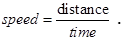
Ans: SONAR stands for Sound Navigation and Ranging. It uses ultrasonic waves to locate objects under water. A transmitter sends out ultrasonic pulses; these pulses travel through water, strike an object and get reflected back. A detector receives the reflected waves and converts them into electrical signals. By measuring the time between sending the pulse and receiving the echo, the distance to the object is calculated using the relation distance = (speed of sound in water × time taken)/2.
Q.10. How can ultrasound be used to detect the defect in metal block?
Ans: Ultrasound (waves with frequency greater than 20 kHz) is sent into the metal from one end while detectors are placed at the other end or at positions to receive returned echoes. If the metal has no defect, the ultrasound passes through and is detected as expected. If there is a defect, part of the ultrasound is reflected back or attenuated at the defect, so the detector receives a changed signal (weaker, delayed or missing). Such changes indicate the presence and often the location of the defect; this is the basis of ultrasonic non-destructive testing.
Q.11. Suppose you and your friend are on the moon. Will you be able to hear any sound produced by your friend?
Ans: No. There is no air on the Moon, so there is no medium to carry sound waves. Therefore you and your friend would not be able to hear sounds produced by one another; communication on the Moon requires radio or other electronic means.
Q.12. Sound requires a medium to travel? Justify experimentally.
Ans: The following experiment demonstrates that sound requires a medium for propagation:
Take a bell jar and suspend an electric bell in it,
The bell jar is connected to a vacuum pump. Till the air is in the bell jar, the sound of the electric bell is louder.
Now, with the help of vacuum pump, pump out the air gradually
Now as air is pumped out, the sound of the bell gets fainter and fainter.
Now, when the bell jar is completely vacuumed no sound is heard.
This shows that air is required for propagation of sound.
Explanation: As air is removed from the jar the bell becomes fainter and finally silent in a vacuum, showing that air (a medium) is needed to transmit sound.
Q.13. How does the sound produced by a vibrating object in a medium reach your ear?
Ans: A vibrating object pushes and pulls the particles of the surrounding medium. These particles transfer the disturbance to neighbouring particles as alternating compressions and rarefactions. The chain of particle vibrations travels through the medium until the waves reach the ear, where they make the eardrum vibrate and are perceived as sound.
Q.14. Why are sound waves called as mechanical waves?
Ans: Sound waves are called mechanical waves because they require a material medium (solid, liquid or gas) to travel. Without a medium, sound cannot propagate, which is a defining property of mechanical waves.
Q.15. Explain how sound is produced by your school bell.
Ans: When the peon strikes the school bell with a hammer, the bell metal vibrates. These vibrations disturb the air around the bell, creating compressions and rarefactions that travel as sound waves. The sound waves reach our ears and are heard as the ringing of the bell.