Introduction
This story explores the close relationship between nature and humans, especially focusing on a farmer’s bond with his land. Set during a year of severe drought, the story follows a hardworking farmer named Velu who is deeply worried about the lack of rain. Through a chance encounter with an old woman, Velu learns a powerful lesson about the natural world that nature, like humans, also needs rest. The story ends on a hopeful note with the arrival of rain, showing how nature works in its own time.
About the Author
Kamakshi Balasubramanian is a respected Indian author, teacher, and environmental thinker. She has a deep love for storytelling that inspires readers to see the world with more care and understanding. Her writing often focuses on nature, everyday life, and the simple truths we tend to forget. Through her thoughtful and gentle stories, she encourages young readers to notice the beauty in small things and to value the bond between humans and the natural world. In “Waiting for the Rain”, she uses the voice of an old woman to remind us that just like people, even the land needs time to rest and recover.
Key Points of the Story
- Velu is a hardworking farmer who wakes up early every day, hoping for rain.
- This year, there has been no rain, which is unusual. Velu and his neighbours are worried about their crops.
- They wait for weeks and months, but the rain does not come. The fields become dry and cracked.
- Velu thinks about going to astrologers for help, but he does not believe they can bring rain.
- He visits the weather office, but the people there also do not know when it will rain.
- Feeling tired and thirsty, Velu sits under a tree and meets an old woman who is also resting.
- The old woman smiles at Velu, but they both feel sad because of the lack of rain.
- Velu expresses his frustration about not being able to work on his land due to the drought.
- The old woman tells Velu that sometimes the land needs to rest, just like people do.
- She explains that Nature takes care of everything and that the earth has its cycle.
- Velu begins to understand that the land might be resting and that rain will eventually come.
- As Velu walks home, he feels a breeze and sees clouds forming in the sky.
- He becomes excited as he realises that rain may soon fall, bringing hope for his crops.
- Velu runs home, feeling happy and hopeful about the future.
Try yourself:
What does the old woman tell Velu about the land?
- A.It needs rain right away.
- B.It needs to rest sometimes.
- C.It is always dry.
- D.It will never grow crops.
View Solution
Detailed Summary
Velu was a sincere and hardworking farmer who lived in a village. Every day, he woke up early to tend to his land. He loved his work and never took a break, even during festivals or holidays. For the past six years, his land had always yielded good crops like jowar and dal, and this made him proud and hopeful.
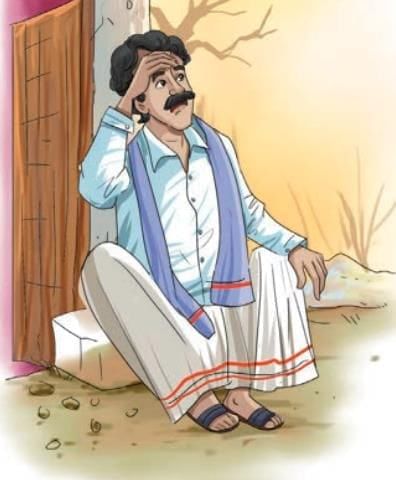
One morning, Velu woke up hoping it would rain. He looked at the sky, but there were no clouds, only a bright red sun rising in the sky. Without rain, Velu couldn’t plough his field, and this made him feel worried and helpless. This year, the usual monsoon rains had not come. The earth in the fields had dried up, cracked, and turned lifeless. Farmers like Velu, who depended on rain, had no choice but to wait and hope.
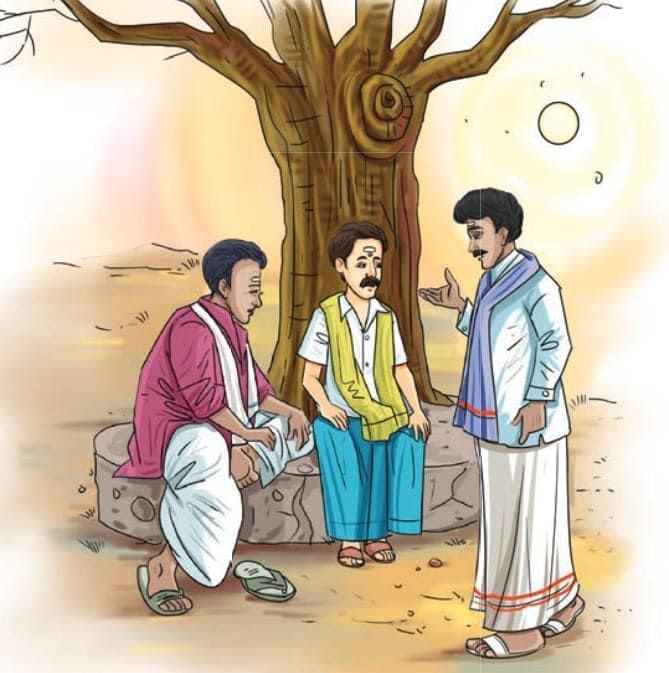
Some villagers began to lose patience. They suggested visiting astrologers to perform rituals or give advice to please the heavens. But Velu didn’t believe in these ideas. He trusted science and nature more. So, he went to the city to talk to people at the weather office. Sadly, even the experts there were confused. They told him that the weather conditions seemed right, but the rain still hadn’t come. Velu returned to his village feeling tired, dusty, and more discouraged than ever.
On the way back, Velu stopped under a shady tree to rest. There, he noticed an old woman already sitting under the tree. She had a kind face, sparkling eyes, and a warm smile. Velu was curious and began speaking with her. He shared his sadness and frustration, telling her how much he had worked over the years and how the lack of rain was affecting his family’s survival.
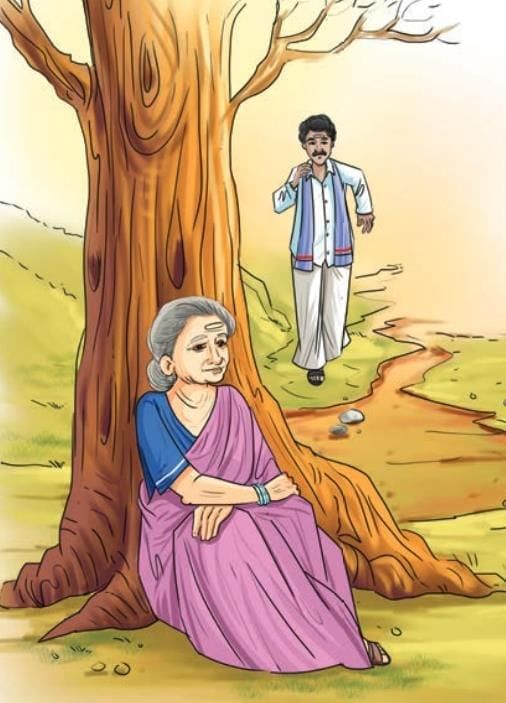
To Velu’s surprise, the old woman gently suggested that perhaps the land itself was tired. She explained that just like people, the earth also needs time to rest and recover. She reminded him that the soil had been worked for thousands of years and that nature often brings a pause so that everything can regain strength. Her words made Velu stop and think. He realised that maybe this long dry season was nature’s way of giving the land a break.
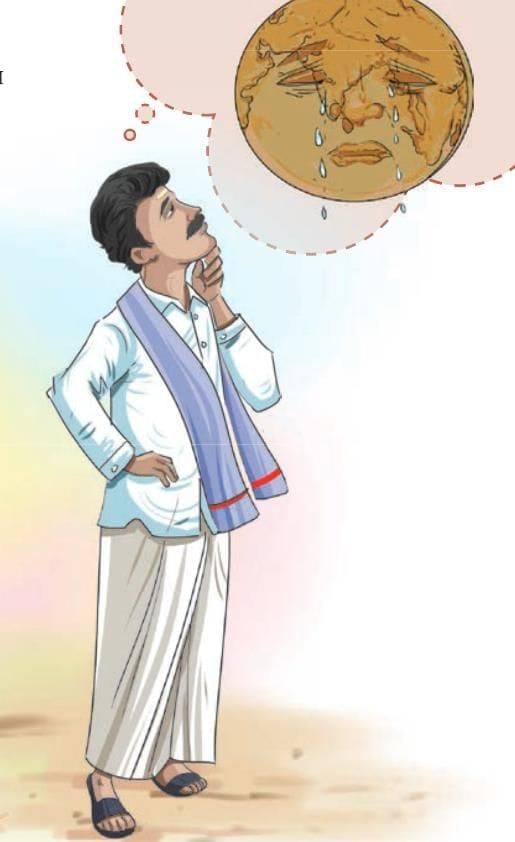
As Velu walked home, he thought deeply about what the old woman had said. The idea that the earth could be resting gave him peace. He began to feel hopeful again. Just then, he felt a cool breeze and a tiny drop of water on his shoulder. Looking up, he saw clouds gathering in the sky. The air became cooler, the light dimmed, and soon it looked like the rains would finally arrive.
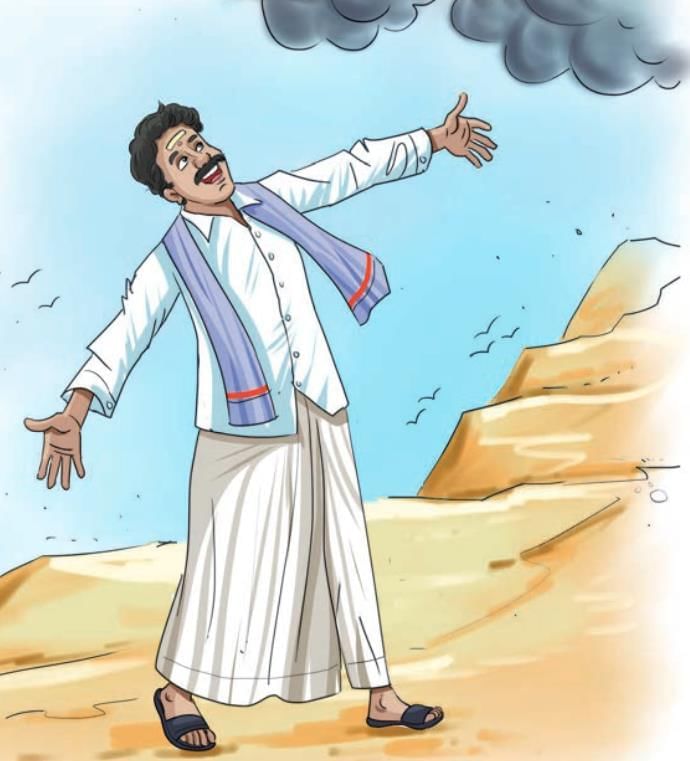
Velu was filled with happiness. He understood that everything in nature happens for a reason and at the right time. Trusting nature, he ran home joyfully, ready to start again with a fresh heart.
Theme/Message
- The main theme of the story is the connection between humans and nature. It shows how farmers depend on the weather for their crops.
- Another important theme is patience and understanding. Sometimes, things do not happen right away, and we must wait for nature to take its course.
- The story also highlights the importance of rest. Just like people need breaks, the land also needs time to recover and rejuvenate.
- The message of the story is that hard work is important, but it is equally important to respect nature’s rhythms.
- It teaches us to have hope, even in tough times. Just like Velu learned to trust that rain would come, we should trust that good things will happen in our lives, too.
- By listening to the wisdom of the old woman, Velu learns that every living thing has a purpose and a cycle, and we must be patient with ourselves and with nature.
Try yourself:
What is the main idea of the theme?
- A.A character’s action
- B.A central message
- C.A specific event
- D.A plot twist
View Solution
Difficult Words
- Crimson: A deep red colour.
- Encouraging: Giving hope or confidence.
- Dejected: Feeling sad and disappointed.
- Astrologers: People who study the stars and planets to predict the future.
- Wrinkled: Having lines or folds in the skin, usually due to age.
- Fragrant: Having a pleasant smell.
- Undisturbed: Not being interrupted or disturbed.
- Jowar: A type of grain used for food, similar to sorghum.
- Harvesting: Gathering crops when they are ready to be eaten.
- Cracked: Having lines or breaks on the surface.
- Frustration: A feeling of being upset or annoyed because you cannot do something.
- Rejuvenate: To make something feel young or fresh again.