Short Answer Questions
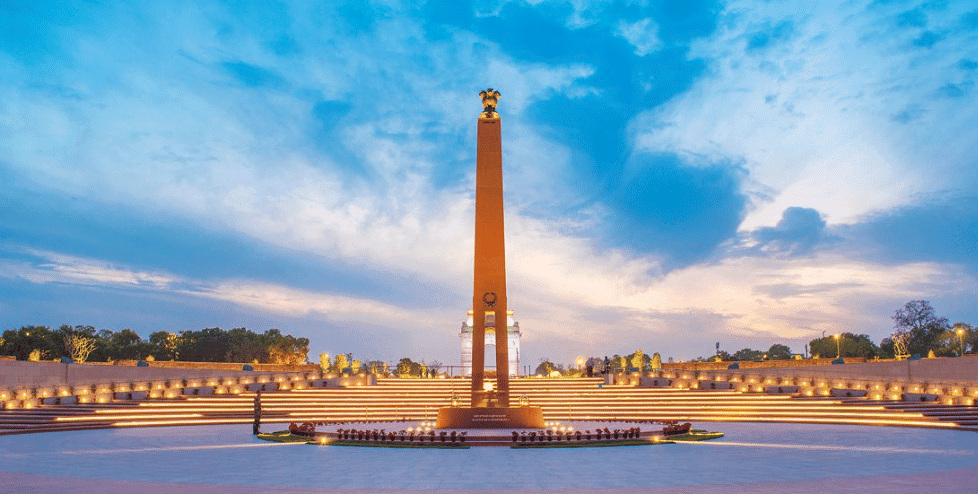
Q1: What is the National War Memorial, and what does it honour?
Ans: The National War Memorial, located near India Gate in New Delhi, is a monument built between April 2018 and February 2019 to honour soldiers who died in conflicts like the Indo-China War (1962), Indo-Pak Wars (1965 and 1971), and the Kargil War (1999). It holds 29,000 tablets with over 26,000 names of fallen heroes, commemorating their sacrifices for India’s freedom.National War MemorialQ2: What is the Amar Chakra at the National War Memorial?
Ans: The Amar Chakra, or Circle of Immortality, at the National War Memorial is home to the eternal flame, symbolising that the spirits of fallen soldiers live on. It represents the everlasting legacy of their bravery and sacrifice, creating a solemn and respectful atmosphere at the memorial.
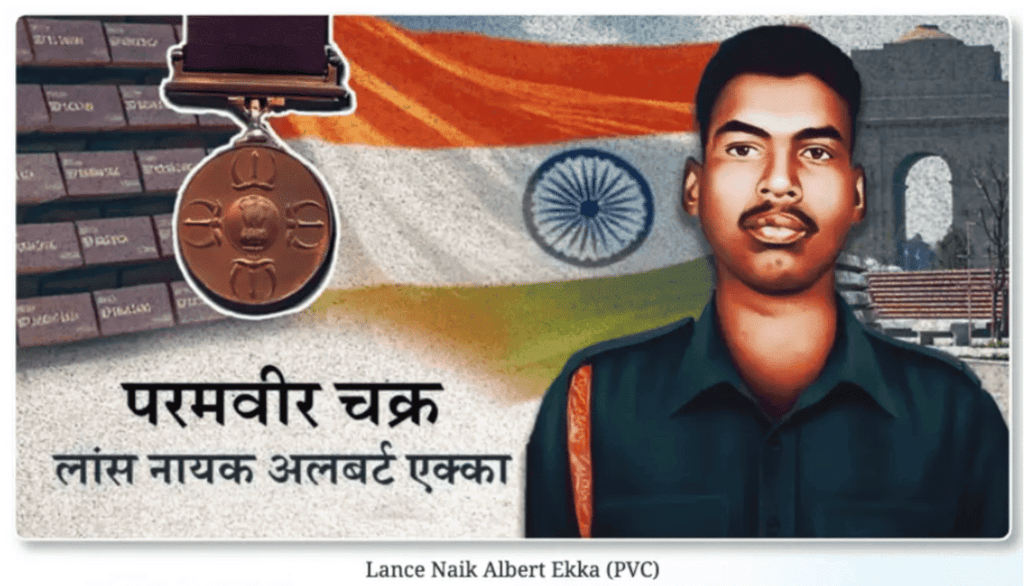
Q3: Who is Lance Naik Albert Ekka, and why does Soumya admire him?
Ans: Lance Naik Albert Ekka was a soldier who fought bravely in the 1971 Indo-Pak War, continuing to battle despite serious injuries until he died. Soumya admires him for his courage and selflessness, inspired by his story to serve the nation, as his gallantry earned him the Param Vir Chakra.
Q4: What does Ananda recall about his visit to a war memorial in Chandigarh?
Ans: Ananda recalls visiting a war memorial in Chandigarh’s Bougainvillaea Garden, where people laid flowers to honour fallen soldiers. This visit reminds him of the Hindi poem Pushp ki Abhilasha by Makhanlal Chaturvedi, where a flower wishes to honour brave soldiers, deepening his respect for their sacrifices.
Q5: Who is Captain Anuj Nayyar, and how does Ananda learn about him?
Ans: Captain Anuj Nayyar was a brave soldier in the Kargil War who was awarded the Maha Vir Chakra after his death. Ananda learns about him from an interview with Nayyar’s mother, who wrote an emotional book about her son, expressing both her pain and pride in remembering him.
Long Answer Questions
Q1: How does Soumya’s visit to the National War Memorial deepen her understanding of soldiers’ sacrifices?
Ans: Soumya’s visit to the National War Memorial in New Delhi helps her understand and appreciate the sacrifices of Indian soldiers. On her school trip, she learns that the memorial was built between 2018 and 2019 to honour over 26,000 soldiers who lost their lives in wars like the Indo-China War, Indo-Pak Wars, and the Kargil War. Their names are written on 29,000 tablets. The memorial has different sections, like the Amar Chakra with an eternal flame showing that the spirit of the soldiers lives on, and the Tyag Chakra with names on walls shaped like a Chakravyuh. These features make Soumya feel both proud and emotional. She is especially inspired by brave soldiers like Lance Naik Albert Ekka and Major Padmapani Acharya, who continued fighting even after getting seriously injured. The memorial’s beauty, with wreaths, lights, and bronze murals, leaves a deep impact on her. In her letter to Ananda, she expresses her wish to serve the nation and respect the bravery of the soldiers. The story teaches us to honour and remember those who gave their lives for our country’s freedom.
Q2: What are the symbolic features of the National War Memorial, and how do they contribute to its message?
Ans: The National War Memorial’s special features strongly express respect for the bravery and sacrifice of Indian soldiers. The Amar Chakra (Circle of Immortality) has an eternal flame that shows the spirits of the soldiers live on. The Veerta Chakra (Circle of Bravery) displays six bronze murals of heroic battles like the Kargil War, honouring the courage of the soldiers. The Tyag Chakra (Circle of Sacrifice) has walls shaped like a Chakravyuh, with the names of over 26,000 soldiers who gave their lives for the country. The Raksha Chakra (Circle of Protection) is lined with trees, showing soldiers as the protectors of the nation. These symbols, along with the wreaths and changing lights from morning to night, create a respectful and emotional atmosphere. In her letter to Ananda, Soumya describes these parts of the memorial, showing how they fill her with pride and respect. The memorial teaches us to be thankful for the freedom we have and to remember the brave heroes who made it possible.
Q3: How does the story of Lance Naik Albert Ekka inspire Soumya, and why is it significant to the lesson?
Ans: The story of Lance Naik Albert Ekka inspires Soumya by showing his great bravery and selflessness, and it strengthens the lesson’s message of honouring the sacrifices of soldiers. During her visit to the National War Memorial, Soumya learns that Ekka fought in the 1971 Indo-Pak War and, even after being badly injured, continued to fight for the country until he lost his life. He was awarded the Param Vir Chakra for his courage. His story touches Soumya deeply and makes her want to serve the nation like him. This moment is important to the lesson because it shows how learning about such heroes can encourage young people like Soumya to feel proud of their country and want to do something meaningful. Ekka’s example, along with other brave soldiers like Major Padmapani Acharya, helps Soumya connect emotionally to the idea of sacrifice for the country. By sharing Ekka’s story in her letter, she not only honours his bravery but also inspires Ananda and other readers to respect and remember those who protect India’s freedom.
Q4: How does Ananda’s response to Soumya’s letter reflect his feelings about soldiers and his own aspirations?
Ans: Ananda’s reply to Soumya’s letter shows his deep respect for soldiers and his strong wish to join the Armed Forces, which supports the lesson’s message of patriotism and courage. He is touched by Soumya’s vivid description of the National War Memorial and sees it as a powerful way to thank those who gave their lives for the country. Ananda connects this with his own visit to the war memorial in Chandigarh, where offering flowers reminded him of the poem Pushp ki Abhilasha, making him feel even more grateful to the brave soldiers. He is inspired by the stories of heroes Soumya mentioned, like Lance Naik Albert Ekka and Major Padmapani Acharya, and especially by Captain Anuj Nayyar, whose mother’s book shares her pride and sorrow. These stories stir Ananda’s emotions and encourage his dream of serving the country. He also feels excited about using the National War Memorial app and wants to make a collage at school to honour these heroes. His letter, full of appreciation for Soumya’s words and his interest in stamp collecting, supports the lesson’s moral of respecting brave soldiers and letting their sacrifice inspire our own goals.
Q5: What lessons about gratitude and courage can we learn from the letter exchange between Soumya and Ananda?
Ans: The letters between Soumya and Ananda teach us important lessons about being thankful and brave. They show how we can honour the sacrifices of soldiers and let their courage inspire us. Soumya’s letter describes her visit to the National War Memorial in New Delhi, where she learns about over 26,000 soldiers who gave their lives in wars like 1962, 1965, 1971, and 1999. The eternal flame, murals, and names on the tablets help her understand how much soldiers have done for our country. She feels inspired by heroes like Lance Naik Albert Ekka and Major Padmapani Acharya, who fought bravely even when they were hurt. Ananda’s reply shows how touched he is by Soumya’s words. He remembers his own visit to a war memorial in Chandigarh and connects his feelings with the poem Pushp ki Abhilasha, which speaks about serving the nation. Both Soumya and Ananda want to give back to the country, just like the soldiers they admire. The story teaches us to be thankful by remembering the bravery of our soldiers, visiting memorials, and living with purpose and respect. Their letters inspire us to follow our dreams, be brave, and always remember the heroes who helped keep our nation free.