Multiple Choice Questions (MCQs)
Q1: Who wrote the letter about visiting the National War Memorial?
a) Ananda
b) Soumya
c) Major Padmapani Acharya
d) Captain Anuj Nayyar
Ans: b) Soumya
Soumya writes the first letter describing her visit to the National War Memorial in New Delhi, while Ananda responds to her letter.
Q2: Where is the National War Memorial located?
a) Bengaluru
b) Chandigarh
c) New Delhi
d) Mumbai
Ans: c) New Delhi
Soumya mentions visiting the National War Memorial near India Gate in New Delhi during her school trip.
Q3: What does the Amar Chakra in the memorial represent?
a) Circle of Bravery
b) Circle of Immortality
c) Circle of Protection
d) Circle of Sacrifice
Ans: b) Circle of Immortality
The Amar Chakra, or Circle of Immortality, houses the eternal flame, symbolizing that soldiers’ spirits live on, as described by Soumya.
Q4: Which war hero does Soumya choose for her school presentation?
a) Lance Naik Albert Ekka
b) Major Somnath Sharma
c) Major Padmapani Acharya
d) Captain Mahendra Nath Mulla
Ans: c) Major Padmapani Acharya
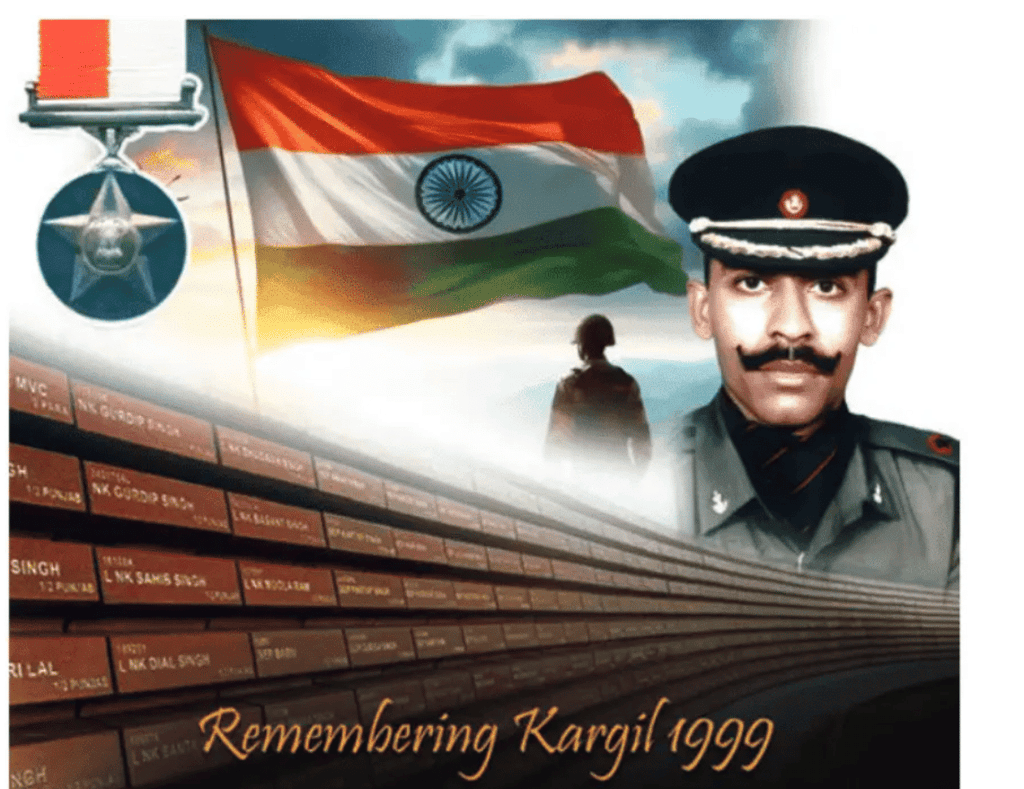
Soumya chooses Major Padmapani Acharya, a Kargil War hero awarded the Maha Vir Chakra, for her school presentation.
Q5: What does the word “gallantry” mean in the lesson?
a) Great courage in battle
b) A place to remember soldiers
c) A hobby of collecting stamps
d) A ring of flowers
Ans: a) Great courage in battle
“Gallantry” is defined as great courage, especially in battle, referring to the bravery of soldiers like those awarded the Param Vir Chakra.
Fill in the Blank
Q1: Soumya visited the National War Memorial during a school trip to _______.
Ans: New Delhi
Q2: The eternal flame is located in the _______ Chakra of the memorial.
Ans: Amar
Q3: Lance Naik Albert Ekka fought bravely in the _______ War of 1971.
Ans: Indo-Pak
Q4: Ananda admires Captain _______ Nayyar, a Kargil War hero.
Ans: Anuj
Q5: The word “wreaths” refers to rings of _______ used to show respect.
Ans: flowers
True or False
Q1: The National War Memorial was inaugurated in 2017.
Ans: False
The memorial was built between April 2018 and February 2019 and inaugurated in 2019, not 2017.
Q2: Soumya and Ananda both want to join the Armed Forces.
Ans: True
Soumya expresses a desire to serve the nation like Lance Naik Albert Ekka, and Ananda shares his dream of joining the Armed Forces in his response.
Q3: The Tyag Chakra has walls shaped like a Chakravyuh formation.
Ans: True
Soumya describes the Tyag Chakra as having walls shaped like a Chakravyuh formation, listing soldiers’ names.
Q4: Ananda has never visited a war memorial.
Ans: False
Ananda mentions visiting a war memorial in Chandigarh’s Bougainvillaea Garden, where people laid flowers.
Q5: The word “philately” means the study of flowers.
Ans: False
“Philately” is the hobby of collecting stamps, as Ananda mentions, not the study of flowers.
Very Short Answer Questions
Q1: What is the name of the first soldier to receive the Param Vir Chakra?
Ans: Major Somnath Sharma
Q2: What does the Veerta Chakra display at the National War Memorial?
Ans: Six bronze murals
Q3: Which poem does Ananda mention in his letter?
Ans: Pushp ki Abhilasha
Q4: What is the meaning of the word “solemn” in the lesson?
Ans: Serious and respectful
Q5: What is one moral of the lesson?
Ans: Be thankful for soldiers’ sacrifices
Long Answer Questions
Q1: How does Soumya describe the National War Memorial and its symbolic sections?
Ans: Soumya describes the National War Memorial in New Delhi as a moving place built near India Gate to honour soldiers who died in wars like the Indo-China War (1962), Indo-Pak Wars (1965, 1971), and the Kargil War (1999). It has 29,000 tablets with over 26,000 names of fallen heroes. The memorial has four sections: the Amar Chakra (Circle of Immortality) with an eternal flame to honor the soldiers’ spirits; the Veerta Chakra (Circle of Bravery) with six bronze murals of heroic battles; the Tyag Chakra (Circle of Sacrifice) with walls listing soldiers’ names; and the Raksha Chakra (Circle of Protection) with rows of trees symbolizing protectors. She mentions the wreaths, changing lights from dawn to dusk, and the mix of pride and sadness, making it a powerful tribute to the soldiers’ sacrifices.
Q2: Describe the story of one war hero mentioned in Soumya’s letter and its impact on her.
Ans: Soumya is especially inspired by Lance Naik Albert Ekka, a hero of the 1971 Indo-Pak War who was awarded the Param Vir Chakra. Despite serious injuries, Ekka kept fighting with incredible courage until he died from his wounds. His story of bravery and selflessness deeply touches Soumya, sparking a strong desire in her to serve the nation like him. His sacrifice shows the immense bravery of soldiers, strengthening her admiration for their dedication and motivating her to honor their legacy through her actions, such as her school presentation and her wish to contribute to the country.
Q3: Explain how Ananda’s response shows his inspiration and gratitude for soldiers.
Ans: Ananda’s response shows his deep inspiration and gratitude as he praises Soumya’s vivid description of the National War Memorial, which he sees as a tribute to soldiers who sacrificed their lives for India’s freedom. He is moved by the stories of heroes like Captain Anuj Nayyar, a Kargil War Maha Vir Chakra awardee, and is touched by Nayyar’s mother’s mix of pride and pain, which deepens his respect. Ananda dreams of joining the Armed Forces to follow in the footsteps of such heroes. His visit to Chandigarh’s war memorial and reference to the poem Pushp ki Abhilasha reflect his emotional connection to soldiers’ sacrifices. His excitement about the memorial’s app and his plan for a school collage further shows his gratitude and commitment to honouring soldiers’ legacy.
Q4: What is the moral of the lesson, and how do Soumya and Ananda’s actions reflect it?
Ans: The moral of the lesson is to be thankful for the soldiers who sacrificed their lives for our freedom and to honor their bravery by remembering their stories and living with respect. Soumya shows this by visiting the National War Memorial, learning about heroes like Lance Naik Albert Ekka and Major Padmapani Acharya, and sharing their stories through her letter and school presentation, expressing gratitude and respect. Her desire to serve the nation reflects the dedication of these soldiers. Ananda embodies the moral by expressing gratitude for soldiers’ sacrifices, inspired by Captain Anuj Nayyar, and planning a school collage to honor heroes. His dream of joining the Armed Forces and his emotional connection to war memorials demonstrate his commitment to honoring the freedom soldiers fought for, living in a way that respects their courage and sacrifice.
Q5: Discuss how the lesson uses the letters to teach about respecting soldiers’ sacrifices.
Ans: The lesson uses the letters between Soumya and Ananda to teach respect for soldiers’ sacrifices, blending personal reflections, vivid descriptions, and inspiring stories into an emotional narrative. Soumya’s letter describes her visit to the National War Memorial, highlighting its symbolic sections and sharing stories of heroes like Lance Naik Albert Ekka and Major Padmapani Acharya. These stories evoke awe and gratitude for their bravery. Soumya’s pride and sadness, alongside her desire to serve the nation, model a respectful attitude toward soldiers’ sacrifices. Ananda’s response deepens this respect, expressing gratitude inspired by Captain Anuj Nayyar and reflecting on the broader sacrifice of soldiers. His reference to Pushp ki Abhilasha and his dream of joining the Armed Forces show his commitment to honouring their legacy. Through personal letters, school projects, and memorial visits, the narrative encourages readers to learn, remember, and live with purpose, fostering a culture of respect for soldiers and their contributions to India’s freedom.