Introduction. Can a garden made of stones be beautiful?
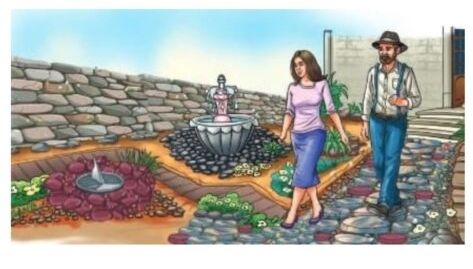
In “A Concrete Example” by Reginald Arkell, we meet Mrs. Jones, a cheerful gardener who proudly tends to her unusual stone garden filled with tiny, delicate plants. With gentle humor and sharp observation, the poet invites us to see the world through a different lens—one where even the smallest flower or a funny misunderstanding can reveal beauty, joy, and wisdom.
About the Poet
Reginald Arkell was a British writer and poet best known for his light verse, humor, and works related to gardening and rural life. He wrote novels, plays, and poetry that often blended wit with gentle observation of everyday life. His most famous work is Old Herbaceous, a charming novel about a gardener’s life, which reflects his deep love for nature and gardens. Arkell’s poetry, like “A Concrete Example,” showcases his playful style and ability to find beauty and humor in simple things.
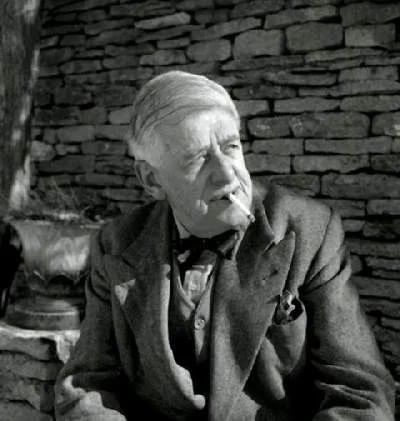
Reginald Arkell
Try yourself:What is Reginald Arkell best known for?A.GardeningB.NovelsC.PlaysD.Light verseView SolutionKey Points of the Poem
- The poem, “A Concrete Example,” is written by Reginald Arkell and consists of three stanzas, each with six lines.
- It maintains a playful and gently ironic tone, fitting the theme of Wit and Wisdom.
- The poem describes the unique garden of Mrs. Jones, the speaker’s neighbor, which is filled with stones and tiny plants.
- Mrs. Jones is portrayed as an enthusiastic gardener who takes pride in her stone garden’s features, such as a path, pond, rockery, and sundial.
- The speaker is amused by the tiny plants, wondering how they are planted in such small spaces.
- A humorous and ironic moment occurs when the speaker, while admiring a flower, accidentally steps on it.
- The poem explores themes of human quirks, perception, joy of gardening, connection with nature, and humor in mistakes.
Explanation of the Poem
Stanza 1
“My next-door neighbour, Mrs. Jones,
has got a garden full of stones:
A crazy path, a lily pond,
a rockery and, just beyond
A sundial with a strange device,
which Mrs. Jones thinks rather nice.”
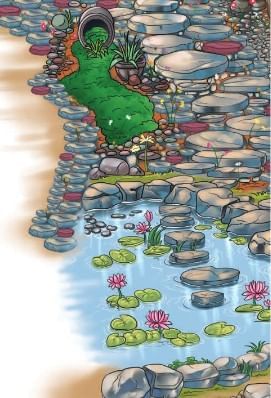
Explanation: In this stanza, the poet introduces us to Mrs. Jones, who lives next door. She has a very unique garden. Instead of flowers and grass, her garden is filled with stones. This makes her garden look different and special. The poet describes her garden as having a “crazy path,” which means the path is not straight and might twist and turn. There is also a “lily pond,” where we can imagine pretty water flowers called lilies. A “rockery” is a special place in the garden where stones are placed beautifully, and it looks nice. Beyond that, Mrs. Jones has something called a “sundial,” which is a tool that tells the time using the sun. The poet mentions that the sundial has a “strange device,” which means it looks unusual or different. Mrs. Jones thinks her garden is lovely, and she takes pride in it. This stanza helps us see how gardens can be different and that people can like different things.
Stanza 2
“My next-door neighbour, Mrs. Jones,
puts little plants between the stones.
They are so delicate and small,
they don’t mean anything at all.
I can’t think how she gets them in,
unless she plants them with a pin.”
In this stanza, the poet tells us more about Mrs. Jones’s garden. He observes that she doesn’t just have stones; she also has tiny plants growing between the stones. These plants are described as “delicate and small,” which means they are very tiny and gentle. The poet feels that these tiny plants are not very important or do not mean much, like they are too small to matter. He wonders how Mrs. Jones manages to plant them in such tight spaces between the stones. This thought is so funny and surprising to him that he imagines she must use a little pin, like a tiny needle, to help her plant them. This shows how special Mrs. Jones’s garden is, and it makes us think about how people can do amazing things to care for their gardens, even if it seems difficult.
Try yourself:What does Mrs. Jones have in her garden besides stones?A.Tiny plantsB.TreesC.FlowersD.VegetablesView Solution
Stanza 3
“My next-door neighbour, Mrs. Jones,
once asked me round to see her stones.
We stood and talked about a flower
for quite a quarter of an hour.
‘Where is this lovely thing?’ I cried.
‘You’re standing on it,’ she replied.”

Sundial
In this stanza, the poet shares a memory of when Mrs. Jones invited him to see her garden. He was excited to visit and talk about the plants. They spent a long time, which is “a quarter of an hour,” or fifteen minutes, talking about a flower. The poet is curious and asks her where this beautiful flower is because he cannot see it. Mrs. Jones gives a surprising answer; she says he is standing on it! This means that the flower is very small and hard to see, maybe one of those tiny plants mentioned earlier. This shows how sometimes we might overlook things that are right in front of us. It also highlights the special bond between the poet and Mrs. Jones, as they enjoy talking about her garden, even if it is a bit different from what most people expect.
Theme/ MessageTheme
- The joy of gardening: The poem celebrates the simple pleasures found in gardening, showing how it can bring joy and beauty to everyday life.
- Perception vs. reality: There is a humorous contrast between how the speaker sees Mrs. Jones’ garden and how she perceives it. This theme suggests that beauty can be subjective.
- Connection with nature: The poem emphasizes the importance of connecting with nature and finding happiness in small, everyday moments.
Message
- Beauty is everywhere: The poem conveys the message that beauty can be found in unexpected places, even in a garden full of stones.
- Encouragement to appreciate the little things: Arkell encourages readers to take a moment to appreciate the small details in life, as they can hold great significance.
- Humor in daily life: The lighthearted tone of the poem reminds us to find humor in our daily experiences, especially in our interactions with others
Difficult Words
- Concrete: Something that is real or solid, not abstract.
- Whimsical: Playful or fanciful, often in an amusing way.
- Quirk: A peculiar behavior or characteristic.
- Delicate: Something very fine and easily damaged.
- Significance: The importance or meaning of something.
- Perception: The way something is understood or interpreted.
- Enthusiastic: Showing intense and eager enjoyment or interest.
- Humorous: Funny or making you laugh.
- Charming: Delightful or pleasant.
- Engaging: Attracting interest or attention.
- Exploration: The act of investigating or examining something.
- Ordinary: Common or usual, not special.
- Delight: Great pleasure or joy.
- Essence: The basic nature or most important quality of something.
- Interaction: Communication or direct involvement with someone or something.