Multiple Choice Questions (MCQs)
Q1. The Delhi Sultanate was established in the year___________
(a) 1100 CE
(b) 1192 CE
(c) 1250 CE
(d) 1325 CE
Q2. Which dynasty did NOT belong to the Delhi Sultanate?
(a) Mamluks
(b) Khiljis
(c) Tughlaqs
(d) Gajapatis
Q3. Who introduced the token currency in medieval India?
(a) Ala-ud-din Khilji
(b) Babur
(c) Muhammad bin Tughlaq
(d) Sher Shah Suri
Q4. The Sun Temple at Konark was built by___________
(a) Krishnadevaraya
(b) Narasimhadeva I
(c) Rana Kumbha
(d) Malik Kafur
Q5. The capital of the Vijayanagara Empire was___________
(a) Delhi
(b) Madurai
(c) Hampi
(d) Bijapur
Q6. Who was the founder of the Mughal Empire in India?
(a) Akbar
(b) Babur
(c) Humayun
(d) Sher Shah Suri
Q7. Which Mughal ruler is known for abolishing the jizya tax and promoting sulh-i-kul?
(a) Jahangir
(b) Akbar
(c) Shah Jahan
(d) Aurangzeb
Q8. The Battle of Saraighat was fought between the Mughals and the___________
(a) Rajputs
(b) Sikhs
(c) Ahoms
(d) Hoysalas
Q9. Which Sikh Guru founded the Khalsa in 1699?
(a) Guru Nanak
(b) Guru Tegh Bahadur
(c) Guru Gobind Singh
(d) Guru Arjan
Q10. Babur’s memoirs are called___________
(a) Ain-i-Akbari
(b) Baburnama
(c) Akbarnama
(d) Tuzuk-i-Jahangiri
Match the Following
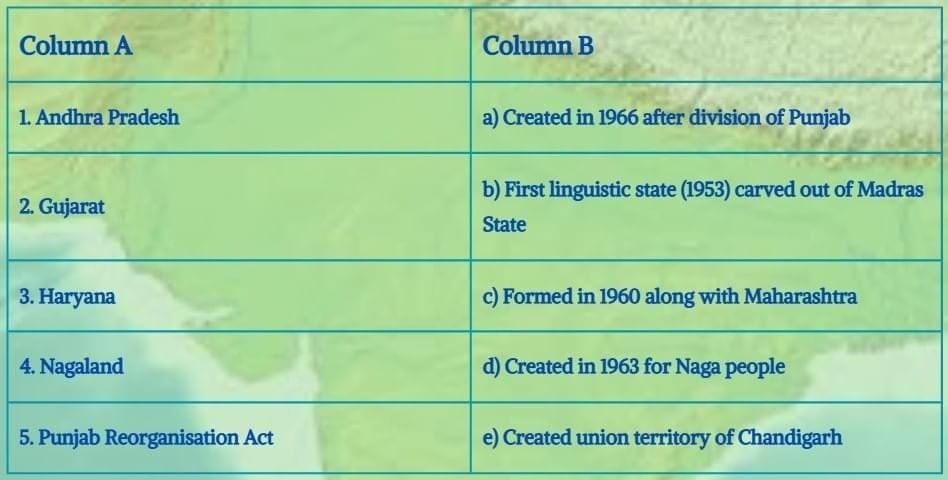
True or False
Q1. The iqta system made administrative positions hereditary in the Delhi Sultanate.
Q2. Timur’s invasion left Delhi devastated in the late 14th century.
Q3. Krishnadevaraya was a great builder and patron of literature.
Q4. Akbar started the jizya tax on non-Muslims.
Q5. Ahom warriors used their knowledge of terrain to defeat the Mughals at Saraighat.
Q6. Guru Gobind Singh introduced the Khalsa for strengthening Sikh identity.
Fill in the Blanks
Q1. Prithviraj Chauhan was defeated in ________, establishing the Delhi Sultanate.
Q2. The Vijayanagara Empire was founded by two brothers, ________ and ________.
Q3. The Rajput leader who resisted Akbar at the Battle of Haldighati was ________.
Q4. Babur’s army used ________ and ________ in the First Battle of Panipat.
Q5. Trade and ________ were economic strengths of medieval India.
Q6. Temples served as centers of ________, learning, and culture.
Q7. The Ahoms defeated the Mughals in the Battle of ________.
Very Short Question Answers
Q1. What is meant by “medieval period” in Indian history?
Q2. Name any two dynasties of the Delhi Sultanate.
Q3. Who was Timur and what was the impact of his invasion?
Q4. Why did Muhammad bin Tughlaq shift his capital, and what happened as a result?
Q5. Mention one reason for the decline of the Vijayanagara Empire.
Q6. What was the jizya tax?
Q7. Name the founder of the Bahmani Sultanate.
Q8. Who was Rani Durgavati and why is she remembered?
Q9. What was a hundi?
Q10. Mention one contribution of Akbar to literature and culture.
You can find Worksheet Solutions here: Worksheet Solutions: Reshaping India’s Political Map