Q1. Multiple Choice Questions (MCQs)
Instruction: Select the correct option for each question.
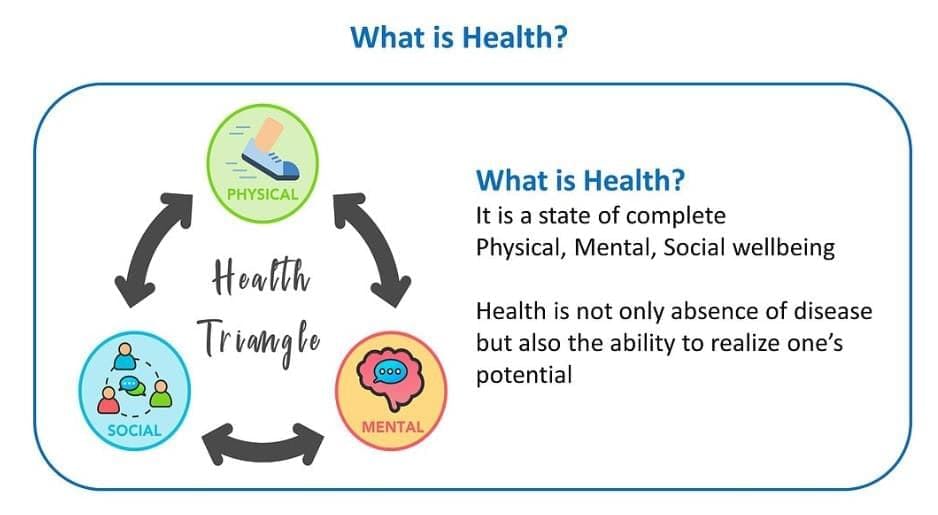 According to WHO, health means:
a) Only absence of disease
b) Physical fitness only
c) Complete physical, mental, and social well-being
d) Ability to work hard
Answer: c) Complete physical, mental, and social well-being
WHO defines health as overall well-being, not merely absence of illness.- Which is a sign, not a symptom?
a) Pain
b) Tiredness
c) Dizziness
d) Fever
Answer: d) Fever
Signs are measurable/observable (e.g., temperature); symptoms are subjective feelings. - Which disease is non-communicable?
a) Typhoid
b) Dengue
c) Diabetes
d) Chickenpox
Answer: c) Diabetes
Non-communicable diseases are not caused by pathogens and do not spread person to person. 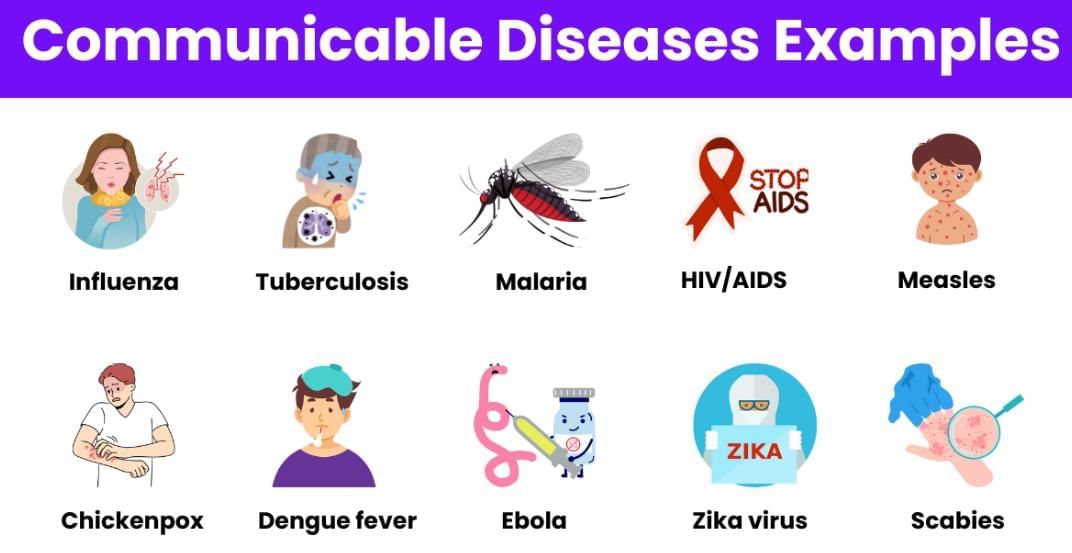 Which habit helps prevent communicable diseases?
a) Skipping breakfast
b) Sharing towels
c) Washing hands with soap
d) Sleeping very late
Answer: c) Washing hands with soap
Good hygiene reduces spread of germs.- Which statement about antibiotics is correct?
a) They kill viruses like flu
b) They treat protozoan diseases
c) They kill bacteria
d) They are safe to take without prescription
Answer: c) They kill bacteria
Antibiotics act against bacteria, not viruses or protozoa. - Who discovered the first antibiotic, penicillin?
a) Edward Jenner
b) Alexander Fleming
c) Robert Koch
d) Louis Pasteur
Answer: b) Alexander Fleming
In 1928, Fleming observed mould killing bacteria and identified penicillin. 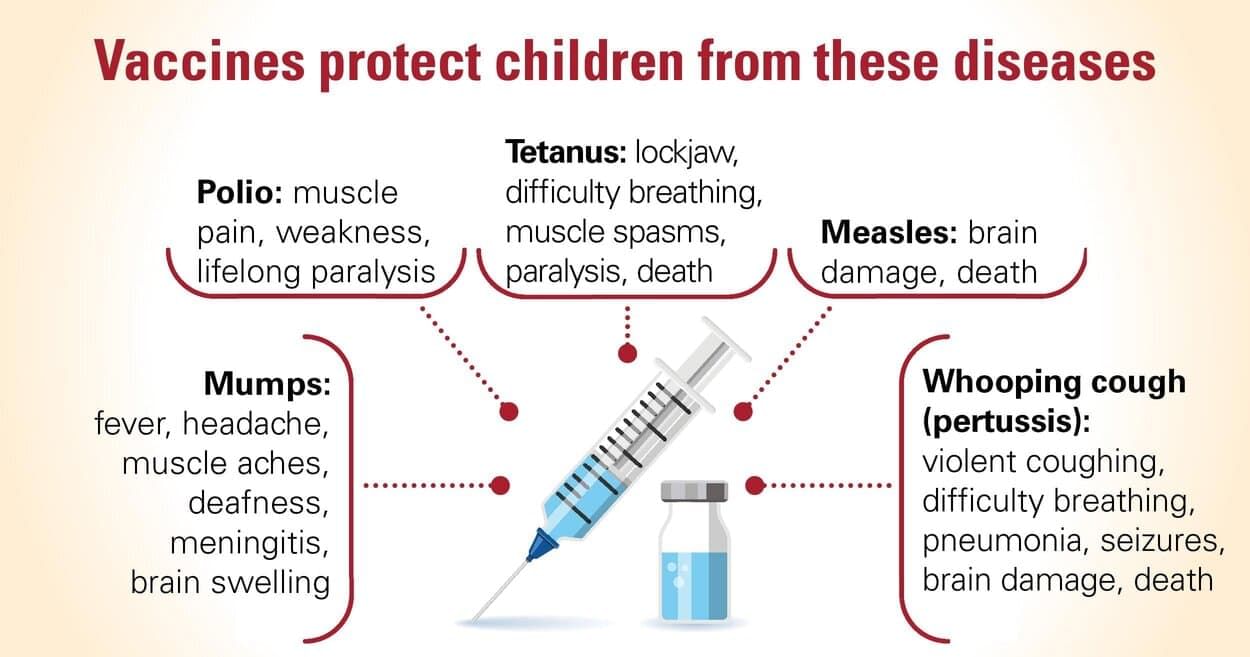 Vaccines protect by:
a) Killing pathogens directly in the body
b) Teaching the immune system to recognize germs
c) Giving energy to white blood cells
d) Replacing antibiotics
Answer: b) Teaching the immune system to recognize germs
Vaccines create acquired immunity by training the immune system.- Which factor commonly increases risk of NCDs?
a) Playing outdoors
b) Balanced diet
c) Longer lifespans and less physical activity
d) Handwashing
Answer: c) Longer lifespans and less physical activity
Lifestyle and aging contribute to higher NCD burden. - Which practice from Ayurveda supports holistic health?
a) Variolation
b) Dinacharya and ritucharya
c) Overuse of antibiotics
d) Skipping meals
Answer: b) Dinacharya and ritucharya
Ayurveda recommends daily and seasonal routines for balance. - AQI is used to measure:
a) Water purity
b) Body temperature
c) Air quality
d) Sleep quality
Answer: c) Air quality
Air Quality Index indicates how clean or polluted the air is.
Q2. Fill in the Blanks
Instruction: Fill in the blanks with the correct word based on the chapter.
- Health includes physical, mental, and ______ well-being.
Answer: social
WHO emphasizes social well-being along with body and mind. 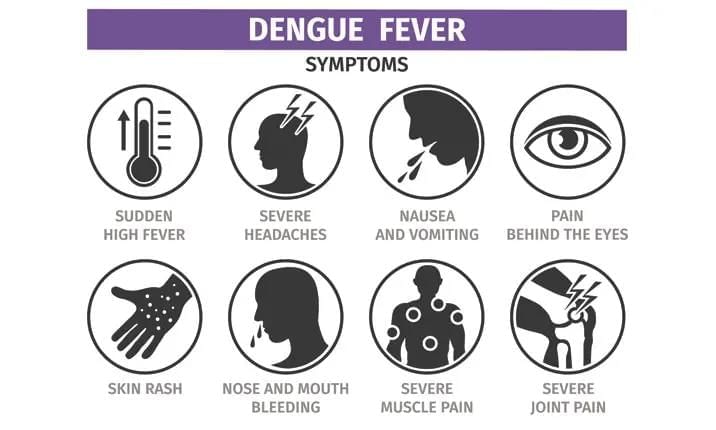 Headache is a ______ experienced by the patient.
Answer: symptom
Symptoms are felt by the person.- A measurable change like a rash or swelling is called a ______.
Answer: sign
Signs are observed or measured by others. - Diseases that spread from person to person are called ______ diseases.
Answer: communicable
Communicable diseases are caused by pathogens and can spread. - Diseases like cancer and asthma that do not spread are ______ diseases.
Answer: non-communicable
NCDs are linked to lifestyle, environment, or body functions. - The body’s ability to fight diseases is called ______.
Answer: immunity
Immunity is the defense capacity against pathogens. - Using weakened or inactive germs to train the body’s defense is called a ______.
Answer: vaccine
Vaccines create acquired immunity against specific diseases. - Taking antibiotics without need can lead to antibiotic ______.
Answer: resistance
Misuse allows bacteria to adapt and survive the drug. - Building and using toilets helps prevent diseases spread through contaminated ______.
Answer: water
Sanitation prevents water-borne diseases like diarrhoea. - Practising ______, like deep breathing, supports mental health in Ayurveda.
Answer: mindfulness (or yoga/pranayama)
Mindfulness, yoga, and pranayama promote calm and balance.
Q3. Very Short Answer Questions
Instruction: Answer the following questions in one line.
- What does WHO say about health?
Answer: It is complete physical, mental, and social well-being, not just absence of disease. - Name one vector that spreads communicable diseases.
Answer: Mosquito. - What is the term for the body’s natural defense system?
Answer: Immune system. - Which discovery led to modern antibiotics?
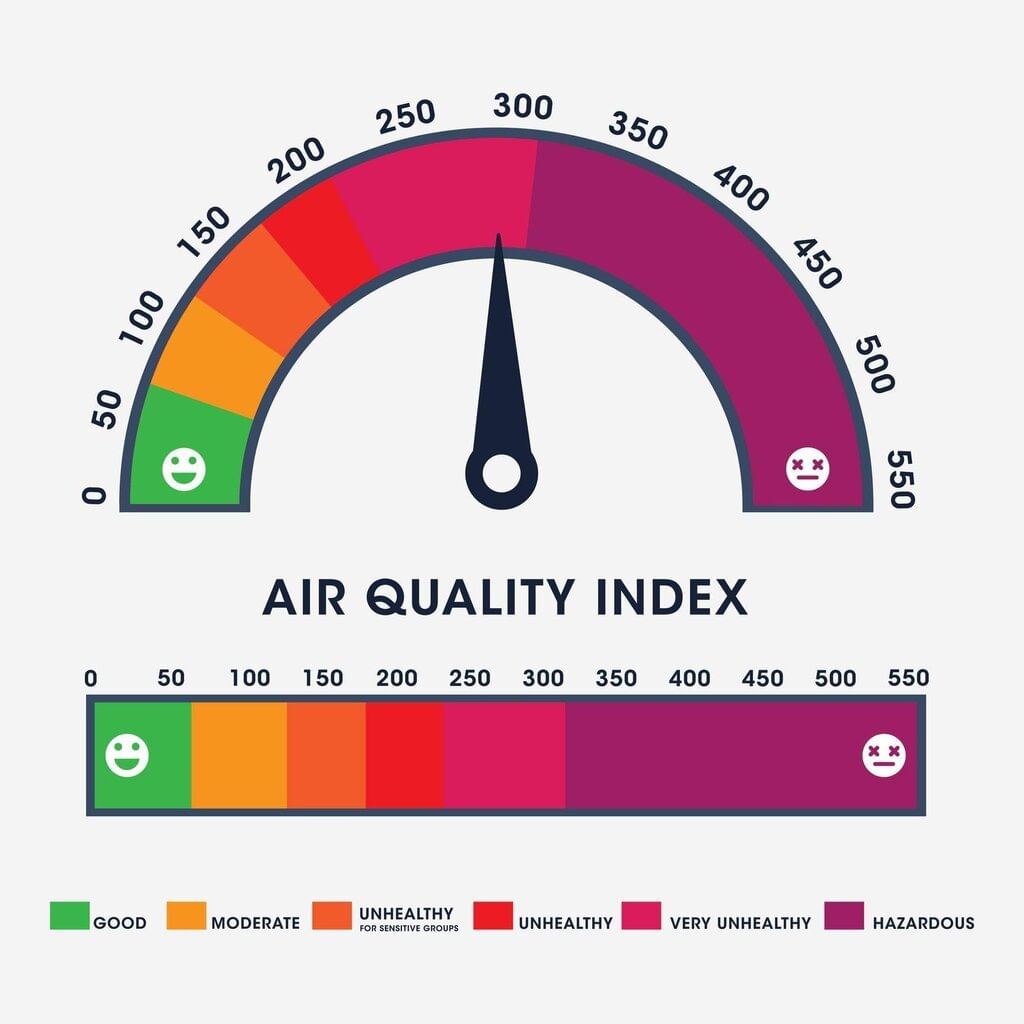
Answer: Penicillin discovered by Alexander Fleming in 1928. - What does AQI stand for?
Answer: Air Quality Index.
Q4. Short Answer Questions
Instruction: Answer the following questions in 2–3 lines.
- How did screen time and loneliness affect student’s health?
Answer: Excessive screen time and loneliness caused headaches, weight loss, and sleep problems—showing links between mental and physical health. Counselling and making friends improved his well-being. - How do communicable diseases spread through air?
Answer: Infected people release droplets with pathogens by coughing/sneezing/talking; others inhale them and get infected (e.g., flu, TB). - Why should we finish a full course of antibiotics?
Answer: Stopping early leaves some bacteria alive, which can become resistant, making future infections harder to treat. - How does community sanitation improve health?
Answer: Building and using toilets, reducing open defecation, and proper waste disposal stop germs from contaminating water and food, lowering diarrhoeal diseases. - Why are relationships important for health?
Answer: Supportive friendships and family time reduce stress, improve mood, and support mental and social well-being.
Q5. Match the Following
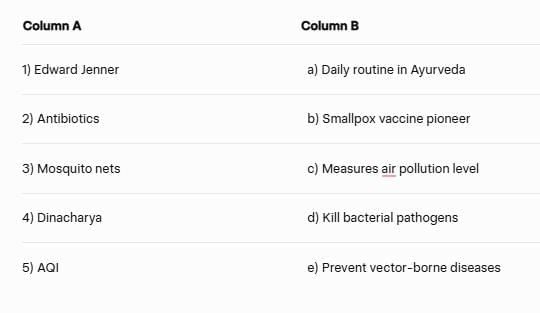
Instruction: Match Column A with the correct option in Column B.
Correct Matches:
- Edward Jenner — b) Smallpox vaccine pioneer
Jenner introduced the first vaccine using cowpox, leading to smallpox eradication. - Antibiotics — d) Kill bacterial pathogens
Antibiotics act against bacteria, not viruses. - Mosquito nets — e) Prevent vector-borne diseases
Nets prevent mosquitoes from biting humans and thus reduce transmission of malaria/dengue. - Dinacharya — a) Daily routine in Ayurveda
Daily habits for balanced body and mind in Ayurveda. - AQI — c) Measures air pollution level
Air Quality Index shows how clean or polluted the air is.