Q1. What happens around a wire when electric current flows through it?
Answer: A magnetic field is produced around the wire.
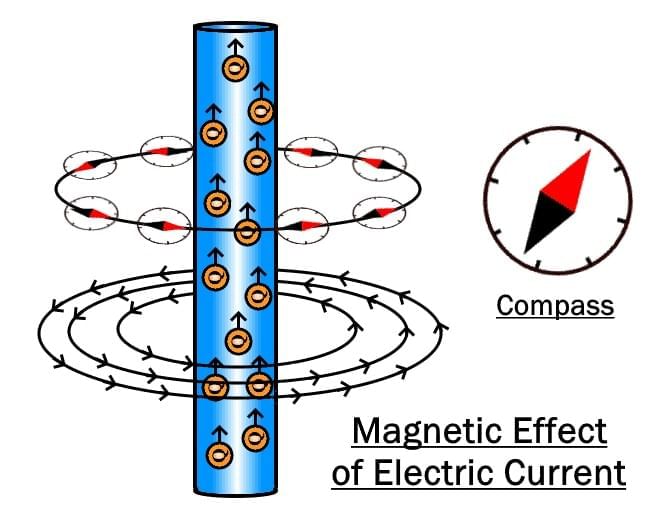
Q2. How can you detect the magnetic effect of a current-carrying wire?
Answer: By using a magnetic compass to see the needle deflect.
Q3. Who discovered the magnetic effect of electric current?
Answer: Hans Christian Oersted discovered it in 1820.
Q4. What is an electromagnet?
Answer: An electromagnet is a coil of wire around an iron core that becomes magnetic when current flows.
Q5. What happens to an electromagnet when the current is switched off?
Answer: It loses its magnetism.
Q6. How can you increase the strength of an electromagnet?
Answer: By increasing current, adding more coil turns, or using an iron core.
Q7. How can you reverse the poles of an electromagnet?
Answer: By reversing the direction of the current.
Q8. Where are lifting electromagnets commonly used?
Answer: In factories and scrap yards to move heavy metal objects.
Q9. What causes a current-carrying wire to heat up?
Answer: Resistance in the wire converts electrical energy into heat.
Q10. Which material is commonly used as a heating element?
Answer: Nichrome is commonly used.
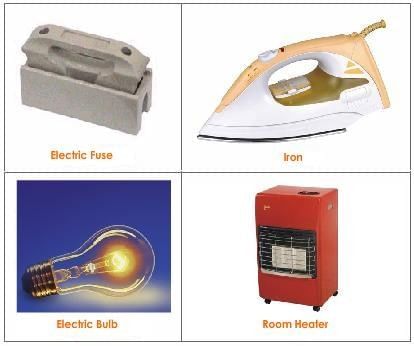
Q11. Name one device that works on the heating effect of electric current.
Answer: An electric iron works on the heating effect.
Q12. What safety step helps prevent overheating in household wiring?
Answer: Using correctly rated wires, plugs, and safety devices.
Q13. What is resistance?
Answer: Resistance is the property of a material that opposes the flow of electric current.
Q14. Which wire heats more: long thin or short thick, for the same material?
Answer: A long thin wire heats more.
Q15. What is an electric cell?
Answer: An electric cell is a device that produces electricity through a chemical reaction.
Q16. What are the two terminals of a cell called?
Answer: Positive terminal and negative terminal.
Q17. What acts as the electrolyte in a lemon battery?
Answer: Lemon juice acts as the electrolyte.
Q18. What are the electrodes in a simple lemon cell example?
Answer: A copper strip and an iron nail.
Q19. What is a dry cell?
Answer: A dry cell is a common single-use battery with a moist paste electrolyte.
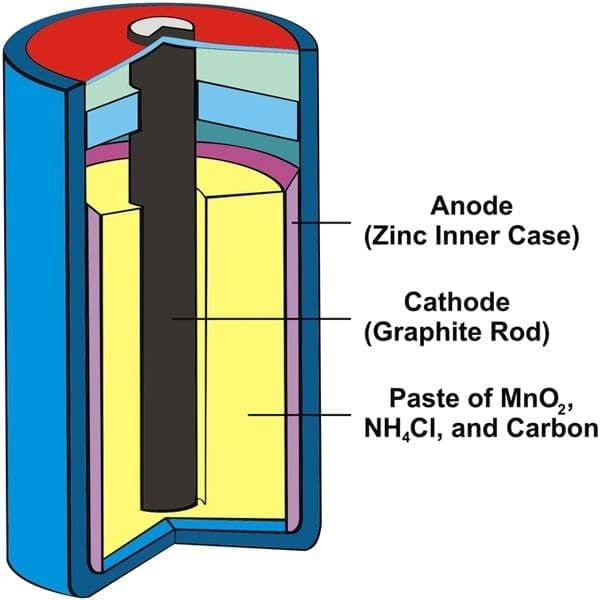
Q20. Which part of a dry cell is the negative terminal?
Answer: The zinc container is the negative terminal.
Q21. Which part of a dry cell is the positive terminal?
Answer: The carbon rod at the center is the positive terminal.
Q22. What is a rechargeable battery?
Answer: A battery that can be recharged and used many times.
Q23. Name a commonly used rechargeable battery type today.
Answer: Lithium-ion battery.
Q24. What is an electrolyte?
Answer: A substance that conducts electricity by the movement of ions.
Q25. What two main effects can electric current produce besides lighting a bulb?
Answer: It can produce magnetism and heat.