The Big Questions (Page 117)
1. What is the universal adult franchise?
Answer: Universal adult franchise is the principle that every Indian citizen aged 18 and above has the equal right to vote in elections, regardless of caste, creed, race, religion, gender, education, or income.
- As outlined in Article 326 of the Indian Constitution, it ensures that all eligible voters have one vote of equal value, forming the cornerstone of India’s democracy.
- This inclusive system allows citizens to participate in choosing representatives for the Lok Sabha, state legislative assemblies, union territories, and local bodies, reflecting the democratic spirit of equality and participation.
- India adopted this from its inception, granting voting rights to all adults, including women, unlike some nations like Switzerland, where women gained voting rights only in 1971.
2. What is an electoral system?
Answer: An electoral system is a set of rules and processes that decide how elections are held and how people are chosen to represent others in a democracy.
- This system includes steps for voter registration, casting votes, counting ballots, and figuring out who wins, all of which help ensure that elections are free, fair, and transparent.
- In India, the Election Commission of India (ECI) is in charge of managing the electoral process. This is an independent body that was created in 1950.
- The ECI oversees elections for the Lok Sabha (House of the People), Rajya Sabha (Council of States), state legislative assemblies, as well as for the President and Vice President of the country.
- To help manage elections, the ECI uses tools like the Model Code of Conduct (MCC) and electronic voting machines (EVMs).
- India’s electoral system is based on the idea of universal adult franchise, meaning that every adult citizen has the right to vote.
- For direct elections, India uses the First-Past-the-Post system, where the candidate who gets the most votes in a certain area wins.
3. How does India’s electoral system work?
Answer: India’s electoral system operates as a multi-tiered parliamentary democracy, enabling citizens to elect representatives at national, state, and local levels through universal adult franchise. Here’s how it functions:
Structure and Oversight: The Election Commission of India (ECI) was set up in 1950.
It is responsible for conducting elections for:
- Lok Sabha – 543 constituencies
- Rajya Sabha
- State legislative assemblies
- President and Vice President
- The State Election Commission works with the ECI to handle elections for local bodies.
- The ECI promotes fairness in elections by enforcing the Model Code of Conduct (MCC). The MCC helps to:
– Regulate the behaviour of candidates and political parties during campaigns
– Prevent the misuse of government resources
Types of Elections:
- Lok Sabha and State Assemblies: Direct elections use the “First-Past-the-Post” system, where voters choose Members of Parliament (MPs) for the Lok Sabha or Members of Legislative Assemblies (MLAs) for state assemblies. The party or coalition with a majority forms the government, with its leader becoming Prime Minister (national) or Chief Minister (state).
- Rajya Sabha: Indirect elections involve MLAs electing 233 of 245 members, with 12 nominated by the President. The “single transferable vote” system ensures proportional representation. Rajya Sabha members serve six-year terms, with one-third retiring every two years.
- President and Vice President: The President is elected indirectly by an Electoral College of MPs (Lok Sabha and Rajya Sabha) and MLAs from states and union territories like Delhi and Puducherry, using the single transferable vote system. The Vice President is elected by MPs from both houses, including nominated members.
- Voting Process: Citizens aged 18 and above register as voters in their constituency. Voting is conducted via EVMs, ensuring secrecy and efficiency. In 2024, about 980 million voters were eligible for the Lok Sabha elections. Accessibility measures include home voting for the elderly and disabled, braille-enabled voter cards, and postal ballots.
- Scale and Challenges: India’s system handles a massive electorate (15 times larger than the UK’s) across diverse geographies. The ECI addresses barriers by deploying officials to remote areas and using assistive technologies, ensuring inclusive participation.
This system, often called the “Festival of Democracy,” empowers citizens to shape governance through free and fair elections, supported by robust institutional mechanisms.
Questions and Activities (Page 138)
1. Why is universal adult franchise important for a healthy democracy?
Answer: Universal adult franchise is vital for a healthy democracy because it ensures inclusivity, equality, and active citizen participation. Without a universal franchise, democracy risks excluding groups, undermining fairness, and weakening governance, making it a cornerstone of India’s vibrant democratic system.
- Promotes Equality: By granting every citizen aged 18 and above one vote of equal value, regardless of caste, religion, gender, or socioeconomic status, it upholds the principle of fairness. This equality strengthens social cohesion and reduces discrimination, as seen in India’s early adoption of women’s voting rights, unlike nations like Switzerland (1971).
- Empowers Citizens: It gives every eligible voter a voice in choosing representatives, fostering a sense of ownership in governance. With 3.1 million elected representatives, including 1.3 million women in local bodies, universal franchise ensures diverse representation, amplifying marginalised groups like Scheduled Castes and Tribes (84 and 47 Lok Sabha seats, respectively).
- Strengthens Accountability: When all adults can vote, elected leaders are accountable to a broad electorate, encouraging responsive governance. Voter awareness and responsible voting protect democracy.
- Supports Democratic Legitimacy: Universal participation ensures the government reflects the people’s will, enhancing trust in institutions. India’s massive 2024 elections (980 million voters) demonstrate the system’s ability to manage diversity, reinforcing democratic credibility.
2. What is the meaning of ‘secret ballot’? Why is this important in a democracy?
Answer: Meaning of Secret Ballot: A secret ballot is a voting method where a voter’s choice remains confidential, ensuring no one else knows whom they voted for. In India, this is facilitated by electronic voting machines (EVMs) and private voting booths.
Importance in a Democracy:
- Prevents Coercion and Intimidation: Secrecy protects voters from pressure by candidates, political parties, or influential groups, allowing free choice without fear of retaliation. This is critical in diverse societies like India, where social hierarchies could otherwise influence voting.
- Ensures Free Expression: Voters can express their true preferences, reflecting the genuine will of the people, which is essential for democratic legitimacy.
- Reduces Vote-Buying: By making it impossible to verify a voter’s choice, secret ballots deter candidates from offering bribes or incentives, as noted in the Model Code of Conduct’s prohibition of such practices.
- Builds Trust in the System: Confidentiality assures voters that their vote is secure, encouraging participation and confidence in fair elections, as managed by the ECI.
3. Give examples of direct and indirect elections.
Answer: Here are examples of direct and indirect elections in India:
Direct Elections:
- Lok Sabha Elections: Citizens directly vote to elect Members of Parliament (MPs) for 543 constituencies, as seen in the 2024 elections with 980 million eligible voters. The candidate with the most votes in each constituency wins under the “First-Past-the-Post” system.
- State Legislative Assembly Elections: Voters directly elect Members of Legislative Assemblies (MLAs) in state constituencies, such as Vidhan Sabha elections in states like Uttar Pradesh or Kerala.
- Local Body Elections: Citizens directly vote for representatives in panchayats, municipalities, and other local bodies, with 3.1 million elected representatives, including 1.3 million women.
Indirect Elections:
- Rajya Sabha Elections: MLAs from state legislative assemblies elect 233 of 245 Rajya Sabha members, using the single transferable vote system. For example, Uttar Pradesh’s MLAs elect more members than Arunachal Pradesh’s due to population differences.
- Presidential Election: An Electoral College of MPs (Lok Sabha and Rajya Sabha) and MLAs from states and union territories like Delhi elects the President, using the single transferable vote system.
- Vice Presidential Election: MPs from both Lok Sabha and Rajya Sabha, including nominated members, elect the Vice President, also using the single transferable vote system.
Direct elections involve public voting, while indirect elections rely on elected representatives, ensuring balanced representation across India’s federal structure.
4. How is the election of members to the Lok Sabha different from that to the Rajya Sabha?
Answer: The election processes for the Lok Sabha and Rajya Sabha differ significantly in method, electorate, and structure:
Lok Sabha Elections:
- Method: Direct elections where citizens aged 18 and above vote in 543 constituencies using the “First-Past-the-Post” system, where the candidate with the most votes wins, even without a majority.
- Electorate: Universal adult franchise applies, with about 980 million eligible voters in 2024. Every registered voter in a constituency can participate.
- Term and Structure: Members of Parliament (MPs) serve five-year terms unless the Lok Sabha is dissolved earlier. The house is temporary and can be dissolved for fresh elections.
- Purpose: Lok Sabha MPs represent constituencies and form the national government, with the majority party’s leader becoming Prime Minister.
Rajya Sabha Elections:
- Method: Indirect elections where elected Members of Legislative Assemblies (MLAs) vote for 233 of 245 members, using the single transferable vote system for proportional representation. The President nominates 12 members for their expertise.
- Electorate: Only MLAs from state assemblies vote, not the general public. The number of seats per state varies by population (e.g., more for Uttar Pradesh than Arunachal Pradesh).
- Term and Structure: Rajya Sabha is a permanent house, never dissolving. Members serve six-year terms, with one-third retiring every two years, ensuring continuity.
- Purpose: Rajya Sabha represents states in the federal structure, acting as a revising chamber and balancing regional interests.
Key Differences:

5. What, in your view, are the advantages of the EVM over paper ballots?
Answer: Electronic Voting Machines (EVMs), introduced in India’s electoral system, offer several advantages over traditional paper ballots:
- Efficiency and Speed: EVMs streamline the voting and counting process, reducing the time needed to declare results. Unlike paper ballots, which require manual counting and are prone to delays, EVMs provide instant tallies, critical for India’s massive elections (e.g., 980 million voters in 2024).
- Accuracy and Reduced Errors: EVMs minimise human errors in counting, such as miscounting or invalid votes due to improper marking. The use of EVM ensures reliable results, enhancing trust in outcomes.
- Prevention of Booth Capturing: EVMs deter malpractices like booth capturing (where groups seize polling stations to stuff ballots), as they limit the rate of vote recording and have tamper-evident features, unlike paper ballots.
- Environmental and Cost Benefits: EVMs reduce paper usage, saving resources and lowering long-term costs compared to printing, transporting, and storing millions of ballots for each election.
- Voter Secrecy: EVMs ensure the secret ballot principle, as votes are recorded electronically without traceable marks, unlike paper ballots, which could be manipulated or identified in some cases.
- Ease of Use: EVMs are user-friendly, with clear buttons and symbols, aiding voters with low literacy. The accessibility measures like braille-enabled voter cards suggest that EVMs integrate well with such innovations.
While paper ballots allow manual verification, EVMs’ efficiency, security, and scalability make them ideal for India’s complex electoral system, as evidenced by their widespread use under ECI oversight.
6. Voter turnout has been declining in some urban areas of India. What could be the reasons for this trend, and what steps can be taken to encourage more people to vote?
Answer: Reasons for Declining Voter Turnout in Urban Areas:
- Voter Apathy: Urban voters, especially youth, may feel disconnected from politics, perceiving their vote as insignificant or distrusting politicians due to issues like money power and criminal candidates, as noted in the challenges section.
- Busy Lifestyles: Urban residents often prioritise work, education, or personal commitments over voting, especially if polling day isn’t a holiday or queues are long.
- Migration and Registration Issues: Many urban dwellers are migrants who may not be registered in their current constituency or face difficulties updating voter IDs, reducing participation.
- Lack of Awareness: Urban voters may lack information about candidates or the importance of voting, unlike rural areas where community mobilisation is stronger.
- Accessibility Barriers: Despite ECI efforts, urban polling stations may lack adequate facilities (e.g., ramps, short queues), discouraging the elderly or disabled.
Steps to Encourage Voting:
- Awareness Campaigns: Leverage media, social media, and educational institutions to highlight voting’s importance, targeting urban youth with engaging content like videos or influencer campaigns for strengthening democracy.
- Voter-Friendly Measures: Increase polling stations in urban areas, extend voting hours, or allow online voter registration updates to accommodate busy schedules and migrants.
- Incentives and Recognition: Offer non-monetary incentives like voter certificates or public recognition for high-turnout areas, while ensuring compliance with the Model Code of Conduct.
- Corporate and Community Engagement: Encourage companies to give paid leave on polling day and partner with resident associations to organise voter drives in urban neighbourhoods.
- Technology Integration: Expand digital tools, like apps for voter registration or locating polling stations, building on ECI’s assistive technologies (e.g., wheelchair requests).
- Civic Education: Introduce mandatory civics programs in urban schools and colleges to instil a sense of democratic responsibility early, call for voter education.
7. Why do you think a proportion of seats in the Lok Sabha is reserved for the Scheduled Castes and Scheduled Tribes? Write a short note.
Answer: Short Note: Reserved Seats for Scheduled Castes and Scheduled Tribes in Lok Sabha
India’s Lok Sabha reserves 84 seats for Scheduled Castes (SCs) and 47 seats for Scheduled Tribes (STs) to ensure representation of historically marginalised communities. This reservation addresses centuries of social and economic discrimination faced by SCs and STs, who were excluded from mainstream political and social structures. By guaranteeing their presence in Parliament, India’s Constitution promotes inclusivity and equality, aligning with the principles of universal adult franchise.
Reservation empowers SCs and STs to voice their concerns, influence legislation, and access opportunities in governance. It corrects imbalances in political power, ensuring diverse perspectives shape national policies. For example, reserved constituencies elect MPs who advocate for affirmative action, education, and economic upliftment for these communities. This system also inspires grassroots participation, as seen in the 3.1 million elected representatives in local bodies, including SCs and STs.
The reservation reflects India’s commitment to social justice, compensating for historical disadvantages while strengthening democracy by amplifying marginalised voices in the “Festival of Democracy.”
8. Social media is changing the way we experience elections — from catchy campaign reels and live speeches to political debates on Instagram and Twitter. But is this strengthening democracy or confusing it? Discuss in pairs: What are the benefits, what are the challenges, and what might the future of elections be in a digital age?
Answer: Instructions for Pairs: One partner argues how social media strengthens democracy, while the other highlights how it confuses it. Then, discuss the future of elections together.
Benefits of Social Media in Elections (Strengthening Democracy):
- Increased Voter Awareness: Platforms like Instagram and Twitter (now X) share campaign reels, live speeches, and candidate profiles, informing voters, especially youth, about issues and choices that call for media-driven voter education.
- Wider Reach: Social media connects candidates with remote or urban voters, bypassing traditional media barriers. In 2024, 980 million voters could access digital campaigns, enhancing participation.
- Engagement and Dialogue: Live debates and Q&A sessions foster interactive politics, encouraging voters to ask questions and hold candidates accountable on informed voting.
- Mobilisation: Hashtags and viral campaigns (e.g., #VoteIndia) motivate turnout, countering urban voter apathy noted as a challenge.
- Transparency: Social media exposes electoral malpractices, complementing ECI’s efforts, like T.N. Seshan’s reforms, to ensure fairness.
Challenges of Social Media in Elections (Confusing Democracy):
- Misinformation and Fake News: False narratives, like doctored videos or divisive posts, can mislead voters, undermining the ECI’s Model Code of Conduct and confusing the electorate.
- Polarisation: Social media amplifies communal or regional divides, echoing colonial “divide and rule” tactics, which can distort democratic discourse.
- Money Power Influence: Paid ads and influencers, noted as a challenge in elections, skew visibility toward wealthy candidates, compromising fairness.
- Echo Chambers: Algorithms limit exposure to diverse views, reducing critical thinking and informed choice call for responsible voting.
- Overload and Apathy: Excessive content can overwhelm voters, contributing to urban turnout decline by fostering disengagement.
Future of Elections in a Digital Age:
- Hybrid Campaigns: Elections may blend physical rallies with virtual events, using AI-driven voter outreach and ECI-verified digital platforms to combat misinformation.
- Digital Voting Innovations: Secure online voting or blockchain-based systems could increase accessibility, building on ECI’s 2024 home-voting initiatives, but require robust cybersecurity.
- Regulation and Literacy: Stricter social media regulations, like MCC extensions, and digital literacy programs could ensure informed participation, addressing current challenges.
- Global Influence: India’s digital election model, with 980 million voters, could inspire global democracies, but risks external interference if unregulated.
- Youth-Centric Democracy: With urban youth driving social media trends, future elections may prioritise their issues (e.g., jobs, climate), reshaping political agendas.
Discussion Tips: Use examples from recent elections (e.g., 2024 Lok Sabha) or personal social media experiences. Reflect on how ECI’s voter awareness campaigns could adapt to digital challenges.
9. Visit the website https://www.indiavotes.com, and choose a parliamentary constituency election from any year and explore its results. Do the same for an assembly election in your state.
Answer: In 2024, the following states and Union Territories held Assembly elections in India:
- Andhra Pradesh: Held on May 13, 2024.
- Arunachal Pradesh: Held on April 19, 2024.
- Haryana: Held on October 5, 2024.
- Jammu and Kashmir: Held between September 18 and October 1, 2024.
- Jharkhand: Held on November 13 and November 20, 2024.
- Maharashtra: Held on November 20, 2024.
- Odisha: Held between May 13 and June 1, 2024.
- Sikkim: Held on April 19, 2024.
Part 1: Parliamentary Constituency Election (Lok Sabha)
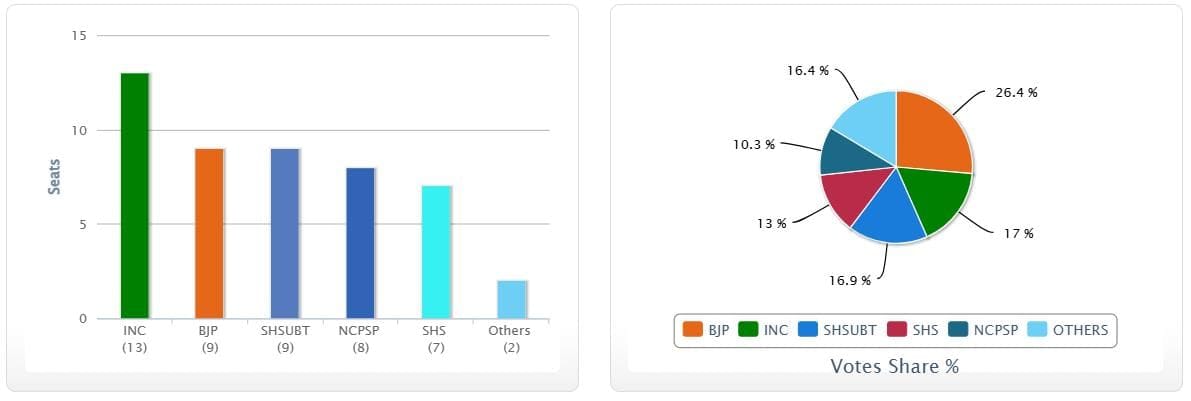
Chosen Constituency and Year: 2024 Lok Sabha election results for Maharashtra
Process: Visited https://www.indiavotes.com, selected PC Elections (Lok Sabha), chose 2024, and navigated to Maharashtra
Results: IndiaVotes PC: Maharashtra 2024
- General Information is provided
Electors: 9,29,43,890
Votes Polled: 5,71,79,133
Turnout: 61.5%
Parliamentary Constituencies: 48[GENERAL: 39 | SC: 5 | ST: 4] - Results are depicted in different styles like Bar graphs, pie charts, tabular form, etc
Part 2: State Assembly Election
Chosen Constituency and Year: 2024 Vidhan Sabha / Assembly election results, Maharashtra
Process: On https://www.indiavotes.com, selected “Assembly Elections,”
Results: IndiaVotes AC: Maharashtra 2024
- General Information is provided
Electors: 9,70,25,119
Votes Polled: 6,41,30,622
Turnout: 66.1%
Total ACs: 288 [General:234 | SC:29 | ST:25] - Results are depicted in different styles like Bar graphs, pie charts, tabular form, etc