Multiple Choice Questions (MCQs)
Instruction: Select the correct option for each question.
Q1. What was Verghese Kurien’s main reason for choosing to work in Anand, Gujarat?
(a) To become a chief executive of a large company
(b) To serve the nation’s farmers and contribute to India’s progress
(c) To pursue a career in the Indian Army
(d) To move to the US as a successful NRI
Ans: (b) To serve the nation’s farmers and contribute to India’s progress
Kurien chose to work in Anand to help dairy farmers and build a nation free from hunger and poverty, as mentioned in his letter to his grandson.
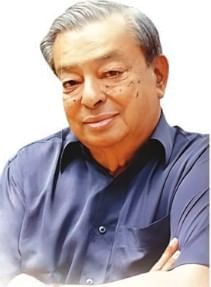
Verghese Kurien
Q2. What value did Kurien emphasize as the most important in his life?
(a) Wealth
(b) Fame
(c) Integrity
(d) Ambition
Ans: (c) Integrity
Kurien stressed that integrity, especially personal integrity, is crucial, as it involves being honest with oneself and others, guiding his contributions.
Q3. What award did Kurien receive in 1999, as mentioned in the chapter?
(a) Bharat Ratna
(b) Padma Shri
(c) Padma Bhushan
(d) Padma Vibhushan
Ans: (d) Padma Vibhushan
Kurien recalls the 1999 ceremony where he received the Padma Vibhushan, and his grandson Siddharth tried on the medal.
Q4. How did Kurien’s grandmother contribute to his work in Anand?
(a) She moved to the US to support him financially
(b) She supported his choice to live and work in Anand
(c) She encouraged him to join the Indian Army
(d) She advised him to pursue metallurgy
Ans: (b) She supported his choice to live and work in Anand
Kurien’s grandmother chose to stand by his decision to work in Anand, giving him strength despite the lack of comforts there.
Q5. What does Kurien say about failure in the chapter?
(a) Failure is about not succeeding in any task
(b) Failure is not trying or contributing to the common good
(c) Failure is about not earning awards
(d) Failure is about not being happy
Ans: (b) Failure is not trying or contributing to the common good
Kurien explains that failure is not about not succeeding but about not putting in effort or contributing to society, even modestly.

Fill in the Blanks
Instruction: Fill in the blanks with the correct word based on the chapter.
Q1. Kurien started his work soon after India became ________.
Ans: independent
Kurien mentions starting his career after India’s independence, focusing on building a nation free from hunger and poverty.
Q2. Kurien worked with a small ________ of dairy farmers in Anand.
Ans: cooperative
He joined a cooperative of dairy farmers in Anand, which was a key part of his life’s work to empower farmers.
Q3. Kurien’s mentor in Anand was ________ Patel.
Ans: Tribhuvandas
Kurien credits Tribhuvandas Patel as his mentor and supporter, whose values influenced his work in Anand.
Q4. Kurien dedicated his musings to his grandson ________ and other children.
Ans: Siddharth
The letter is addressed to Siddharth, with hopes that it inspires him and his generation to work for the greater good.
Q5. Kurien believed that life is a ________ and should not be wasted.
Ans: privilege
He describes life as a privilege, urging Siddharth to use his talents and contribute to the common good responsibly.
Very Short Answer Questions
Instruction: Answer the following questions in one line.
Q1. Where did Kurien choose to work instead of pursuing other careers?
Ans: Anand, Gujarat
Q2. What was the time period when Kurien began his work, as mentioned in the chapter?
Ans: Soon after India’s independence
Q3. What did Kurien’s grandmother sacrifice to support his work in Anand?
Ans: Simple comforts
Q4. What did Kurien say about the rewards of a life well-spent?
Ans: They come from working for the larger good
Q5. What did Kurien urge Siddharth to earn in his lifetime?
Ans: His own reward Short Answer Questions
Instruction: Answer the following questions in 2–3 lines.
Q1. Why did Kurien prefer writing a letter to his grandson instead of using a telephone?
Ans: Writing a letter conveys thoughts that can be treasured and re-read for lasting joy. Unlike a phone call’s fleeting joy, a letter becomes a keepsake. It helps Siddharth understand Kurien’s life and work later.
Q2. What was Kurien’s dream for India as described in the chapter?
Ans: Kurien dreamed of an India free from hunger and poverty, where people live with equal respect. He wanted the nation to be among the foremost in the world. This vision guided his work with farmers.
Q3. How did Kurien’s choice to work in Anand change his life?
Ans: Choosing Anand led Kurien to a life of service to farmers, transforming his career from metallurgy or military options. It gave him purpose and recognition. This choice defined his meaningful contributions.
Q4. What did Kurien learn about happiness from his experiences?
Ans: Kurien learned there is little connection between life’s circumstances and happiness. Comparing oneself to others creates false images of perfection. He advises cherishing what one has instead.
Q5. How did Kurien view the role of personal integrity in his work?
Ans: Kurien saw personal integrity as being honest with oneself, which made honesty with others effortless. It was a core value inherited from his family and mentor. This guided his contributions to India’s progress.