Table of contents
Key Points of the Story
- Anne finds writing a diary strange but necessary to express her feelings.
- She feels lonely and lacks a true friend, so she treats her diary as one and names it “Kitty.”
- Although she has a loving family and many acquaintances, she cannot confide in anyone.
- Anne shares a brief sketch of her life, her family, and her school days.
- She deeply loved her grandmother, whose death affected her greatly.
- Her class is anxious about their promotion results; Anne is only unsure about math.
- Mr. Keesing, her math teacher, punishes her for talking in class by assigning essays.
- Anne uses humor and clever arguments in her essays, calling talking an inherited trait.
- For the final punishment, she writes a poem, turning the joke back on Mr. Keesing.
- Mr. Keesing appreciates her creativity and stops punishing her, even starts making jokes.
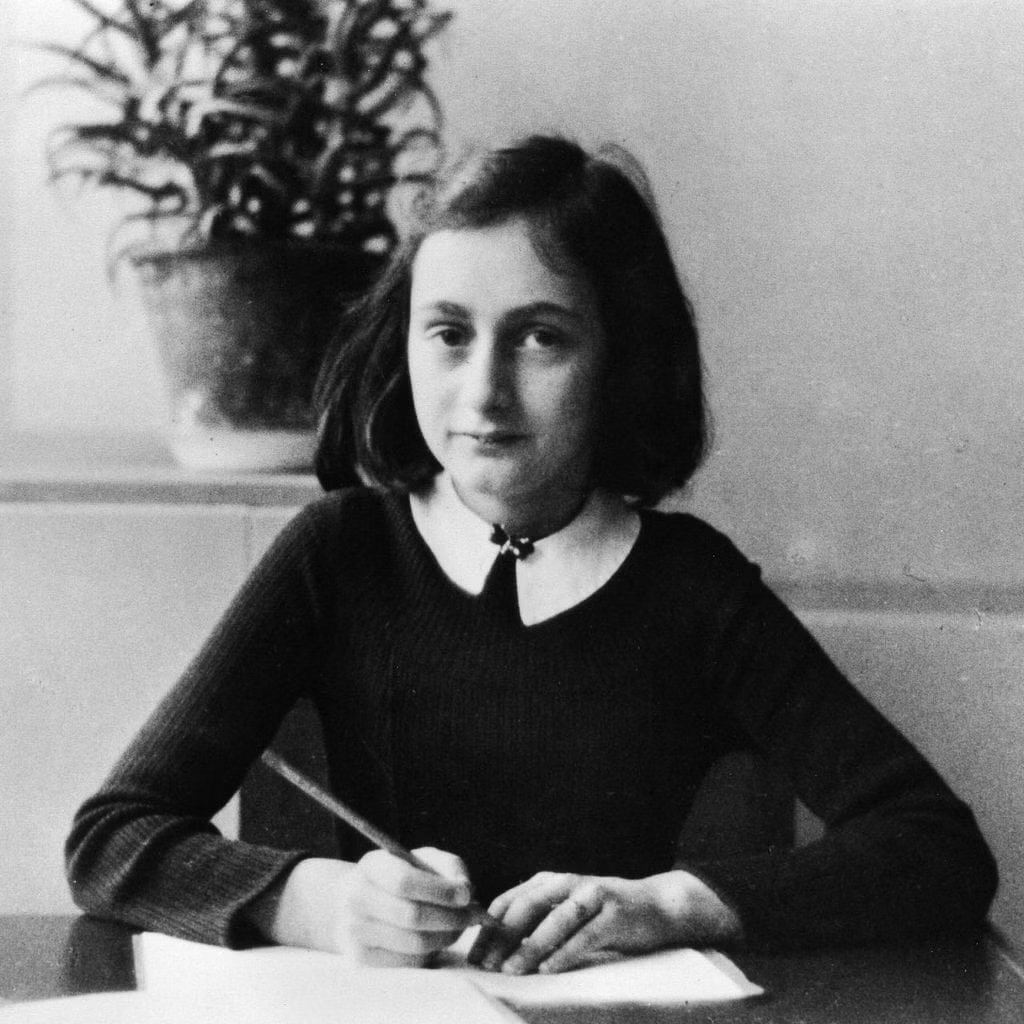
Anne Frank
Detailed Summary
From the Diary of Anne Frank is an autobiography of a young Jewish girl who wrote her thoughts in a diary. At first, she felt it was an unusual experience for her to pen down all her thoughts. She believed that no one in the near future would be interested to read about a young girl’s past experiences from her diary. However, she still decided to write her thoughts in her diary and named it “Kitty”. She considered her diary to be her true and loyal friend as she was lonely and had no friends to talk to. Anne felt that her diary had more capacity to absorb thoughts than people with low patience levels. Further, she mentioned how much she loved her family, especially her adorable father, who gifted her the diary on her thirteenth birthday.
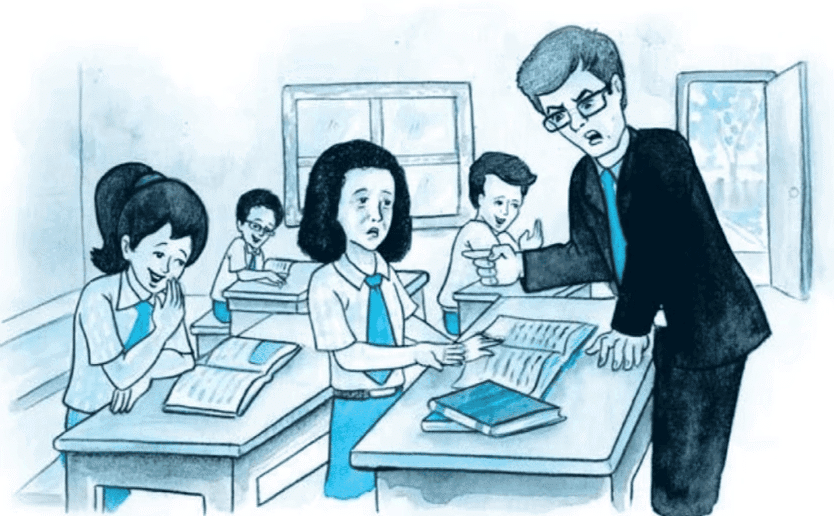
On 20th June 1942, Anne stated how her entire class was nervous about their exam results. Although she was confident about other subjects, she wasn’t quite sure about mathematics. She and her friend, G, pleaded with the students to calm down and not make noise, but all in vain. She felt that about a quarter of the class were dummies who should be kept back in the same class as they did not participate in other activities.
Besides, Anne also mentioned how the maths teacher, Mr Keesing, was annoyed by her talkative nature. He would often punish her with extra homework whenever she talked more during his class. In the first punishment, he asked her to write an essay on ‘A Chatterbox’, which in itself was a weird topic for Anne. She gave good thought to the topic and decided to present convincing arguments in her essay, justifying her points in support of talking. She mentioned that she would try to improve herself, but she could not do anything about the trait that she inherited from her mother. When her teacher read the essay, he found it amusing and assigned her a second essay, ‘An Incorrigible Chatterbox’, for her unreformable talkative nature.
However, during the third lesson, Mr Keesing had read enough of her justifications and assigned her another topic entitled, ‘Quack, Quack, Quack, Said Mistress Chatterbox’ as a punishment for her incorrigible habit. Anne almost ran out of thoughts after writing essays on similar topics previously. This time she took the help of her friend, Sanne, who was good at poetry and wrote the essay from beginning to end in satirical verse. When her teacher read the essay he took it lightly and thoroughly enjoyed it. Since then, Anne was allowed to talk in class and was never assigned any extra homework by Mr Keesing.
Try yourself:
What was the topic of the third essay assigned by the math professor to the author?
- A.”Chatterbox”
- B.”An Incorrigible Chatterbox”
- C.”Quack, Quack, Quack, Said Mistress Chatterbox”
- D.Poetry
View Solution
Theme/ Message
Theme
- Loneliness and Companionship: Anne Frank feels lonely and creates an imaginary friend, “Kitty,” in her diary to cope with her isolation.
- Power of Writing: Writing in her diary helps Anne express thoughts and feelings she can’t share with others, providing emotional relief.
- Self-Improvement and Resilience: Anne shows resilience and creativity when punished for her talkativeness, using her punishments as opportunities for self-expression.
Message
- Importance of Expression: Expressing thoughts and emotions, even through writing, is essential for mental well-being.
- Creativity in Adversity: Challenges can be met with creativity and resilience, turning punishments into opportunities for growth.
- Value of Companionship: Creating a sense of companionship, even imaginatively, helps combat loneliness and fosters a sense of connection.
Difficult Words
- Brooding – deeply thinking about something makes someone unhappy
- Adorable – cute
- Prompt – reminded
- Confide – blindly trust someone and tell everything
- Enhance – improve
- Plunked down – drop down
- Intended – calculated
- Outbursts – attack
- Dummy – idiot
- Unpredictable – unsure/not sure
- Ramble on – talk or write
- Incorrigible – addicted
- Ingenuity – genius
- Exhausted – too much tired
- Ridiculous – to very funny
- Roaming – moving here and there
- Tranquil – calm
- Sulking – be silent