Multiple Choice Questions (MCQs)
Q 1. Which of the following is a type of connective tissue that transports substances in the body?
(a) Bone
(b) Blood
(c) Cartilage
(d) Tendon
Q 2. What is the main function of ligaments in the body?
(a) Connect muscles to bones
(b) Provide flexibility to bones
(c) Connect bones to other bones
(d) Store minerals like calcium and phosphorus
Q 3. Which of the following tissues is responsible for the transport of water and minerals in plants?
(a) Phloem
(b) Parenchyma
(c) Collenchyma
(d) Xylem
Q4. Which of the following tissues provides protection to organs and forms a barrier in the body?
(a) Muscular tissue
(b) Nervous tissue
(c) Epithelial tissue
(d) Connective tissue
Q5. Which of the following tissues makes the plant hard and stiff, and is found in the husk of a coconut?
(a) Parenchyma
(b) Collenchyma
(c) Sclerenchyma
(d) Phloem
Fill in the blanks
(i) ________________ tissue is found between the skin and muscles, around blood vessels and nerves and in the bone marrow.
(ii) The signal that passes along the nerve fibre is called a _______________.
(iii) Xylem and phloem together form a __________ in plants.
(iv) __________ is the most common simple permanent tissue, consisting of unspecialized cells with thin cell walls.
(v) The flexibility in plants is due to permanent tissue named ____________.
Short Answer Questions
Q1. Water hyacinth floats on the water surface. Explain.
Q2. What are the different types of connective tissue?
Q3. Define the process of differentiation.
Q4. How does the cork act as a protective tissue?
Q5. What are complex permanent tissues? Name their types and describe their functions.
Q6. If a potted plant is covered with a glass jar, water vapour appears on the wall of the glass jar. Explain why?
Q7. What is the utility of tissues in multicellular organisms?
Q8. Give three features of cardiac muscles.
Q9: What is glandular epithelium, and how is it formed?
Q10. Draw a labelled diagram of a Neuron.
Crossword Puzzle
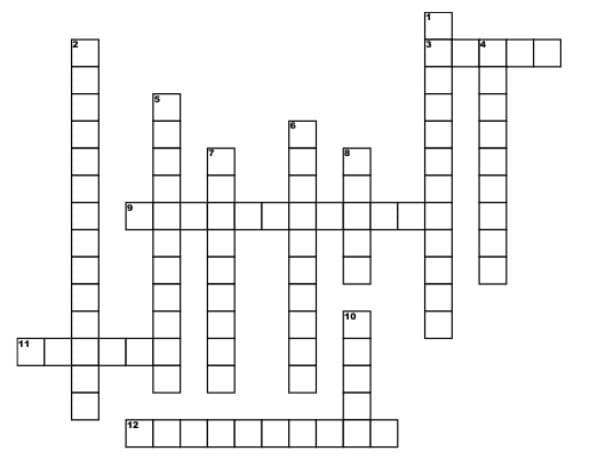
Across Clues
3. A component of the waxy outer coating of aquatic plant leaves.
9. Tissue is only meant for growth.
11. Conducts dissolved food materials produced by photosynthesis.
12. Most abundant of the cell types found in the major parts of higher plants.
Down Clues
1. Thick, tough secondary walls impregnated with lignin
2. Certain cells are associated with the sieve tube
4. Tubes with pits rather than openings at the ends
5. Provide flexible support for growing and mature plant organs. An extra primary wall in the corners
6. Parenchyma tissue with connected air spaces
7. Outermost layer of cells
8. Pairs of cells that border stomata
10. Chief conducting tissue of water and minerals