NCERT Solutions: Exploring Some Geometric Themes
Page No. 72
Figure it Out
Q: Draw the initial few steps (at least till Step 2) of the shape sequence that leads to the Sierpinski Carpet.
Ans: Step 0: Take cut out of an equilateral triangle Δ.
Step 1: Divide it into 4 equilateral triangles by joining the midpoints of each of the sides.
Remove the central triangle.
Step 2: Divide each of the remaining 3 equilateral triangles into four equilateral triangles and remove the central triangle in each of them.
Step 3: Repeat the steps again and again to get Sierpinski’s gasket.
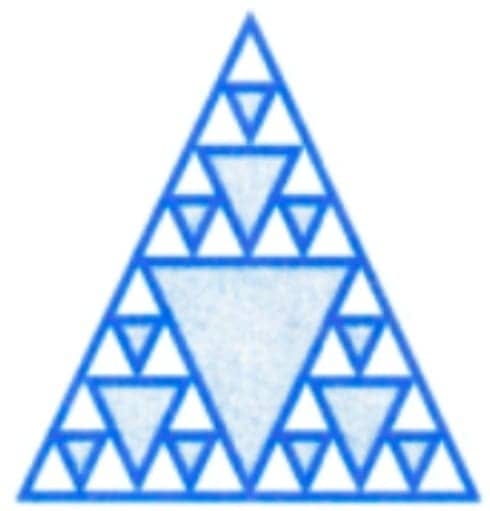
Q: Find the number of holes, and the triangles that remain at each step of the shape sequence that leads to the Sierpinski Triangle.
Ans: Number of holes in
Step 0: 0 hole
Step 1: 1 hole
Step 2: 1 + 3 = 4 holes
Step 3: 1 + 3 + 9 = 13 holes
Step 4: 1 + 3 + 9 + 27 = 40 holes
.
.
.


Q: Find the area of the region remaining at the nth step in each of the shape sequences that lead to the Sierpinski fractals. Take the area of the starting square/triangle to be 1 sq. unit.
Ans:
For Sierpinski Carpet:
Let An = area remaining at step n
- Step 0: A₀ = 1 sq. unit (full square)
- Step 1: A₁ = $\frac{8}{9}$ sq. unit (8 squares out of 9 remain)
- Step 2: A₂ = ($\frac{8}{9}$) × ($\frac{8}{9}$) = ($\frac{8}{9}$)² sq. unit
At each step, we keep $\frac{8}{9}$ of the area from the previous step.
Therefore, An = ($\frac{8}{9}$)ⁿ sq. unit
For Sierpinski Triangle:
Let An = area remaining at step n
- Step 0: A₀ = 1 sq. unit (full triangle)
- Step 1: A₁ = $\frac{3}{4}$ sq. unit (3 triangles out of 4 remain)
- Step 2: A₂ = ($\frac{3}{4}$) × ($\frac{3}{4}$) = ($\frac{3}{4}$)² sq. unit
At each step, we keep $\frac{3}{4}$ of the area from the previous step.
Therefore, An = ($\frac{3}{4}$)ⁿ sq. unit
Page No. 73Koch Snowflake
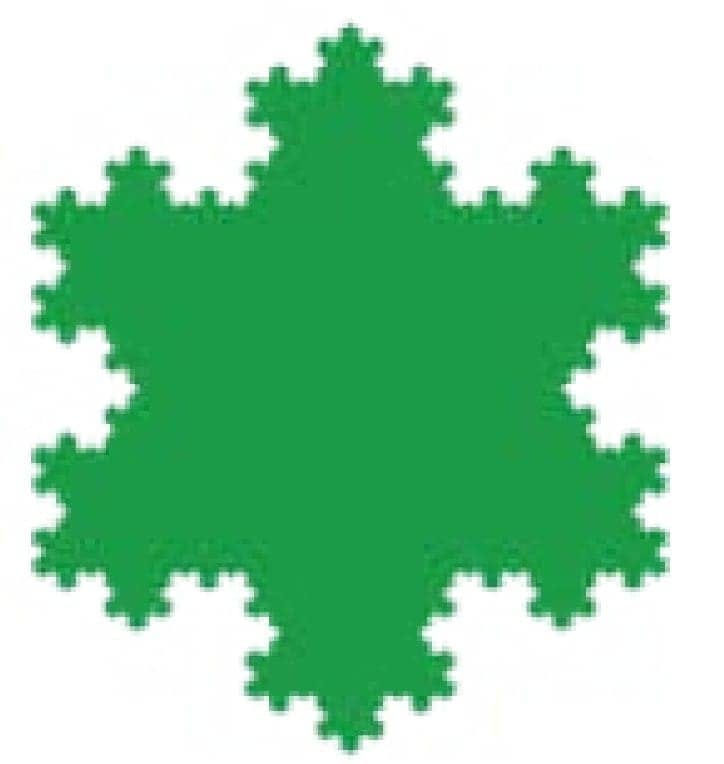
Figure it Out
Q: Draw the initial few steps (at least till Step 2) of the shape sequence that leads to the Koch Snowflake.
Ans:
Q: Find the number of sides in the nth step of the shape sequence that leads to the Koch Snowflake.
Ans: Number of sides:
Step 0: 3
Step 1: 3 × 4 = 12
Step 2: 3 × 42 = 48
Step 3: 3 × 43 = 192
.
.
.
Step n: 3 × 4n
Q: Find the perimeter of the shape at the nth step of the sequence. Take the starting equilateral triangle to have a sidelength of 1 unit.
Ans:
Let Pn = perimeter at step n
Step 0:
- Side length = 1 unit
- Number of sides = 3
- P₀ = $3 \times 1$ = 3 units
Step 1:
- Each side of length 1 is divided into 3 parts, each of length $\frac{1}{3}$
- Each side becomes 4 segments of length $\frac{1}{3}$
- Number of sides = 12
- P₁ = 12 × ($\frac{1}{3}$) = 4 units
Step 2:
- Each side of length $\frac{1}{3}$ becomes 4 segments of length $\frac{1}{9}$
- Number of sides = 48
- P₂ = 48 × ($\frac{1}{9}$) = $\frac{16}{3}$ units
Pattern:
- At step n, each original side is divided into 3ⁿ equal parts
- Length of each small segment = 1/3ⁿ
- Number of sides = $3 \times 4$ⁿ
- Perimeter Pn = ($3 \times 4$ⁿ) × (1/3ⁿ)
Therefore, Pn = 3 × ($\frac{4}{3}$)ⁿ units
Note: As n increases, the perimeter keeps increasing and approaches infinity!
Page No. 75Build it in Your Imagination
Q: Picture your name, then read off the letters backwards. Make sure to do this by sight, not by sound — really see your name! Now try with your friend’s name.
Ans: This is a visualization exercise. Let’s take an example:
If your name is “RAVI”:
- Visualize: R-A-V-I
- Reading backwards by sight: I-V-A-R
If your friend’s name is “PRIYA”:
- Visualize: P-R-I-Y-A
- Reading backwards by sight: A-Y-I-R-P
Practice this with different names to improve visual memory and spatial thinking.
Page No. 76
Q: Cut off the four corners of an imaginary square, with each cut going between midpoints of adjacent edges. What shape is left over? How can you reassemble the four corners to make another square?
Ans: ABCD is a square.
P, Q, R, and S are midpoints of AB, BC, CD, and AD, respectively.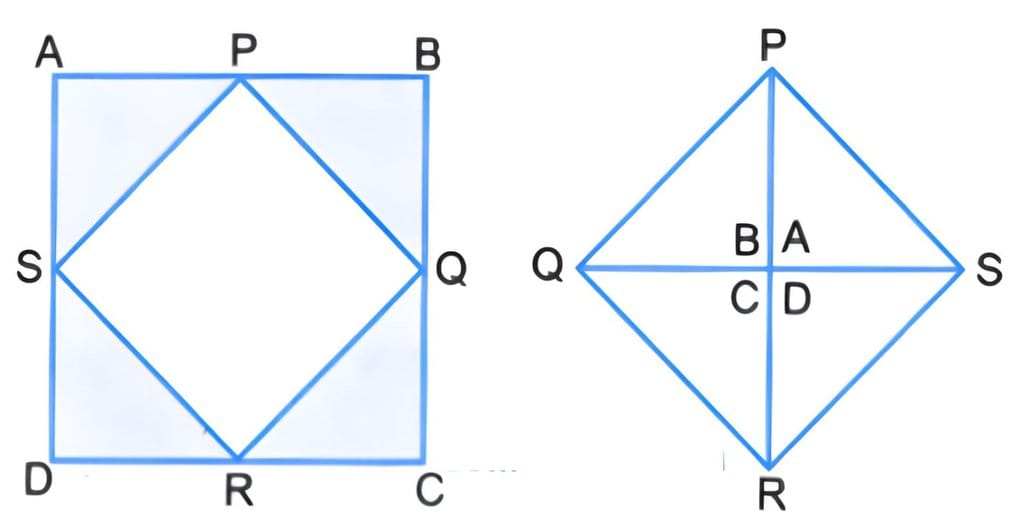
When we cut along PQ, QR, RS, and PS, we again get a square.
If we join the shaded portions again, we get a square of the same size as that of PQRS.
Q: Mark the sides of an equilateral triangle into thirds. Cut off each corner of the triangle, as far as the marks. What shape do you get?
Ans: XYZ is an equilateral triangle with AY = YZ = ZX.
Divide each side into 3 equal parts as shown.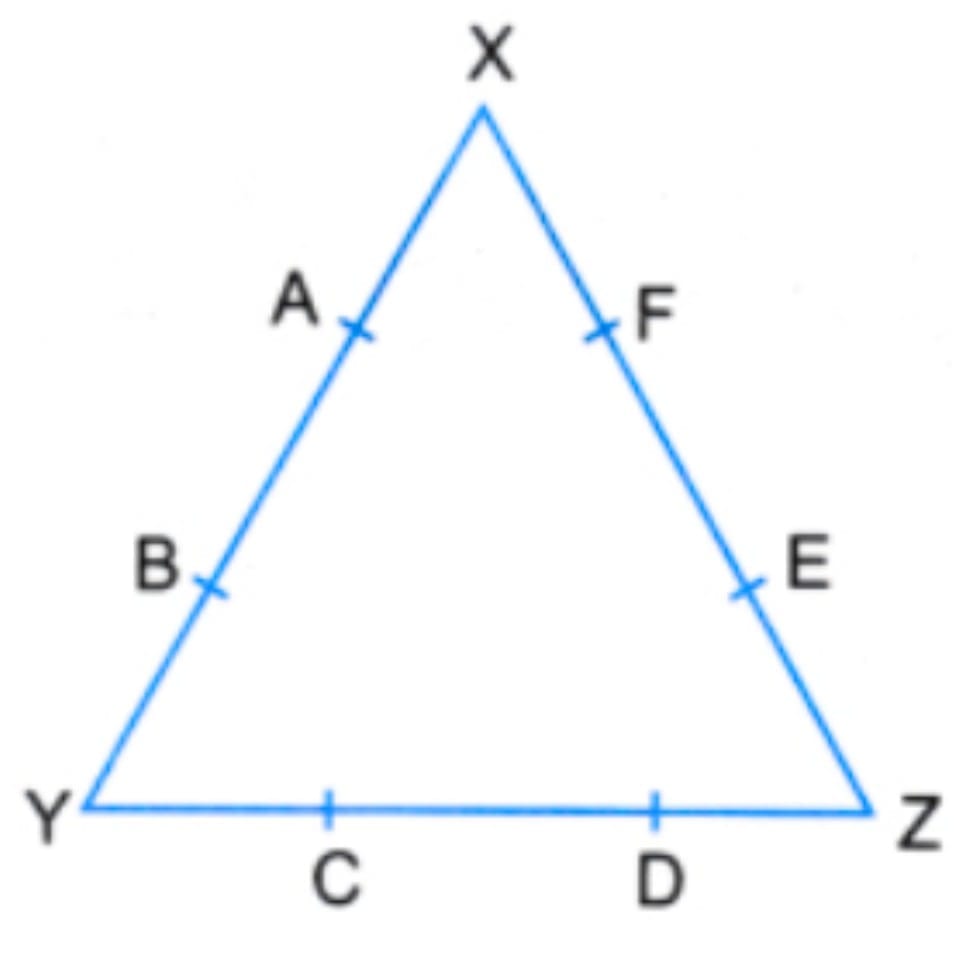
We note XA = AB = BY = YC = CD = DZ = ZE = EF = FX
Join AF, BC, ED.
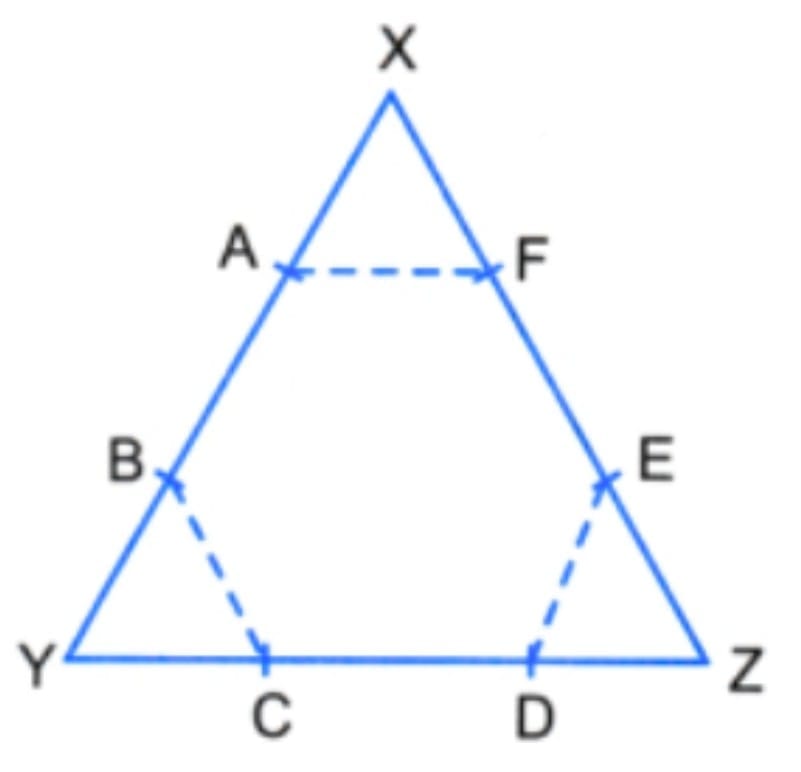
Shape ABCDEF is a hexagon.
As all sides of the hexagon are equal, it is called regular hexagon.
Q: Mark the sides of a square into thirds and cut off each of its corners as far as the marks. What shape is left?
Ans: KLMN is a square.
Each side of the square is divided into three equal parts.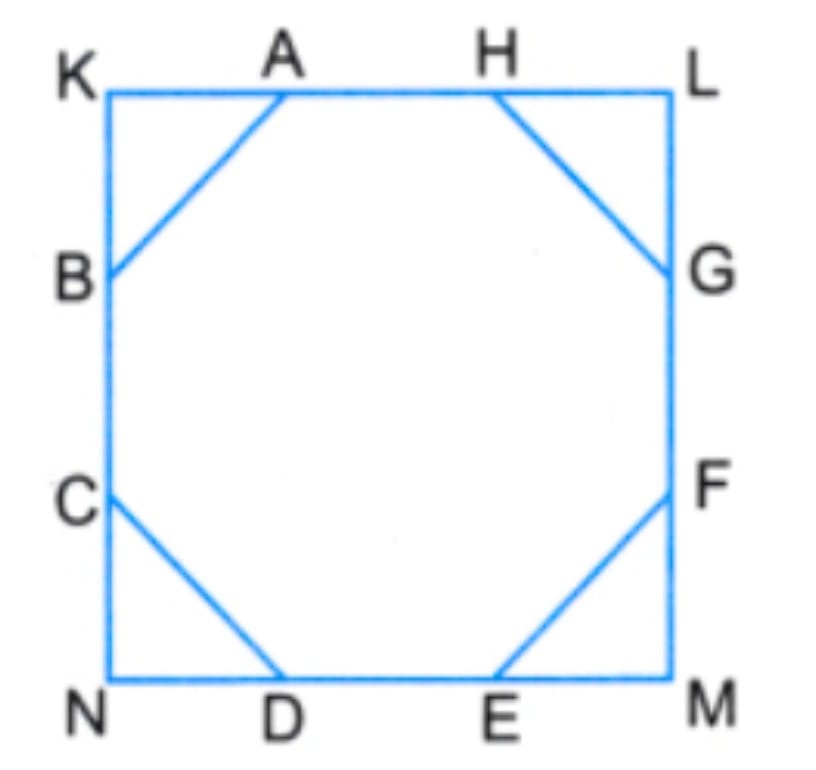
When the four corners of the square are cut off, we get an octagon.
Page No. 77
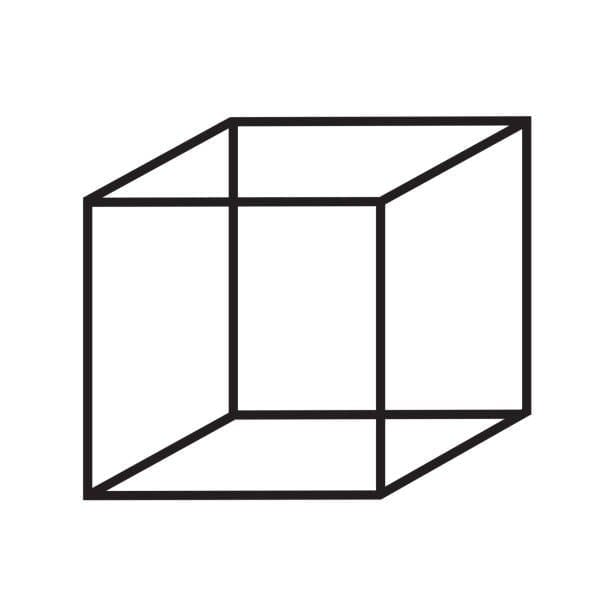
Q: A solid whose profile has a square outline
Ans: A solid with a profile that has a square outline is a CUBE.
 Q: A solid whose profile has a circular outline
Ans: A solid whose profile has a circular outline is a sphere
Q: A solid whose profile has a triangular outline
Ans: A solid whose profile has a triangular outline is a triangular pyramid.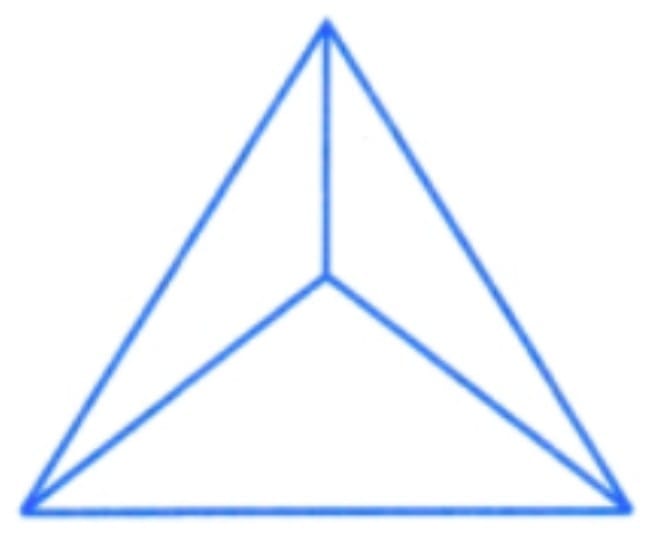
Q: A solid with a rectangular profile from one viewpoint and a circular profile from another viewpoint
Ans: 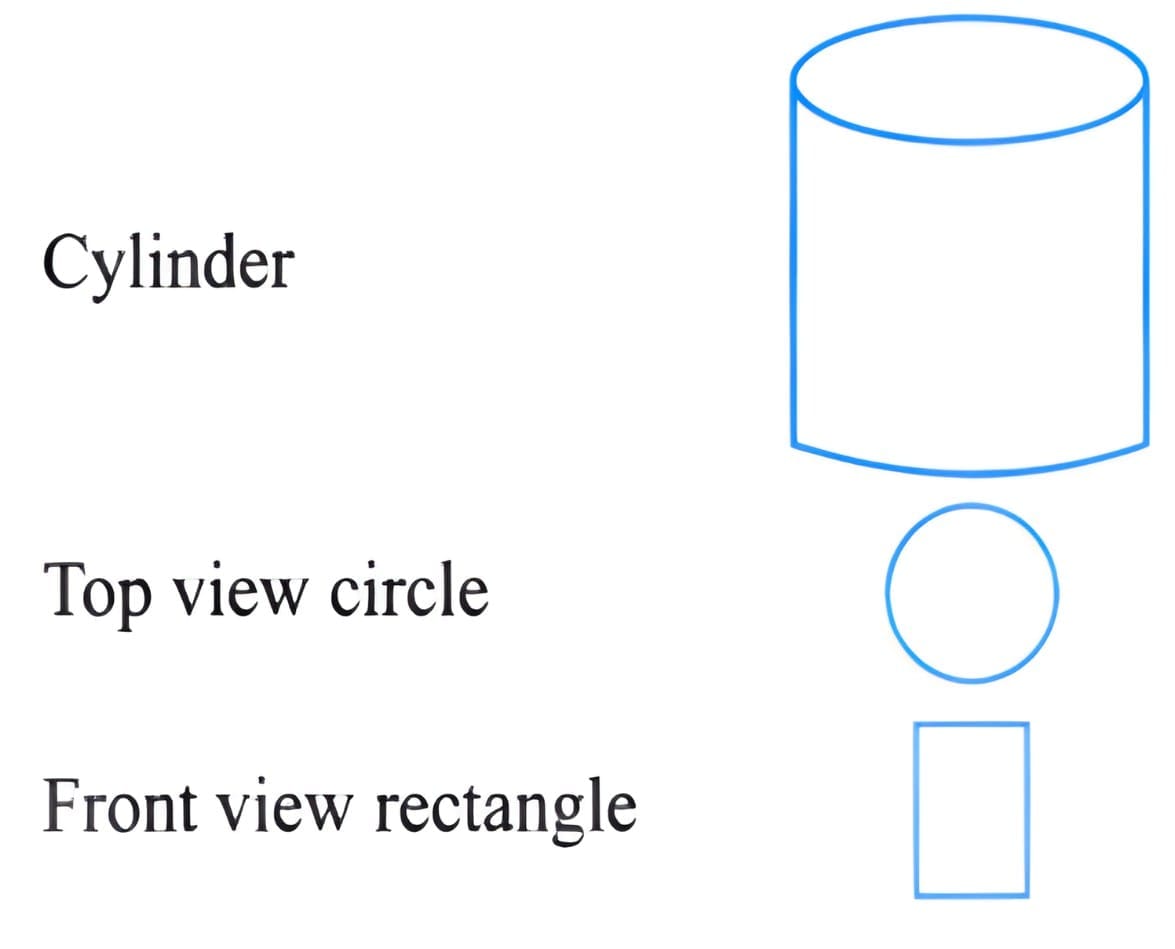
Q: A solid with a circular profile from one viewpoint and a triangular one from another viewpoint
Ans:
Q: A solid with a rectangular profile from one viewpoint and a triangular one from another viewpoint
Ans:
Q: A solid with a trapezium shaped profile from one viewpoint and a circular one from another viewpoint
Ans: A truncated cone or a cone cut off from a larger cone.
This shape is called a frustum.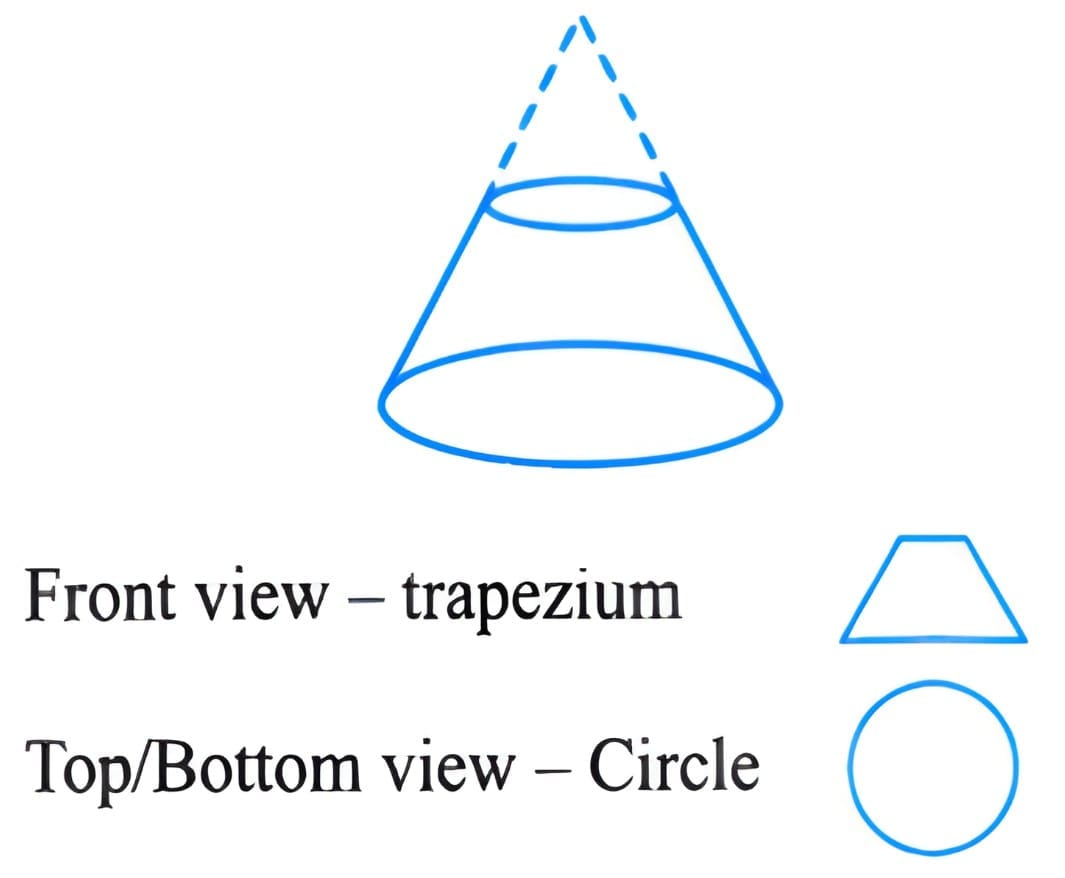
Q: A solid with a pentagonal profile from one viewpoint and a rectangular one from another viewpoint
Ans: Pentagon Base Prism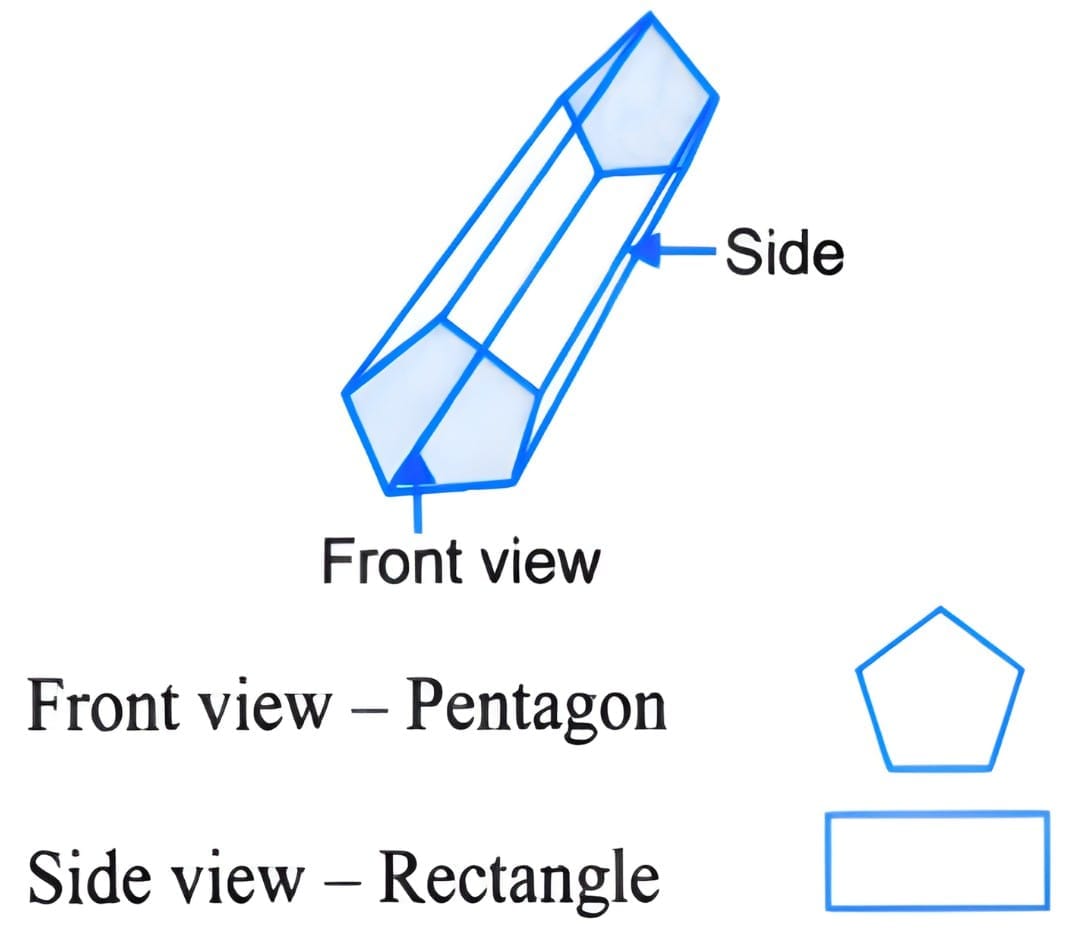
Page No. 79Math Talk Questions
Q: If the congruent polygons of a prism have 10 sides, how many faces, edges and vertices does the prism have? What if the polygons have n sides?
Ans: Number of sides of a congruent polygon of a prism = 10
Number of faces = n + 2
= 10 + 2
= 12
Number of edges = 3 × n
= 3 × 10
= 30
Number of vertices = 2 × n
= 2 × 10
= 20
A polygon with n sides will have
Number of faces = n + 2
Number of edges = 3n
Number of vertices = 2n
Q: If the base of a pyramid has 10 sides, how many faces, edges and vertices does the pyramid have? What if the base is an n-sided polygon?
Ans: Number of sides of the base of the pyramid = 10
Number of faces = n + 1
= 10 + 1
= 11
Number of edges = 2n
= 2 × 10
= 20
Number of vertices = n + 1
= 10 + 1
= 11
If the base is an n-sided polygon, then
No. of faces = n + 1
No. of edges = 2n
No. of vertices = n + 1
Page No. 80 – 81Figure it Out
Q: Which of the following are the nets of a cube? First, try to answer by visualisation. Then, you may use cutouts and try.
(i), (ii), (iii), (iv), (v), (vi)
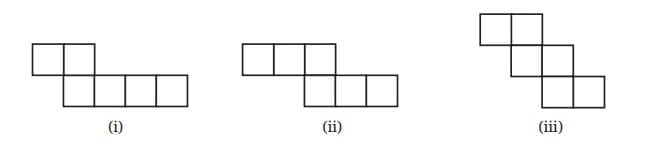
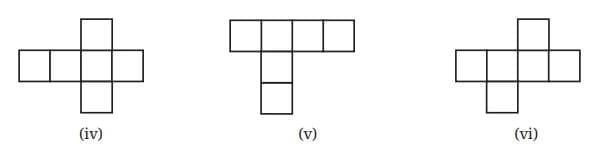
Ans: (i) No
(ii) Yes
(iii) Yes
(iv) Yes
(v) No
(vi) Yes
Q: A cube has 11 possible net structures in total. In this count, two nets are considered the same if one can be obtained from the other by a rotation or a flip. Find all the 11 nets of a cube.
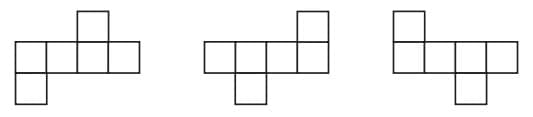
Ans: 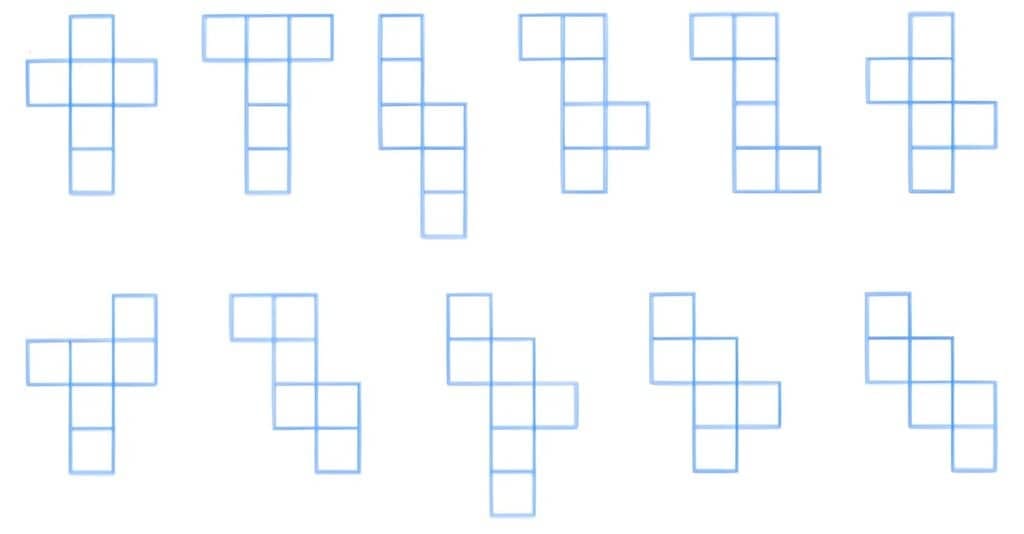
Q: Draw a net of a cuboid having sidelengths:
(i) 5 cm, 3 cm, and 1 cm
(ii) 6 cm, 3 cm, and 2 cm
Ans:
Q: What is a net of a regular tetrahedron? Which of the following are nets of a regular tetrahedron? Are there any other possible nets?

Ans: (ii) and (iv) are not a net of a tetrahedron.
Math Talk
Q: Draw a net with appropriate measurements that can be folded into a regular tetrahedron. Verify if it works by making an actual cutout.
Ans: Draw an equilateral triangle of side length 6 cm.
Mark the midpoints of the sides of the triangle.
Join the midpoints. Fold along the dotted lines to get the tetrahedron.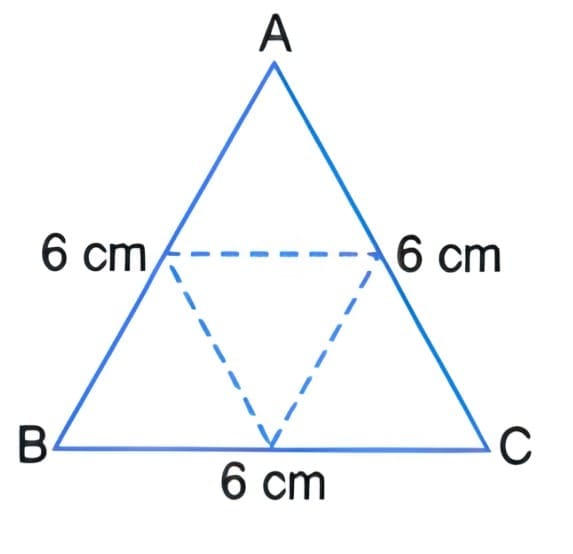
Cut out the triangle to form an actual tetrahedron.
Q: Draw a net with appropriate measurements that can be folded into a square pyramid. Verify if it works by making an actual cutout.
Ans: (a) Draw four squares of side 4 cm in a row.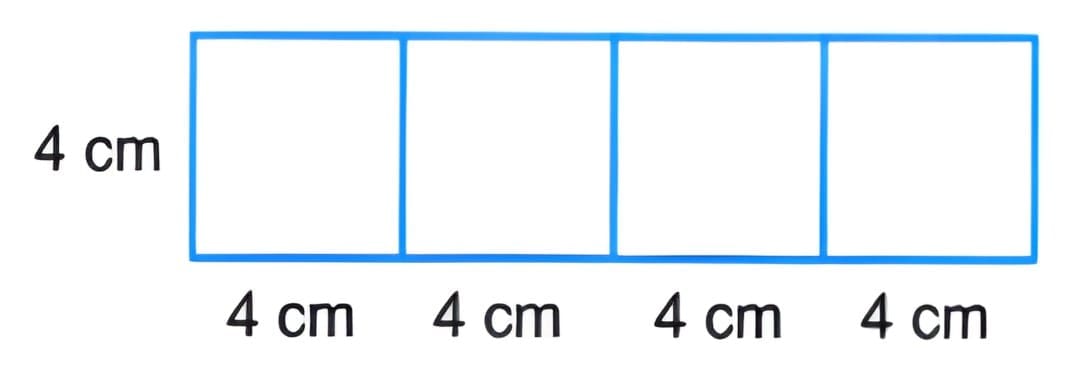
(b) On the opposite edges of any of the middle two squares, draw two more squares of side 4 cm each.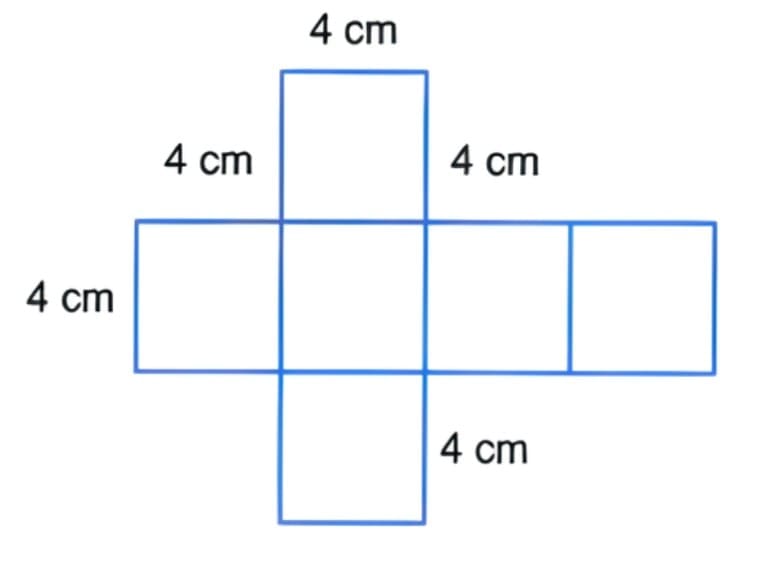
Fold along the common edges to form a cube of edge length 4 cm.
Cut along the outer boundary and fold along the common edge to form a cube.
Q: What is the net of a cylinder?
Ans: A net of a cylinder is a rectangle and two equal circles.
For the net of a cylinder, draw a circular face of radius r cm on the opposite side of a rectangle with length = 2πr and breadth = h.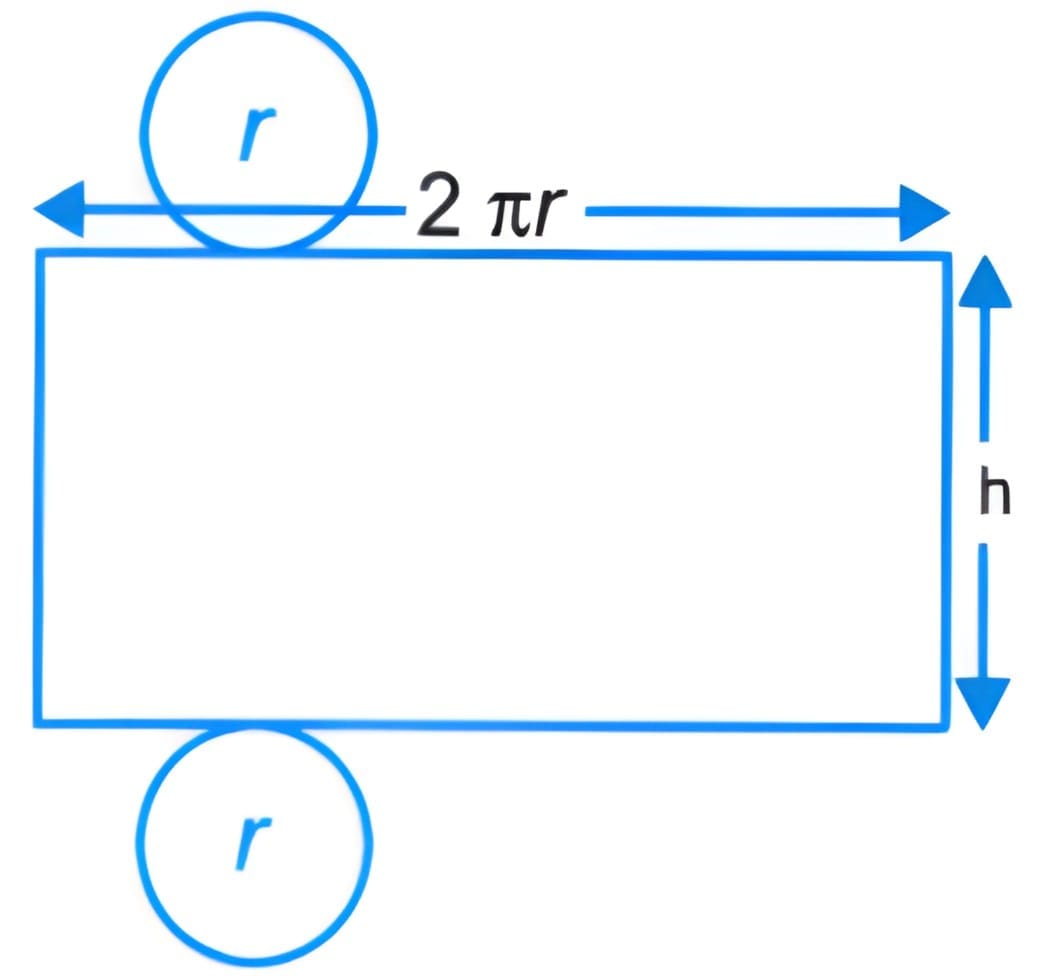
Page No. 82
Q: What are the sidelengths of the rectangle obtained (from unfolding a cylinder)?
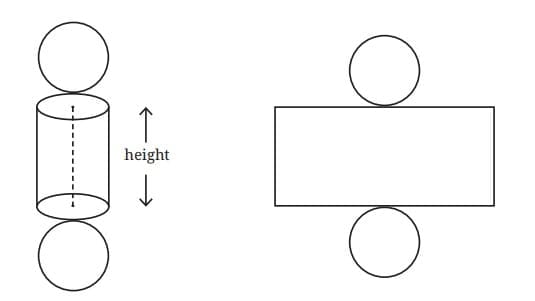
Ans: When a cylinder is unfolded into its net:
The rectangle has:
- Length = Circumference of the circular base = 2πr (where r is the radius of the base)
- Width (or height) = h (the height of the cylinder)
Explanation:
- When we “unroll” the curved surface, the distance around the circle becomes the length of the rectangle
- The height of the cylinder becomes the width of the rectangle
- The two circular faces remain as circles
Complete net of cylinder consists of:
- 1 rectangle with dimensions 2πr × h
- 2 circles with radius r
Q: How will the net of a cone look?
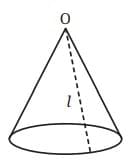
Ans: To make a net of a cone, draw a sector of a circle of radius R with a length of arc of the sector as 2πr and a circle of radius r attached to the arc.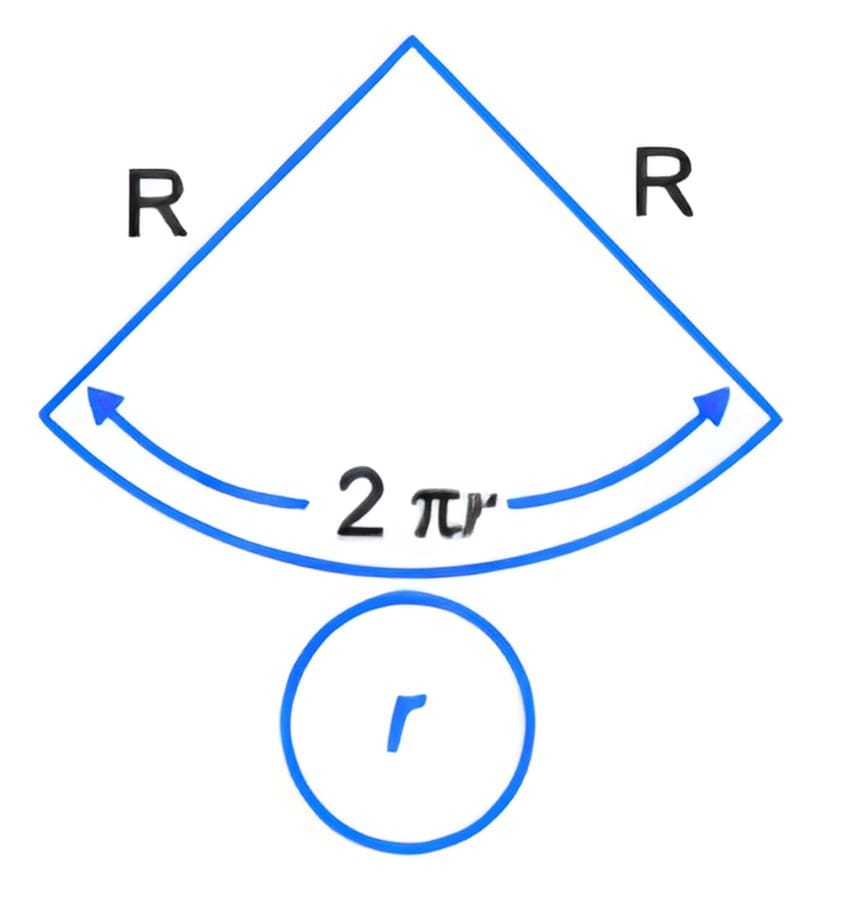
Math Talk
Q: What surface do you construct by using the above net, in which O is not the centre of the boundary circle? Make a physical model to help you answer this question!
Ans: When we join the radii of the sector, we get a cone: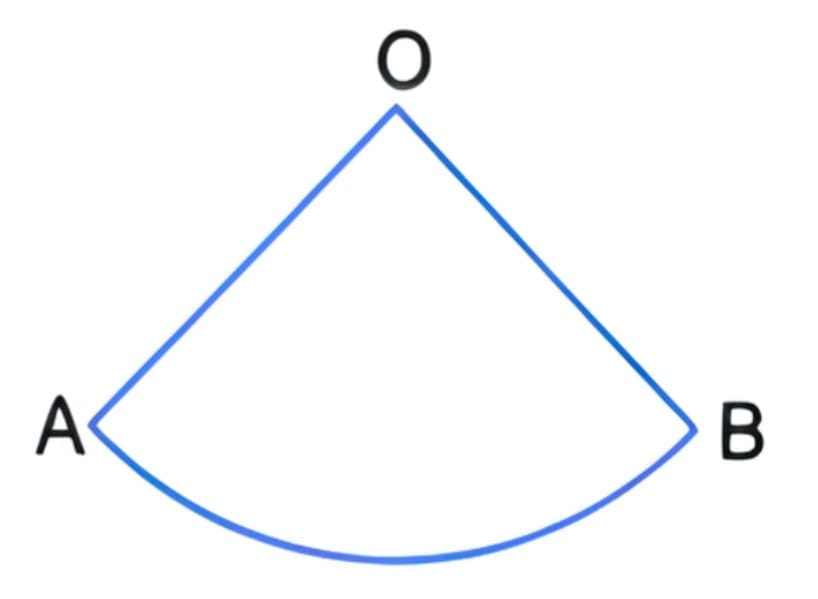
OA and OB are radii of a circle.
Paste OA over OB, we get a cone with slant height = OA.
Q: Draw a net with appropriate measurements that can be folded into a triangular prism. Verify that it works by making an actual cutout.
Ans: ABCD is a rectangle of sides 6 cm by 2 cm. DCIF and FIHG are also rectangles of the same dimensions.
DEF and CJI are equilateral triangles of side 2 cm each.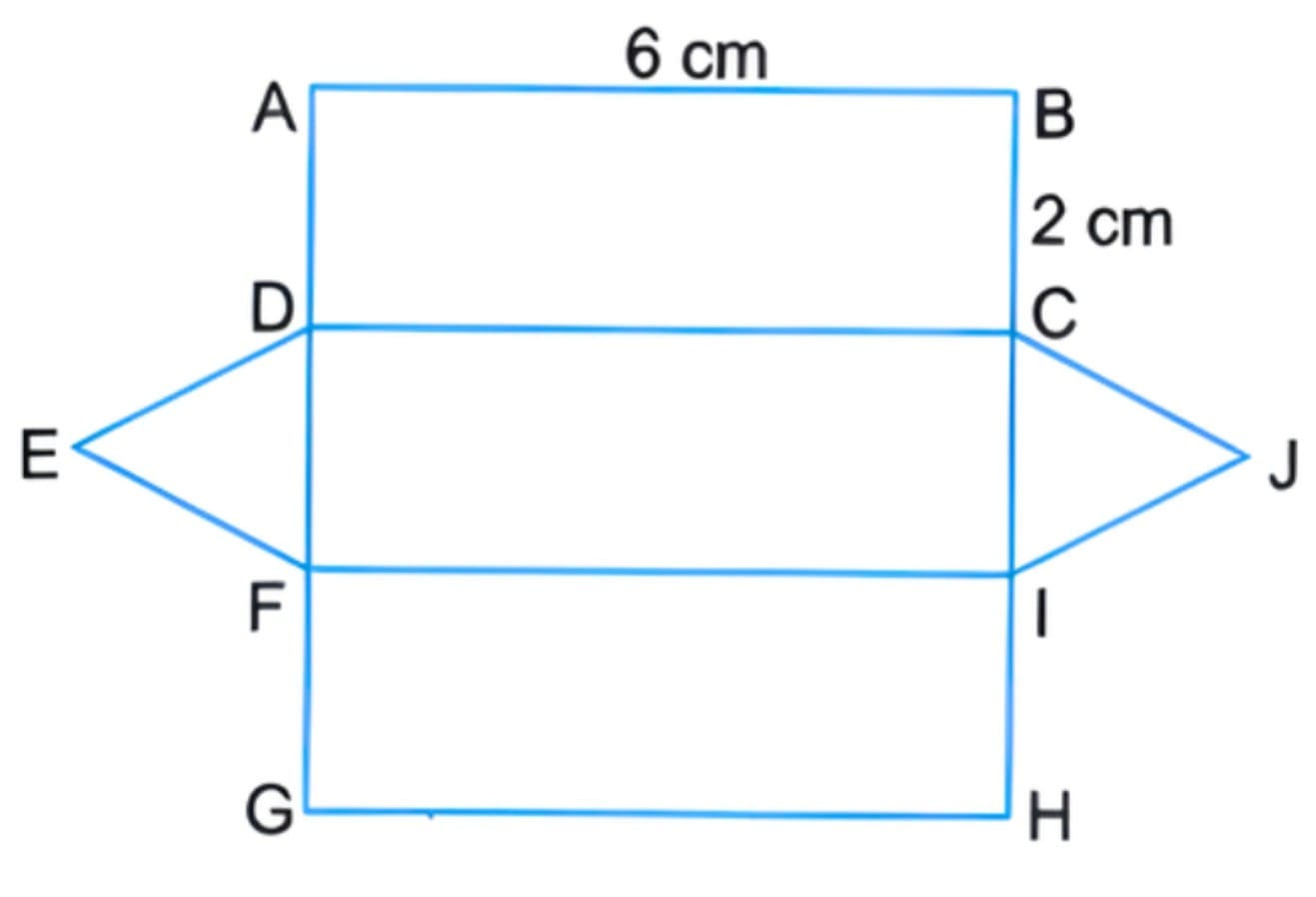
By folding along the common edges, we get a triangular prism.Page No. 92 – 93
Figure it Out
Q: Observe the front view, top view and side view of the different lines in Fig. 4.6. Is there any relation between their lengths?
Ans: (a) Horizontal Line
(b) oblique (slanting) line
(c) oblique (slanting) line, More tilted than line (b)
Top views show that (a) is the shortest, and (c) is the longest
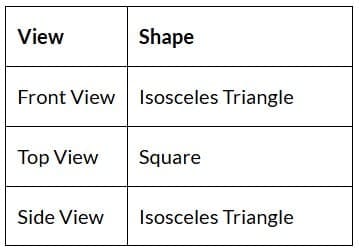
Q: Find the front view, top view and side view of each of the following solids, fixing its orientation with respect to the vertical, horizontal and side planes: cube, cuboid, parallelepiped, cylinder, cone, prism, and pyramid.
Ans: (a) Cube: Assuming standard orientation with faces parallel to planes.
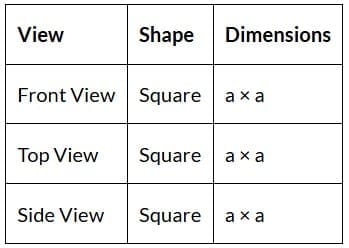
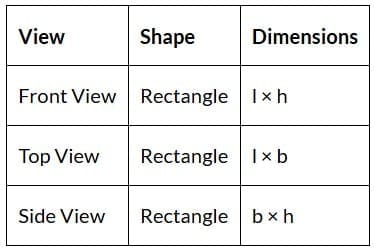
(ii) Cuboid (dimensions: length l, breadth b, height h)
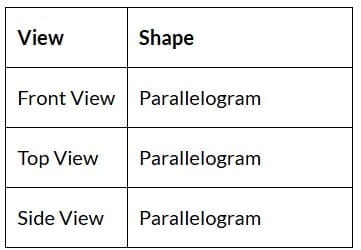
(iii) Parallelepiped (all faces are parallelograms)
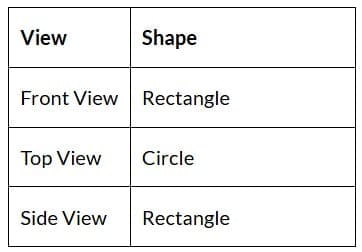
(iv) Cylinder (axis vertical)
(v) Cone (axis vertical, base on horizontal plane)
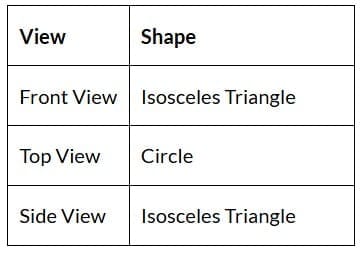
(vi) Prism (regular prism with square base, axis vertical)
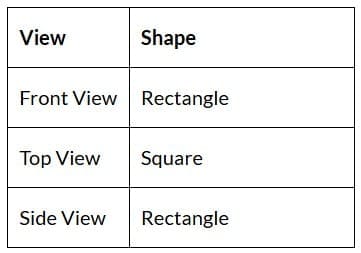
(vii) Pyramid (square pyramid, axis vertical)
Q: Match each of the following objects with its projections.
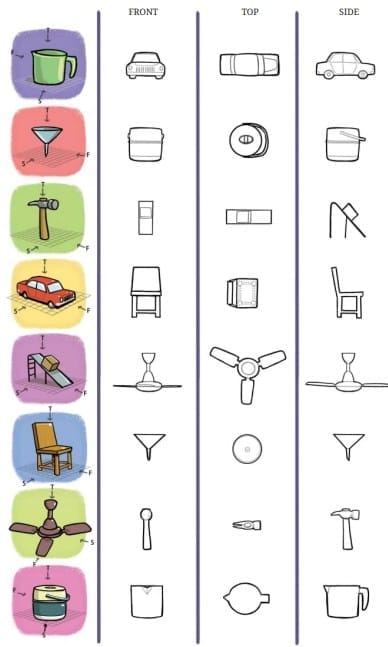
Ans: (a) – (viii)
(b) – (vi)
(c) – (vii)
(d) – (i)
(e) – (iii)
(f) – (iv)
(g) – (v)
(h) – (ii)Page No. 95
Figure it Out
Q1: Draw the top view, front view and the side view of each of the following combinations of identical cubes.
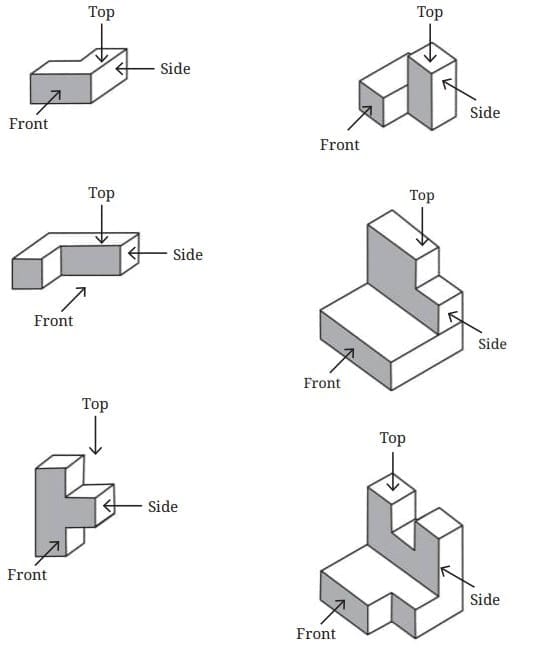
Ans: Do it Yourself.Page No. 95
Math Talk
Q: Imagine eight identical cubes, glued together along faces to form the letter ‘E’.
(i) This looks like a ‘E’ from the front. What does it look like from the side? From the top?
(ii) Glue additional cubes to make a shape that looks like ‘E’ from the front and ‘L’ from the top.
(iii) Now, can you glue even more cubes to make it look like ‘E’ from the front, ‘L’ from the top, and ‘F’ from the side?
(iv) Can you think of other letter combinations to make with a single combination of cubes in this manner?
Ans: 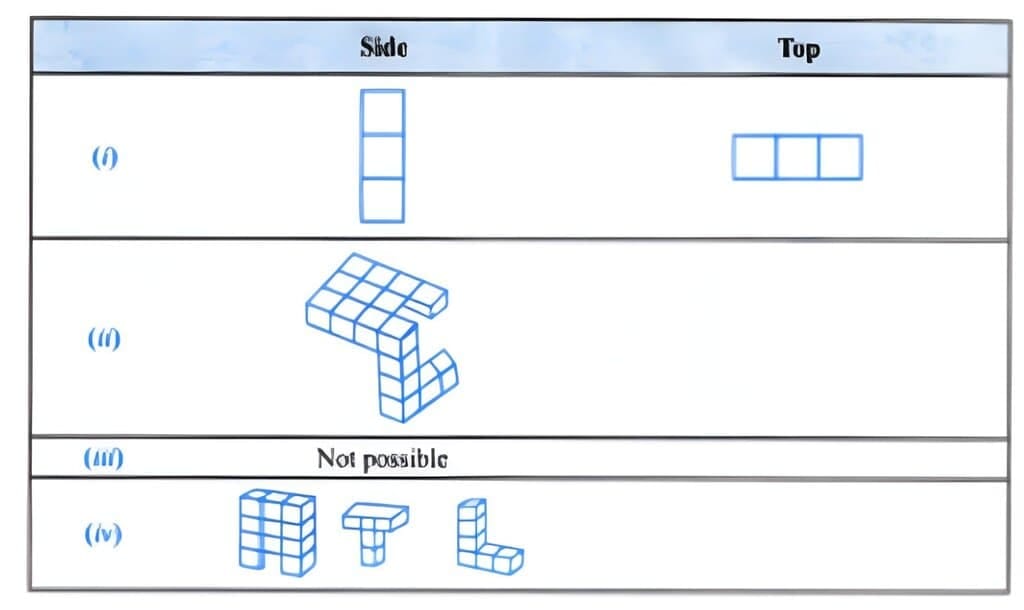 Page No. 96
Q: Which solid corresponds to the given top view, front view, and side view?
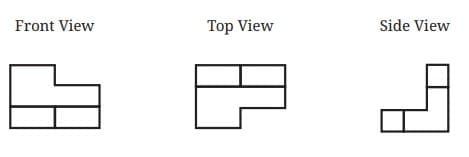
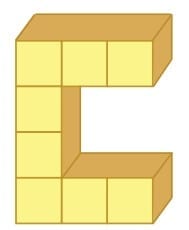
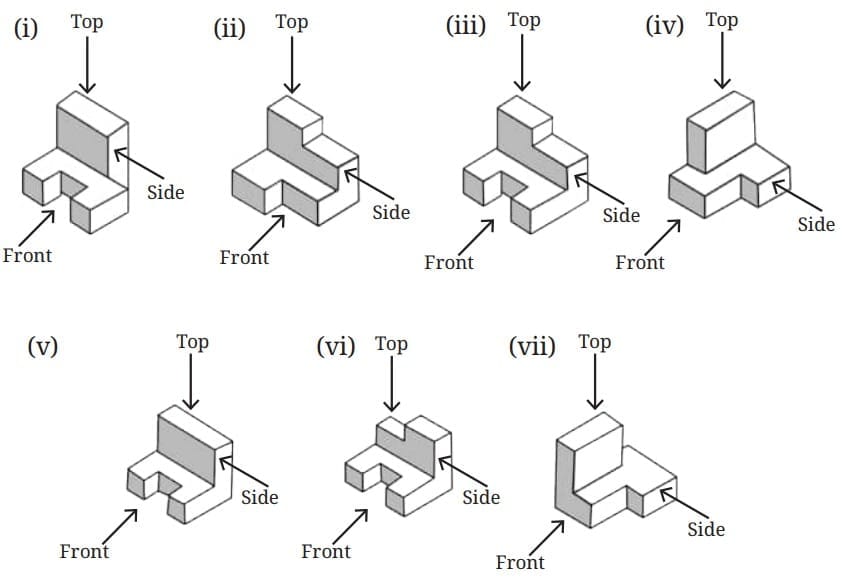
Ans: Solid (ii)
Q: Using identical cubes, make a solid that gives the following projections.
Ans:
Page No. 97
Q: Find the number of cubes in this stack of identical cubes.
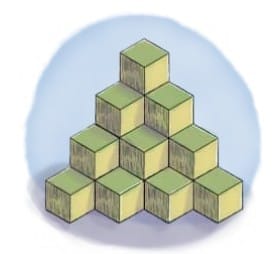
Ans: Counting from the top layer to the bottom layer:
1 + 3 + 6 + 10 = 20 cubes
Q: What are the different shapes the projection of a cube can make under different orientations?
Ans: Five different shapes can be observed.
(a) Square
Orientation: One face of the cube is parallel to the projection plane.
(b) Rectangle
Orientation: Two faces are visible, but one set of edges is parallel to the plane.
(c) Parallelogram
Orientation: A face is tilted relative to the plane.
(d) Rhombus
Orientation: A special tilted case where all projected edges remain equal.
(e) Hexagon (maximum case)
Orientation: The cube is oriented so that three faces are equally visible (e.g., looking along a body diagonal).
Page No. 100
Figure it Out
Math Talk
Q: In addition to the 5 ways shown in Fig. 4.8, are there any additional ways of gluing four cubes together along faces? Can you visualise and draw these as well?
Ans: Page No. 101 – 102
Q: Draw the following figures on the isometric grid.
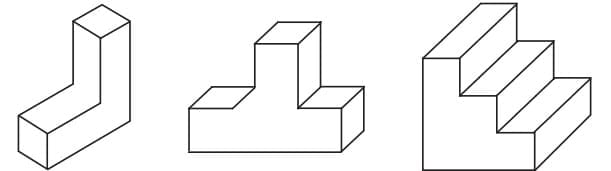
Hint: It may be useful to determine whether the edge to be currently drawn — say, along the height — goes from down to up or up to down. Accordingly, draw the line segment on the grid either in the direction of the height axis or opposite to it.
Ans:
Q: Is there anything strange about the path of this ball? Recreate it on the isometric grid.
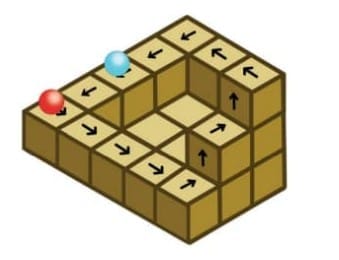
Hint: Consider a portion of this figure that is physically realisable and identify the 3 primary directions.
Ans: The picture shows the Penrose staircase. It is an optical illusion showing a loop of stairs that appears to rise or descend forever. Each step looks locally consistent, but the structure cannot exist in reality. The illusion works by exploiting perspective and depth cues, creating the impression of continuous motion without a true beginning or end. On a Penrose staircase, a ball would have no physically possible path at all—because the staircase itself cannot exist as a single, consistent object in real 3D space. However, we can still answer the question in two ways:
- Every step appears to slope downward, yet the staircase loops back to the starting point.
When the ball is released, it rolls “down” the stairs, goes around the loop, and keeps rolling forever, always downhill. This creates a perpetual- motion illusion — a never-ending descent with no lowest point. - If we have a Penrose staircase in the real world, at least one section would slope upward or the staircase would have to twist or break. The loop would not close. So the ball would roll down until it reaches a lowest point, then stop or roll back the way it came. There is no continuous path where the ball can always go down and still return to the start.
Q: Observe this triangle.
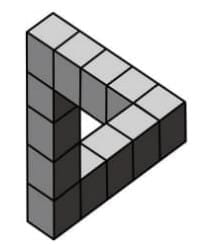
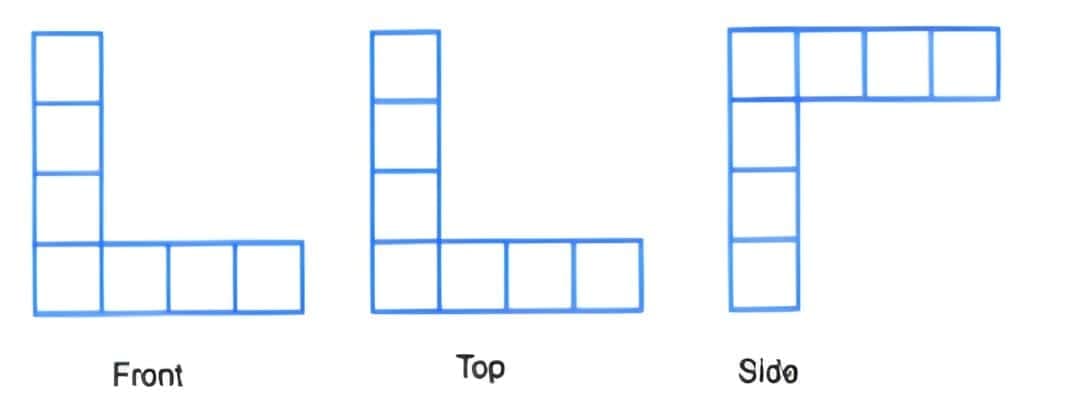
(i) Would it be possible to build a model out of actual cubes? What are the front, top, and side profiles of this impossible triangle?
(ii) Recreate this on an isometric grid.
(iii) Why does the illusion work?
Ans: The impossible triangle using cubes creates an optical illusion where three straight beams of square cross-section appear to form a continuous, closed loop.
It can be built using cubes of the same size in the following steps.
Step 1: Bottom Row: Lay a horizontal row of 4-5 cubes.
Step 2: Vertical Row: At one end, stack 4-5 cubes vertically to form a 90-degree corner.
Step 3: The “Gap” Row: At the top of the vertical stack, extend a row of cubes horizontally away from the viewer (into the depth of the scene)
When observed through a camera at a specific angle, the end of this third row will appear to “touch” the first horizontal row, even though they are feet apart.
Front, side, and top views are as follows.
(ii)
(iii) The impossible triangle works because:
- Our brain assumes a 3D structure from 2D images.
- Our brain focuses on small, local areas rather than checking the entire object for logical consistency. When we mentally “connect” the corners, the contradictions are hidden.
- Our brain doesn’t notice the switch—it keeps one depth interpretation and ignores the rest.
- Our visual system follows a principle called good continuation: it prefers smooth, continuous shapes rather than broken ones.
- So instead of seeing three separate bars that don’t line up, your brain forces them into a single triangle.