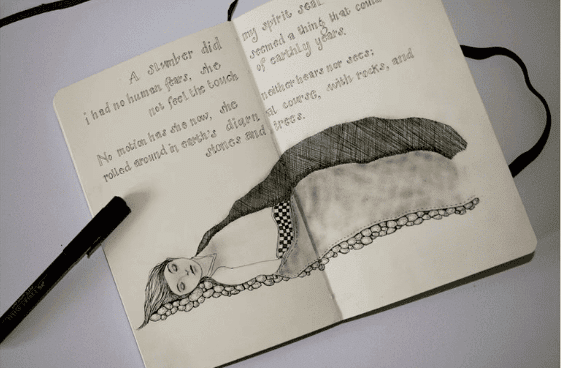
Q1. “A slumber did my spirit seal,” says the poet. That is, a deep sleep ‘closed off’ his soul (or mind). How does the poet react to his loved one’s death? Does he feel bitter grief? Or does he feel a great peace?
Answer –
The poet’s reaction to his loved one’s death is not one of bitter grief expressed through tears. Instead, he experiences a sense of calm. Upon her passing, he does not feel the usual human fears; rather, he reflects on her appearance and what she might be experiencing in death. This contemplation leads to a state of mind that is neither filled with sorrow nor completely peaceful. Thus, it is challenging to determine if he is engulfed in grief or enveloped in a tranquil acceptance of her fate.
Q2. The passing of time will no longer affect her, says the poet. Which lines of the poem say this?
Answer –
The lines of the poem that show that the passing of time will no longer affect her are as follows:
“She seemed a thing that could not feel
The touch of earthly years.”
Q3. How does the poet imagine her to be, after death? Does he think of her as a person living in a very happy state (a ‘heaven’)? Or does he see her now as a part of nature? In which lines of the poem do you find your answer?
Answer –
The poet thinks that she is now a part of nature. After her death, he imagines her buried inside the earth with other rocks, stones, and trees and rolling around with the earth in its daily rotation. The following lines express this idea-
Rolled round in earth’s diurnal course
With rocks and stones and trees.