Reflect and Respond
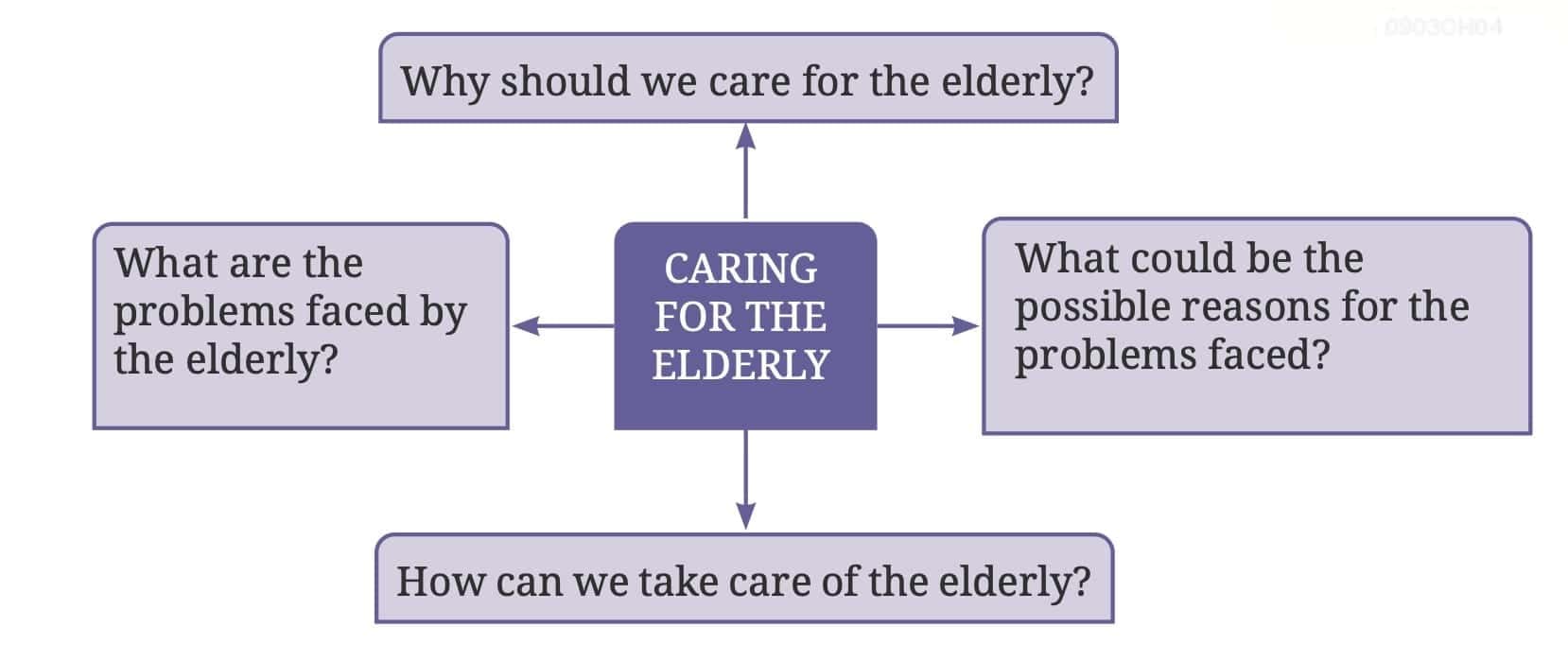
I. From your experience with an elderly person at home or in your neighbourhood, complete the following graphic organiser on “Caring for the Elderly”.
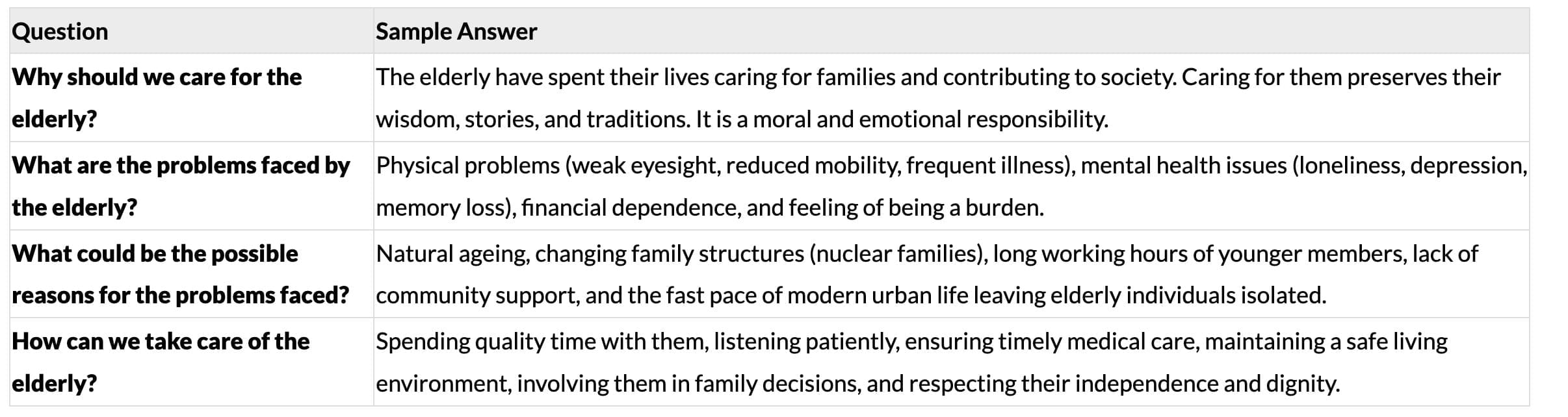
Ans:
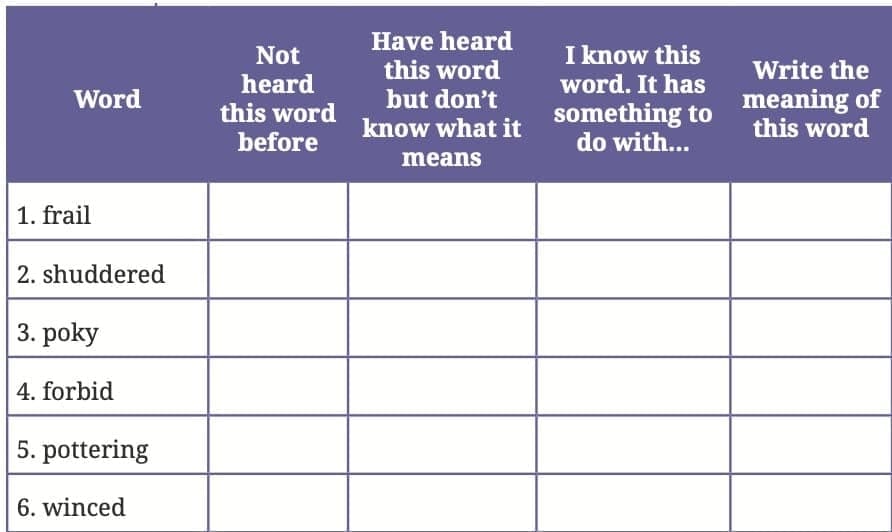
II. Fill in the table with the meanings of the following words from the story.
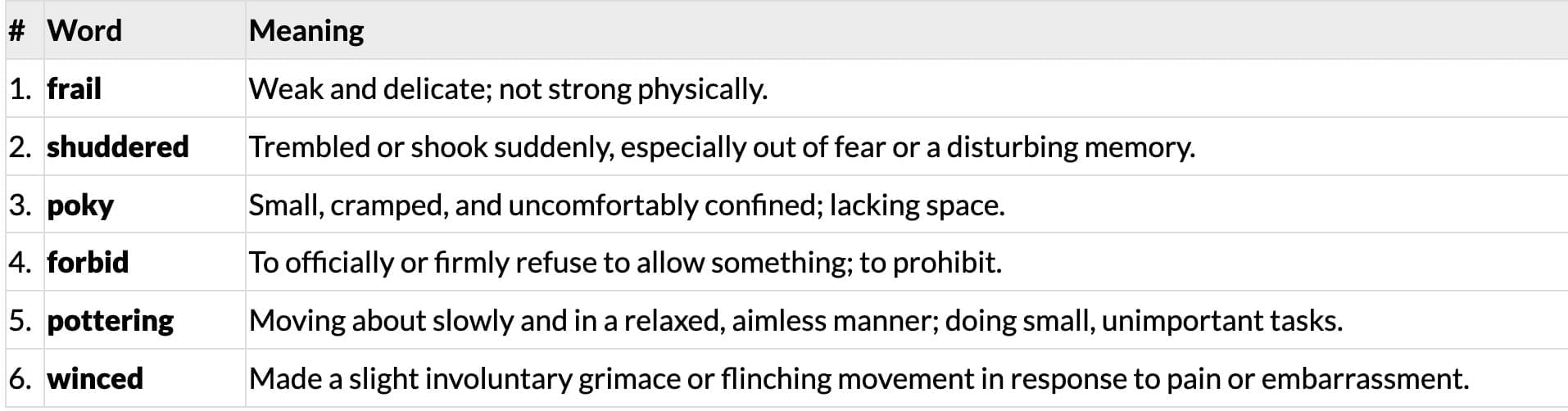
Ans:
III. Think of a tradition, story, or recipe passed down by grandparents or an elderly relative in your family. What does it mean to you? How does it connect you to your growing-up years? Share with your classmates and teacher.
Ans: (Sample Response)
My grandmother used to describe how our family celebrated Diwali in their village — making diyas by hand, drawing rangoli with natural colours, and preparing traditional sweets like mathri and besan ke ladoo from scratch. This tradition represents warmth, togetherness, and cultural roots. Every time I see handmade diyas or smell those sweets, I feel a bond with my grandmother and the generations before her.
Check Your Understanding – Part I
I. Why did Grandpa dislike living in the city with his daughter?
Ans: Grandpa had spent most of his life in a small, quiet town and hated the noise and bustle of city life. He missed his brick house with its large mango tree and peaceful evenings. The cramped flat felt suffocating, and his daughter’s insistence that he not go out alone made him feel like a prisoner — deeply wounding his sense of dignity as a man who had lived self-sufficiently for decades.
II. Why did Vidya not want her father to go out alone?
Ans: Vidya had genuine reason to worry. Grandpa had recently taken a double dose of medicine due to forgetfulness, causing a hospital admission. He had also once forgotten the way home during a walk, and had slipped and fallen in his garden at night, lying there until morning with no one to help. These incidents convinced Vidya that Grandpa could not safely go out alone. Her restriction came entirely from love and fear for his safety.
III. Was Ravi in favour of his mother treating Grandpa like a child? How can you say so?
Ans: No, Ravi was not in favour. He “winced” at his mother’s over-loud, patronising tone when speaking to Grandpa. He was embarrassed by this because he respected his grandfather’s intelligence and dignity. When Grandpa accused his mother of treating him like a baby and a prisoner, Ravi quickly said, “Of course not, Grandpa. Mamma would never treat you like a baby … or a prisoner” — showing he was aware of the problem and tried to protect his grandfather’s feelings.
IV. Would Ravi be able to keep up his promise to his mother?
Ans: Ravi was in a difficult dilemma — he could not force Grandpa to stay without making him feel like a prisoner, so he followed him secretly. However, this plan failed: he got into several embarrassing situations and ultimately lost track of Grandpa on the bus. So while his intention was sincere, he was not fully able to keep his promise, though thankfully Grandpa returned home safely on his own.
Check Your Understanding – Part II
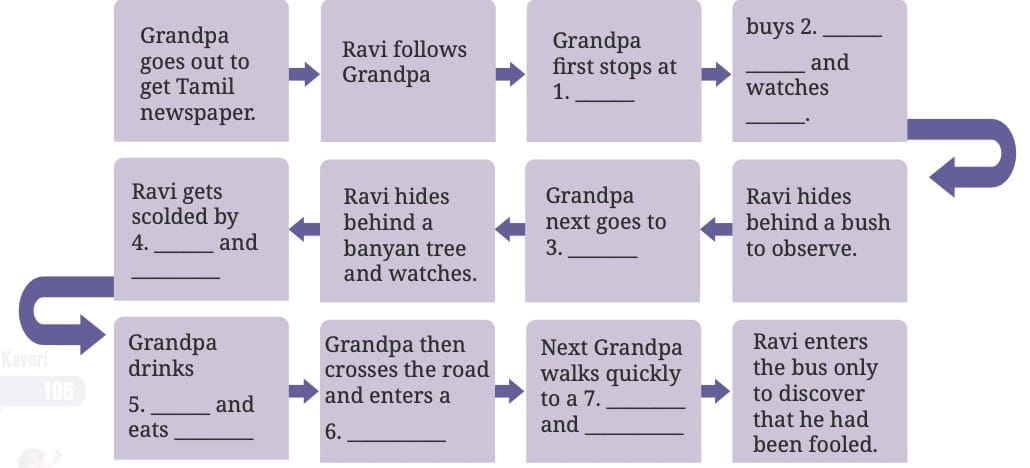
I. Complete the flow chart by describing Grandpa’s day out.
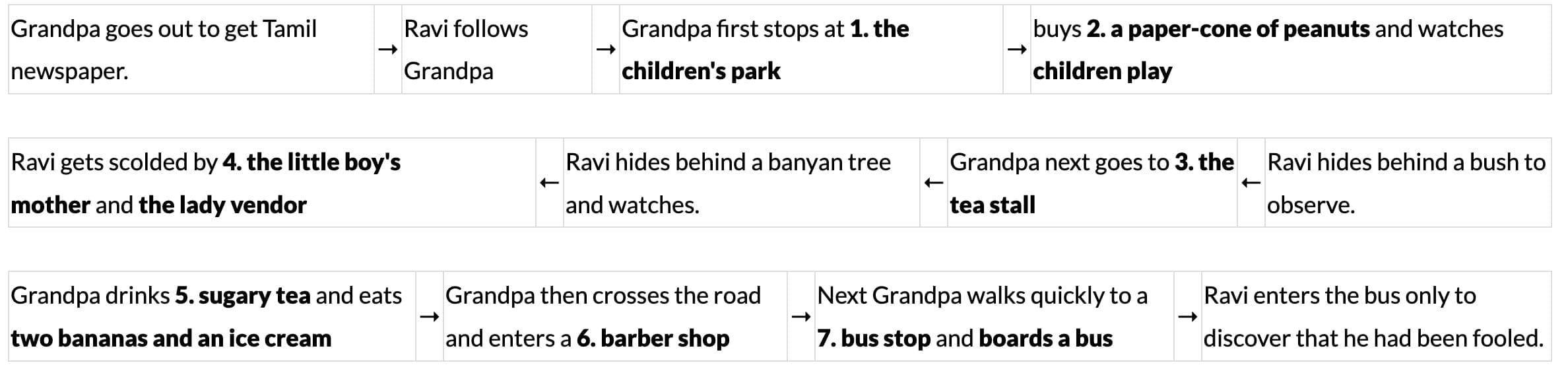
Ans:
II. Was Grandpa lost as feared by Ravi’s mother?
Ans: No, Grandpa was not lost. Despite Ravi’s frantic searching, Grandpa had made his way home entirely on his own and was peacefully asleep when Ravi arrived. This showed that Grandpa was far more capable and resourceful than his family had credited him for — he had navigated the city, enjoyed his outing, returned safely, and even had gifts ready.
III. How would Ravi feel after seeing Grandpa?
Ans: Ravi would feel an enormous wave of relief and joy. After a day of anxiety, embarrassment, and finally losing Grandpa on a bus, finding him sleeping soundly would have lifted a tremendous burden. The story tells us Ravi was “overcome with affection” and hugged his grandfather, resting his cheek against the old man’s wrinkled face — revealing not just relief but deep love and renewed appreciation.
IV. Do you think Ravi’s mother will get to know about what had happened?
Ans: Grandpa revealed just enough to expose Ravi’s absence — saying “I had a quiet morning, but I don’t know about Ravi. He just disappeared instead of staying at home to look after me” — without disclosing his own adventure. Vidya learnt that Ravi had left the house but was not told the full story. The gift of a detective story book was Grandpa’s witty private signal to Ravi — a secret shared only between the two of them.
Check Your Understanding – Part III
I. Describe how Ravi’s emotional reaction upon finding Grandpa safe at home reveals his feelings towards his grandfather.
Ans: Ravi knelt beside the bed and gently pressed his cheek against his grandfather’s wrinkled face, taking in the familiar smell of eucalyptus ointment. He was “suddenly overcome with affection” and hugged Grandpa. This instinctive, tender behaviour reveals a profound emotional bond. After a day of frantic worry, the relief transformed instantly into an outpouring of love — showing that Ravi’s feelings for his grandfather are warm, genuine, and deep.
II. What might be the significance of Grandpa’s habit of giving gifts to everyone on his birthday rather than receiving them?
Ans: This habit reveals a generous, giving spirit — Grandpa derives greater pleasure from making others happy than from being celebrated himself. It also shows he still considers himself the patriarch and caretaker, challenging the story’s premise that he is frail and dependent. Most wittily, it turns the tables on Vidya: Grandpa remembered his own birthday tradition perfectly while she had forgotten it entirely.
III. Why do you think Grandpa gave Ravi a detective story book as a gift? What might this suggest about Grandpa’s awareness of Ravi’s actions earlier in the day?
Ans: The gift of The Best Detective Stories — with the pointed remark about picking up “tips on how to avoid getting fooled when trailing a suspect” — is Grandpa’s sly, affectionate way of telling Ravi he knew he was being followed all along. The “twinkle” in Grandpa’s eye confirms he was being mischievous, not oblivious. He had likely spotted Ravi at one or more stops and had deliberately given away his cap in the barber shop to mislead him.
Critical Reflection
I. Read the extracts given below and answer the questions that follow.
Extract 1:
Grandpa hated the noise and bustle of city life and when they were on their own, he often spoke longingly of his small brick house in town. “Such a wonderful place…! With that big mango tree in the garden! It is so quiet that at dusk you can even hear a leaf fall!” But then Grandpa had slipped and fallen in the garden late one evening while he was pottering around and lain outside all night because there was no one at home to help him up.
(i) Choose the emotion displayed by the Grandfather:
A. regretful
B. apologetic
C. nostalgic
D. wistful
Ans: C. nostalgic. Grandpa is fondly recalling his old home and longing for the past — “nostalgic” precisely describes this warm recollection of a cherished former life.
(ii) Complete the following sentence with a reason: Grandpa hated the busy and noisy city life because ___________.
Ans: …because he had spent most of his life in a small, quiet town with his own spacious brick house and mango tree, and treasured that peace and tranquillity. The crowded, noisy, cramped city was the complete opposite of everything he valued.
(iii) Why did Grandpa come to the city despite his dislike for city life?
Ans: Grandpa came to the city because his family felt it was no longer safe for him to live alone. He had slipped and fallen in his garden one evening and lain there all night without help. This alarmed Vidya, who locked up the town house and brought him to live with the family — a decision made out of concern for his safety, not his own choice.
(iv) Choose an expression similar in meaning to ‘you can even hear a leaf fall’:
A. end of one’s life
B. arrival of autumn
C. sign of good luck
D. pin drop silence
Ans: D. pin drop silence. “You can even hear a leaf fall” describes absolute, total silence — the same idea as “pin drop silence,” a stillness so profound that even the faintest sound would be audible.
(v) State one advantage and one disadvantage of the Grandfather living in the house in town.
Ans:
- Advantage: The town house gave Grandpa peace, independence, and surroundings he loved — the garden, mango tree, and quiet life that reflected his identity. He was mentally and emotionally happiest there.
- Disadvantage: Living alone was physically dangerous — there was no one to help him in an emergency, as the incident of his fall proved, which could have had serious consequences.
Extract 2:
“I had a quiet morning, but I don’t know about Ravi. He just disappeared instead of staying at home to look after me like you told him to,” answered Grandpa coolly, while Ravi just looked confused and embarrassed. Grandpa had another surprise for Ravi. A gift-wrapped parcel! “But, Papa, Ravi’s birthday was three months ago. Have you forgotten?” exclaimed Ravi’s mother, impatiently.
(i) Choose the option that displays the tone of the Grandfather’s response:
A. apologetic
B. hurtful
C. calm
D. puzzled
Ans: C. calm. The story says Grandpa “answered coolly” — measured, unhurried, and composed. This coolness suggests he was deliberately choosing his words to expose Ravi’s absence while appearing perfectly unruffled.
(ii) Why was Ravi confused and embarrassed?
Ans: Ravi had spent the whole morning secretly following Grandpa, ended up on the wrong bus, lost his grandfather, and returned home in panic — yet here was Grandpa, perfectly fine and home before him. Grandpa’s cool statement placed Ravi in an impossible position in front of his mother, and the sly gift of a detective book hinted that Grandpa had known everything — making Ravi’s mission look both foolish and transparent.
(iii) Complete the sentence with a suitable reason: Ravi’s mother was impatient because ___________.
Ans: …because she had just returned from work to find Ravi had not stayed home as instructed, and was hearing this from Grandpa himself. Moreover, Grandpa presenting a gift-wrapped parcel confused her — she assumed he had forgotten Ravi’s birthday had already passed, seemingly confirming her fears about his failing memory.
(iv) State whether the following sentence is true or false: Grandfather forgot that Ravi’s birthday was three months ago.
Ans: False. Grandpa had not forgotten anything. His tradition was to give gifts to everyone on his own birthday — not theirs. It was Vidya who had forgotten Grandpa’s lifelong birthday tradition, and she flushed with embarrassment when she realised this. The irony is a gentle inversion: the family worried about Grandpa’s memory, but Vidya was the one who had forgotten.
(v) Why did Grandpa say he didn’t know what kind of morning Ravi might have had?
Ans: Grandpa said this with mischievous, knowing composure. He was fully aware that Ravi had been trailing him all morning. By contrasting his own “quiet” morning with Ravi’s unknown one, Grandpa was being deliberately ironic — subtly exposing Ravi’s chaotic adventure to his mother while maintaining an innocent calm.
II. Answer the following questions.
1. Grandpa is portrayed as a person with failing memory in the beginning of the story. Give two evidences to disprove the statement.
Ans:
- Evidence 1 – Chess memory: Grandpa could recall thousands of historic chess games in detail — referencing specific moves by Karpov, Bobby Fischer, and Spassky — revealing a sharp, well-preserved long-term memory.
- Evidence 2 – Birthday tradition: Grandpa remembered his lifelong tradition of giving gifts on his own birthday without any prompting, and had prepared gifts for the whole family. It was Vidya who had forgotten this tradition — not Grandpa.
2. Give two characteristic traits of each of the following characters: (i) Grandfather (ii) Ravi (iii) Ravi’s mother
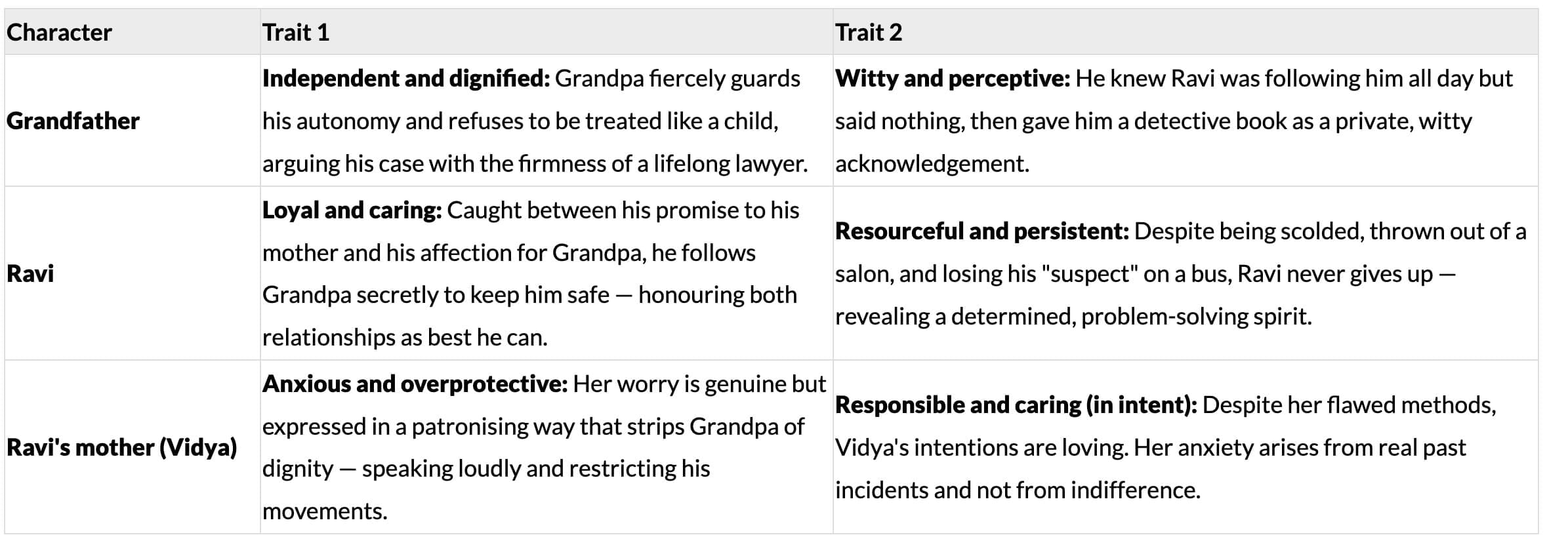
Ans:
3. Why was Ravi worried about what Grandfather had at the tea stall?
Ans: Grandpa consumed several things specifically forbidden by the doctor — sugary tea, two bananas (“another banned item”), and an ice cream. Ravi knew his mother would be alarmed, since these items were prohibited due to Grandpa’s health condition. Watching his grandfather gleefully indulge in everything he was not supposed to have, while hiding behind a car, Ravi could only think of his mother’s likely reaction.
4. Do you think it was easy for Ravi to follow his Grandfather? If yes, why? If no, why not?
Ans: No, it was far from easy. Every hiding spot led to a new embarrassment:
- At the children’s park, he was confronted by a child’s mother who threatened him with an umbrella — he crawled out on all fours.
- At the tea stall, vendors accused him of encroaching on their space.
- He accidentally walked into a Ladies’ Hairdressing Salon and was thrown out amid shrieks.
- Finally, he sprinted onto a bus believing he was following Grandpa, only to find a complete stranger wearing a similar cap.
Every step of the way, the world conspired to make Ravi’s mission more difficult, comical, and ultimately unsuccessful.
5. ‘Ravi is a good detective’. Give one argument in favour of and against the given statement.
Ans:
- In favour: Ravi shows persistence and resourcefulness — despite numerous setbacks, he never gave up, always found new hiding spots, and tracked Grandpa through multiple locations with genuine commitment.
- Against: In practice, Ravi drew far too much attention to himself, was removed from multiple locations, and crucially was fooled into chasing the wrong person. Grandpa knew he was being followed and evaded him entirely — a clear sign that Ravi failed as a detective.
6. Was Grandfather aware that Ravi was following him? How do you know?
Ans: Yes, Grandpa was certainly aware. The clearest evidence is the gift of The Best Detective Stories with the pointed remark about “tips on how to avoid getting fooled when trailing a suspect” — directly referencing the day’s events. The narrator notes a “twinkle” in Grandpa’s eye, which the context makes clear was mischievous. He had likely spotted Ravi at one or more stops and deliberately given away his cap in the barber shop to mislead him.
7. In your opinion, who needs Vitamin-M? And why?
Ans: Metaphorically, the person who most needs Vitamin-M is Ravi’s mother, Vidya. She has forgotten the most important things: that Grandpa is an intelligent, dignified human being who managed his own life for 75 years; that his “failing memory” does not define his entire personhood; and that her own memory of his cherished traditions was itself faulty. The story is a gentle reminder that caring for the elderly must include caring for their dignity — and that memory is not the only measure of a person’s worth.
8. Some people believe society shows bias based on age (being young or old). Give an example where you might have experienced or observed such discrimination, when opinions were disregarded because of age.
Ans (Sample):
An elderly neighbour — a retired civil engineer of 40 years — tried to share his opinion at a housing society meeting about a water tank’s placement. Younger members dismissed him quickly, saying “Uncle, you wouldn’t understand the technical side.” His suggestion was actually the most practical one, proven correct when the original plan encountered the very problem he had predicted. Both the elderly and teenagers frequently face this age-based bias — their opinions dismissed not on merit but on the basis of how many years they have lived.
Vocabulary and Structures in Context
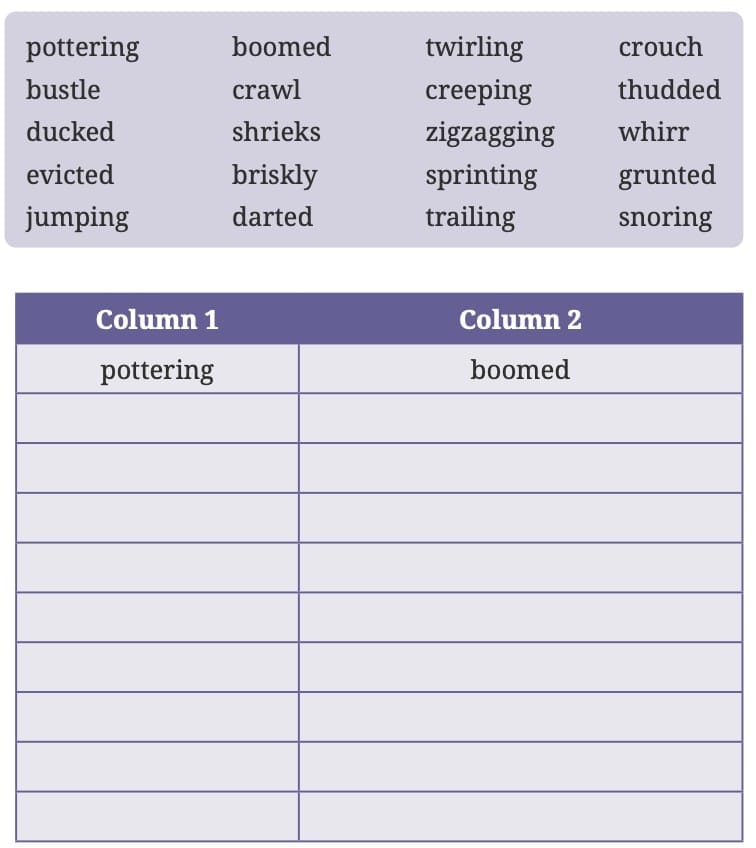
I. Classify the words given in the box into movement words (Column 1) and sound words (Column 2).
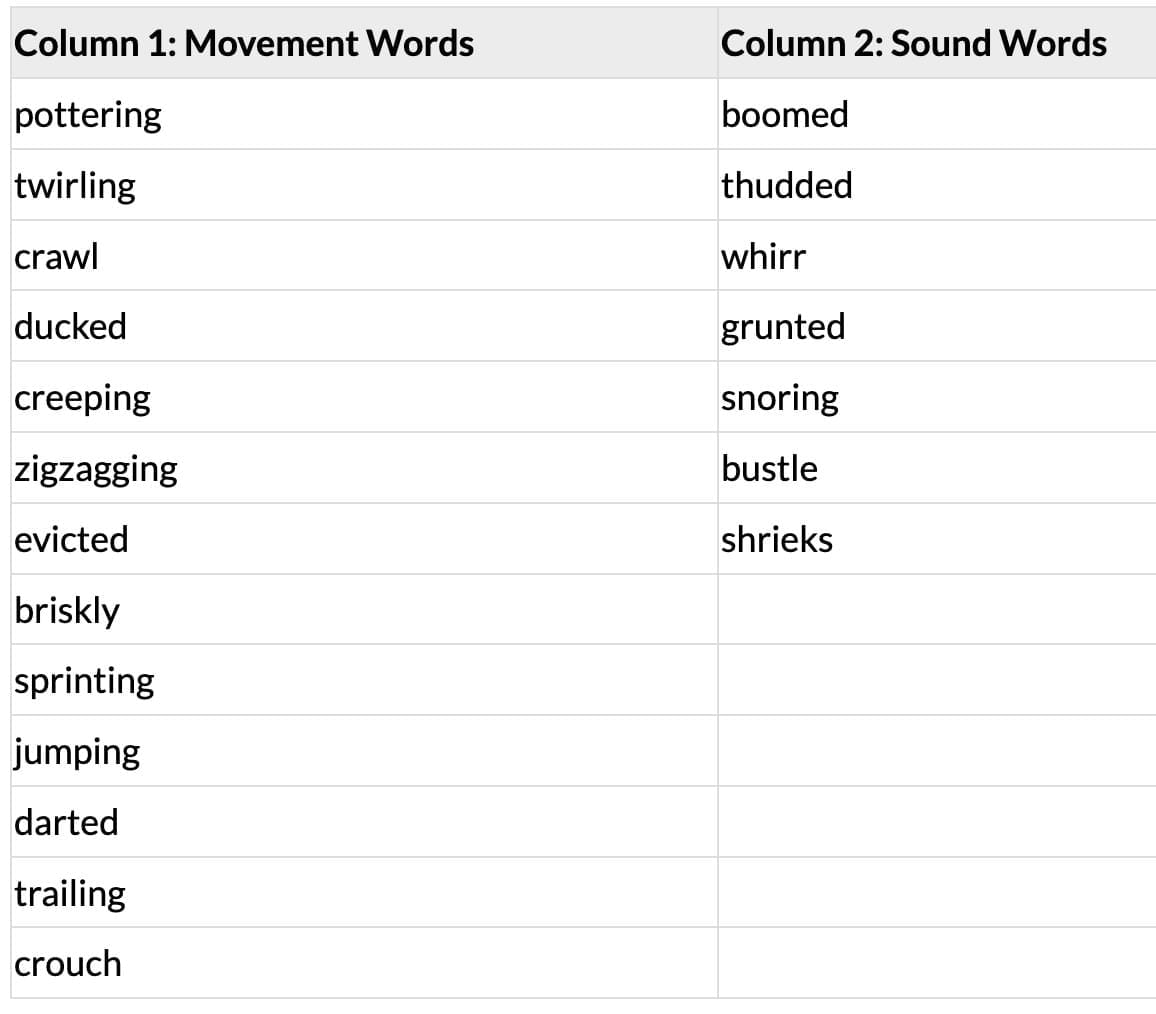
Ans:
Fill in the blanks:
Detective Shankar, 1. trailing the mysterious suspect through the dimly lit side lanes, away from the 2. bustle of the city, quickened his pace 3. briskly. The suspect’s heavy footsteps 4. thudded across the street, unaware of the pursuit. Shankar 5. twirling his magnifying glass had to 6. crouch behind the market stalls, 7. creeping through the lanes to avoid being seen. Shankar 8. grunted when he hit himself against a pole. This alarmed the suspect and he 9. darted into the night leaving only the distant 10. whirr of the sleeping city behind.
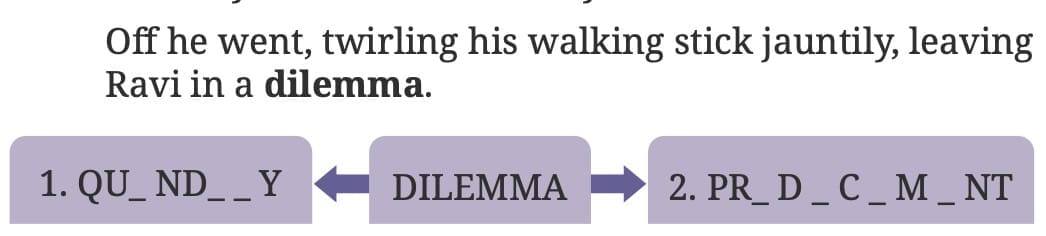
II. Study the highlighted word “dilemma” in the sentence and fill in the boxes with synonymous words.
Ans:
1. QUANDARY ← DILEMMA → 2. PREDICAMENT
Both “quandary” and “predicament” are synonyms for “dilemma” — a situation in which a person faces a difficult choice between options, each with its own disadvantages.
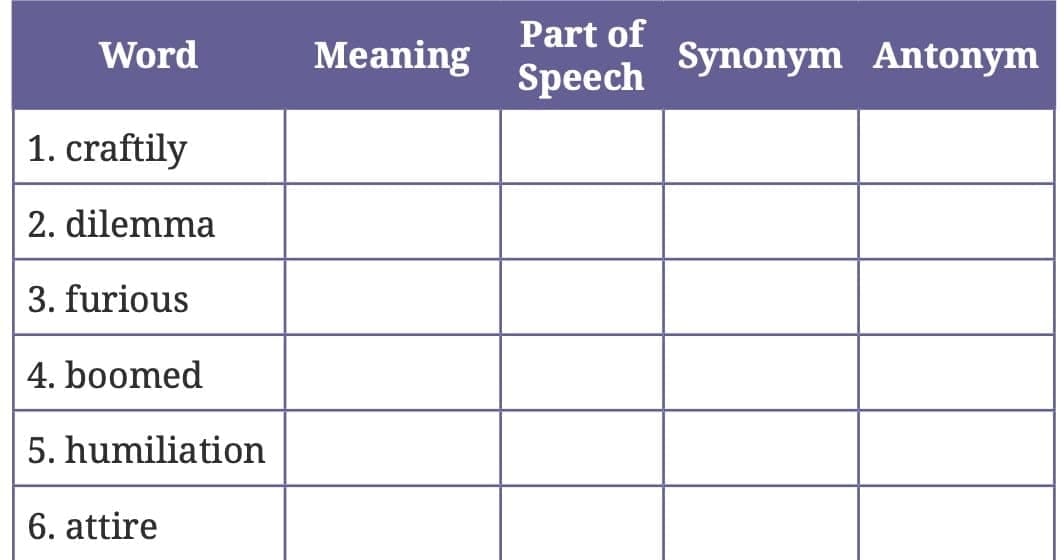
III. Fill in the table with meaning, part of speech, synonym, and antonym of the given words.
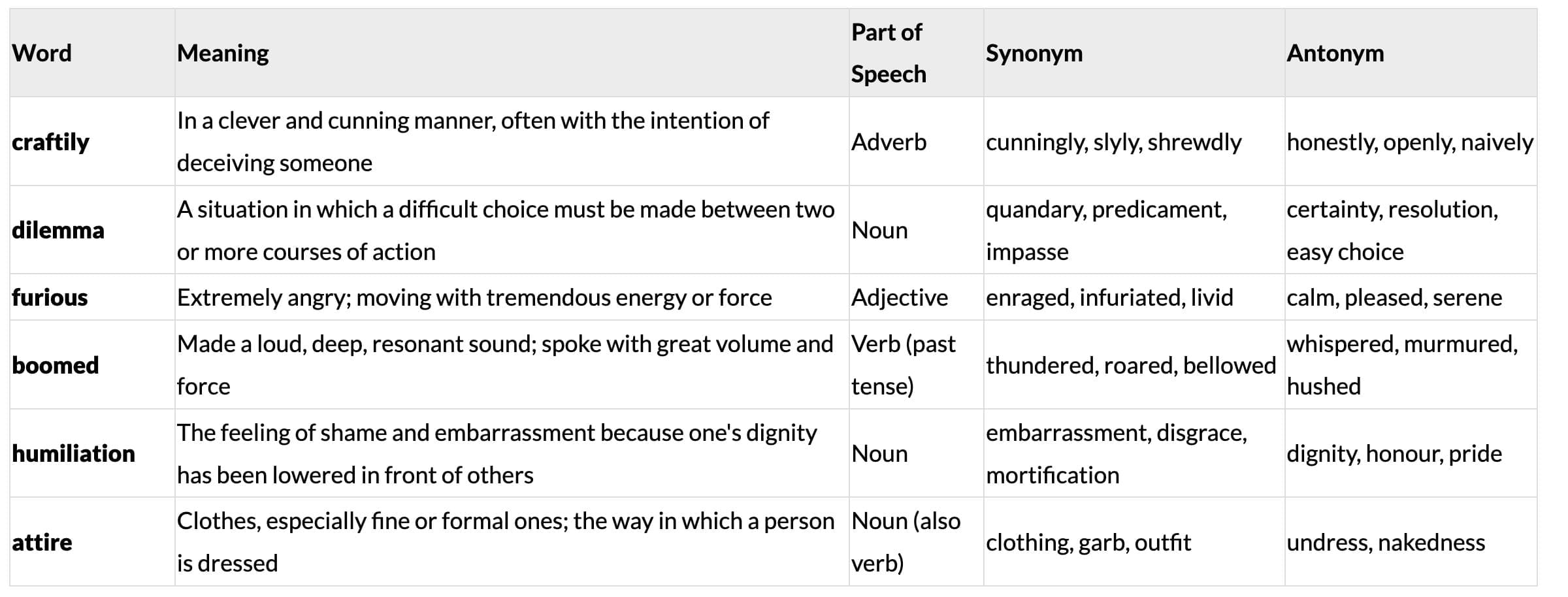
Ans:
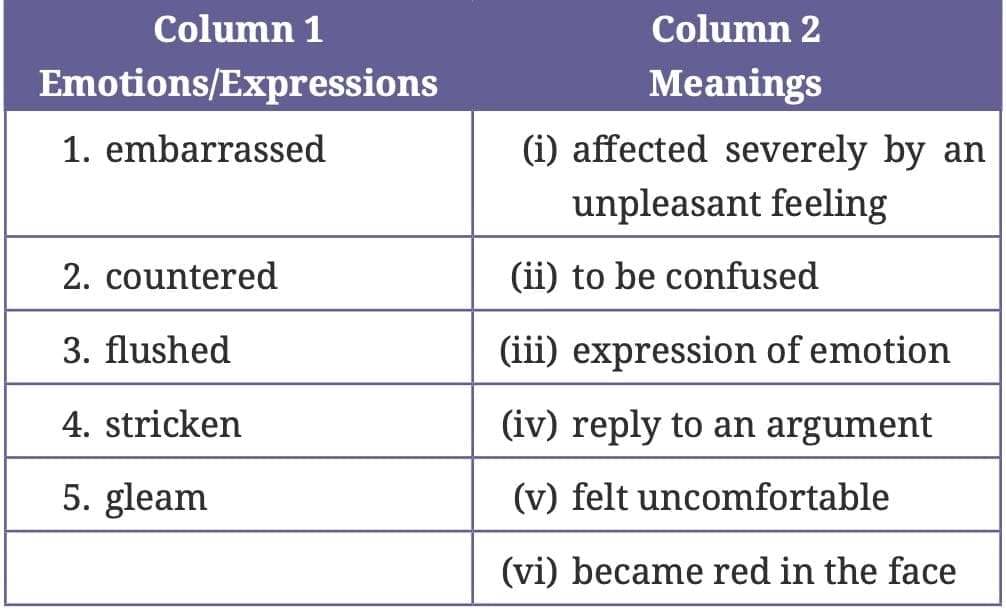
IV. Match the emotions/expressions in Column 1 with their meanings in Column 2. (One meaning is extra.)4
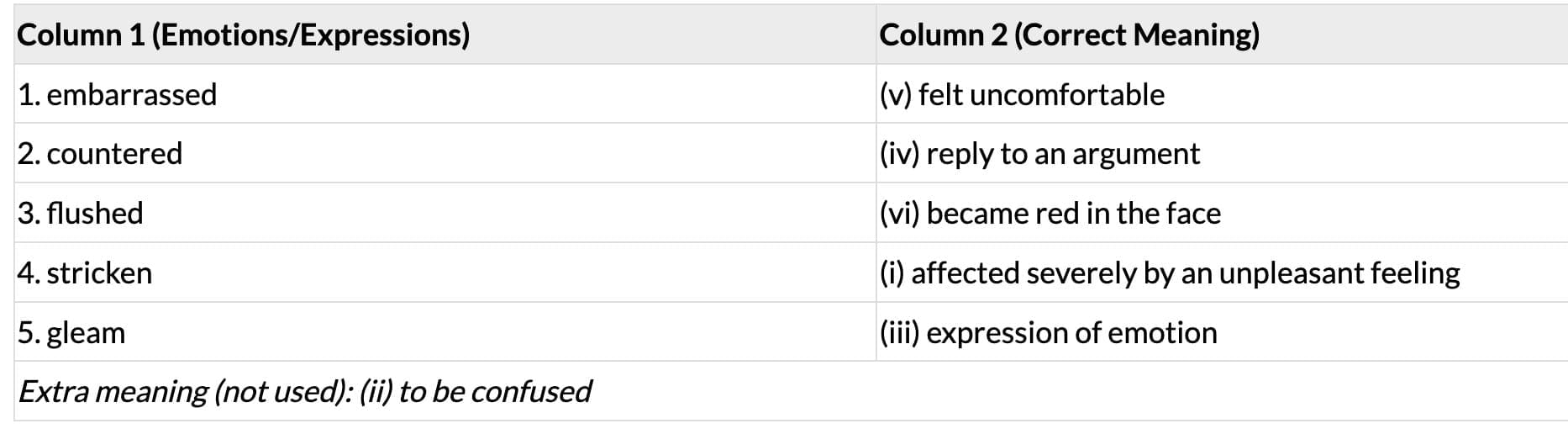
Ans:
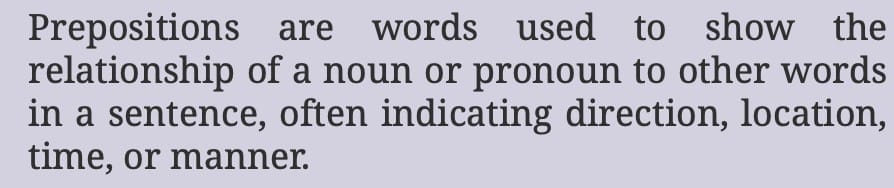
V. Fill in the blanks with appropriate prepositions.
Ans:
I walked (i) through the village, crossed a bridge (ii) over a brook, and found a quiet garden (iii) near a cottage. Sitting on a bench (iv) in the garden, I enjoyed the peaceful surroundings. Later, I strolled (v) along a riverbank, exploring the forest and heading (vi) towards the unknown.
VI. Read the dialogues and choose the correct answers.
- “Shall we play chess or watch the cricket match on TV, Grandpa?” asked Ravi.
- “Who are you?” said the little boy’s mother.
- “What did you both do today?” asked Ravi’s mother.
- “Have you forgotten?” countered Grandpa.
- A small child came up to him and asked, “Are you playing hide and seek?”
Now, choose the correct answer.
A. The words in the quotes are (i) __________ (exclamatory/interrogative) sentences.
B. Sentences 1, 4, and 5 are (ii) __________ (Wh-/Yes, No type) interrogative sentences.
C. Sentences 2 and 3 are (iii) __________ (Wh-/Yes, No type) interrogative sentences.
D. So, there are (iv) __________ (two/three) types of interrogative sentences.
Ans:
- A. The words in the quotes are (i) interrogative sentences.
- B. Sentences 1, 4, and 5 are (ii) Yes/No type interrogative sentences.
- C. Sentences 2 and 3 are (iii) Wh- type interrogative sentences.
- D. So, there are (iv) two types of interrogative sentences.
VII. Complete the following sentences in reported speech based on the conversation between Arvind and Priya.
ARVIND: Do you help in taking care of your grandparents at home?
PRIYA: Yes, I do. We take turns making sure they’re alright. Do you have grandparents living with you?
ARVIND: No. My parents and I visit my grandpa every weekend. How do you manage your grandparents’ medical needs?
PRIYA: We have a schedule for giving medications and visits to the doctor.
Ans:
Arvind asked Priya if she 1. helped in taking care of her grandparents at home, for which Priya replied in the affirmative and said that they 2. took turns making sure they were alright. Priya further asked Arvind 3. whether he had grandparents living with him. Arvind replied in the negative and said that 4. his parents and he visited his grandpa every weekend. He further enquired 5. how she managed her grandparents’ medical needs. Priya responded by saying that they 6. had a schedule for giving medications and visits to the doctor.
Speaking Activity
I. Intonation practice: Revisit the story and select different questions. Work in pairs and practise speaking them aloud with the correct intonation.
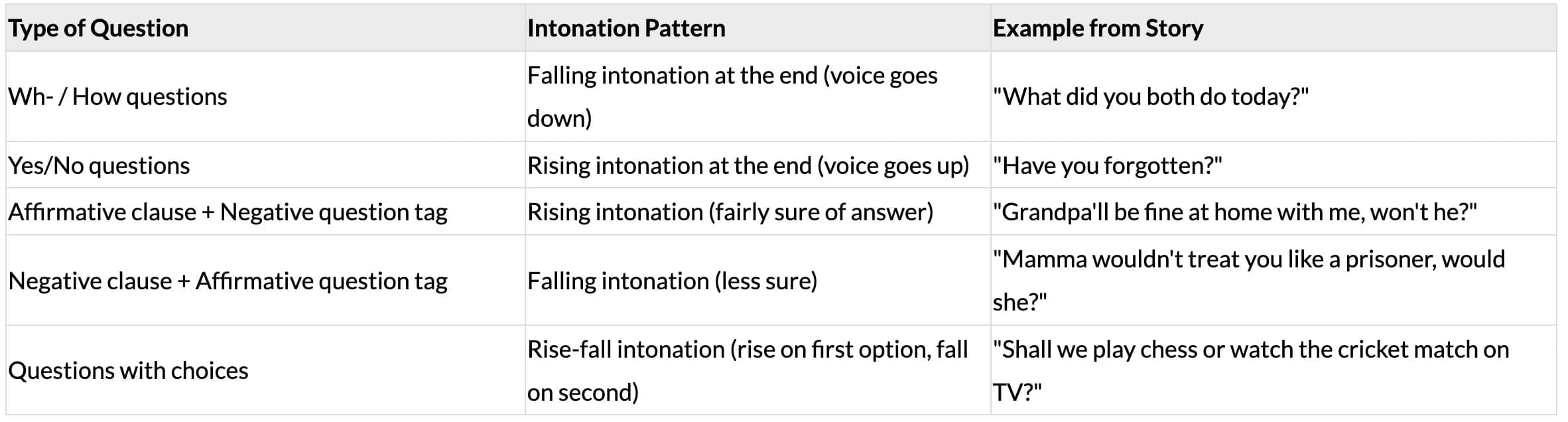
Ans (Guidelines):
II. Make a presentation about a brief personal experience related to taking care of an older person.
Ans (Sample Presentation):
Background of my experience: The person I had the privilege of taking care of was my maternal grandfather, Nana ji, during the summer holidays when I was in Class 7. He had undergone knee surgery and needed help with daily activities while he recovered at home.
What I learned about myself: Caring for someone taught me valuable lessons about patience and attentiveness. In this role, I learned that I possess the ability to set aside my own wants and focus entirely on another person’s needs. One significant realisation about me during this experience was that I am more capable of empathy than I had previously believed — I could sense when he was in discomfort even before he expressed it.
What I learned about the older person: Understanding the needs and preferences of the older person, I learned that the elderly deeply value being spoken to with warmth and respect, not just being physically attended to. Their challenges offered insights into the difficulties of aging, such as the frustration of being physically restricted when one’s mind is still sharp and active. Caring for Nana ji deepened my understanding of the ageing process, particularly how much the elderly need companionship and conversation, not just medical care.
Writing Task
I. Write an article for your school magazine on the topic ‘Our Inspiring Elderly’.
Ans (Sample Article):
OUR INSPIRING ELDERLY
By [Your Name] | Class IXThere is a quiet, unassuming kind of heroism that lives in the homes of most Indian families — in the form of an elderly grandparent seated in a favourite armchair, a retired teacher who still carries the habit of precise observation, or a grandmother whose hands have quietly fed generations. The elderly among us are far more than people who need to be looked after. They are a living archive of wisdom, resilience, and experience that no textbook can replicate.
Consider what the elderly represent: decades of lived experience, the memory of a world that no longer exists, skills that are disappearing, and a perspective on life that comes only from having truly lived it. Many of our grandparents survived poverty, partition, illness, and loss — and emerged with a philosophical calm that their grandchildren, for all the advantages of the modern world, often lack. As Grandpa in the story Vitamin-M quietly demonstrates, the elderly can be sharp, self-sufficient, generous, and even mischievous — qualities that age does not diminish.
Take the example of 78-year-old Mrs Kaur in our neighbourhood, who has spent the past fifteen years teaching underprivileged children to read, despite her own failing eyesight. Or consider my grandfather, who, at the age of 82, still writes letters by hand and calls every letter “an exercise in patience and clarity.” These individuals overcame the challenges of a rapidly changing world — the transition from letters to emails, from local markets to online shopping, from joint families to nuclear ones — with a quiet adaptability that many younger people find difficult. Their resilience in the face of these transitions is a lesson in itself.
The most important idea to carry with us is this: the elderly do not merely need our care — they deserve our attention. In listening to their stories, in learning their recipes, in sitting patiently through their slower pace, we gain something irreplaceable. Their wisdom is a vitamin that no pharmacy can supply. Let us not wait until they are gone to realise what they gave us while they were here.