Reflect and Respond
I. Look at the picture of Sheetal Devi carefully and share your observations. Does this personality inspire you? Give a caption for this picture.
1. Observations about the picture:
Ans:
The picture shows Sheetal Devi, a young para-archer, drawing her compound bow using her feet — a remarkable adaptation as she was born without arms. She appears completely focused and concentrated. The Paralympics logo in the background contextualises the setting as an elite international competition.
2. Does this personality inspire you? Explain how.
Ans:
Yes, Sheetal Devi is deeply inspiring. Born without arms, she chose archery — one of the most precision-demanding sports — and competed at international level. She teaches us that the only real limitation is the one we accept in our minds, and that with determination and support, any barrier can be crossed.
3. Caption for this picture:
Ans:
“Sheetal Devi — Where There Is a Will, There Is Always a Way.”
Alternative: “No Arms, No Limits — India’s Golden Para-Archer Defies the Impossible.”
II. Complete the table given below about Paralympics. (What I know / What I want to know)

Ans (Sample):
Check Your Understanding
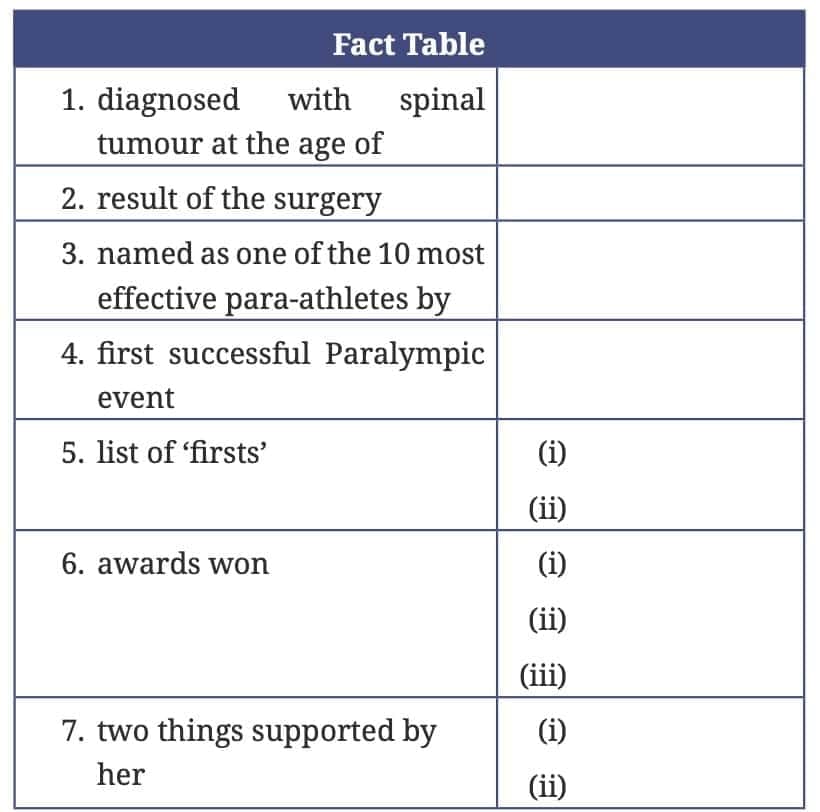
I. Fill in the fact table based on the interview with Dr. Deepa Malik.
Ans:
II. Choose whether the given statements display: fact-opinion or cause-effect.
Set (1):
(i) In the 2016 Rio Paralympic Games, I secured the silver medal in the shot-put event.
(ii) I feel it was a moment of personal victory and a step forward in changing perceptions.
Ans: Fact-Opinion.
Statement (i) is a fact — a verifiable, documented event. Statement (ii) is an opinion — Dr. Malik’s personal interpretation (“I feel”) about its significance.
Set (2):
(i) I was diagnosed with a tumour in my spine.
(ii) I had a surgery and was told that I would be bound to a wheelchair for the rest of my life.
Ans: Cause-Effect.
Statement (i) is the cause — the spinal tumour diagnosis. Statement (ii) is the effect — surgery resulting in permanent paralysis.
III. Work in pairs to identify which pairs of sentences show cause-effect or fact-opinion.

Ans:
Critical Reflection
I. Read the extracts given below and answer the questions that follow.
Extract 1
I had two choices — squander my life in remorse or transform it to a world of limitless possibilities. I love sports and had been a swimmer too, so I decided to switch to para-athletics. This is how my Paralympics journey began. My breakthrough moment came in the 2016 Rio Paralympic Games, when I secured the silver medal in the shot-put event. In hindsight, I feel it was a moment of personal victory and a step forward in changing perceptions.
(i) Give a reason for the following statement. The speaker’s decision to transform her life can be likened to the concept of a caterpillar transforming into a butterfly.
Ans:
Just as a caterpillar undergoes profound transformation within the constraints of its cocoon to emerge as a butterfly, Dr. Malik transformed within the confines of a wheelchair and paralysis. She chose not to see her disability as an ending but as the beginning of a new chapter — emerging from her lowest point not broken, but transformed into an international para-athlete, advocate, and inspiration. In both cases, the most limiting condition becomes the foundation of the most remarkable reinvention.
(ii) Why could the speaker switch to para-athletics quite comfortably?
Ans:
She could switch comfortably because she had always loved sports and had been a competitive swimmer before her illness. This pre-existing passion and experience gave her the discipline, competitive mindset, and motivational foundation needed to transition — making the switch a natural extension of her identity rather than an entirely new undertaking.
(iii) Complete the sentence with an appropriate reason. The speaker calls 2016 Rio Paralympic Games as a ‘breakthrough moment’ because ________.
Ans:
…because it was the first time she won a medal at Paralympic level — silver in the shot-put — marking her arrival on the world stage and validating her decision to switch to para-athletics. It shifted public perception about what a para-athlete could achieve and opened doors to greater recognition and advocacy.
(iv) Select the correct option to complete the sentence. The phrase ‘in hindsight’ indicates the speaker is __________.
- A. curious
- B. reflective
- C. determined
- D. courageous
Ans: B. reflective.
“In hindsight” means looking back with understanding gained since then — a reflective act. Dr. Malik is thinking deeply about the meaning of a past event, not expressing curiosity, determination, or courage in that phrase.
(v) The speaker uses the phrase ‘changing perceptions’. List one likely perception the speaker might have changed.
Ans:
The widely held belief that a person physically disabled and confined to a wheelchair cannot compete at the elite international level. By becoming India’s first female Paralympic medallist, Dr. Malik demonstrated concretely that a wheelchair-user can be a world-class athlete — challenging the stereotype that disability and sporting excellence are mutually exclusive.
Extract 2
Honestly, I feel sports, especially Paralympics, have the extraordinary ability to challenge stereotypes and change attitudes towards disability. When people witness the strength, skill, and competitive spirit of para-athletes, it breaks down preconceived notions. Paralympics has given me a new lease of life and helped me push boundaries.
(i) Choose the option that lists the words to describe the tone of the speaker.
- A. appreciative
- B. moralistic
- C. sentimental
- D. optimistic
- E. defensive
- (a) A and D
- (b) B, D, and E
- (c) B and C
- (d) A, C, and E
Ans: (a) A and D — appreciative and optimistic.
Dr. Malik is appreciative of what Paralympics gave her (“a new lease of life”) and optimistic in her positive conviction about sports’ “extraordinary ability” to challenge stereotypes. The tone is not moralistic, sentimental, or defensive.
(ii) Complete the analogy given below with a word from the extract. ability : potential :: preconceived notions : __________
Ans: stereotypes.
Just as “ability” relates to “potential” (both refer to what one is capable of), “preconceived notions” relates to “stereotypes” — both are fixed, unfair judgements formed without adequate knowledge. Preconceived notions are the personal form; stereotypes the broader social form.
(iii) State whether the following sentence is true or false. Paralympics is a platform that not only showcases the remarkable abilities of para-athletes but also questions stereotypes.
Ans: True.
Dr. Malik states that Paralympics has “the extraordinary ability to challenge stereotypes and change attitudes towards disability.” When audiences witness para-athletes perform with skill and competitive spirit, it directly counters the preconceived notion that disabled people are limited.
(iv) What does ‘helped me push boundaries’ tell us about the speaker?
Ans:
It tells us that Dr. Malik is inherently driven to exceed her own limits and does not accept boundaries set by her physical condition or societal expectations. She is growth-oriented — always looking to do more — and for her, the Paralympics has been not just a competitive platform but a catalyst that continuously stretches her personal and professional horizons.
(v) Which phrase from the extract suggests that the speaker was able to transform her life?
Ans:
The phrase “a new lease of life.” This means being given a fresh start and renewed purpose after difficulty. By saying “Paralympics has given me a new lease of life,” Dr. Malik indicates that the sport fundamentally revived her sense of self and ability to live fully and meaningfully — the turning point that transformed potential despair into achievement and inspiration.
II. Answer the following questions.
1. Explain how Dr. Malik’s achievements challenge societal perceptions.
Ans:
- Disability and athletics: Her silver medal at Rio, Asian Games gold, and status as first Indian female Paralympic medallist directly refute the assumption that disability and elite sporting achievement are incompatible.
- Gender and para-sport: As the first Indian woman to win a Paralympic medal, she challenged the compounded marginalisation women with disabilities face — proving neither barrier is insurmountable.
- Disability and leadership: Her role as advocate, policy contributor, and social entrepreneur challenges the perception that persons with disabilities can only be recipients of support, not architects of change.
- Wheelchair users and independence: Winning international gold and empowering others from a wheelchair directly contradicts the notion that wheelchair users are dependent or incapable of full societal participation.
2. What can be the long-term impact of involving youth in schools and colleges in advocacy with respect to disability?
Ans:
- Attitude change from an early age: Young people educated about disability in an empowering framework grow up with attitudes of equality rather than condescension, naturally including rather than excluding.
- Breaking the cycle of stereotyping: Youth who understand disability rights are far less likely to perpetuate harmful stereotypes as they enter the workplace, politics, media, and social life.
- Future professionals: Today’s students are tomorrow’s doctors, architects, and lawmakers. Sensitised youth will design more accessible buildings, fairer laws, and more empathetic healthcare.
- Inspiration for peers with disabilities: When young people see their peers advocating for inclusion, it sends a powerful message of belonging, positively impacting the self-esteem and ambition of young people with disabilities.
3. Rationalise the appropriateness of the title of this text with reference to Dr. Deepa Malik’s attitude and achievements.
Ans:
- Her own words: Dr. Malik herself uses the phrase “limitless possibilities” — she consciously chose to “transform her life to a world of limitless possibilities,” and her entire story is the proof that she succeeded.
- Defying physical limits: A person paralysed from the waist down who becomes an international para-athlete and national awardee is the living embodiment of the title.
- Beyond one person: The title applies to the entire world of Paralympics — where athletes repeatedly show the world what is possible despite what they have been told they “cannot” do.
- Her motto: “Ability beyond disability” is a direct expression of limitless possibilities — the title encapsulates her philosophy perfectly.
4. “Every setback is an opportunity to prove your strength.” How might this be a life lesson for every individual, and not just sportspersons?
Ans:
- For students: Failure in an exam or rejection from a college is a setback that can be reframed as motivation to study harder and demonstrate capability.
- For professionals: A lost job or failed business, when analysed and learned from, becomes the training ground for future success.
- For personal life: Relationship breakdowns, health challenges, and loss — even through the deepest difficulty, humans can rebuild, find new meaning, and discover strengths that ease would never have revealed.
- The universal principle: Every setback forces a choice — to collapse or to respond. Those who respond discover abilities and depths of character that become their greatest strengths.
5. Examine how Dr. Deepa Malik’s recognition as one of the 10 most inspirational para-athletes globally contributes to the larger discourse on gender equality in sports.
Ans:
- Visibility for women in para-sport: When a woman para-athlete receives global recognition of this scale, it draws attention to the fact that women with disabilities are equally capable of elite athletic achievement — visibility being the first step toward equality.
- Challenging double marginalisation: Women with disabilities face marginalisation as both women and as disabled persons. Dr. Malik’s recognition challenges both forms simultaneously.
- Role model effect: Young girls who see Dr. Malik celebrated on the world stage receive a message that women’s athletic achievement is valued — encouraging more girls to take up sports.
- Policy change: High-profile recognition creates pressure on sporting bodies and governments to invest more equitably in women’s para-sport — moving the conversation from aspiration to systemic change.
6. How might Dr. Deepa Malik’s thought, ‘ability beyond disability’, serve as a guideline for success for all future para-athletes?
Ans:
- Identity anchored in strength: It urges athletes to define themselves by what they can do, not by what they cannot — making skill and competitive spirit the defining features of their identity.
- Resilience against doubt: Para-athletes frequently face scepticism from coaches, institutions, and families. This philosophy equips them with an internal conviction strong enough to persevere despite external doubt.
- Focus on adaptation: It encourages creative thinking about how to work with the body as it is — leading to innovative training techniques and performance breakthroughs.
- Holistic success: The philosophy defines success beyond medals — as living fully, contributing to one’s community, and inspiring others. This broader definition ensures athletes find meaning even when medals are elusive.
7. What have you learnt from this interview, and how can you implement these learnings in your life?
Ans (Sample):
- The power of choice: Dr. Malik chose transformation over despair. I will try to choose action over wallowing when I face failures.
- Redefining possibility: Most limitations exist in the mind. I will question the limits I set for myself before accepting them as permanent.
- Empathy and inclusion: I will be more conscious of my assumptions about others and actively include those who may feel marginalised.
- The importance of advocacy: Personal success is most meaningful when used to create opportunities for others — I can be a voice for classmates who may be shy, isolated, or differently-abled.
Vocabulary and Structures in Context
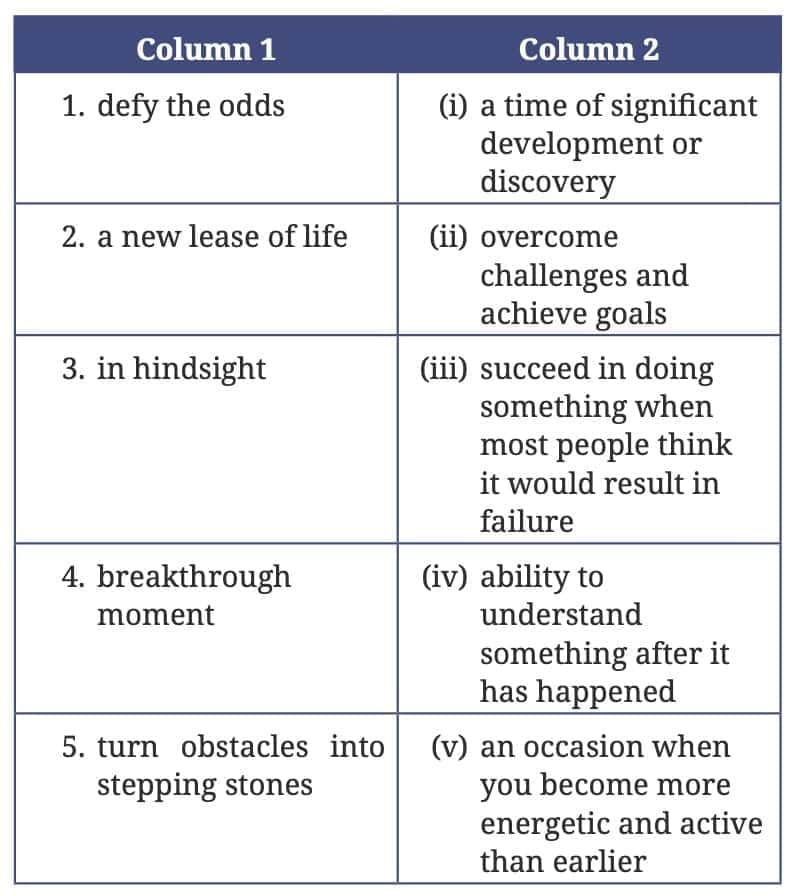
I. Match the given phrases in Column 1 with their meanings in Column 2. Use the phrases in sentences of your own.
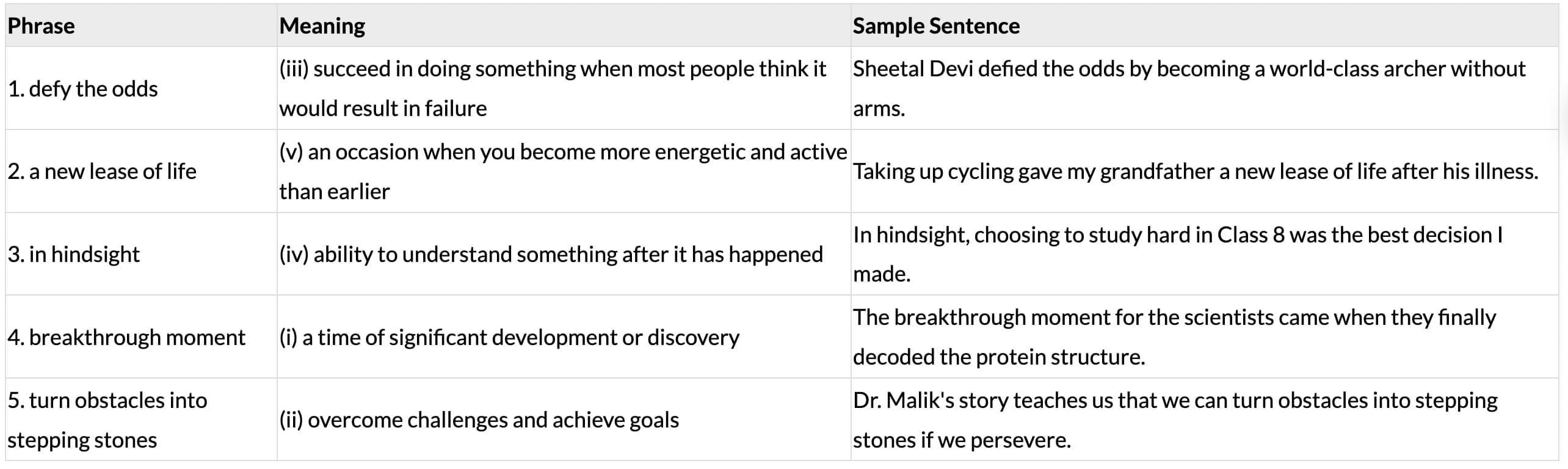
Ans:
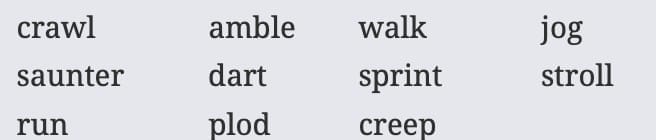
II. Arrange the words related to movement on a word cline from slowest to fastest.
Ans (Slowest → Fastest):
crawl → creep → plod → amble → walk → stroll → saunter → jog → run → dart → sprint
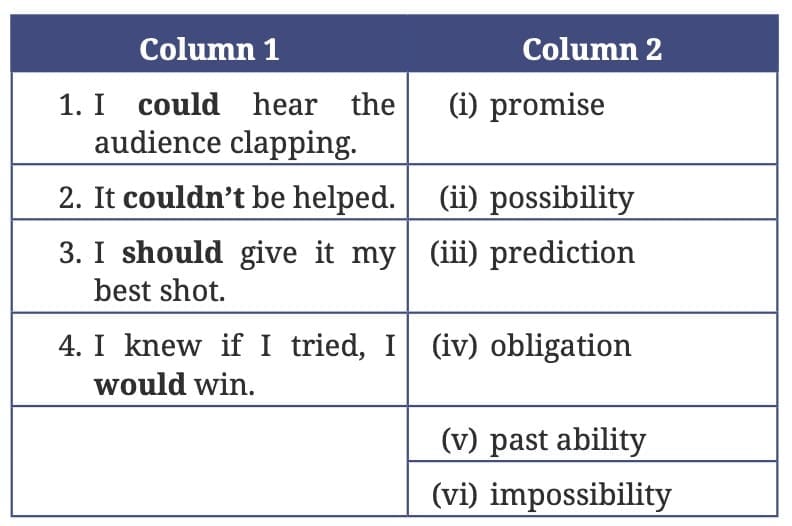
III. Match the highlighted modal verbs in Column 1 with their functions in Column 2. (Two extra functions not needed.)

Ans:
Extra functions not used: (i) promise and (ii) possibility
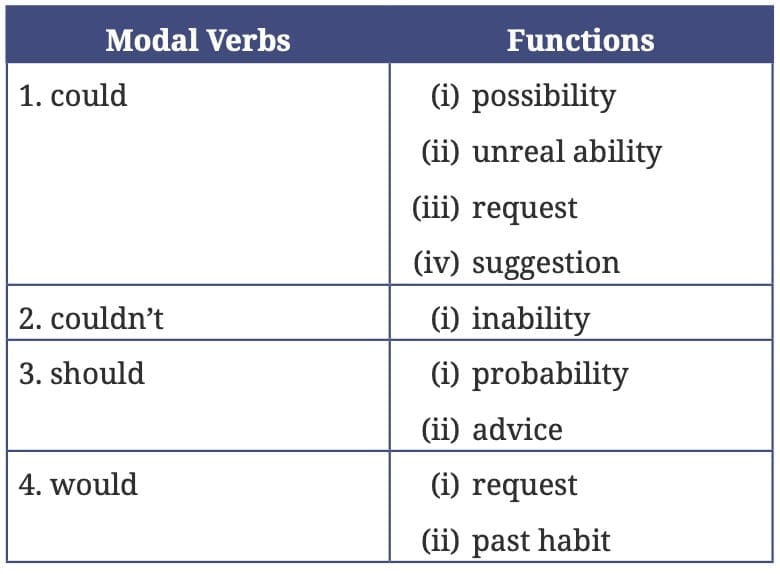
IV. Make sentences with modal verbs using all their functions.
Ans:
V. Read the following sentences and answer questions about Direct and Reported Speech. Observe and complete the changes table.
Interviewer: You’ve been listed as one of the 10 most inspirational women para-athletes globally by the International Paralympic Committee.
Dr. Malik: I love sports and had been a swimmer too, so I decided to switch to para-athletics.
The sentences given above are in ____________________. (Direct Speech/Reported Speech)
The sentences given above are __________ sentences. (declarative/interrogative/exclamatory/imperative)
Now, work in pairs. Observe the changes from Column 1 to Column 2. Note these changes in Column 3. One example has been done for you.
Ans:
The sentences given are in Direct Speech.
The sentences given are declarative sentences.
VI. Change the conversation between Siya and Tarun to reported speech.
SIYA: I watched a documentary on the para equestrian event on television last night.
TARUN: I didn’t know Paralympics has equestrian events.
SIYA: It does. It was so interesting to watch.
TARUN: That’s wonderful. So, para equestrians must be training for months for this.
SIYA: They also have to find and develop their own style of communication with their horse.
TARUN: I will watch this documentary the next weekend.
Ans:
Siya said that she 1. had watched a documentary on the para equestrian event on television the previous night. Tarun replied that he hadn’t known that Paralympics had equestrian events. Siya added that 2. it did and that it had been very interesting to watch. Tarun remarked that it was wonderful and that para equestrians must be training for months for that. Siya replied that 3. they also had to find and develop their own style of communication with their horse. Tarun said that 4. he would watch that documentary the following weekend.
Speaking Activity
I. Interview the Sports Captain (informal) and Sports Coach (formal) of your school. Sample responses given below.
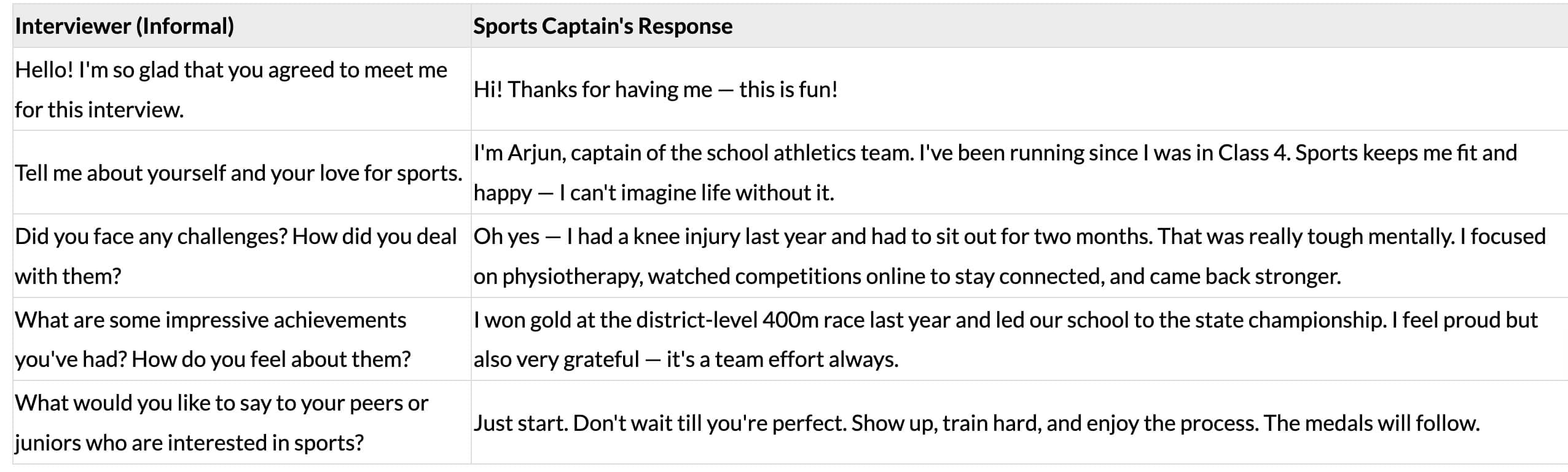
Sample Informal Interview — Sports Captain
Ans:
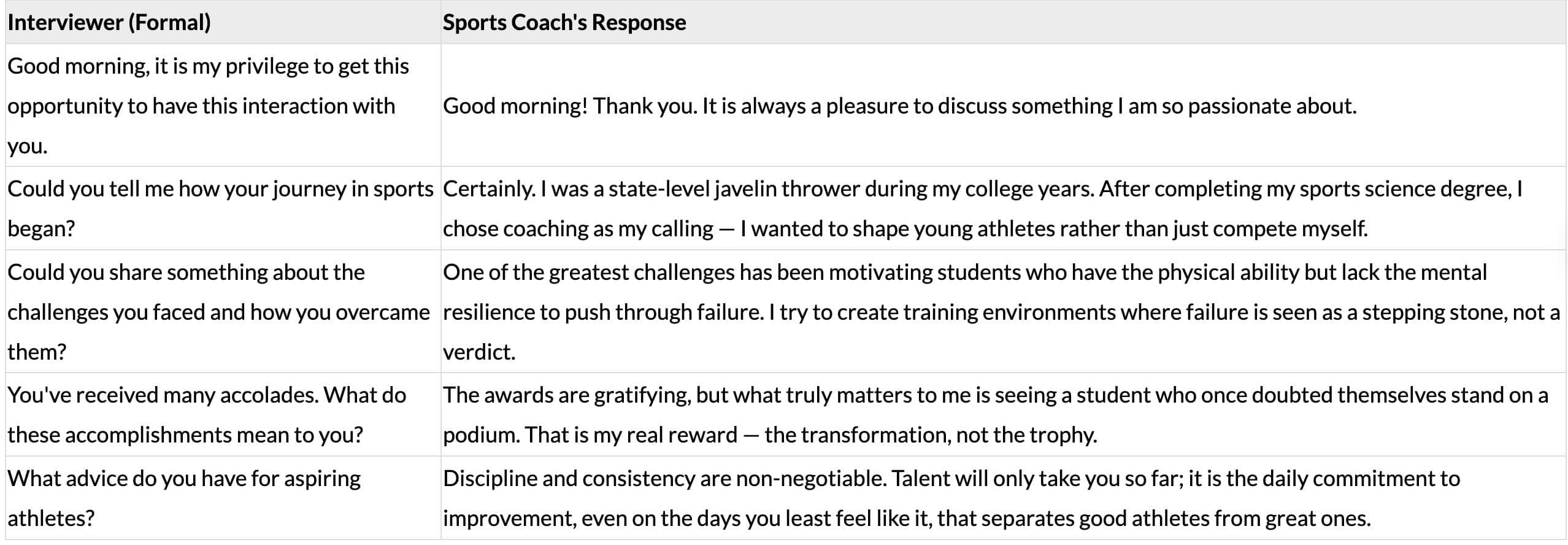
Sample Formal Interview — Sports Coach
Ans:
Writing Task
II. Draft a notice for the Inter-school Athletic Meet (not more than 50 words), in a box.
Ans: Sample Notice
Green Valley Public School, Chandigarh
NOTICE
Date: 18 March 2026
Inter-school Athletic Meet — Student Registration
Students of Classes 6–10 interested in participating in the Inter-school Athletic Meet (to be held on 5 April 2026) are requested to register with the Sports Department by 25 March 2026. Events include sprints, relay races, long jump, and shot-put. Selection trials will be held on 28 March.
(Signature)
Rohan Sharma
Sports Captain, Green Valley Public School