Activity 1.1 – Let Us Model ( Page 2)
Question: Suppose you ride a bicycle from your school to your home. You want to model the time it takes to go home from school. What details would you keep? What details could you ignore? Suggest why ignoring some details may actually be useful.
Ans:
Details to keep:
- Distance from school to home
- Average speed of cycling
- Number of traffic stops or signals
Details to ignore:
- Colour of the bicycle
- Exact route curves (use straight-line distance as approximation)
- Whether the road is slightly uphill or downhill (for a simple model)
Why ignoring details is useful:Ignoring unnecessary details makes the model simple enough to calculate quickly. If we tried to include every bump on the road or every traffic signal, the model would become too complicated to be useful. A simple model gives us a reasonable estimate that is good enough for most purposes.
Threads of Curiosity – Why is the speed of light denoted by ‘c’? (Page 3)
Answer:
The symbol c for the speed of light does not stand for any English word. It comes from the Latin word celeritas, meaning speed or swiftness. Scientific symbols are often chosen based on historical tradition and international agreement, not simply as abbreviations of the English name for the quantity. This is why many symbols in science seem unexpected – they carry the history of the language in which that concept was first formally studied. The speed of light is a fundamental physical constant, defined to be exactly 299,792,458 metres per second.
Ready to Go Beyond – Airplane Fuel Miscalculation (Page 3)
Question: A passenger aircraft ran out of fuel mid-flight due to a unit mix-up. What does this tell us about the importance of standard units in science and real life?
Answer:
This incident shows that using wrong units can have dangerous real-world consequences. The ground crew calculated fuel density in pounds (lb) per litre instead of kilograms (kg) per litre, which are very different values. As a result, the plane carried far less fuel than it needed and had to make an emergency landing.
This tells us:
- Standard SI units are not just a formality – they are essential for safety
- Everyone in a system (pilots, ground crew, engineers) must use the same units
- Science emphasises standard units so that results and calculations mean the same thing everywhere in the world
- A small error in units can compound into a huge error in the final result
Threads of Curiosity – Why is a kilogram used everywhere? (Page 3)

Answer:
When we buy rice, vegetables, or any goods by weight, we expect a kilogram to mean exactly the same amount whether we are in a shop in Chandigarh, a market in Mumbai, or a store in another country. This is possible because the kilogram is based on an internationally agreed standard – not a local object or a regional custom. Without such a standard, the same word “kilogram” could mean different amounts in different places, making trade unfair and scientific comparison impossible. Standard units ensure that measurements are universal, results can be replicated anywhere in the world, and daily transactions are fair and trustworthy.
Pause and Ponder ( Page 4)
Question: Think of a prediction you or your family made recently (for example, the outcome of a cricket match). Was it based on evidence and reasoning, or mainly on guesswork? How can scientific thinking improve such predictions?
Ans:
Example prediction: “Our team will win today’s cricket match.”
Based on guesswork if: It was based on feeling, hope, or just supporting a favourite team.
Based on evidence if: It considered the team’s recent performance, pitch conditions, weather, and the opponent’s weaknesses.
How scientific thinking helps:Scientific thinking means looking for measurable patterns instead of opinions. For a cricket match, this means:
- Checking win-loss records on this type of pitch
- Comparing current form of players
- Analysing past head-to-head results
This kind of reasoning gives a more reliable prediction than pure guesswork – just like weather forecasters use data rather than gut feeling.
Ready to Go Beyond – Why do weather forecasts sometimes go wrong? (Page 4)
Answer:
Weather is governed by a large number of constantly changing variables – temperature, air pressure, humidity, wind speed and direction, and moisture content at different altitudes. Even tiny differences in these starting conditions can grow over time and produce completely different outcomes. This is sometimes called the “butterfly effect” – a small, unmeasured variation early on can lead to a very different result later.
Weather forecasting models use mathematical equations and real-time measurements from satellites, weather stations, and balloons. However, no measurement tool is perfectly precise, and no model can capture every detail of the atmosphere. So small errors in the initial data get amplified as the model runs forward in time. This is why:
- Forecasts for the next few hours are usually quite reliable
- Forecasts for 2-3 days ahead are reasonably good
- Forecasts beyond a week become increasingly uncertain
This is not a failure of science – it is an honest acknowledgment of the limits of current models and measurements. Scientists continue to improve forecasting by collecting better data and building more powerful models.
Threads of Curiosity – Checking ‘viral’ claims on social media: Is eating food harmful during an eclipse? (Page 5)
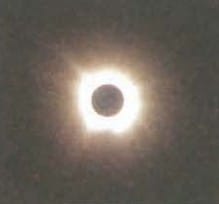
Ans:
This is a widely shared belief, but it does not hold up to scientific questioning. An eclipse is purely an astronomical event – the Moon passes between the Earth and the Sun, temporarily blocking sunlight. It is essentially a play of shadows.
To test the claim scientifically, we should ask:
- What physical change occurs in food during an eclipse? None that has been measured.
- Does temperature change significantly enough to spoil food? No – an eclipse lasts only a few minutes and any temperature drop is minimal.
- Does food left in ordinary shade go bad? No.
- Is there any radiation during an eclipse that is different from normal? No harmful radiation reaches food on the ground.
Since no physical, chemical, or biological mechanism can explain why food would become harmful during an eclipse, the claim has no scientific basis. This example shows how asking simple, measurable questions – the core of scientific thinking – can help us evaluate viral claims rather than accepting them uncritically.
Ready to Go Beyond – How Much Rice Would Feed a Family of Four for a Month? (Page 5)

Answer: Assumptions: All calorie needs come from rice alone (for simplification) An average adult needs about 2000-2500 kcal per day 100 g of uncooked rice provides approximately 350-360 kcal when cooked Calculation: Daily rice needed per person: 2000 ÷ 350 ≈ about 570 g, roughly 0.6 kg per person per day For 4 people: 0.6 × 4 = 2.4 kg per day For 30 days: 2.4 × 30 = 72 kg per month Sense check: 100 g per month? Clearly too little. A few tonnes? Way too much. About 70-75 kg? This seems reasonable for a family of four. This is approximate reasoning – we are not trying to be exact, just making sure the answer is in the right range.
Pause and Ponder (Page 6)
Q3: Describe one situation where an approximate answer is good enough, and one where you would need a very exact value.
Answer:
Situation where approximate answer is enough:Estimating how much rice is needed to feed a family of four for a month. You do not need to calculate down to the last gram – a rough estimate of a few kilograms is perfectly useful for planning grocery shopping.
Situation where exact value is needed:Calculating the amount of fuel required for an airplane before a long flight. Even a small error in units or calculation (as in the real-life airplane incident) can lead to fuel running out mid-flight, which is extremely dangerous. Here, precision is critical.
Q4: Choose a real-life object (maybe a pressure cooker or a mobile phone) or a problem (maybe a traffic jam near your school). List what kind of ideas from physics, chemistry, biology, earth science, or mathematics are involved. Show how at least two branches of science connect with your example.
Ans:
Object chosen: Mobile PhoneBranchHow it connects to a mobile phonePhysicsElectricity powers the phone; light from the screen; radio waves transmit signals; electromagnetic induction charges the batteryChemistryBattery stores and releases energy through chemical reactions; screen made of special chemical compoundsBiologyThe phone’s design considers how humans hold it (ergonomics); screen brightness is adjusted for human eye safetyMathematicsAlgorithms process data; encryption protects messages; compression reduces photo/video file sizes
Two branches connecting: Physics and Chemistry are most directly connected – the battery uses chemical reactions to produce electrical energy (physics), and the screen uses both electrical signals and chemical materials to display images.
Ready to Go Beyond – How does a mask really work? (Page 7)

Answer:
A mask works by blocking tiny particles (like virus droplets) from entering or leaving through the nose and mouth. Understanding this involves:
- Physics: Particles in air are constantly moving. Masks use electrostatic attraction – the fibres in the mask carry a charge that attracts and traps tiny particles, even ones smaller than the pore size.
- Chemistry: The fibres are made of polymers (like polypropylene). The chemical structure of these polymers makes them good at generating and holding static charge.
- Biology: Viruses like SARS-CoV-2 travel in tiny droplets. Their size (0.1 microns) determines what kind of filtration is needed to block them.
- Mathematics: Engineers model airflow and filtration efficiency – calculating what percentage of particles are blocked at different breathing speeds.
So, a simple-looking mask is actually a product of knowledge from physics, chemistry, biology, and mathematics working together.