Page No. 105
Q1: What is the difference between a reflex action and walking?
Ans:
- Reflex action is the involuntary action that occurs in response to stimuli.
- They occur without the involvement of conscious areas of the brain.
- All the reflex actions are unconscious.
- Reflex action occurs brain and spinal cord of the central nervous systems.
- This kind of response occurs within a fraction of a second.
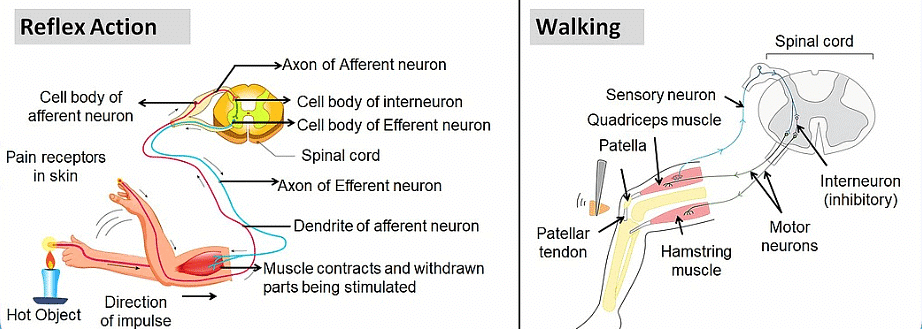
- On the other hand, voluntary actions are those which occur under the control of the cerebellum of the brain.
- Walking is learnt as we grow. Walking is controlled by the brain. This kind of response takes a longer time.
Q2: What happens at the synapse between two neurons?
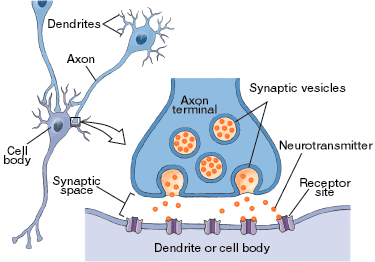
Ans: A synapse is a tiny gap between the end of one neuron’s axon and the dendrite of another neuron. It functions as a one-way valve for transmitting signals. Here’s how it works:
- The axon of the first neuron releases chemicals into the synapse.
- These chemicals cross the synapse and trigger an electrical impulse in the dendrite of the next neuron.
- This process ensures that signals travel in only one direction.
This mechanism is essential for the rapid transmission of nervous impulses throughout the body.
DendriteQ3: Which part of the brain maintains the posture and equilibrium of the body?
Ans: Cerebellum, a part of the hindbrain is responsible for maintaining posture and equilibrium of the body.
Q4: How do we detect the smell of an agarbatti (incense stick)?
Ans: The thinking part of our brain is the forebrain. It has separate areas that are specialized for hearing, smelling, sight, taste, touch, etc. The fore-brain also has regions that collect information or impulses from various receptors.
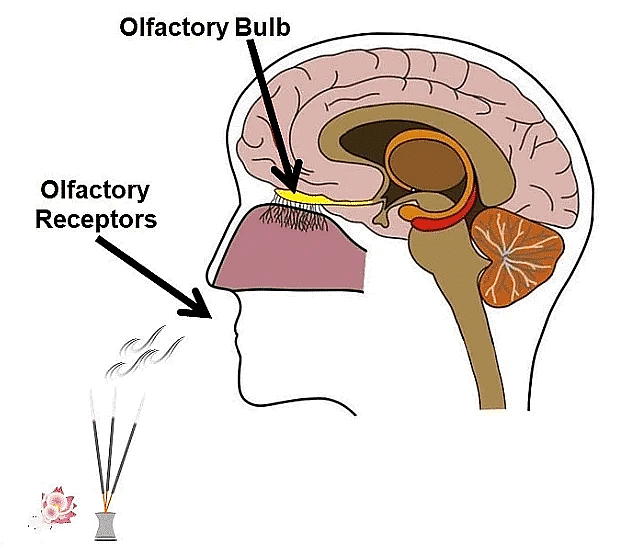
When the smell of an incense stick reaches us, our forebrain detects it. Then, the forebrain interprets it by putting it together with the information received from other receptors and also with the information already stored in the brain.
Q5: What is the role of the brain in reflex action?
Ans: Reflex actions are sudden responses, which do not involve any thinking.
- For example, when we touch a hot object, we withdraw our hand immediately without thinking as thinking may take time which would be enough to get us burnt.
- The sensory nerves that detect heat are connected to the nerves that move the muscles of the hand.
- Such a connection of detecting the signal from the nerves (input) and responding to it quickly (output) is called a reflex arc.
- The reflex arcs (connections present between the input and output nerves) meet in a bundle in the spinal cord.
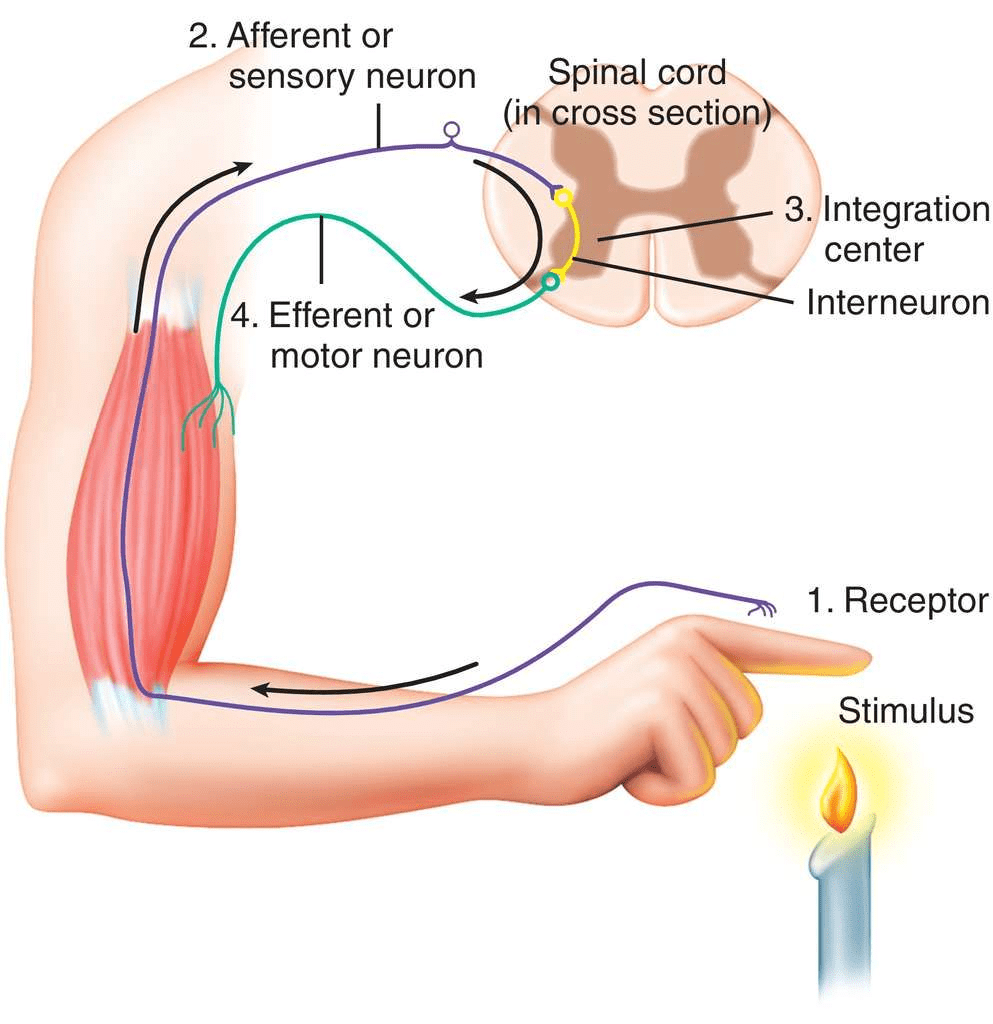
Reflex arcs are formed in the spinal cord and the information (input) reaches the brain. The brain is only aware of the signal and the response that has taken place. However, the brain has no role to play in the creation of the response.
Page No. 108
Q1: What are plant hormones?
Ans: Plant hormones are the fluid that are secreted within the plant also known as phytohormones. Plant hormones regulate the growth and development of the plant.
Examples of plant hormones include:
- Auxin – promotes cell elongation and growth.
- Gibberellins – stimulate stem growth.
- Cytokinins – encourage cell division.
Q2: How is the movement of leaves of the sensitive plant different from the movement of a shoot towards light?
Ans:Movement of leaves of sensitive plantMovement of shoot towards light(i) Growth independent movement.
(ii) Movement is non-directional i.e., it is neither towards nor away from the stimulus.
(iii) Such movements are referred to d as nastic movements.
(iv) Such movements are reversible.(I) Growth-dependent movement.
(ii) Movement is towards the source of stimulus (light). So it is a directional movement.
(in) Such movements are referred d as tropic movements.
(iv) Such movements are irreversible.
Q3: Give an example of a plant hormone that promotes growth.
Ans: Auxin is an example of a growth-promoting plant hormone. Auxins are responsible for cell elongation in the shoot and accelerates growth.
Q4: How do auxins promote the growth of a tendril around a support?
Ans: Auxins are hormones produced at the shoot tip of plants. They play a crucial role in growth, particularly in tendrils. Here’s how they work:
- When a tendril touches a support, auxins promote faster growth on the side away from the support.
- This uneven growth causes the tendril to coil around the support.
- The result is a structure that resembles a watch spring, allowing the plant to cling effectively.
Q5: Design an experiment to demonstrate hydrotropism.
Ans: To demonstrate hydrotropism in plants.
Procedure:
- Plant a seedling in a vessel containing soil.
- Adjacent to the seedling put a porous pot containing water.
- Leave thset-upup for few days.
Observation:
On examining the roots it is observed that the roots bend towards the source of water and do not grow straight.
Result:
It confirms that the plant shows hydrotropism as the roots bend towards the porous pot of water. As hydrotropism is a plant growth response in which the direction of growth is determined by a stimulus of a gradient in water concentration.
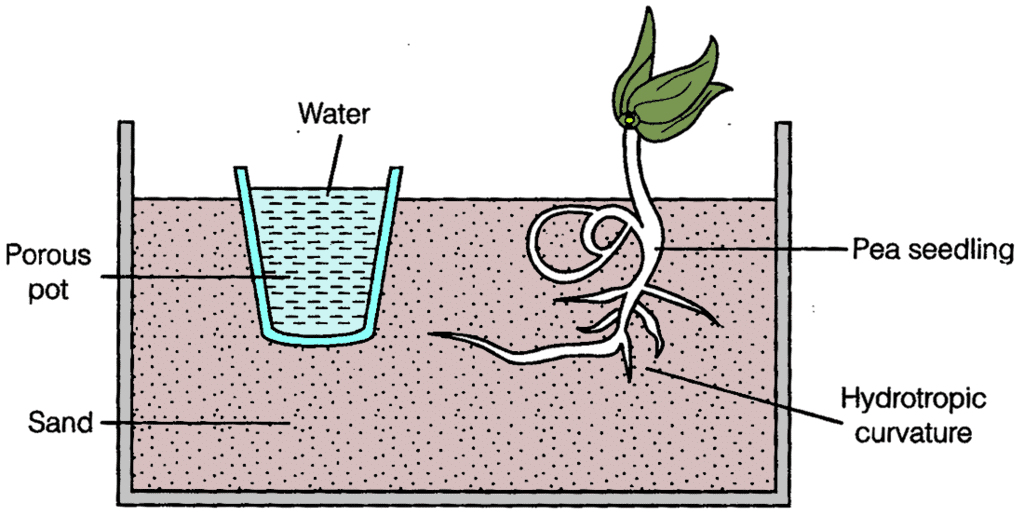
Experiment of Hydrotropism
Page No. 111
Q1: How does chemical coordination take place in animals?
Ans: Chemical coordination in animals occurs through hormones, A hormone is the chemical messenger that regulates the physiological processes in living organisms.
- It is secreted by glands.
- The regulation of physiological processes and control and coordination by hormones comes under the endocrine system.
- The nervous system along with the endocrine system in our body controls and coordinates the physiological processes.
Q2: Why is the use of iodized salt advisable?
Ans: The use of iodized salt is important for several reasons:
- Iodine is essential for the thyroid gland to produce the hormone thyroxin.
- Thyroxin helps regulate the metabolism of carbohydrates, fats, and proteins in the body.
- A deficiency in iodine can lead to an enlarged thyroid gland, known as goitre.
- Goitre is often characterised by a swollen neck.
Therefore, incorporating iodized salt into our diet supports the normal functioning of the thyroid gland.
Q3: How does our body respond when adrenaline is secreted into the blood?
Ans: Adrenalineis a hormone released by the adrenal glands during times of danger or stress. When it enters the bloodstream, it triggers several responses in the body:
- It is secreted directly into the blood and is transported to different parts of the body.
- When secreted in large amounts, it speeds up the heartbeat and hence supplies more oxygen to the muscles.
- The breathing rate also increases due to contractions of the diaphragm and rib muscles.
- It also increases the blood pressure.
- All these responses enable the body to deal with any stress or emergency.
Q4: Why are some patient of diabetes treated by giving injections of insulin?
Ans: Diabetes is caused due to less or no secretion of the hormone insulin by the pancreas. In such a person, blood sugar level is high. Insulin converts extra sugar present in the blood into glycogen. Thus, patients suffering from diabetes are given insulin injections on to control their blood sugar levels.
Page No. 112
Exercises
Q1. Which of the following is a plant hormone?
(a) Insulin
(b) Thyroxin
(c) Oestrogen
(d) Cytokinin
Ans: (d) Cytokinin
Cytokinin is a plant hormone whereas Insulin, Thyroxin and, Oestrogen are the hormones produced by animals.
Q2. The gap between two neurons is called a
(a) dendrite.
(b) synapse.
(c) axon.
(d) impulse.
Ans: (b) Synapse
The gap between two neurons is called a synapse. At the synapse, chemicals are released that help transmit signals to the next neuron.
Q3. The brain is responsible for
(a) thinking.
(b) regulating the heartbeat.
(c) balancing the body.
(d) all of the above.
Ans: (d) all of the above
The brain is responsible for thinking, regulating the heartbeat and balancing the body.
Q4. What is the function of receptors in our body? Think of situations where receptors do not work properly. What problems are likely to arise?
Ans: Receptors are sensory structures (organs/tissues or cells) present all over the body. The receptors are either grouped in the case of the eye or ear or scattered in the case of the skin.
Functions of receptors:
- They sense external stimuli such as heat or pain.
- They also trigger an impulse in the sensory neuron which sends a message to the spinal cord.
When the receptors are damaged, the external stimuli transferring signals to the brain are not felt. For example, in the case of damaged receptors, if we accidentally touch any hot object, then our hands might get burnt as damaged receptors cannot perceive the external stimuli of heat and pain.
Q5. Draw the structure of a neuron and explain its function.
Ans:
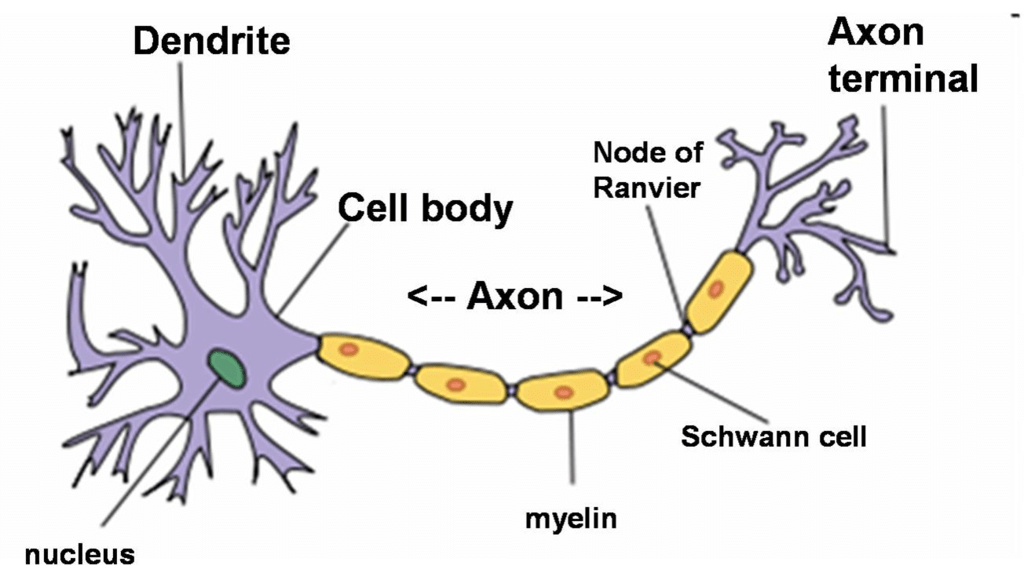
Structure of Neuron
Functions of the three parts of a neuron:
- Axon: It conducts messages away from the cell body.
- Dendrite: It receives information from the axon of another cell and conducts the messages towards the cell body.
- Cell body: It contains a nucleus, mitochondria, and other organelles. It is mainly concerned with maintenance and growth.
Q6. How does phototropism occur in plants?
Ans: The growth movement in plants in response to light stimulus is known as phototropism. The shoots show positive phototropism and the roots show negative phototropism. This means that the shoots bend towards the source of light whereas the roots bend away from the light source.
Some examples of phototropism are as follows:
- The flower head of the sunflower is positively phototropic and hence it moves from east to west along with the sun.
- The ovary stalk of groundnut is positively phototropic before fertilization and becomes negatively phototropic after fertilization so that the fruit is formed underground.
Q7. Which signals will get disrupted in case of a spinal cord injury?
Ans: The reflex arc connections between the input and output nerves meet in a bundle in the spinal cord. Nerves from all over the body meet in a bundle in the spinal cord on their way to the brain. In case of any injury to the spinal cord, the signals coming from the nerves as well as the signals coming to the receptors will be disrupted.
Q8. How does chemical coordination occur in plants?
Ans:
- In animals, control and coordination occur with the help of the nervous system.
- However, plants do not have a nervous system.
- Plants respond to stimuli by showing movements.
- The growth, development, and responses to the environment in plants are controlled and coordinated by a special class of chemical substances known as hormones.
- These hormones are produced in one part of the plant body and are translocated to other needy parts.
- For example, a hormone produced in roots is translocated to other parts when required.
- The five major types of phytohormone are auxins, gibberellins, cytokinins, abscisic acid, and ethylene.
- These phytohormones are either growth promoters (such as auxins, gibberellins, cytokinins, and ethylene) or growth inhibitors such as abscisic acid.
Q9. What is the need for a system of control and coordination in an organism?
Ans: The need for a system of control and coordination in an organism is crucial for maintaining body functions. This system allows various body systems to work together in response to changes.
- All the movements that occur in response to stimuli are carefully coordinated and controlled.
- In animals, the control and coordination movements are provided by the nervous and muscular systems.
- The nervous system sends messages to and away from the brain.
- The spinal cord plays an important role in the relay of messages.
- In the absence of this system of control and coordination, our body will not be able to function properly.
- For example, when we accidentally touch a hot utensil, we immediately withdraw our hand. In the absence of nerve transmission, we will not withdraw our hands and may get burnt.
Q10. How are involuntary actions and reflex actions different from each other?
Ans: Involuntary actions cannot be consciously controlled. For example, we cannot consciously control the movement of food in the alimentary canal. These actions are however directly under the control of the brain.
On the other hand, the reflex actions such as the closing of eyes immediately when bright light is focused show sudden responses and do not involve any thinking. This means that, unlike involuntary actions, reflex actions are not under the control of the brain.
Q11. Compare and contrast nervous and hormonal mechanisms for control and coordination in animals.
Ans:
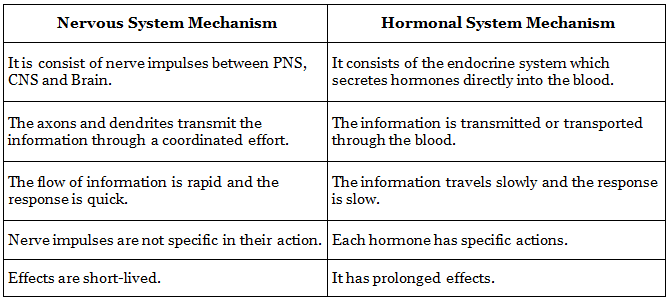
Q12. What is the difference between the manner in which movement takes place in a sensitive plant and the movement in our legs? Ans: