Q1. What are the different forms of power-sharing in modern democracies? Give an example of each of these.
Ans: Different forms of power-sharing in modern democracies:
(i) Horizontal distribution of Power
- Power is shared among different organs of the government the Legislature, Executive and the Judiciary.
- Example: the Indian Parliament enacts laws. Executive executes or implements them and judiciary checks the functioning of executive.
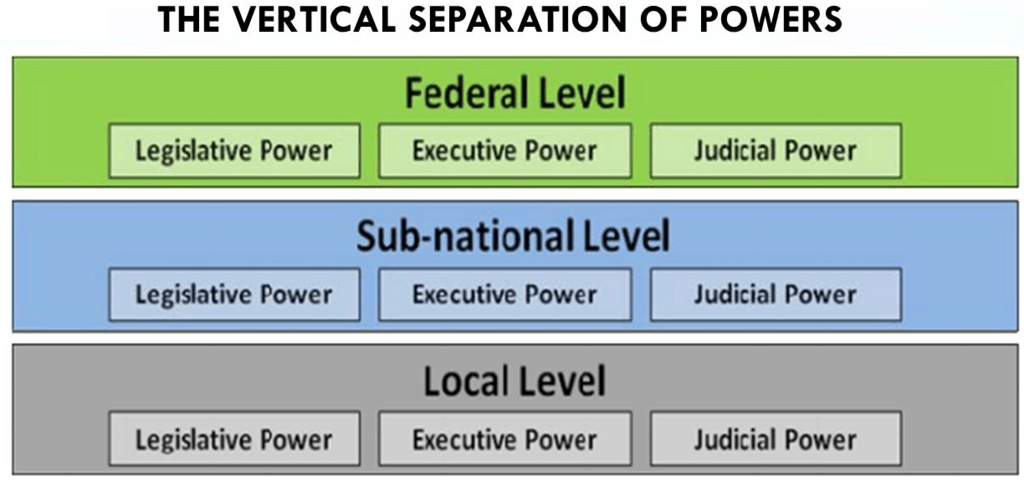
(ii) Federal Division of Power
- A Federal Government governs the whole country, which in India is known as the Central or Union Government, along which lower levels of government also exist.
- India has a three-tier system: Central, State, and Local Governments.
(iii) Power shared among different social groups
- This system ensures diverse groups have a voice in government and provides fair power to minorities.
- In India, this is achieved through reserved constituencies in Assemblies and Parliament. Belgium’s Community Government is another example.
(iv) Power shared among political parties, pressure groups, and moments:
- Over time, power is shared among different political parties with diverse ideologies and social groups, forming a Coalition Government.
- Interest groups like traders, businessmen, farmers, and industrial workers also influence and participate in decision-making.
Q2. State one prudential reason and one moral reason for power-sharing with an example from the Indian context.
Ans:
(i) Prudential Reason
- It helps to reduce the possibility of conflict between social groups.
- It brings out better outcomes
Example: In India seats in the Parliament and assemblies have been reserved for weaker sections.
(ii) Moral Reason
- It is the spirit of democracy.
- All people should be consulted in a democracy.
- In India, people elect their representatives after every five years or earlier.
Q3. After reading this chapter, three students drew different conclusions. Which of these do you agree with and why? Give your reasons in about 50 words.
- Thomman − Power sharing is necessary only in societies which have religious, linguistic or ethnic divisions.
- Mathai − Power sharing is suitable only for big countries that have regional divisions.
- Ouseph − Every society needs some form of power sharing even if it is small or does not have social divisions.
Ans:
- The conclusion drawn by Ouseph is correct.
- Every society needs some form of power-sharing.
- In a family, the members may differ but power-sharing may resolve differences.
- In a society too different communities should try to accommodate each other as has been done in Belgium where the French-speaking people accepted equal representation in Brussels because the Dutch-speaking community has accepted equal representation in the central government.
Q4. The Mayor of Merchtem, a town near Brussels in Belgium, has defended a ban on speaking French in the town’s schools. He said that the ban would help all non-Dutch speakers integrate into this Flemish town. Do you think that this measure is in keeping with the spirit of Belgium’s power-sharing arrangements? Give your reasons in about 50 words.
Ans:
- The ban is not in keeping with the spirit of Belgium’s power-sharing arrangements.
- It is an example of the imposition of the will of the majority on the minority which is against the principle of accommodation.
- The ban may result in strained relations between different communities i.e., French-speaking and Dutch-speaking in Belgium.
Q5. Read the following passage and pick out any one of the prudential reasons for power sharing offered in this.
“We need to give more power to the panchayats to realize the dream of Mahatma Gandhi and the hopes of the makers of our Constitution. Panchayati Raj establishes true democracy. It restores power to the only place where power belongs in a democracy in the hands of the people. Given power to panchayats is also a way to reduce corruption and increase administrative efficiency. When people participate in the planning and implementation of developmental schemes, they would naturally exercise greater control over these schemes. This would eliminate the corrupt middlemen. Thus, Panchayati Raj will strengthen the foundations of our democracy.”
Ans: The prudential reason for power sharing offered in the above passage is giving power to panchayats. It is a way to reduce corruption and increase administrative efficiency.
- Panchayati Raj establishes true democracy.
- It restores power to the people.
- It reduces corruption and increases administrative efficiency.
- People control over development schemes.
- It will strengthen the foundations of democracy.
Q6. Different arguments are usually put forth in favor of and against power-sharing. Identify those which are in favor of power-sharing and select the answer using the codes given below? Power-sharing:
A. reduces conflict among different communities
B. decreases the possibility of arbitrariness
C. delays the decision-making process
D. accommodates diversities
E. increases instability and divisiveness
F. promotes people’s participation in government
G. undermines the unity of a country
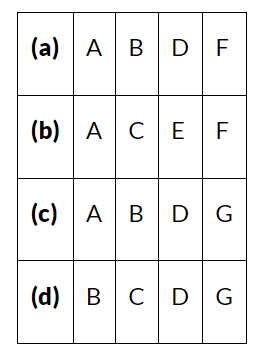
Ans: (a)
Q7. Consider the following statements about power-sharing arrangements in Belgium and Sri Lanka.
Α. In Belgium, the Dutch-speaking majority of people tried to impose their domination on the minority French-speaking community.
B. In Sri Lanka, the policies of the government sought to ensure the dominance of the Sinhala-speaking majority.
C. The Tamils in Sri Lanka demanded a federal arrangement of power-sharing to protect their culture, language and equality of opportunity in education and jobs.
D. The transformation of Belgium from a unitary government to a federal one prevented a possible division of the country on linguistic lines.
Which of the statements given above are correct?
(a) A, B, C and D
(b) A, B and D
(c) C and D
(d) B, C and D
Ans: (d)
Statement A is incorrect because, in Belgium, the Dutch-speaking majority did not impose domination; instead, Belgium adopted power-sharing arrangements to ensure equality between the Dutch-speaking and French-speaking communities. The rest of the statements are true.
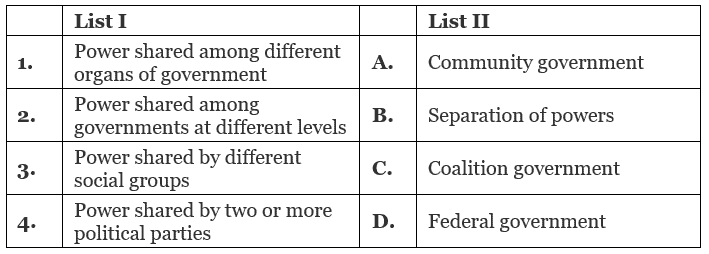
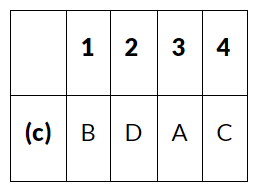
Q8. Match List I (forms of power-sharing) with List-II (forms of government) and select the correct answer using the codes given below in the lists:
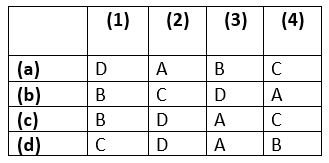
Ans:
Q9. Consider the following two statements on power sharing and select the answer using the codes given below:
1. Power-sharing is good for democracy.
2. It helps to reduce the possibility of conflict between social groups.
Which of these statements are true and false?
(a) A is true and B is false
(b) Both A and B are true
(c) Both A and B are false
(d) A is false but B is true
Ans: (b)
Features of power-sharing are as follows:
- Power-sharing reduces the possibility of conflicts between social groups.
- Power-sharing is a good way to ensure the stability of political order.
- Power-sharing is the spirit of democracy.
- Power-sharing is good for democracy.