Introduction
- In Grade 3, we learned about measuring weight and capacity. We explored the 1 kilogram salt packet and the 1 litre bottle. Now, let’s dive deeper into understanding how to measure weight and capacity in our everyday lives.
Fun at Vegetable Market!
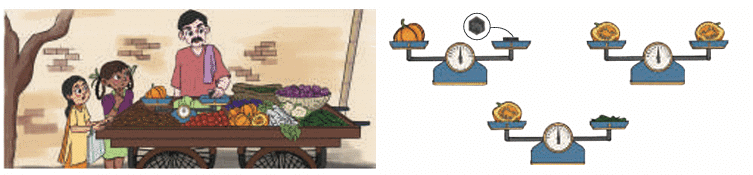
Rita and Shabnam went to the market to buy some fruits and vegetables. They saw the vegetable seller weighing vegetables. What do you think will be the weight of the half pumpkin?
Sol: If the whole pumpkin weighs, say, 4 kilograms, then the half pumpkin would weigh:
42=2 kilograms
So, if you know the full weight, you can divide it by 2 to get the weight of the half.
- Weight and capacity measurements are essential skills that help us in many daily activities. From cooking in the kitchen to shopping at the market, these measurements allow us to understand quantities and make comparisons between objects.
Understanding Weight
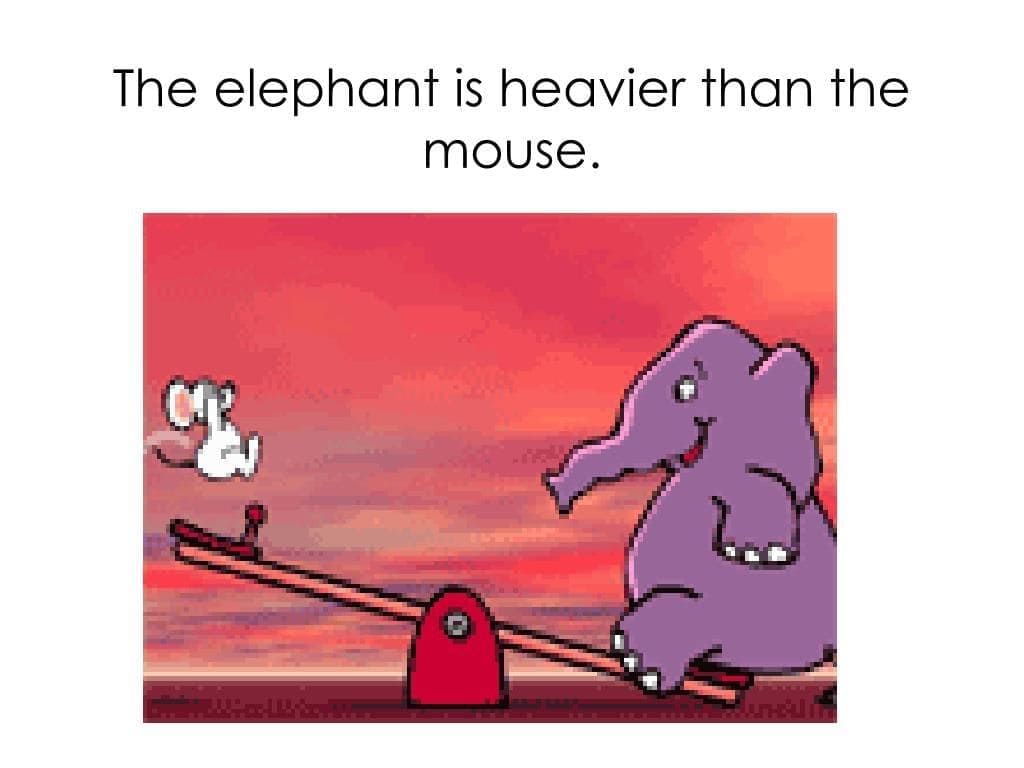
In our daily lives, we often need to compare the weights of different objects. When we look at objects around us, we can sometimes tell which one is heavier just by looking at them. For example, an elephant is clearly heavier than a dog. But sometimes, it’s not so obvious, and we need to use tools to help us compare weights.
Estimating Weights
- Estimation is an important skill that helps us make reasonable guesses about the weight of objects without actually measuring them.
- By developing this skill, we can become better at understanding weights in our everyday life.
- When estimating weights, think about similar objects whose weights you already know.
For example, if you know that an apple weighs about 150 grams, you can use this knowledge to estimate the weight of an orange.
Grams and Kilograms
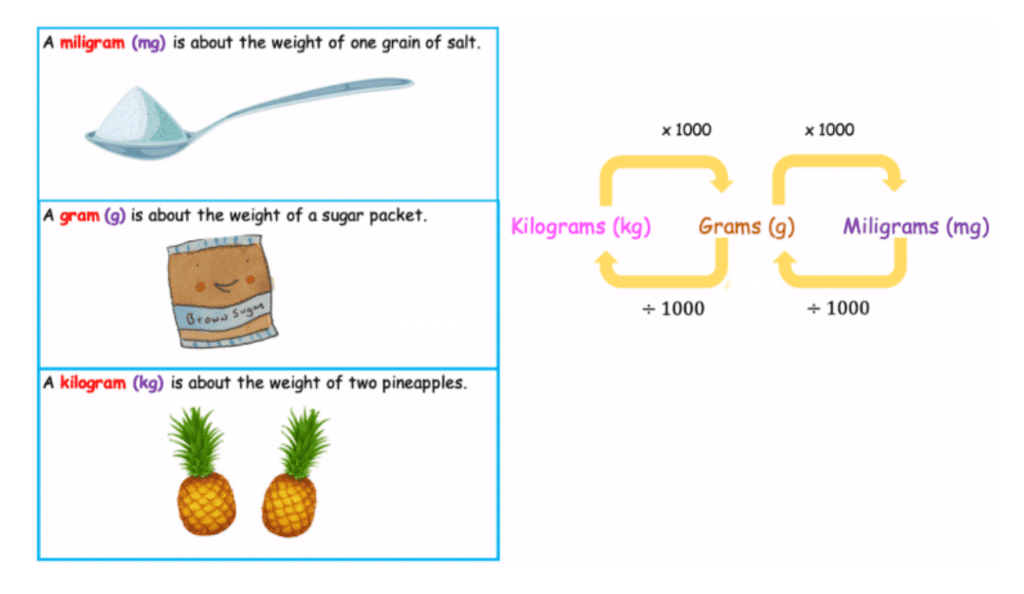
We use different units to measure weight depending on how heavy an object is. The two main units we use are:
Gram (g): Used for measuring lighter objects
Kilogram (kg): Used for measuring heavier objects
1 kilogram (kg) = 1000 grams (g)
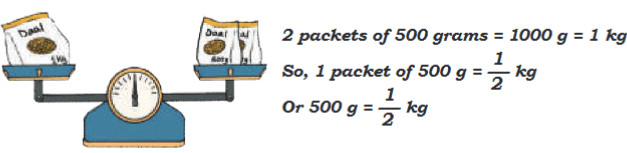
This means that if you have 1000 grams, it equals 1 kilogram. Similarly, half a kilogram equals 500 grams.
Try yourself:
What is the unit used for measuring heavier objects?
- A.Gram
- B.Kilogram
- C.Milligram
- D.Pound
View Solution
Choosing the Right Unit
It’s important to choose the appropriate unit when measuring weight:
- Use grams (g) for lighter objects like a pencil, an eraser, or a small fruit.
- Use kilograms (kg) for heavier objects like a watermelon, a school bag, or a person.
Converting between grams and kilograms is an essential skill. Here are some important conversions to remember:
1. 500 grams to kilograms
2 packets of 500 grams = 1000 g = 1 kg
So, 1 packet of 500 g = 1/2 kg
Or 500 g = 1/2 kg
2. 250 grams to kilograms
4 packets of 250 grams = 1000 g = 1 kg
So, 1 packet of 250 g = 1/4 kg
Or 250 g = 1/4 kg
3. 100 grams to kilograms
10 packets of 100 grams = 1000 g = 1 kg
These conversions help us understand the relationship between different weight measurements and make calculations easier.
Measuring with Balance Scales
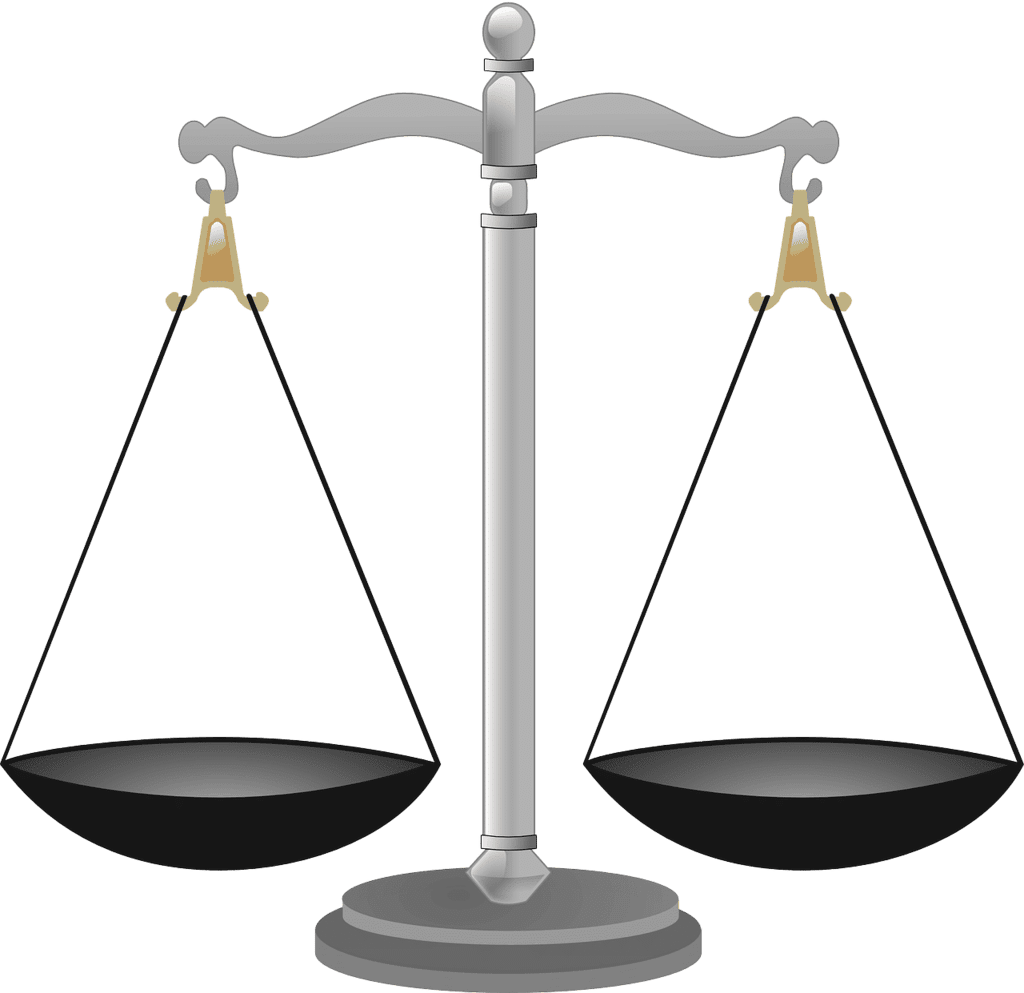
Balance scales are one of the oldest tools used for measuring weight. They work on a simple principle: when two objects have the same weight, the scale remains balanced. If one object is heavier than the other, the scale tilts toward the heavier object.
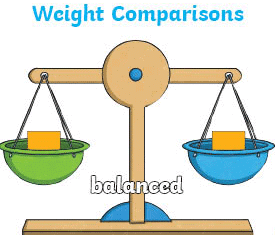
A balance scale has two pans connected to a central beam. When we place objects on the pans, the beam tilts in the direction of the heavier object. If both objects weigh the same, the beam stays horizontal.
Comparing Objects
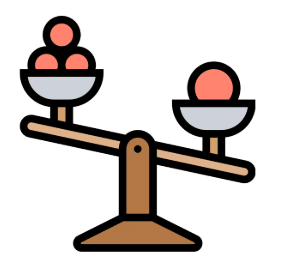
Balance scales are excellent tools for comparing the weights of different objects. By placing objects on opposite pans, we can easily determine which one is heavier.
Balance scales help us solve many interesting weight problems. Let’s look at some examples:
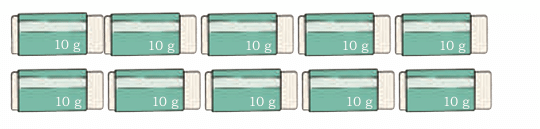
Example 1: How many 10 g erasers will weigh the same as a 50 g Haldi packet?
Sol: We need to find how many 10 g erasers equal 50 g
50 g ÷ 10 g = 5
Therefore, 5 erasers of 10 g each will weigh the same as a 50 g Haldi packet.
Example 2: Mr. Shrinathan, a sweet shop owner, has several orders for 1 kg Kaju-katli but needs to pack them in different sized boxes. How many boxes of each size will he need to pack 1 kg of sweets?
Sol: For 500 g boxes: 1 kg = 1000 g, so 1000 g ÷ 500 g = 2 boxes
For 250 g boxes: 1000 g ÷ 250 g = 4 boxes
For 100 g boxes: 1000 g ÷ 100 g = 10 boxes
For 50 g boxes: 1000 g ÷ 50 g = 20 boxes
This problem shows us how the same weight can be distributed in different ways depending on the size of the containers.
Weighing Machines
In our daily lives, we encounter various types of weighing machines that are designed for different purposes. Each type of weighing machine is suited for measuring specific objects and weight ranges.
Here are some common types of weighing machines:
- Balance Scales: These traditional scales use two pans to compare weights. They are often used in jewelry shops and science laboratories for precise measurements.
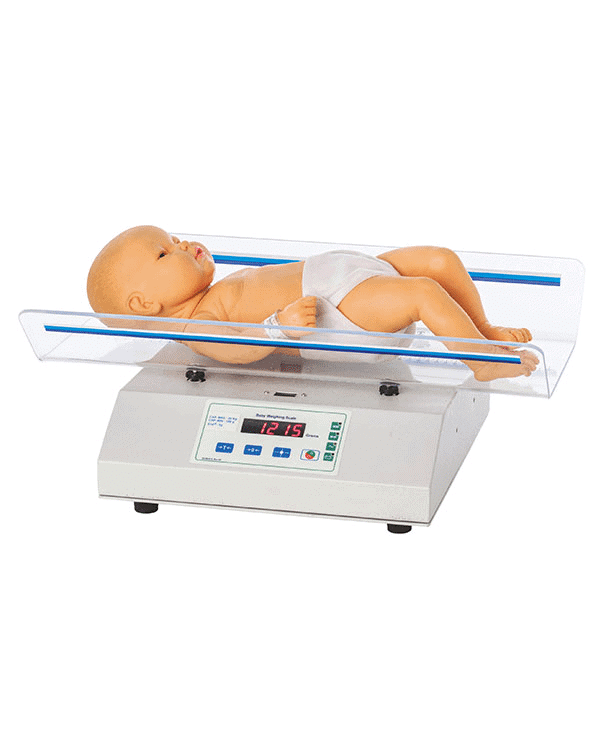
- Baby Weighing Scales: These are specially designed to weigh infants and toddlers. They usually have a curved surface to safely hold the baby during weighing.
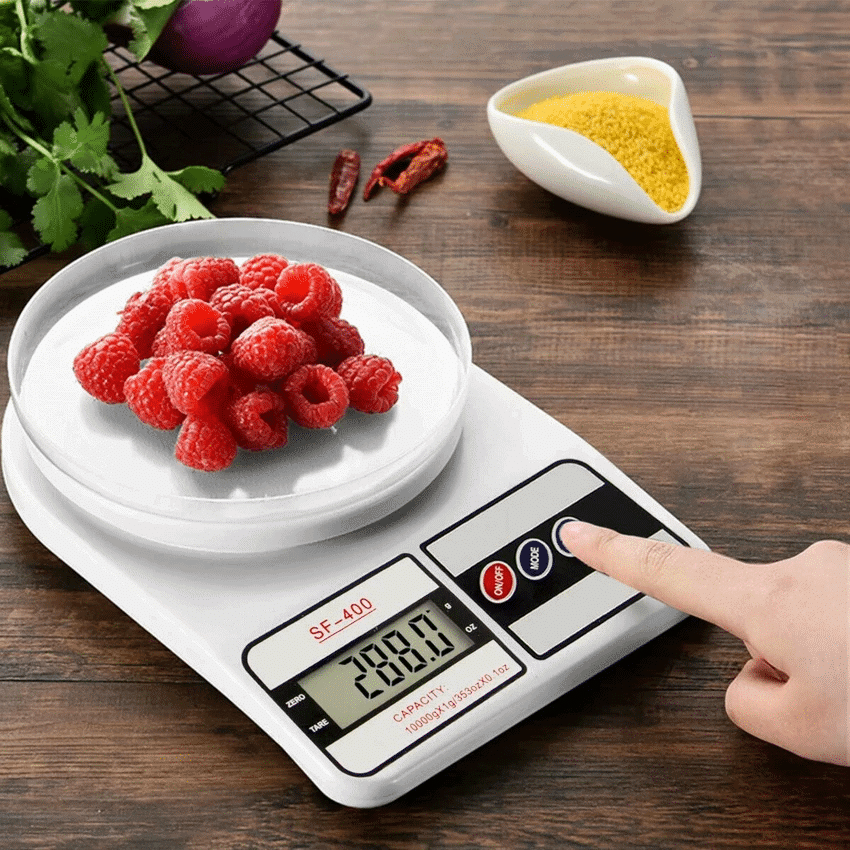
- Kitchen Scales: Used for measuring ingredients while cooking. Modern kitchen scales can measure in both grams and ounces and are essential for following recipes accurately.
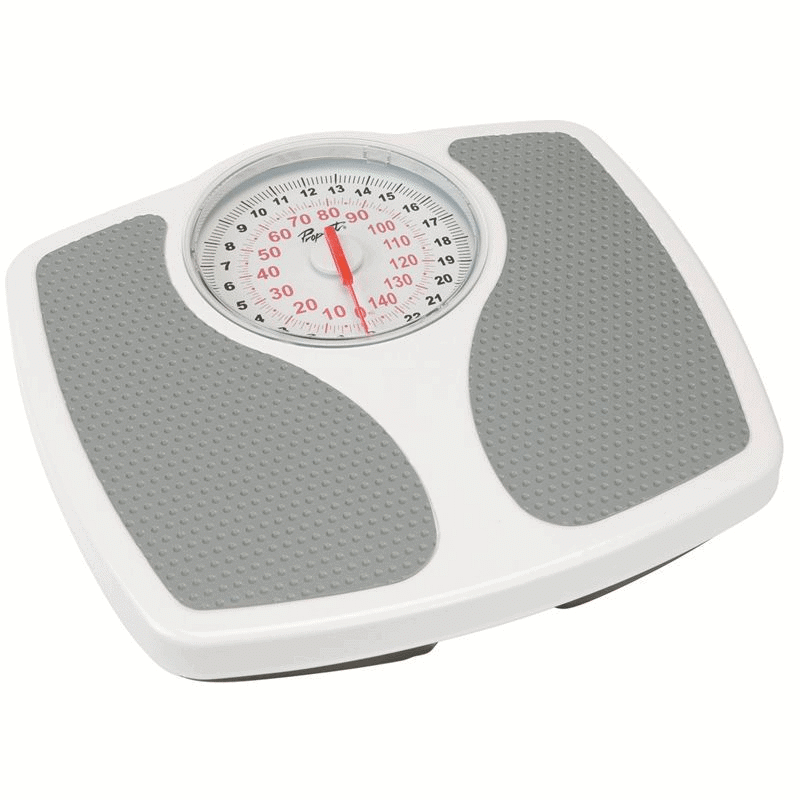
- Bathroom Scales: These are used to measure a person’s body weight. They typically display weight in kilograms or pounds.
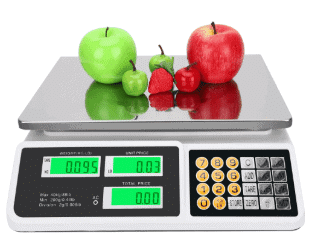
- Commercial Scales: Found in markets and grocery stores, these scales are used to weigh fruits, vegetables, and other items before pricing them.
Measuring Capacity
Just as we use grams and kilograms to measure weight, we use litres and millilitres to measure capacity or the amount of liquid a container can hold.
Litre (l): The basic unit for measuring capacity
Millilitre (ml): Used for measuring smaller amounts of liquid
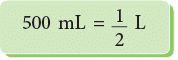
The relationship between litres and millilitres is:
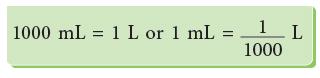
This means that half a litre equals 500 ml, and a quarter litre equals 250 ml.

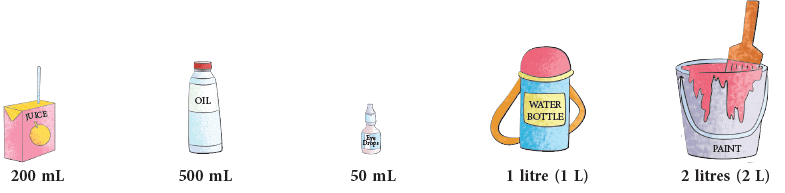
You can see the capacity written on the container, be it a can of juice or a bottle of medicine.
Containers Used for Measuring CapacitySome of the standard containers marked with standard units to measure the capacity of liquids are shown here.
These containers are generally used for measuring milk:
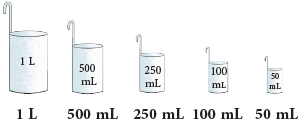
These containers are generally used for measuring petrol and oil:
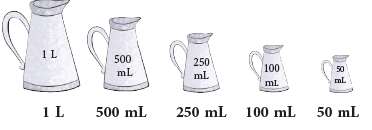
From the pictures given above, you can now understand that smaller capacities are measured in millilitres and the larger ones in litres.
Capacity Conversion
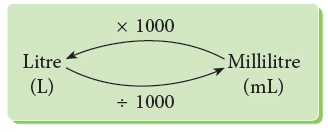
Let’s explore some common conversions:
Example 3: How many 500 ml bottles will fill a 1 l bottle?
500 ml + 500 ml = 1 l
1000 ml = 1 l
500 ml = 1/2 l
Therefore, 2 bottles of 500 ml will fill a 1 l bottle.
Example 4: How many 250 ml bottles will fill a 1 l bottle?
250 ml + 250 ml + 250 ml + 250 ml = 1 l
1000 ml = 1 l
250 ml = 1/4 l
Therefore, 4 bottles of 250 ml will fill a 1 l bottle.
Example 5: How many 100 ml bottles will fill a 1 l bottle?
10 bottles of 100 ml = 1000 ml = 1 l
Therefore, 10 bottles of 100 ml will fill a 1 l bottle.
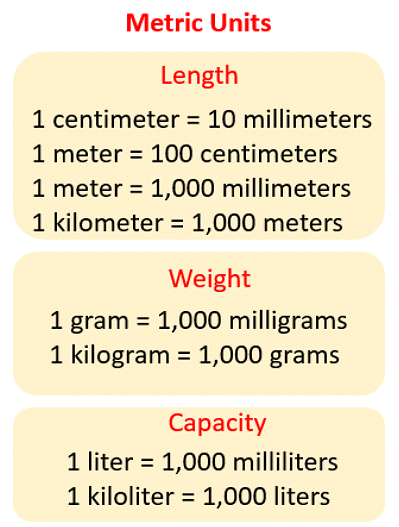
Table of Units
Try yourself:
What is the capacity of one litre in millilitres?
- A.250 ml
- B.10 ml
- C.500 ml
- D.1000 ml
View Solution
Water Conservation in Everyday Life
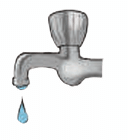
You place a container under a slow dripping tap and find that in 1 hour, the tap drips out 1000 millilitres (ml) of water.
That’s the same as 1 litre of water wasted every hour!
Q1: How Much Water is Wasted?
In 1 Hour:
- 1000 millilitres (ml) = 1 litre
In 1 Day (24 hours):
- 1 litre/hour × 24 hours = 24 litres
In 1 Week (7 days):
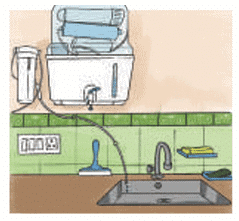 24 litres/day × 7 = 168 litres
That’s a LOT of Water!
Just imagine — 168 litres of clean water wasted in a week from a tiny drip.
That’s enough for:
- Bathing
- Washing clothes
- Drinking for a family
Q2: How Does This Wastage Affect Us?
- Less water for drinking and cooking
- Wasted money (especially if it’s filtered or stored water)
- Drying up of rivers and lakes
- Less water available for plants, animals, and farming
Q3: What Can We Do?
- Fix leaking taps quickly
- Turn off taps tightly after use
- Use a mug or bucket instead of running water while brushing or bathing
- Remind others to save water too
Some Solved Examples
Example 1: Convert 3500 grams to kilograms.
Sol: We know that 1 kg = 1000 g
To convert grams to kilograms, we divide by 1000.
3500 g ÷ 1000 = 3.5 kg
Therefore, 3500 grams = 3.5 kilograms.
Example 2: How many 100 g soap bars will weigh the same as 10 erasers of 10 g each?
Sol: First, let’s find the total weight of 10 erasers:
10 erasers × 10 g = 100 g
Now, we need to find how many 100 g soap bars equal 100 g:
100 g ÷ 100 g = 1 soap bar
Therefore, 1 soap bar of 100 g will weigh the same as 10 erasers of 10 g each.
Example 3: Arrange the following in ascending order of their weights: a pen, an elephant, a cat, a tiger, a 1 litre filled bottle, an empty gas cylinder.
Sol: Let’s estimate the weight of each item:
A pen: approximately 10 g
A cat: approximately 1-5 kg
A tiger: approximately 150-300 kg
An elephant: approximately 3000-6000 kg
A 1 litre filled bottle: approximately 1 kg (1 litre of water weighs 1 kg)
An empty gas cylinder: approximately 15-20 kg
Arranging in ascending order (lightest to heaviest):
Pen < Cat < 1 litre filled bottle < Empty gas cylinder < Tiger < Elephant