A. Answer the following.
Q1: Who was Minam, and what did she enjoy doing with her grandfather?
Ans: Minam was a young girl who lived in a village at the foot of the Himalayas. She enjoyed listening to stories about the mountains and going on long walks with her grandfather.
Q2: What did Minam’s grandfather say to her one sunny morning?
Ans: Minam’s grandfather said, “Minam, you have become strong, and you can walk for a long distance. Today, I will take you on a special journey to the mountains. We’ll see the beauty of the Himalayas up close!”
Q3: What items did Minam pack for her journey to the mountains?
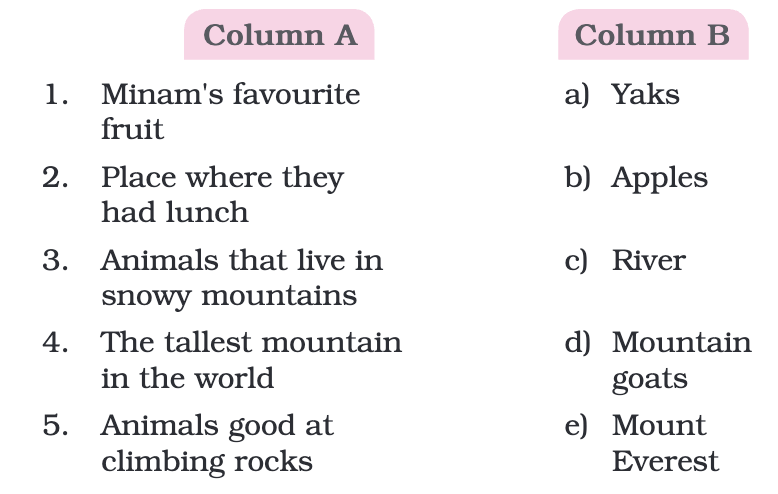
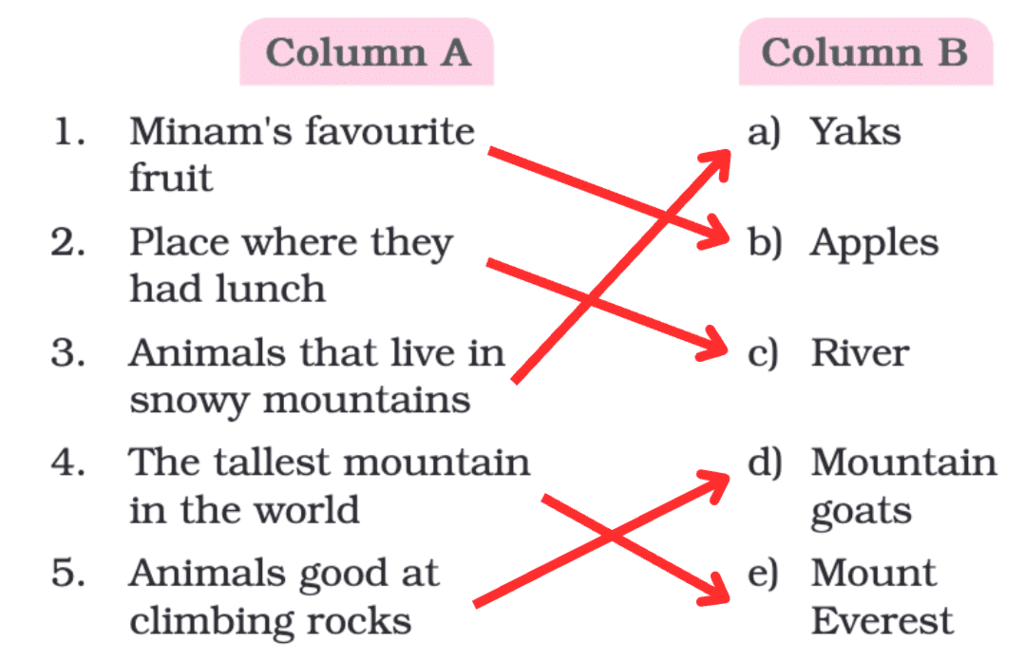
Ans: Minam packed rotis with achaar, two water bottles, and her favourite fruit, apples, for her journey.
Q4: Where did Minam and her grandfather stop for lunch? What did they do there?
Ans: They stopped for lunch by a small river with clear water. They ate rotis, watched fish swim, and Minam dipped her feet in the cool water while eating an apple.
Q5: What was Minam’s reaction when she saw snow for the first time?
Ans: Minam was amazed as she had never seen so much snow before. She laughed and played with her grandfather, making a small snowman.
Q6: What did Minam promise her grandfather at the end of their journey?
Ans: Minam promised to take care of the mountains and share their magic with everyone she met.
B. Think and discuss.
Q7: Minam enjoyed learning from her grandfather during their walk. Is there someone in your family or community who teaches you special things? What have you learned from them?
Ans: Yes, my grandmother teaches me special things. She taught me how to make round rotis and told me stories about our family.
Q8: Minam saw yaks and mountain goats helping people in the mountains. Can you think of animals or things in your surroundings that are very important to the people around you? How do they help?
Ans: In my surroundings, cows are very important. They give us milk, which we use to make curd and butter, and they help farmers by pulling carts.
Q3: Minam promised to protect the mountains. Is there something in nature around your home, school, or neighbourhood that you feel should be protected? What would you do to keep it safe?
Ans: I feel the trees near my school should be protected. I would water them, not pluck their leaves, and tell my friends to keep the area clean.
C. Match the following based on the story.
Ans:
Let us Learn
A. Use the words to complete these sentences.

Q1: Minam saw the tall peaks of the ________
Ans: Minam saw the tall peaks of the Himalayas.
Q2: Her grandfather was once a ________
Ans: Her grandfather was once a Sherpa.
Q3: They went on a long _______ to the mountains.
Ans: They went on a long journey to the mountains.
Q4: Yaks are used by mountain people to carry ________
Ans: Yaks are used by mountain people to carry heavyloads.
Q5: They saw the snow-covered mountains. She and her grandfather made a small ________
Ans: They saw the snow-covered mountains. She and her grandfather made a small snowman.
Q6: The day created beautiful _______ for Minam.
Ans: The day created beautiful memories for Minam.
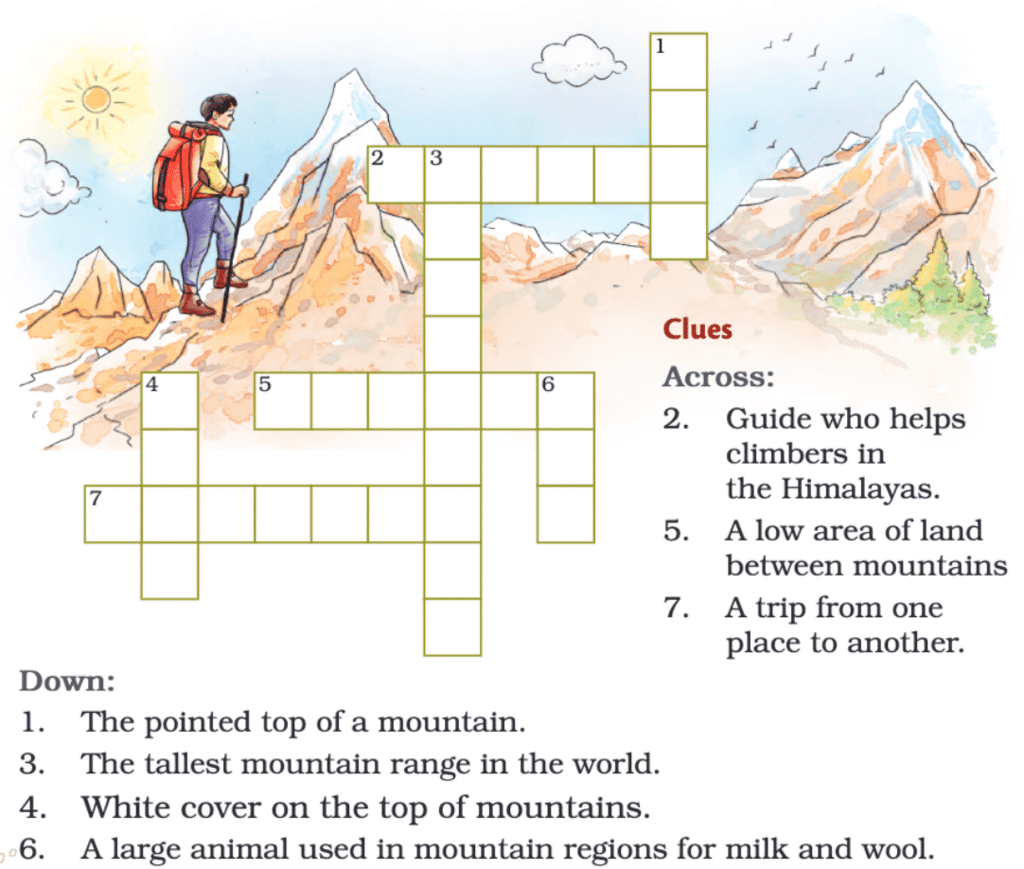
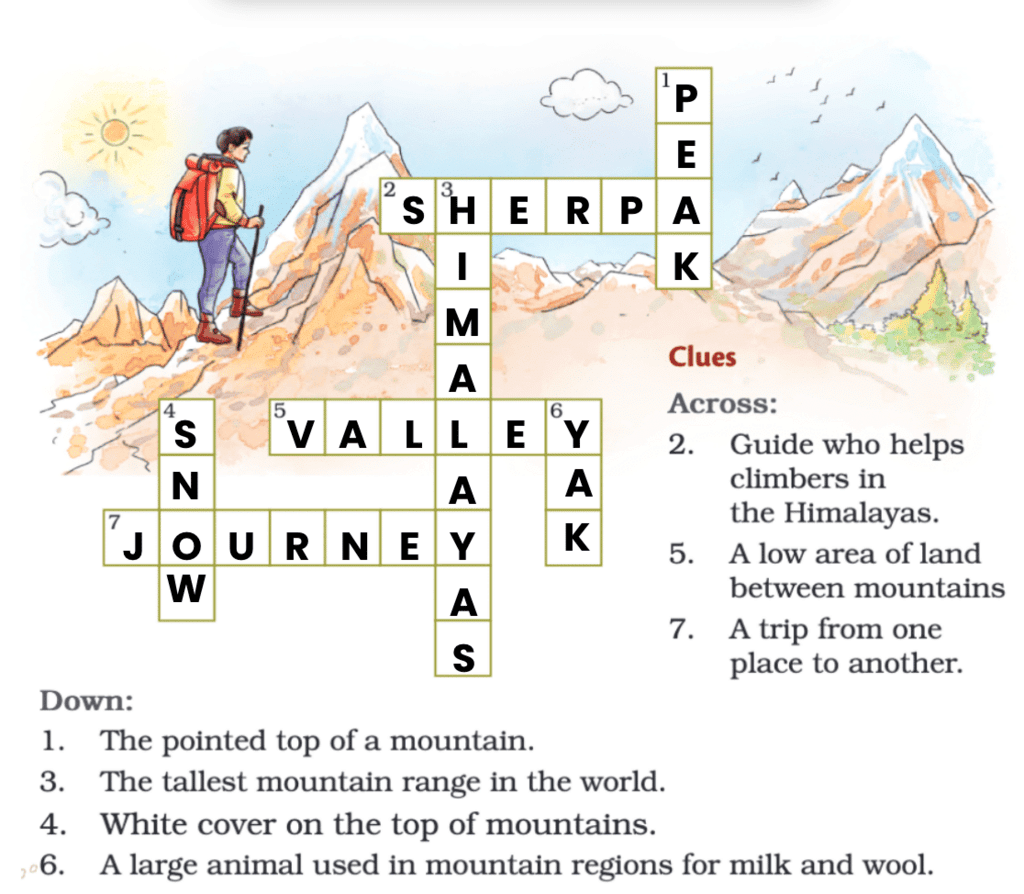
B. Solve the crossword puzzle.
Ans:
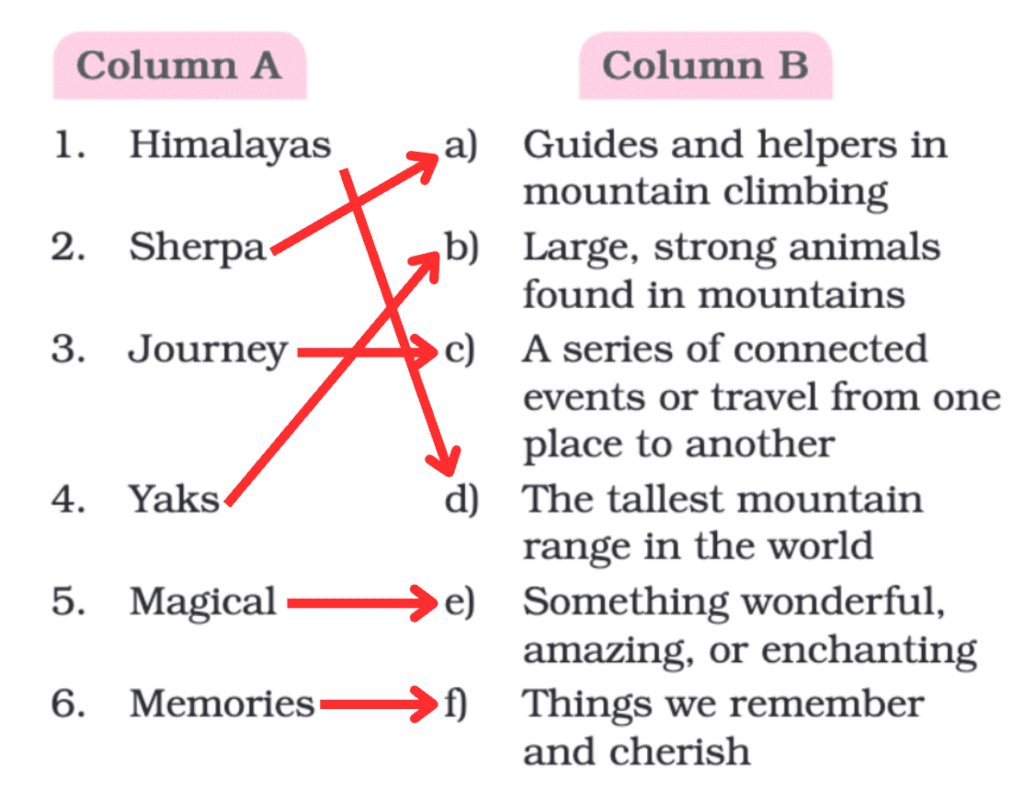
C. Match each word with its correct meaning.
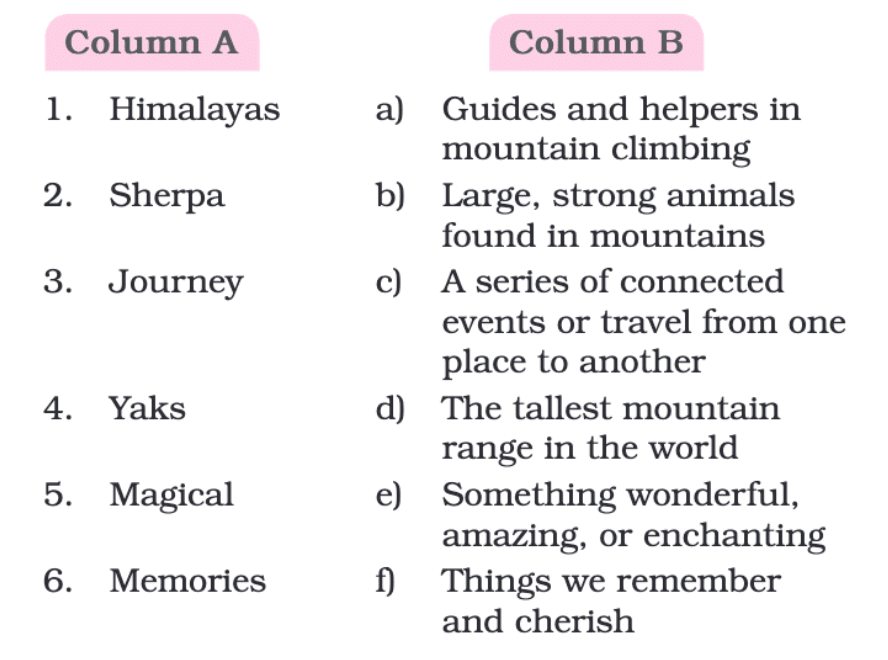
Ans:
D. Read these lines from the lesson.
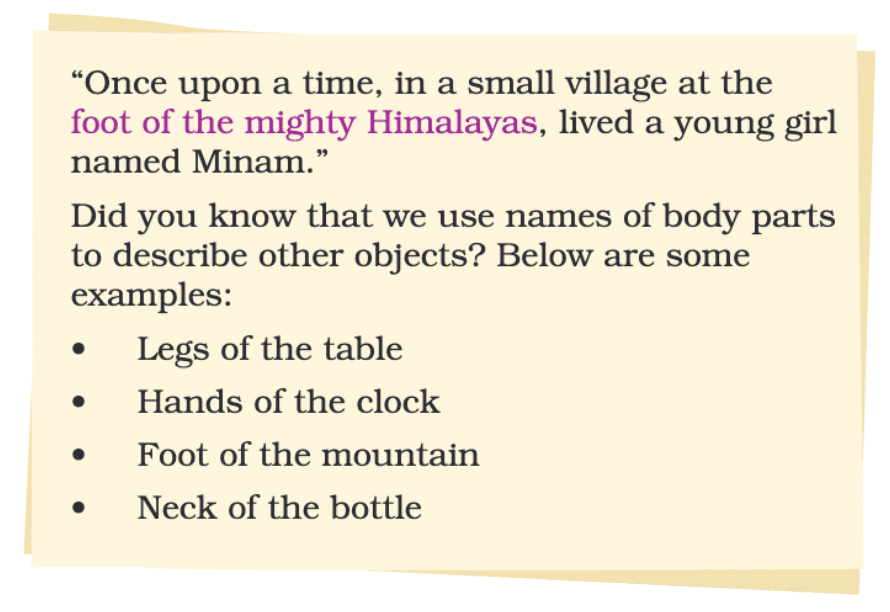
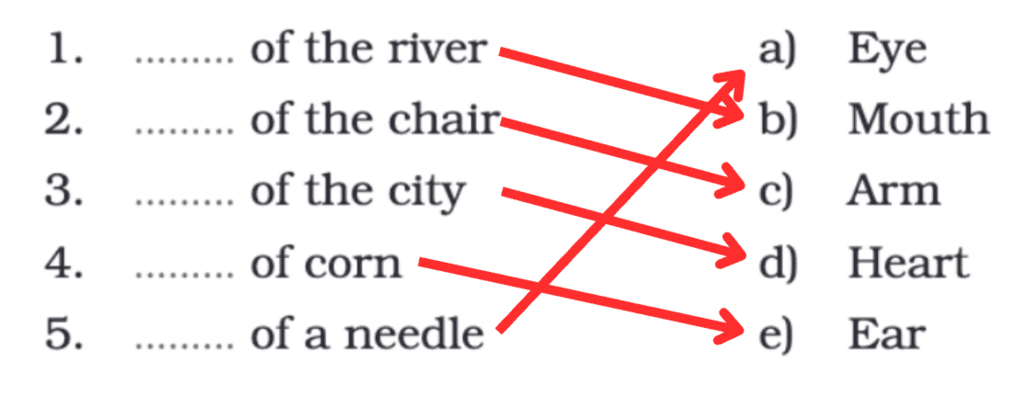
Now, it’s your turn to think creatively! Match the objects below with the correct “body part” they are often compared to.
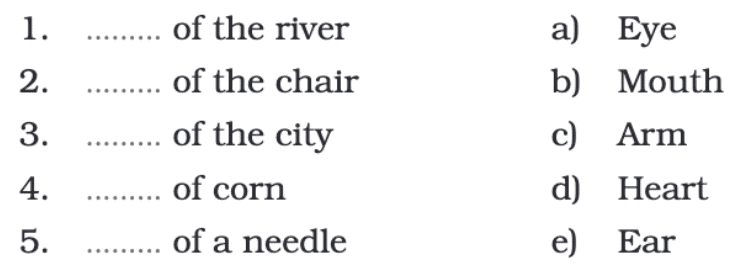
Ans:
Let us Write
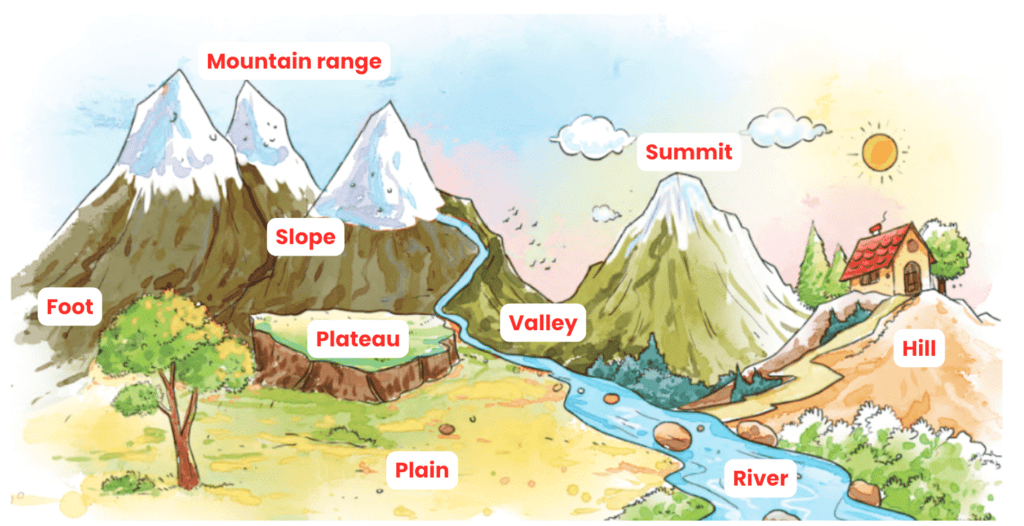
A. Look up a dictionary and find the meaning of the words in the box. Later label the picture.

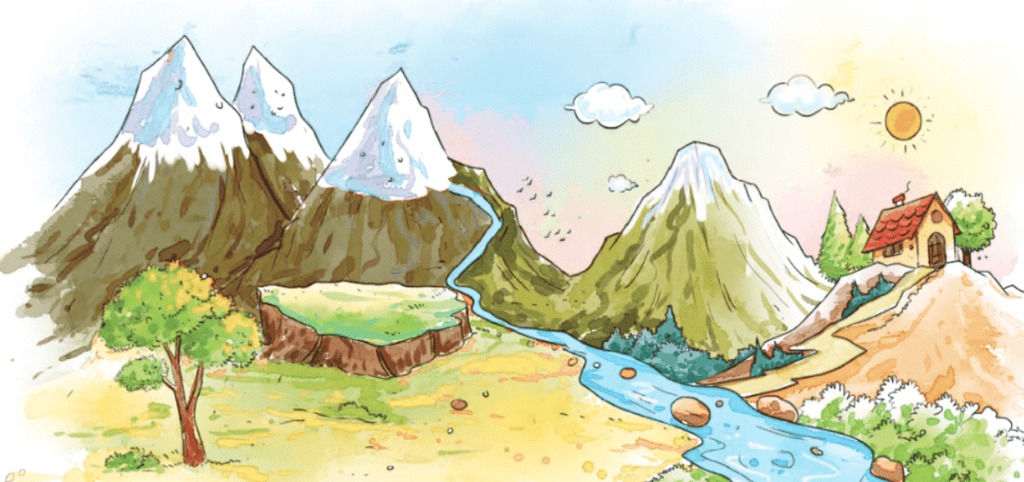
Ans:
Meanings:
- Plain: A flat, open area of land.
- River: A large stream of water that flows into a sea or lake.
- Valley: A low area of land between hills or mountains.
- Summit: The highest point of a mountain.
- Foot: The lowest part of a mountain.
- Slope: A slanted surface of a hill or mountain.
- Plateau: A flat area of land that is higher than the surrounding land.
- Hill: A small, raised area of land, smaller than a mountain.
- Mountain range: A group of mountains together.
Label the picture:
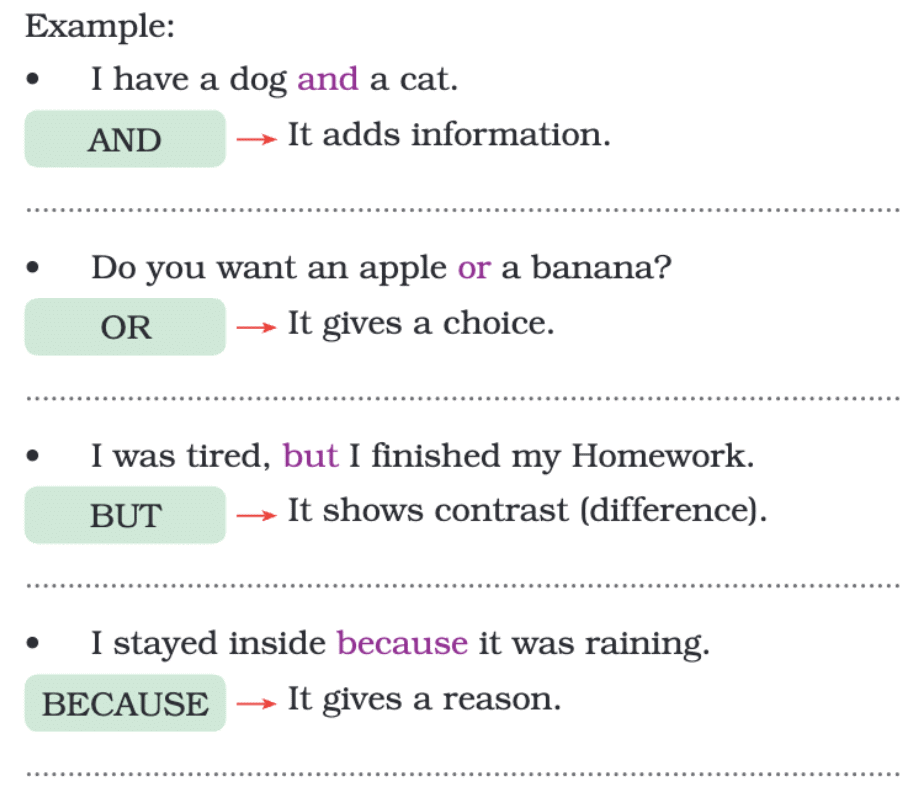
B. Join the sentences using the correct conjunction.
Q1: She was hungry. She ate a sandwich. (or/but/because)
Ans: She was hungry because she ate a sandwich.
Q2: I wanted to go out. It was too late. (or/and/but)
Ans: I wanted to go out, but it was too late.
Q3: He was happy. He got a new toy. (or/and/because)
Ans: He was happy because he got a new toy.
Q4: We can go to the zoo. We can go to the aquarium. (or/but/because)
Ans: We can go to the zoo or we can go to the aquarium.
Q5: Aman has a pen. Aman has a pencil. Aman has an eraser. (or/because/and)
Ans: Aman has a pen, and Aman has a pencil, and Aman has an eraser.
Q6: Simran loves to eat mangoes. She loves bananas. (or/and/but)
Ans: Simran loves to eat mangoes, and she loves bananas.
Q7: He ran fast. He missed the bus. (and/but/because)
Ans: He ran fast, but he missed the bus.
Q8: She stayed home. She was not feeling well. (or/and/because)
Ans: She Moody home because she was not feeling well.
Q9: I love chocolate. I love vanilla. (and/but/or)
Ans: I love chocolate, and I love vanilla.
Q10: The baby is crying. He is hungry. (but/or/because)
Ans: The baby is crying because he is hungry.
Let us Speak
Form your class into two groups, A and B. Each group will sit facing to each other. Follow the instructions to play the ‘Sentence Completion’ game.
Q1: On a bright summer morning,
Ans: On a bright summer morning, I went to the park with my friends.
Q2: One day, a clever squirrel decided
Ans: One day, a clever squirrel decided to hide its nuts in a big tree.
Let us Do
Pick any one of the given mountain animal or bird.

Find out details about them. You may include their picture, habitat, adaptation, life cycle and lifestyle, as well as how they survive in harsh conditions. Design a colourful chart with drawings, pictures, and captions about the animal or bird. Make a presentation and present it to the class.
Ans:
I will pick the Snow Leopard.
Details:
- Habitat: Snow Leopards live in the high mountains of the Himalayas and other cold regions.
- Adaptation: They have thick fur to keep them warm and big paws to walk on snow.
- Life Cycle: A baby snow leopard is born in spring, stays with its mother for 2 years, and then lives alone.
- Lifestyle: They hunt animals like mountain goats and rest in caves during the day.
- Survival in Harsh Conditions: Their grey-white fur helps them hide in the snow, and they can jump long distances to catch food.
Chart Description: I will draw a snow leopard on a snowy mountain with a blue sky. I will add captions like “Thick fur keeps me warm!” and “I can jump far to hunt!” I will use white, grey, and blue colors for the chart.
Presentation: I will show my chart to the class and say, “This is a snow leopard. It lives in cold mountains and has thick fur to stay warm. It hunts goats and can jump very far. I drew it on a snowy mountain because that’s where it lives.”