Introduction
Imagine you are helping your family with a garden. You might be counting the number of saplings of plants or you could be using your pocket money to buy your favorite snacks.
How do you keep track of everything?
This is where addition and subtraction come to the rescue!—our “give and take” math heroes! In this chapter, we will learn how adding and subtracting can help us solve problems we face every day. Whether it’s counting saplings, managing money, or figuring out how much more we need to finish a task.
Let’s start this exciting journey where numbers become our friends.
Together, we will discover the magic of give and take!

Let’s try to understand this using an example:
Once upon a time in a colourful village, there lived a farmer named Kishan. Kishan loved taking care of plants and had a big nursery where he grew beautiful saplings. In the month of August, he had 456 saplings of various plants ready to be shared with the villagers. The villagers often visited Kishan to get saplings for their gardens.
One sunny day, Kishan decided to distribute some of his saplings to help his friends in the village. He happily gave away 63 saplings to those who needed them. Kishan was excited to see his friends so happy, but he also wanted to know how many saplings he had left in his nursery after giving some away.

To find out how many saplings Kishan has left, Here’s how we can solve it step by step:
- Kishan started with 456 saplings.
- He distributed 63 saplings to his friends.
- So to find out how many saplings are left, we need to subtract the saplings given away from the total saplings:
= 456 − 63
=393 Saplings
Kishan felt happy knowing that he could still take care of many more plants while helping his friends grow their gardens. And so, he continued to nurture his nursery, always ready to share the beauty of nature with others.
Try yourself:
What is the result of subtracting 29 from 87?
- A.56
- B.58
- C.58
- D.60
View Solution
Concept of Addition and Subtraction Using Box Diagram
Kishan got an order of 230 saplings from a school. He packed 75 saplings. How many Saplings more do he need to pack ?
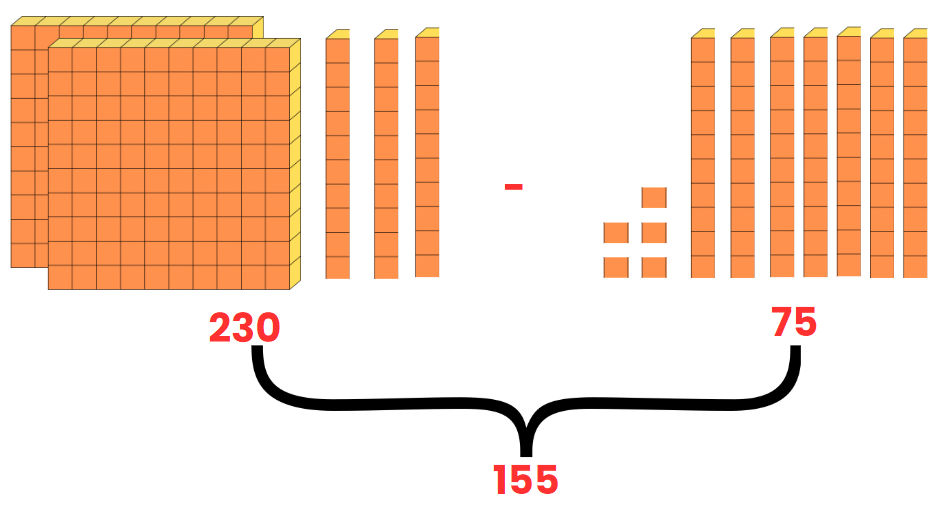
For finding the saplings he is left with we will subtract 75 from 230 using the Hundreds (H), Tens (T), and Ones (O) columns.
Step 1: Draw a Box Diagram
In the box diagram, we’ll break down the numbers into Hundreds (H), Tens (T), and Ones (O).
Total saplings ordered: 230
Saplings already packed: 75

Step 2: Perform Subtraction Using the Box Diagram
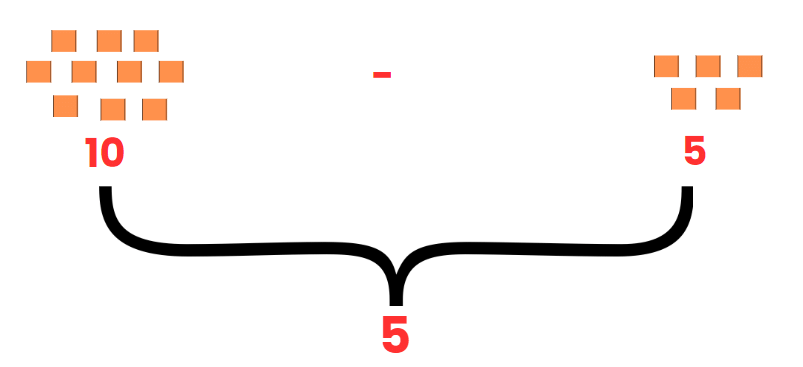
1. Start with the Ones column:
We cannot subtract 5 from 0 (0 < 5), so we borrow 1 ten from the Tens column.
The 3 tens become 2 tens, and now we have 10 ones in the Ones column.
Now, subtract the Ones:
10 ones − 5 ones = 5 ones
2. Move to the Tens column:
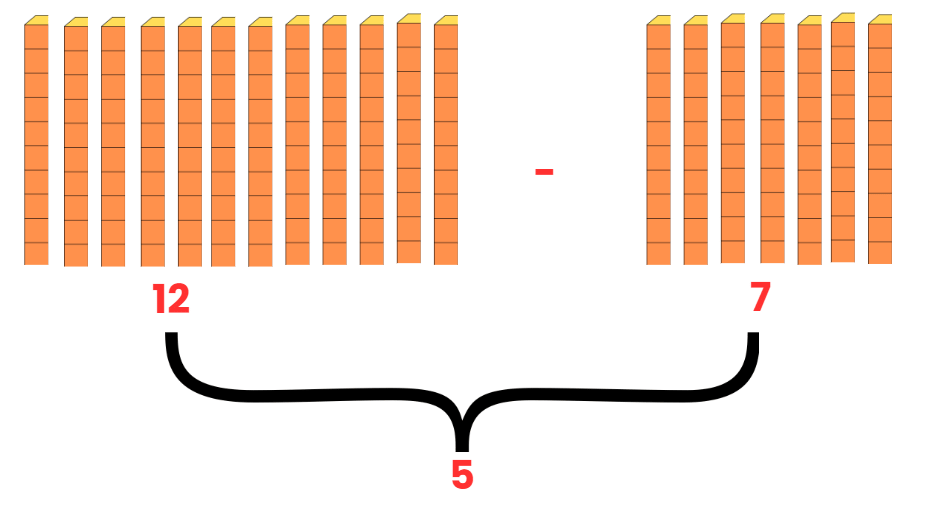
After borrowing, we have 2 tens. Now, we subtract 7 tens from 2 tens.
Since 2 tens are smaller than 7 tens, we borrow 1 hundred from the Hundreds column.
The 2 hundreds become 1 hundred, and now we have 12 tens.
Now, subtract the Tens:
12 tens − 7 tens = 5 tens
3. Move to the Hundreds column:
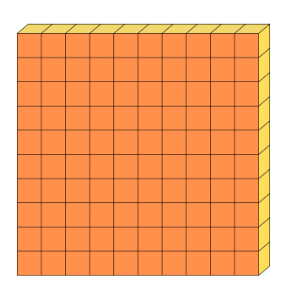
We now have 1 hundred left, and since there’s nothing to subtract from it, it stays the same.
Step 3: Final Box Diagram
Combining all above steps we get 1 Hundred , 5 Tens , 5 ones which makes 155 Saplings . Hence Kishan needs to pack 155 saplings more to complete the order of 230 saplings.
Try yourself:
Kishan got an order of 320 pens from a store. He already packed 145 pens. How many more pens does he need to pack?
- A.175 pens
- B.185 pens
- C.135 pens
- D.165 pens
View Solution
Concept of Addition and Subtraction Using Number Line
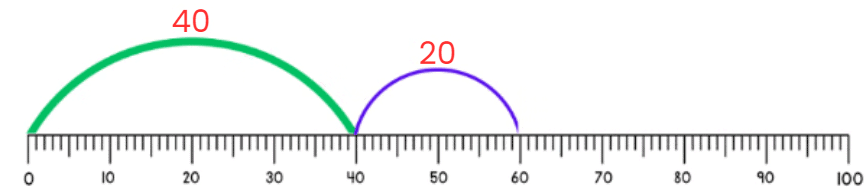
One sunny day, Ria went to the orchard with a basket to collect fruits. First, she picked 40 apples and put them in her basket. Then, she found a tree with juicy oranges and picked 20 more. She wanted to know how many fruits she had in total.
She sat under the tree and used her number line to find out:
- She started at 40 and took a big jump of 20 to reach 60 .
- Ria happily counted, “Wow! I now have 60 fruits in my basket!”
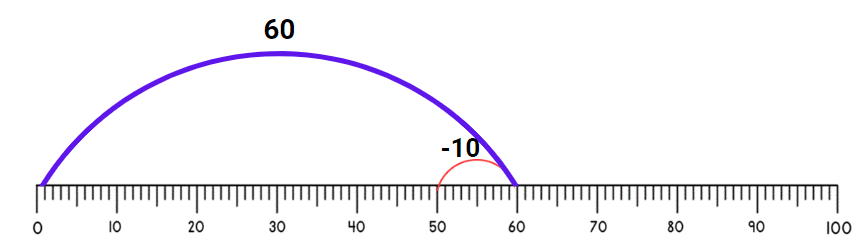
Later, Ria decided to share some of her fruits with her little brother. She gave him 10 fruits. To figure out how many fruits were left, she used her number line again:
- She started at 60 and jumped back 10 to 50.
- Ria smiled and said, “I have 50 fruits left now!”
And with that, Ria and her brother enjoyed their delicious fruit feast!
Money and Real – Life Transactions
These days we use money in exchange for things we need. Notes and coins come in different values which are used to buy different things.
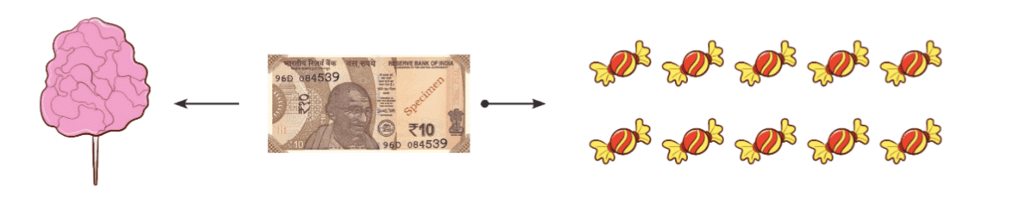
For example: one 10-rupee note can buy one Hawa Mithai or ten toffees.
Therefore, one hawa mithai costs more than a toffee.
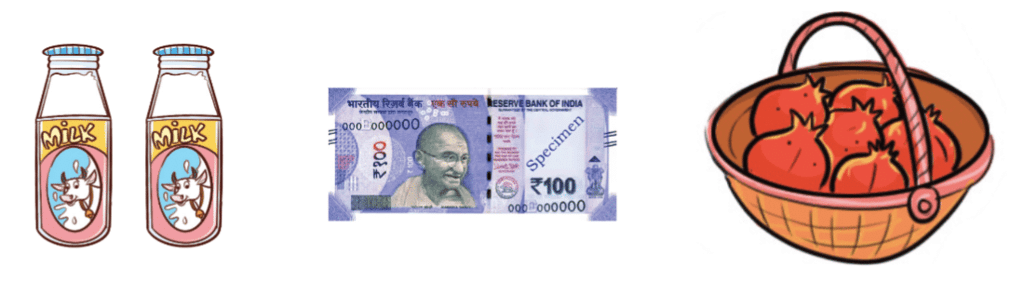
Salma buys two bottles of milk for ₹ 100. Kiran buys a basket of pomegranates for ₹ 100.
Can you estimate what costs more, a milk bottle or a pomegranate?
Raman is a friendly shopkeeper in the village who loves helping his customers. One day, his regular customer, Meera, came to his shop to buy some groceries.

Meera picked up the following items:
- A packet of rice for ₹50
- A bottle of oil for ₹30
Meera happily gave Raman a ₹100 note. Now, she wanted to know how much change she would get back.
Raman calculated using notes again:
He first took ₹80 from the ₹100 note, using:
8 ten-rupee notes (₹80)
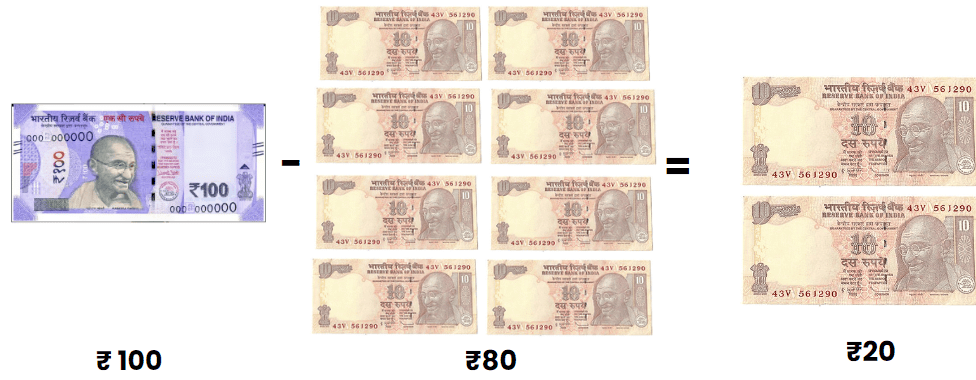
The remaining change was ₹20, which he gave back to Meera in: 2 ten-rupee notes (₹20)
“Here’s your change of ₹20, Meera!” Raman said with a smile.
Estimation
Estimating values is important because it helps us quickly understand and make decisions about quantities without needing exact numbers, making math and real-life situations easier to handle.
Let’s take a number : 156 + 34

To estimate the sum of 156 and 34, we can round the numbers to the nearest ten and then add them. Here’s how to do it step by step:
Steps to Estimate:
1. Round 156: The nearest ten is 160 (because 156 is closer to 160 than to 150).
2. Round 34: The nearest ten is 30 (because 34 is closer to 30 than to 40).
3. Add the Rounded Numbers: Now we add the rounded numbers: 160 + 30
4. Calculate: 160 + 30 = 190
Try yourself:Estimate the sum of 78 and 25.
- A.90
- B.110
- C.100
- D.120
View Solution
Comparing Numbers
Comparing different problem statements helps us understand relationships between numbers without necessarily calculating their exact values. This skill is useful for estimating and making decisions based on the information given.
Let’s Understand comparing using an example:
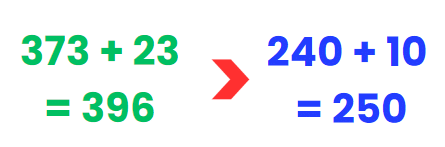
- 373 + 23 and 240 + 10
After Adding Both the Numbers we get,
373 +23 = 396
and 240 + 10 = 250, which shows 373 + 23 is more than 240 + 10
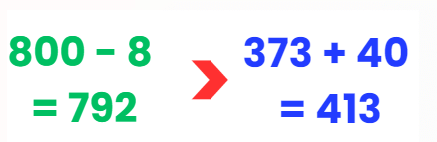
- 800 – 8 and 373 + 40
After solving Both the Numbers we get,
800 – 8 = 792
and 373 + 40 = 413 , which shows 800 – 8 is more than 373 + 40
In conclusion, the chapter “Give and Take” highlights the practical application of addition and subtraction in everyday transactions, particularly in managing money. Beyond shopping, these operations are essential for budgeting, calculating distances, tracking time, and solving problems in various contexts, empowering us to make accurate calculations in our daily lives.