Clean and Bright (Page 110)
Ask yourself these questions.
- Did I brush my teeth today?
- Did I take a shower?
- Did I comb my hair?
- Did I wash my hands with soap?
- Are my nails trimmed and clean?
Ans: Students are encouraged to attempt it on their own.
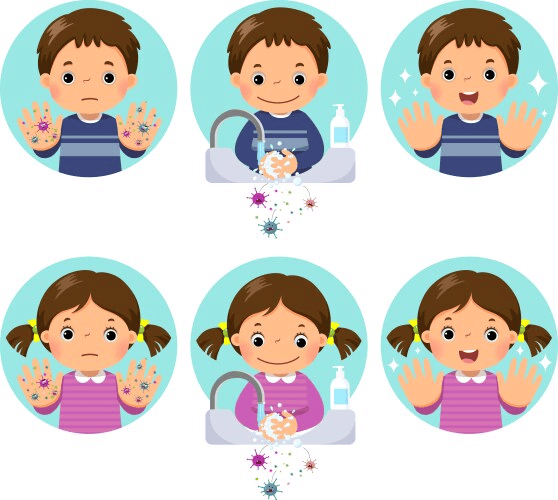
Daily Routine (Page 110)Write Write down the activities that you do every day, from the time you wake up, till you go to sleep. Your list should include the activities below. Remember that you do some of these things more than once in the day:
- Take a shower
- Wash your hands with soap
- Brush your teeth
- Drink 6–8 glasses of water
- Eat food
- Sleep well for at least 8 hours total
- Play outside
Check your list for these activities
- Do you brush your teeth twice in the day — once after waking up and once before going to bed?
- Do you rinse your mouth every time after eating food?
- Do you wash your hands with soap after using the toilet and after coming home from outdoors?
- If your answer to any of these questions is “No,” think and discuss how you can make it a habit. Is there anything that makes it difficult for you to follow these routines?
Ans: Students are encouraged to attempt it on their own.
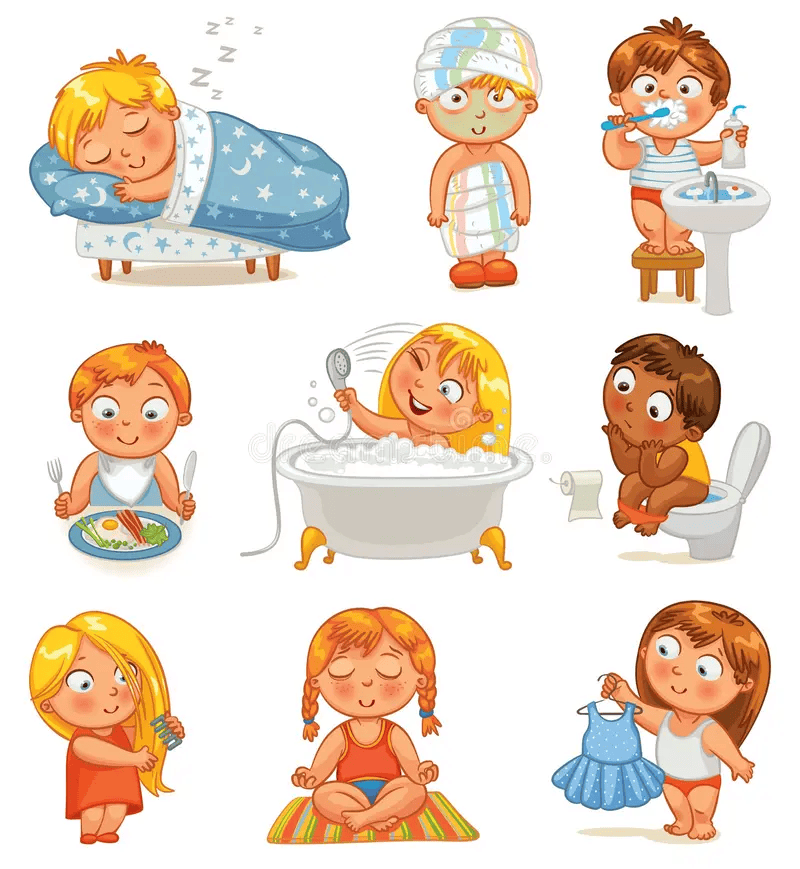
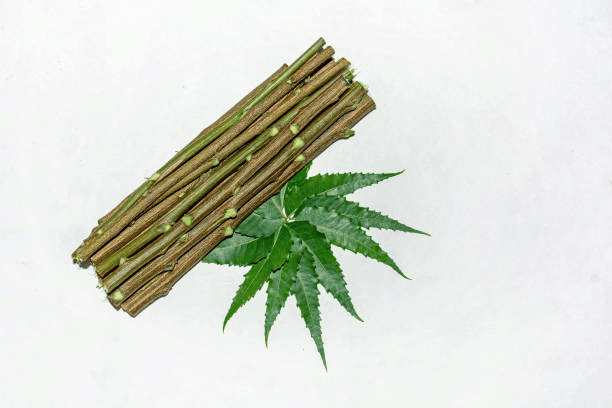
How do we brush our teeth ? (Page 111)Ask your grandparents or any elderly person in your neighbourhood — What did they use to wash their hair, body and clothes and clean their teeth when they were young? Can these things be found now?
Ans: My grandparents used natural things like shikakai or reetha for their hair, clay for washing their body, and neem twigs to clean their teeth. While most people now use soaps and shampoos, these natural items can still be found and are healthy to use.
Activity 1 (Page 112)
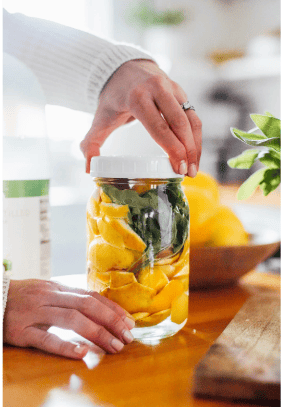
Making a home-cleaner using orange and lemon peels
We use many cleaning agents at home to remove dirt and germs from surfaces like kitchen slabs, furniture and bathrooms. Find out what home-cleaners are used in your home. You can also make your own eco-friendly cleaner! Here is what you need:
Peels of 8–12 oranges or lemons, enough to fill a half-litre transparent container.
Ten whole cloves (laung) or 2–3 bay leaves (tejpatta) (optional).
Two cups of white vinegar, enough to cover the peels or spices.
Now put all these ingredients in a half litre transparent container and close the lid. Keep the container in a sunny area for about two weeks, occasionally shaking the mixture. Strain the liquid after two weeks and your all-purpose cleaner is ready! You can mix a cup of the liquid in one bucket of water to clean floors and bathrooms.
Ans: Students are encouraged to attempt it on their own.
Activity 2 ( Page 114 )
Hop, skip, jump!
Try the following moves:
Walk like a duck.
Jump like a frog.
Run like a cat.
Which moves did you enjoy the most?
Ans: Students are encouraged to attempt it on their own.
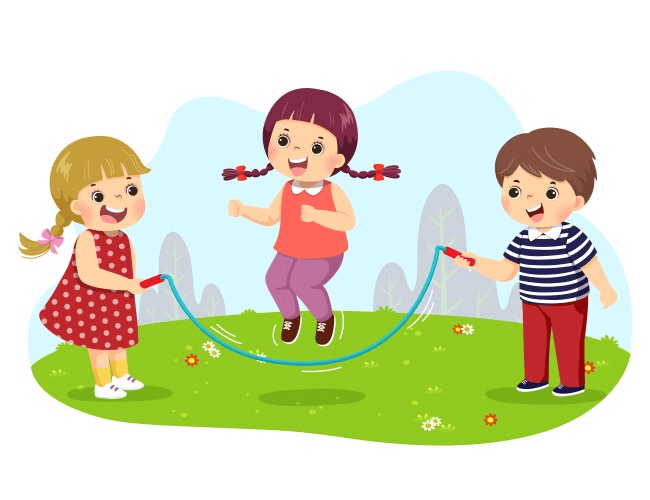
Take a skipping rope and count as you jump. Do this with your friends and see who can jump the maximum number of times.
Then, invite a friend to start jumping after you skip 10 times or after you say a short poem as you skip. For example:
I like roti,
I like ghee,
I want ___________ (name of a friend)
To jump with me!
What other games do you play with a skipping rope? Teach and learn from your friends.
Ans: Students are encouraged to attempt it on their own.
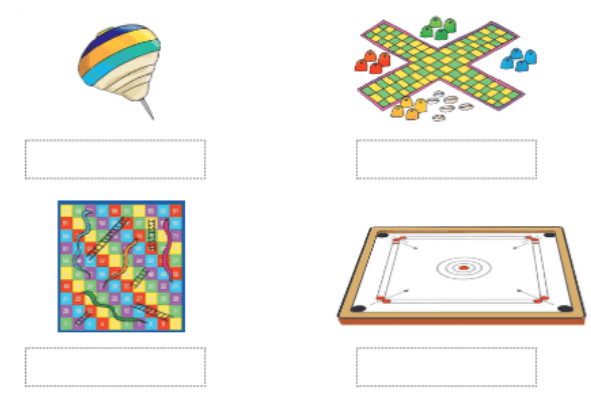
Name The Game ?
What types of games do you like to play outside your home?
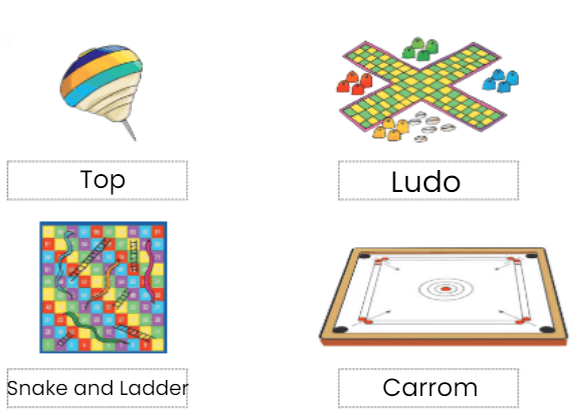
Can you identify the games shown here ? Have you played them before ?
Ans:
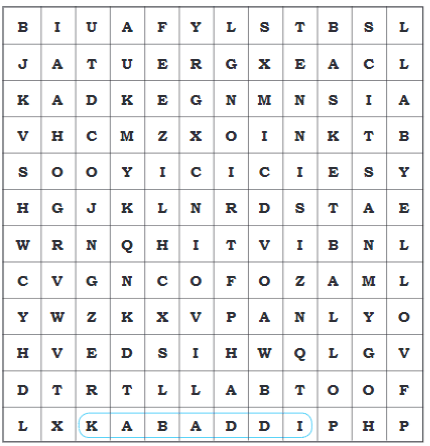
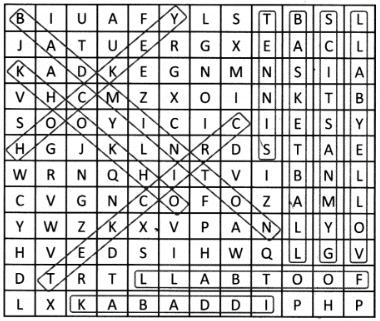
I Spy ! (Page 116)
Can you find the names of all the games hidden here ? Are any of these your favourites? One has been done for you.
Ans:
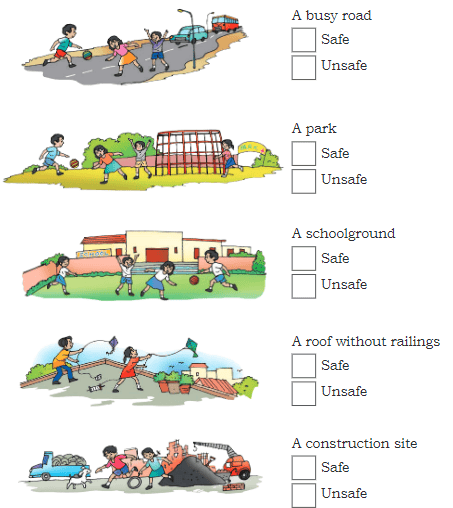
Playing Safe (Page 117)
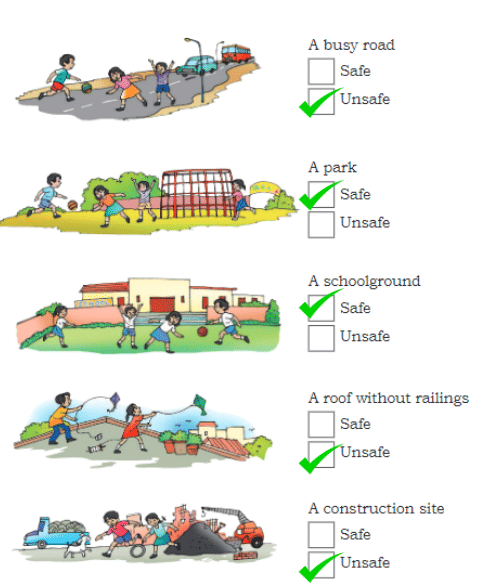
It is important to be safe while having fun. Which of the following places is considered a safe area to play ? Why or Why not ?
Ans:
Let us reflect (Page 119)
A. Write
Q1: Make your weekly health table. What makes you feel sleepy, hungry, or tired? Feelings are the body’s way of telling us that something is amiss. We all have different needs. We should each know what is good for our body and mind. For this, track your activities for a week and observe how you feel.
Example of a weekly health table:DayDid I brush my teeth twice?Did I take a shower?Did I use the toilet in the morning?What did I have for breakfast?How much time did I sleep?How long did I play outdoors?How long did I watch TV or play on the phone?How did it make me feel? (Good, okay, not so good, bad)MondayYesYesYesBread and butter8 hours1 hour1 hourGoodTuesdayYesYesYesMilk and cereal8 hours1 hour1 hourGoodWednesdayYesYesYesEggs and toast8 hours1 hour1 hourGoodThursdayYesYesYesParatha and yogurt8 hours1 hour1 hourGoodFridayYesYesYesPancakes8 hours1 hour1 hourGoodSaturdayYesYesYesPoha8 hours2 hours1 hourGoodSundayYesYesYesIdli and sambar8 hours2 hours1 hourGood
B. Draw (Page 120)
1. Draw a big circle in your notebook and divide it into 24 slices. Imagine that each slice is one hour of the day. Now colour these slices differently based on the number of hours you spend doing different activities in one entire day of 24 hours.
Example:
- Sleeping: 8 hours
- Eating: 2 hours
- Studying: 6 hours
- Playing: 2 hours
- Helping parents: 2 hours
- Watching TV: 1 hour
- Using the toilet: 1 hour
- Other activities: 2 hours
C. Discuss (Page 120)
1. Think of one activity you would like to do at least twice a week to improve your stamina. It could be running, jumping, climbing stairs, or anything else. Discuss it with your friends and try doing such activities together.
Ans:
Students are encouraged to attempt it on their own.