What are Directions?Imagine you are playing a fun treasure hunt in a big park. You have a map in your hand, but how will you find the treasure?
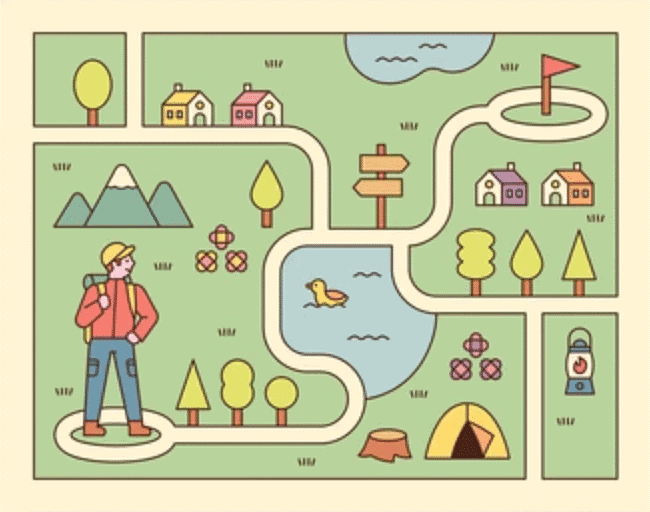
Map
- That’s when direction helps you!
- Directions tell us which way to go, like left, right, straight, or back.
- They help us understand where things are and how to reach a place easily.
- For example, if your teacher says, “Turn right and go to the blackboard,” she is using directions!
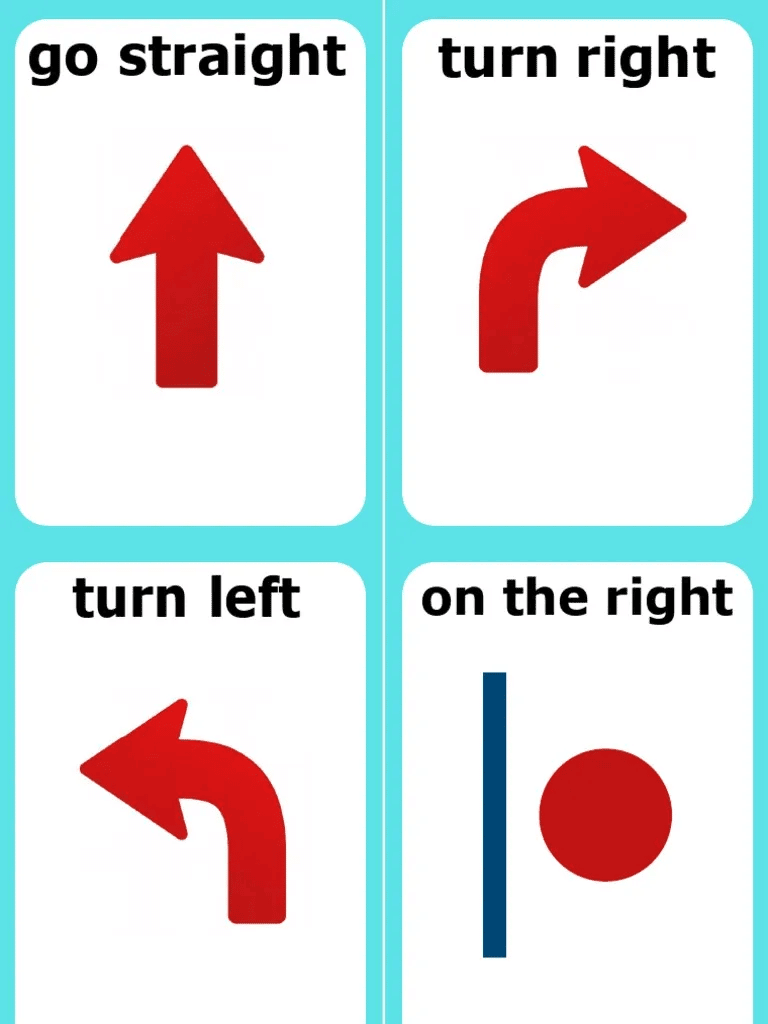
Directions
Try yourself:
What are directions used for?
- A.Helping us find hidden treasure in a park
- B.Showing us which way to go
- C.Playing games and navigating
- D.Understanding where things are in relation to us
View Solution
Understanding Our Body Sides
Before learning big directions like North and South, let’s learn about our body directions:
- Front: The way you are facing.
- Back: Behind you.

- Left: The side of your left hand.
- Right: The side of your right hand.
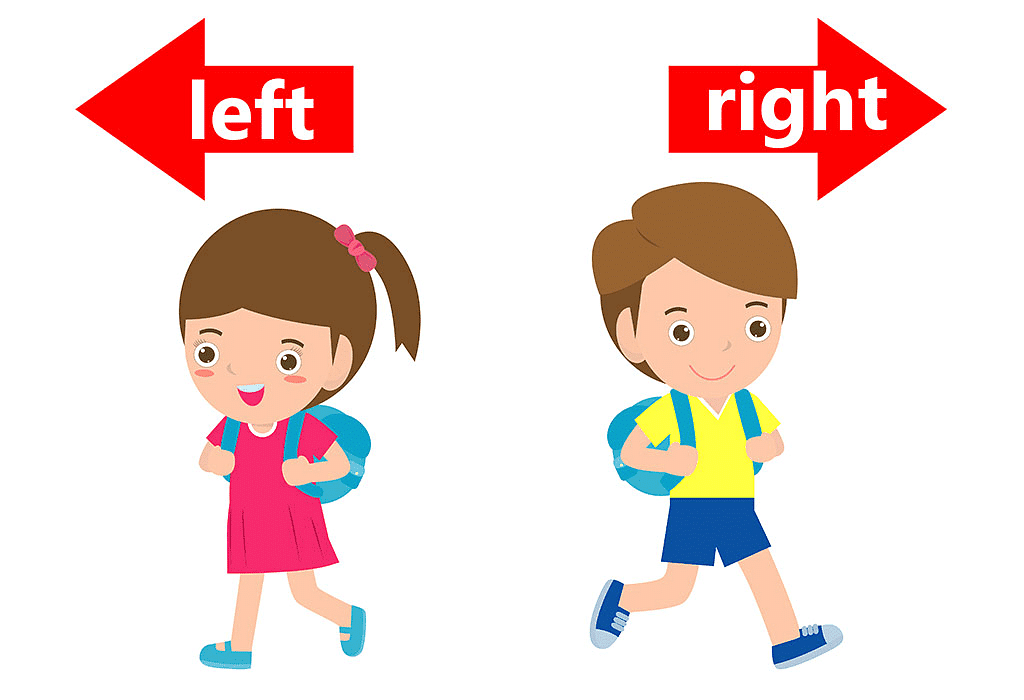
Four Main DirectionsOn maps and in the real world, we use four main directions:
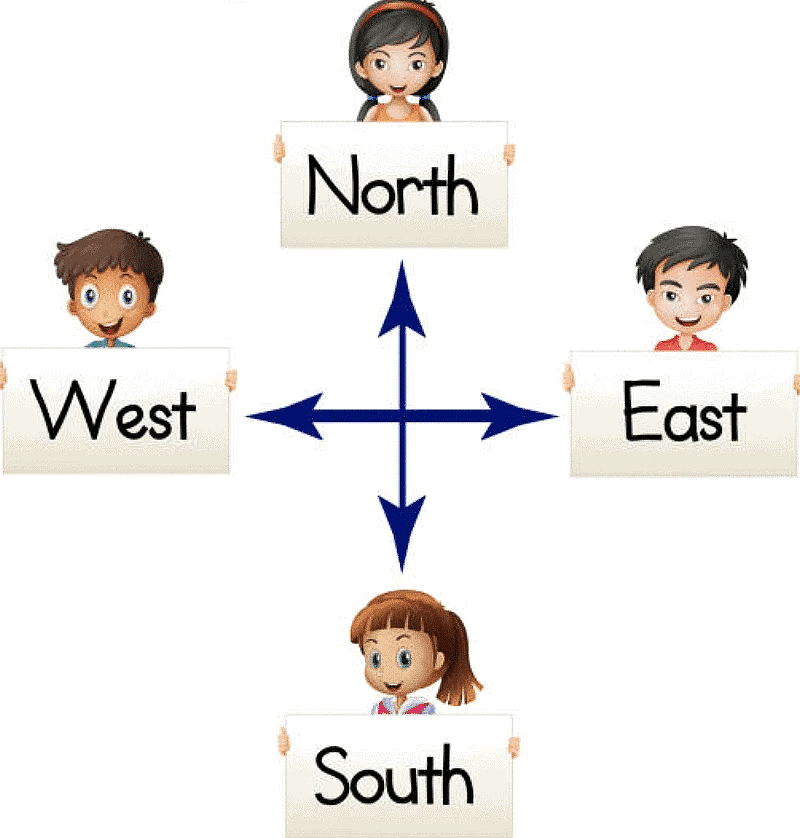
- North – It is at the top of a map.
- South – It is at the bottom of a map and opposite of North.
- East – The sun rises in the East. You can remember:
“East comes with the Early sun!” - West – The sun sets in the West. You can remember:
“West is where the day rests!”
These directions are like invisible arrows that guide us when we travel or use a map.
Try yourself:
Which direction is where the sun rises in the morning?
- A.North
- B.South
- C.East
- D.West
View Solution
What is a Map?
A map is a drawing of a place — it could be a city, a school, or even the world!
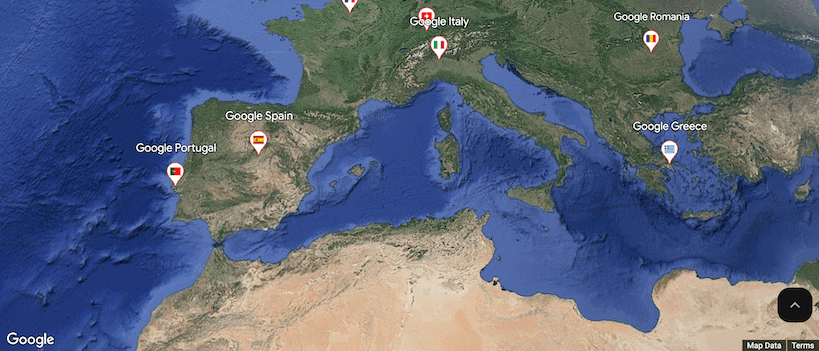
MapA map shows:
- Where things are (like buildings or roads)
- Which way to go using directions
Maps use the four directions:
- Top = North
- Bottom = South
- Right = East
- Left = West
Next time you see a map, try pointing to where North is!
How to Use Directions to Find a PlaceTo locate a place with the help of directions, we use landmarks and follow specific instructions.
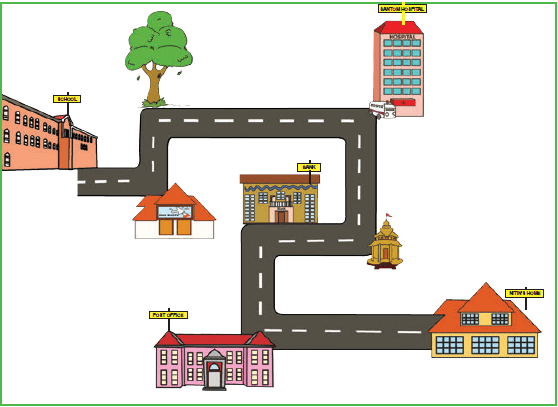
Route MapLet’s understand with an example:
Imagine Rohan wants to go to his friend Nitin’s house to play.
He follows the directions carefully from his school:
- Start at the school.
- Walk straight to the milk booth.
- Turn left after the milk booth.
- Walk straight until he sees a big tree.
- At the tree, turn right.
- Walk ahead to Santom Hospital.
- Turn right again.
- Walk straight to the temple.
- Turn right at the temple.
- Walk a little and see a bank.
- Turn left at the bank.
- Reach the post office.
- Turn left again.
- Finally, Rohan reaches Nitin’s house!
Each turn and place helped Rohan move in the right direction.
He used landmarks like trees, hospitals, and banks to remember where to go.
Summary: Directions
Directions are very helpful in real life.
- They help you find places like a friend’s home or a shop.
- They help postmen deliver letters.
- Pilots and drivers also use directions to travel safely.
Learning directions is like learning to be your own explorer!