Hey kids! today we’re going to learn something exciting through a story! Get ready to discover how measurement works in a fun and engaging way!
Story Time: Raja and CarpenterRaja Jagdeep’s Request
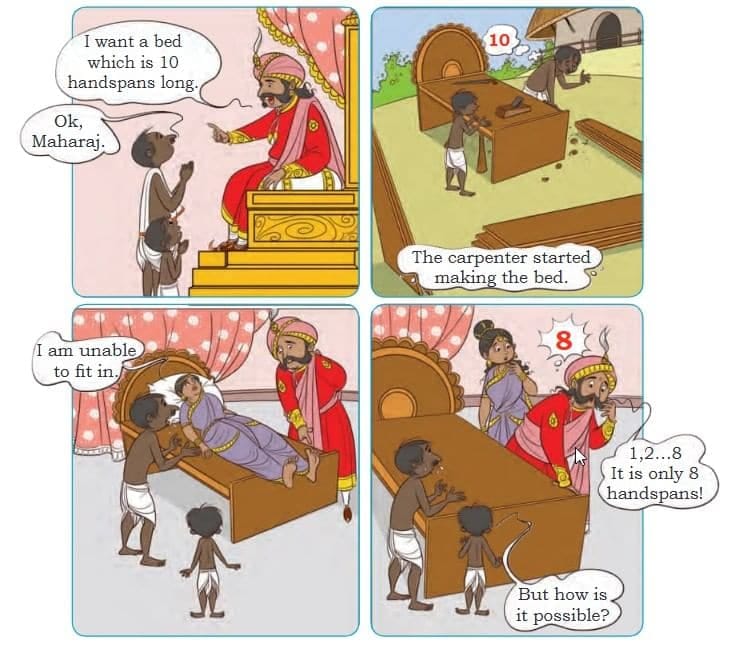
- Raja Jagdeep wanted to make a beautiful carved bed for his queen.
- He asked his best carpenter to make the bed 10 handspans long.
- The carpenter made the bed 10 handspans long, but the queen was unable to fit in.
- When the king measured the bed, he found it was only 8 handspans long.
- The king was confused and asked someone else to measure the bed again.
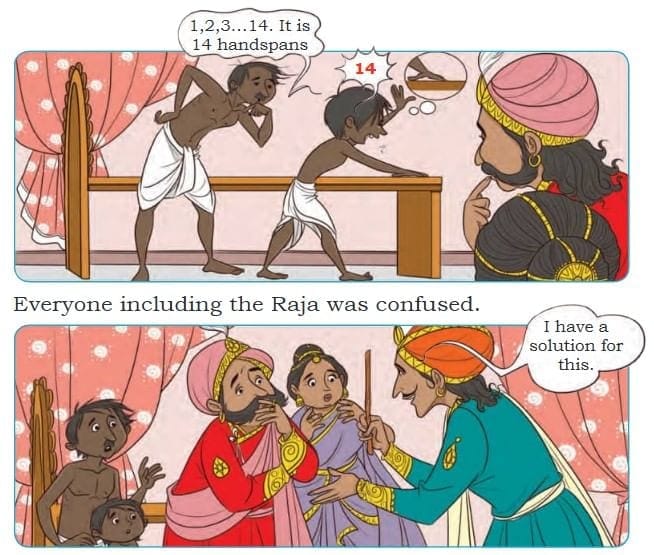
- This time, the bed measured 14 handspans!
The Confusion
- Everyone is puzzled: Why do the measurements differ?
- The Mantri (minister) explains that the length of a “hand-span” varies with each person’s hand.
- To measure fairly, they decide to use the same hand-span (for example, the carpenter’s) every time.
Understanding Measurement: What is it?
Measurement is the process of finding out the size, length, weight, or capacity of something. We use measurements in our daily lives without even realizing it. Whether it’s figuring out how tall we are, how heavy a bag is, or how much water is needed to fill a pot, we use measurements all the time.
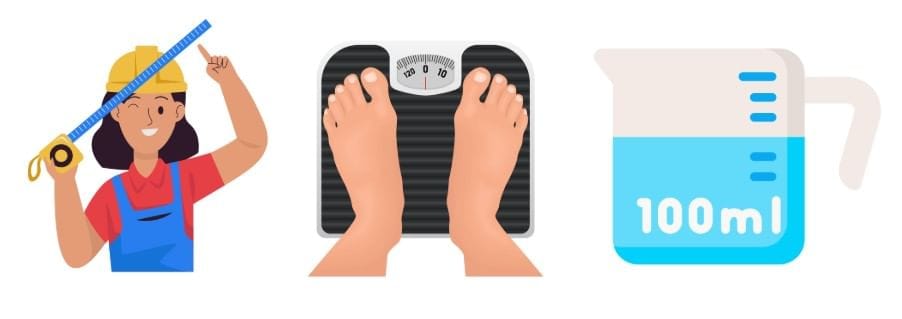
Measurement of Length, Weight and CapacityThis chapter focuses on three main types of measurement:
- Length – how long or short something is.
- Weight – how heavy or light something is.
- Capacity – how much something can hold (usually liquids).
Let’s explore each of these in detail.
Distance- How far?
Measuring distance is like counting steps or jumps to find out how far things are from each other on a grid or map. We use units of distance, like meters or feet, to measure the length or distance between two points.
Let’s help Shinchan
Now Let’s help shinchan to reach masao’s home using shortest distance.
- To find the shortest distance, we are using a grid.
- Imagine a grid with horizontal and vertical lines. Each line, whether going up and down (vertical) or left and right (horizontal), is like taking a single step or jump.
- We call each of these lines a unit of distance.
- So, if you want to measure how far something is from one point to another, you count how many of these lines you need to go across or up and down.
 Shinchan & Masao
For instance, if you start at one corner of the grid and move three lines to the right (horizontal) and two lines up (vertical), you’ve moved a total of five units of distance. It’s like counting steps or jumps, but instead, we’re counting the lines in the grid.
Imagine Shinchan wants to visit Masao’s house on a grid. If he starts moving diagonally upwards, he’ll eventually reach Masao’s house. However, there are many other paths he could take to get there.
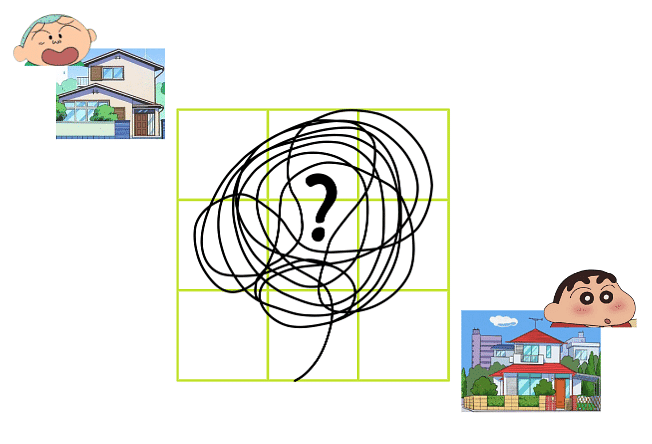
That’s where the grid comes in handy. It helps us figure out how many units of distance each route to Masao’s house will take. We use the grid to compare and find the shortest distance possible.
- For example, let’s say there are two routes.
- In route one, it takes 10 units of distance for Shinchan to reach Masao’s house.
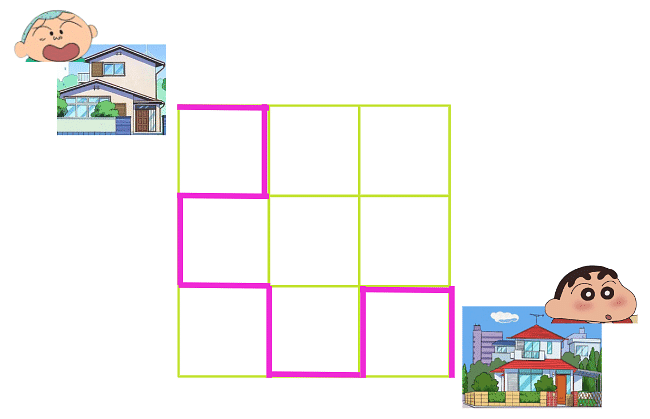
- But in route two, it only takes 6 units of distance.
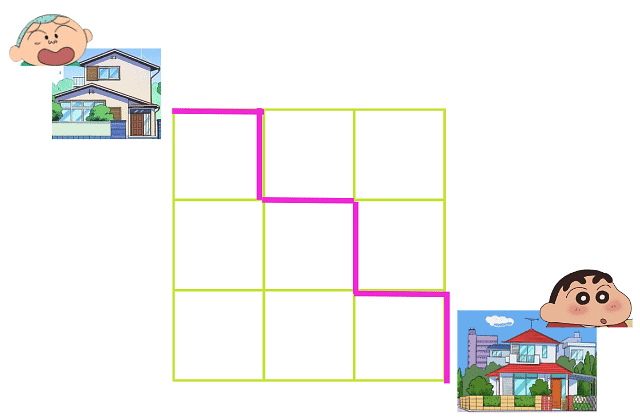
Route 2
- Now, which route should Shinchan pick? The correct answer is route two, because 6 units of distance are lesser than 10 units. So, using the grid helps us make smart decisions and find the shortest route. Cool, right?
Height- How Tall?
“How Tall?” is about measuring how high or tall something or someone is, like a tree or a person. We use units of measurement, like meters or feet, to find out the height from the ground to the top of the object or person.
Story Time: How tall we are?
Once upon a time in a park, there were boxes of flowers piled up high, forming a huge tower.
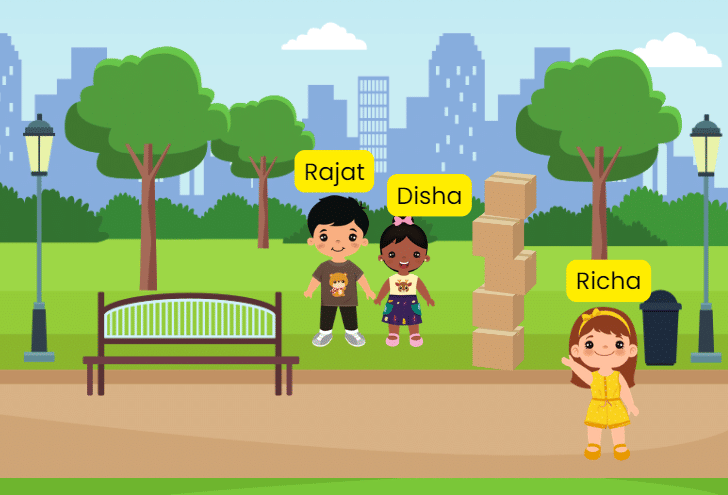
- All the kids gathered around to see how tall they were compared to the tower.
- Rajat stood next to the tower and found out he was 4 boxes tall.
Rajat is 4 boxes tall - Richa then stood beside Rajat and discovered she was 5 boxes tall.
Richa is 5 boxes tall - Finally, Disha joined them and realized she was 3 boxes tall.
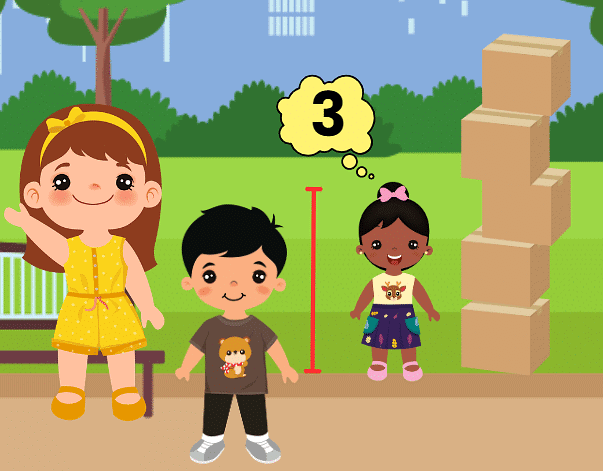 Disha is 3 boxes tall
 - The kids were amazed to see how the tower helped them understand their heights in a fun way.
- They learned that comparing our height to something else, like a tower or a tree, can show us how high or tall we are.
Weight- Heavier or lighter?
“Heavier or lighter?” is about comparing the weight of different objects to see which one is heavier (weighs more) or lighter (weighs less) than the other.
- When we say that one vegetable is heavier than another, it means that it weighs more.
- For example, if a pumpkin weighs 5 kilograms and a cucumber weighs 1 kilogram, we can say that the pumpkin is heavier than the cucumber.
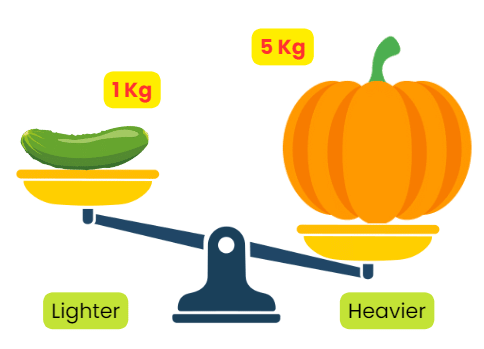
Pumpkin is heavier than cucumber
- On the other hand, when we say that one vegetable is lighter than another, it means that it weighs less.
- For example, if a potato weighs 1 kilograms and a watermelon weighs 2 kilograms, we can say that the potato is lighter than the watermelon.
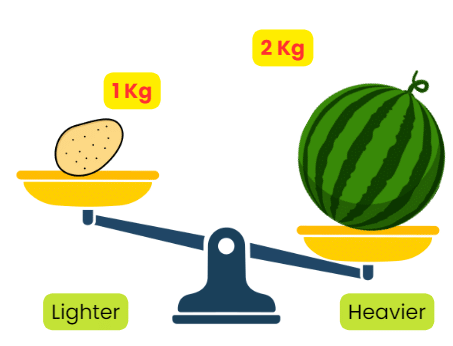
Potato is lighter than watermelon
Capacity – How much?
Capacity or “how much” refers to the amount of space something can hold or the amount of something it can contain. For example, a glass can hold 250 milliliters of water, showing its capacity, or a bucket can contain 5 liters of sand, indicating how much it can hold.
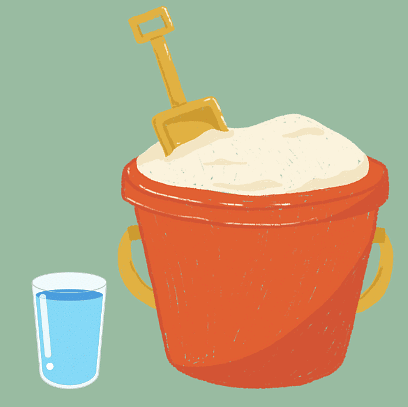
Capacity of glass & bucket
Story time: Tanya and the Bucket
- Once upon a time, there was a curious and helpful girl named Tanya.
- One day, her mom asked her to fill a big bucket with water from a tap using a mug.
- Tanya was excited to help and started filling the mug with water from the tap.
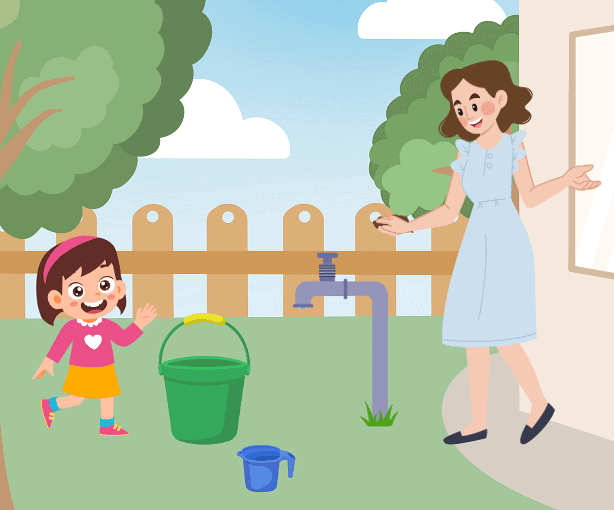
- As she poured the water from the mug into the bucket, she noticed that the mug could only hold a small amount of water each time.
- After filling the bucket several times with the mug, Tanya realized that the bucket had a greater capacity than the mug.
- This means the bucket could hold much more water compared to the mug.
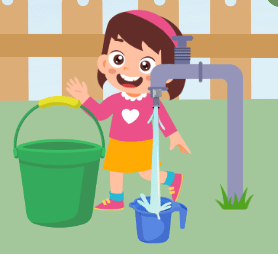
- Tanya learned that capacity is about how much a container can hold.
- The mug had a smaller capacity because it could only hold a little water, while the bucket had a larger capacity as it could hold a lot more water.
- Tanya felt proud of herself for understanding the concept of capacity and helping her mom with the task.
Learning about measurement helps us compare things, guess how much there is, and solve problems, which makes our daily tasks easier and more accurate! Just like tanya,