Money
- Hey kids! You have seen money, right?
- We use money daily. you must have seen your parents giving money when you go to market to buy your favourite fruit, or toys.
- Money is like special coins and colourful paper that we use to buy things we want, like toys, books, or ice cream.
- It helps us trade for stuff we like!
Now, let’s hear what Dadaji has to say about money!
Dadaji & money
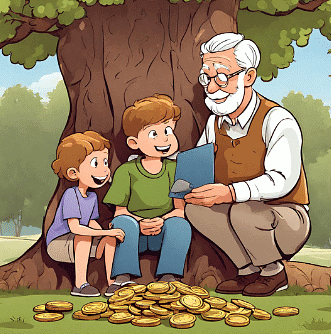
Once upon a time, in a village, there lived a kind and wise grandfather called Dadaji. One sunny afternoon, Dadaji gathered all the children under a big, shady tree and began to share something fascinating—money!
“Children,” Dadaji said with a warm smile, “did you know that in our country, money comes in various forms?
- We have special coins and colorful notes that we use to buy things.”
- He showed the children a shiny one-rupee coin, a slightly bigger two-rupee coin, and a round five-rupee coin.
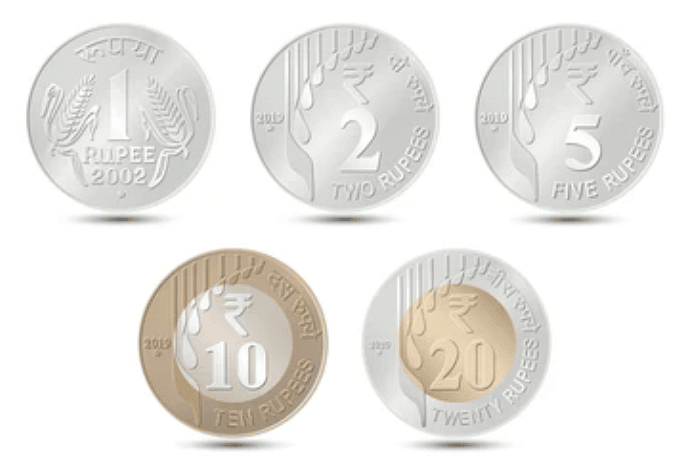
Different coins
- “These are some of the coins we use,” Dadaji explained.
- “They have different values, but they all help us buy things we need.”
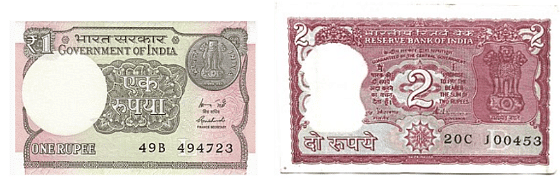
- Dadaji then displayed a one-rupee note, a two-rupee note, and a five-rupee note.
- “And these are our rupee notes,” he said. “We also have coins for 10 rupees, 20 rupees, and even a 50-rupee note!”
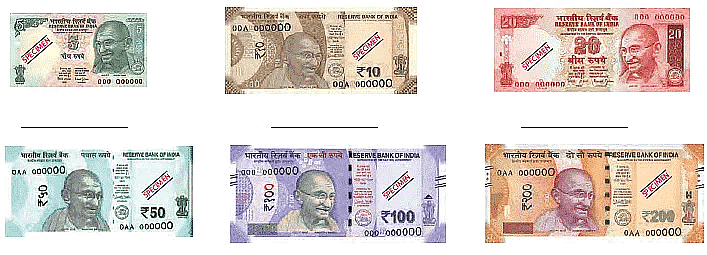
- Dadaji further told them that there are even bigger notes, means that notes that have higher value. For example 500 Rupee note.
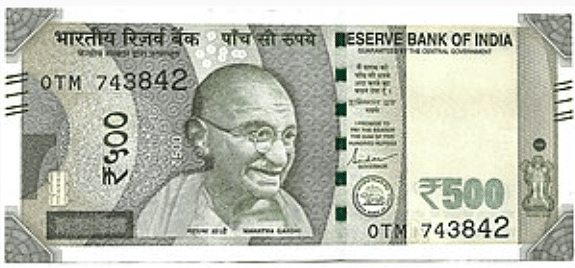
500 Rupee note
- The children were fascinated as Dadaji talked about the different types of coins and notes in India.
- They learned that coins and notes are like little helpers that we use every day to buy food, toys, books, and other things we need.
- Dadaji concluded the story by saying, “So, my dear children, next time you see a coin or a note, remember how special they are. They help us trade and buy things, making our lives easier and more colorful!”
Now that we know about different types of notes, let’s help Jaspreet.
Adding Money: Let’s help Jaspreet
Once upon a time, there was a girl named Jaspreet who had been saving up in her wallet to buy a beautiful doll she had her eyes on. The doll cost 200 rupees, and Jaspreet was excited to see if she had enough money in her wallet to buy it.
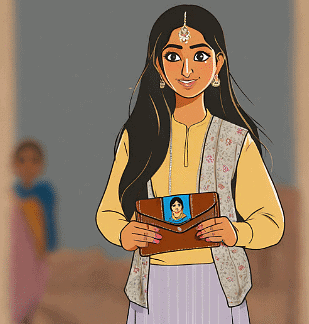
Jaspreet with her wallet
Jaspreet’s wallet was filled with a variety of notes and coins. She had:
- One 100-rupee note
- Two 50-rupee notes
- Three 20-rupee notes
- Four 10-rupee notes
- Five 5-rupee coins
- Six 1-rupee coins.
Let’s help Jaspreet by counting the money in her wallet to see if she has enough to buy the doll. We add up the values of each note and coin:
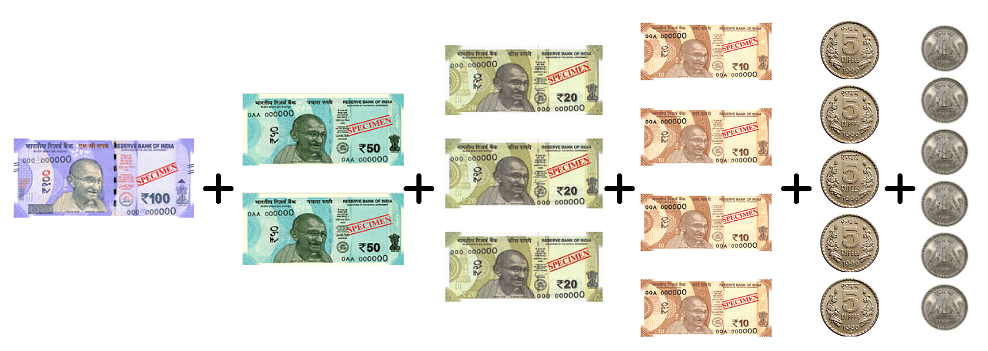
After carefully counting, we find that Jaspreet has:
- 100 rupees (from the 100-rupee note) + 100 rupees (from the two 50-rupee notes) + 60 rupees (from the three 20-rupee notes) + 40 rupees (from the four 10-rupee notes) + 25 rupees (from the five 5-rupee coins) + 6 rupees (from the six 1-rupee coins) = 331 rupees
That means Jaspreet has more than enough money to buy the doll she wants and even have some left over! Jaspreet is overjoyed !
We learn an important lesson about the value of money and how adding up the values of different notes and coins can help us determine if we have enough money to buy what we want.