Multiple Choice Questions (MCQs)
Instruction: Select the correct option for each question.
- Who first used the term “cell” after observing thin slices of cork?
a) Antonie van Leeuwenhoek
b) Robert Hooke
c) Louis Pasteur
d) Ananda Mohan Chakrabarty - Which tool allows us to view objects too small to be seen with the naked eye?
a) Telescope
b) Periscope
c) Microscope
d) Binoculars - A round-bottom flask filled with water can act as:
a) A lens/magnifier
b) A telescope
c) A prism
d) A mirror - Which cell structure is present in plant cells but absent in animal cells?
a) Nucleus
b) Cell membrane
c) Cell wall
d) Cytoplasm - Which statement is true about cheek cells?
a) They are rectangular and have a cell wall.
b) They have a large central vacuole.
c) They contain chloroplasts.
d) They are polygon-shaped and lack a cell wall. - Which part of the cell controls all activities like growth and division?
a) Cytoplasm
b) Nucleus
c) Cell membrane
d) Vacuole - Spirulina is best described as:
a) A microalga used as a superfood
b) A nitrogen-fixing bacterium
c) A fungus used in bread making
d) A protozoan that causes disease - Which microorganism helps convert milk into curd?
a) Yeast
b) Rhizobium
c) Lactobacillus
d) Amoeba
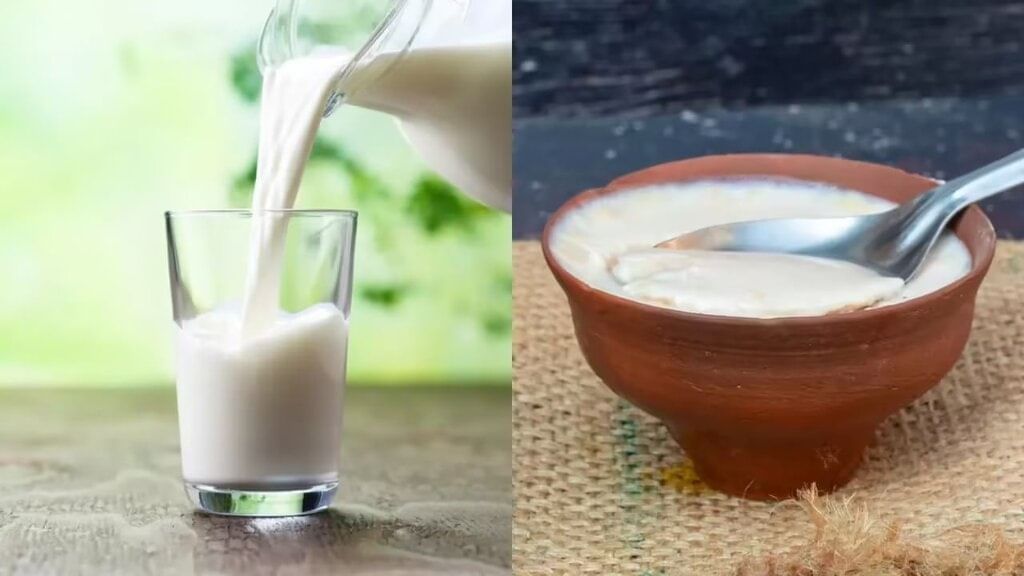
Milk to Curd
Fill in the BlanksInstruction: Fill in the blanks with the correct word based on the chapter.
- The jelly-like substance inside a cell where life processes occur is the ______.
- The thin, flexible boundary of a cell that controls entry and exit is the ______ ______.
- In onion peel cells, staining with ______ helps make the cells visible.
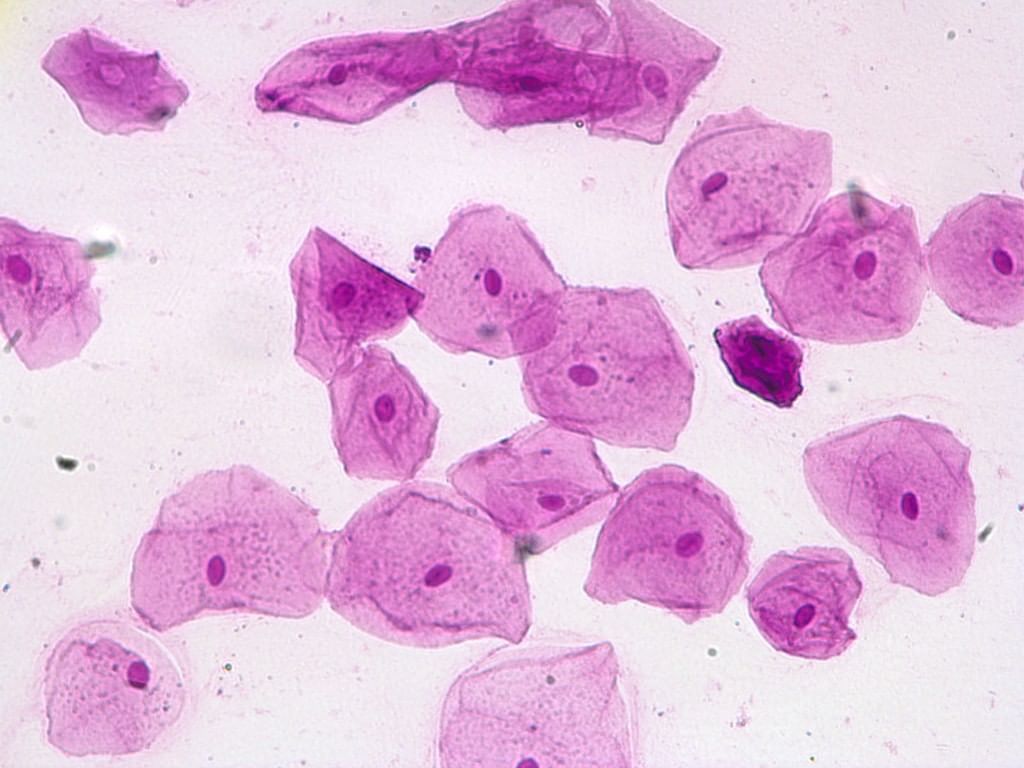 Cheek cells are commonly stained with ______ ______.
Cheek Cells- The bacteria that fix nitrogen in legume root nodules are called ______.
- The process by which yeast makes dough rise by releasing carbon dioxide is called ______.
- Bacterial genetic material without a nuclear membrane is found in a region called the ______.
Very Short Answer Questions
Instruction: Answer the following questions in one line.
- Who is known as the Father of Microbiology?
- What do chloroplasts contain that enables photosynthesis?
- Name the large storage cavity commonly found in plant cells.
- What shape are muscle cells typically described as?
- Which organisms decompose waste to form manure?
Short Answer QuestionsInstruction: Answer the following questions in 2–3 lines.
- Why are some microorganisms invisible to the naked eye?
- How does high salt or sugar preserve pickles and murabbas?
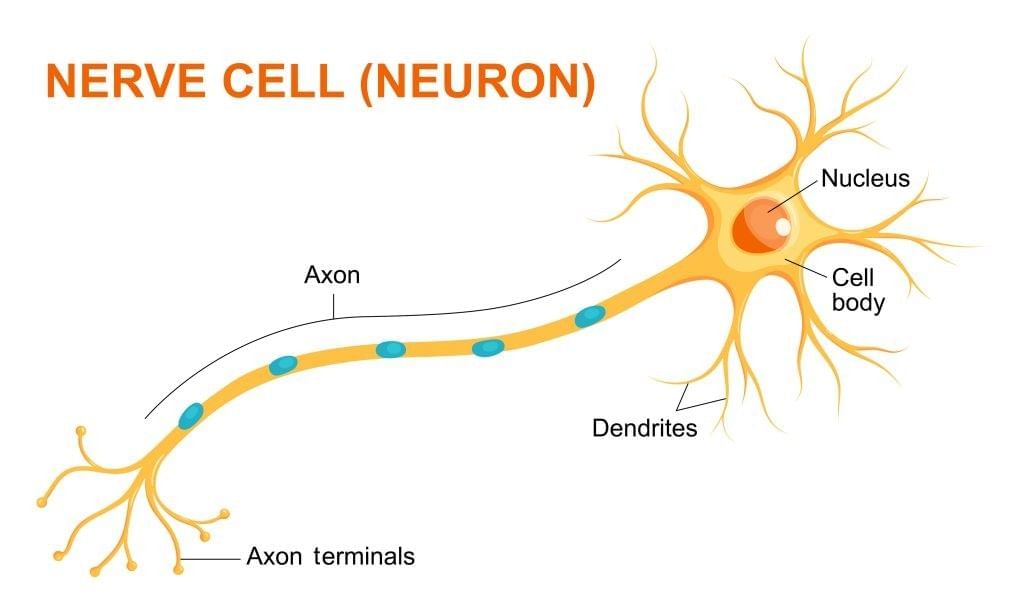 How do nerve cells (neurons) suit their function?
- Why is warm milk preferred for curd formation?
- What role do microalgae play in Earth’s oxygen supply?
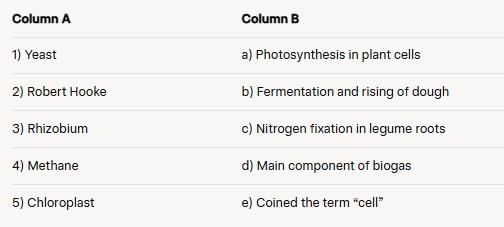
Match the Following
Instruction: Match Column A with the correct option in Column B.
Check worksheet solutions here.