Short Answer Questions
Q1: How do birds like the baya weaver make nests?
Ans: Baya weavers weave grass into pouch-shaped nests hanging from trees. This criss-cross pattern strengthens the structure.
Q2: What is weaving and its tools?
Ans: Weaving interlaces threads into fabric using looms. Handlooms create traditional cloth, employing millions in India.
Q3: Explain spinning and its importance.
Ans: Spinning twists fibres like cotton into yarn using charkhas. It’s key for making strong threads for weaving clothes.
Q4: Name natural fibres and their sources.
Ans: Cotton from plants, silk from silkworm cocoons, wool from sheep or goats, like pashmina from Ladakh.
Q5: What are synthetic fibres?
Ans: Man-made like nylon (stretchy) or polyester, used for durable clothes. They differ from natural ones in origin and properties.
Q6: Describe Chikankari embroidery.
Ans: From Lucknow, it’s delicate thread work on fabric. It showcases regional artistry and provides livelihoods.
Q7: What is bandhani?
Ans: A tie-dye from Gujarat, where cloth is tied and dyed for patterns. It’s eco-friendly and cultural.
Q8: How is a running stitch done?
Ans: Thread a needle, knot, and go up and down in a line to join fabrics. It’s basic for sewing.
Q9: Why is handloom important in India?
Ans: It employs over 45 lakh people, preserving traditions like patola sarees. It supports rural artisans sustainably.
Q10: What is phulkari?
Ans: Embroidery from Punjab using flower patterns. It’s vibrant and part of the cultural heritage, often on clothing.
Long Answer Questions
Q1: Explain the process of making cloth from fibres to fabric.
Ans: Process of making cloth from fibres:
- Start with fibres like cotton spun into yarn via twisting on charkhas.
- Yarn is woven on looms, interlacing vertical and horizontal threads.
- Natural fibres from plants or animals, and synthetic fibres from chemicals.
- Embroidery like chikankari adds designs.
- Handlooms preserve culture, employing millions. This process creates diverse textiles, blending tradition and utility.
Q2: Discuss animal inspirations in cloth-making, like birds.
Ans: Animal inspirations, particularly from birds, have significantly influenced cloth-making, inspiring patterns, textures, and sustainable techniques in textile design.
- Baya weavers inspire weaving with grass nests, tailorbirds stitch leaves.
- Humans mimic in looms and stitches.
- Natural fibres like silk from cocoons show animal roles.
- These teach sustainable methods, reducing waste.
- Cultural embroideries like phulkari reflect nature’s patterns, connecting human crafts to biodiversity.
Q3: Describe traditional Indian embroideries and their regions.
Ans: Traditional Indian Embroideries:
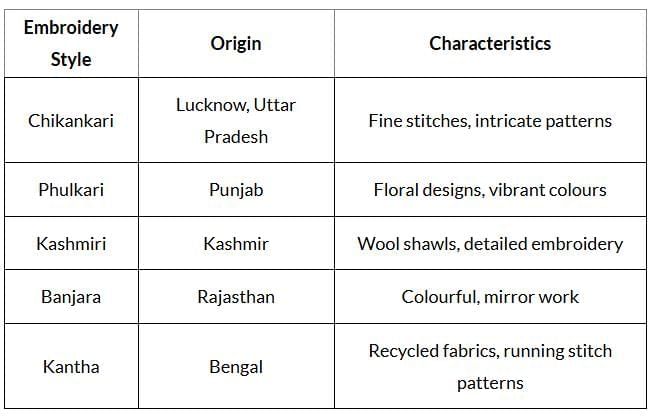
- Chikankari from Lucknow uses fine stitches, phulkari from Punjab floral designs, and Kashmiri for wool shawls.
- Banjara from Rajasthan is colourful, and kantha from Bengal recycles fabrics.
- Each employs locals, preserves heritage, and uses local materials.
- They add value to handlooms, supporting economies and cultural identity.
Q4: How does recycling and reuse apply to clothes in India?
Ans: Recycling and reuse of clothes in India promote sustainability by reducing waste, conserving resources, and supporting traditional practices that align with environmental and cultural values.
- Old clothes are passed to siblings or remade into quilts, reducing waste.
- Sectors like handloom employ lakhs sustainably.
- Kala cotton from Gujarat is chemical-free.
- Traditions encourage mending with stitches, like running.
- This promotes eco-friendliness, dignity of labour, and cultural continuity in resource use.
Q5: What is the significance of handloom in the Indian economy and culture?
Ans: Handloom holds immense significance in India’s economy and culture, serving as a source of livelihood, preserving heritage, and promoting sustainable craftsmanship.
- Handloom employs over 45 lakh people, especially women, as a cottage industry.
- It produces unique items like six-month woven patola sarees.
- Regional styles like bandhani preserve arts.
- It supports self-sufficiency, as Gandhi promoted khadi.
- Economically, it boosts rural incomes; culturally, it ties to festivals and identities, fostering pride and sustainability.