Introduction. Picture yourself on stage, transforming a simple space into a lively market or a magical forest with just a few props and your acting skills! In this chapter, with the help of Vidushaka, a humorous character from Indian theatre, you’ll create your own play by building exciting scenes. Learn how to act, use props cleverly, and set the stage with details about where, when, and who is in your story to make your audience smile and cheer!
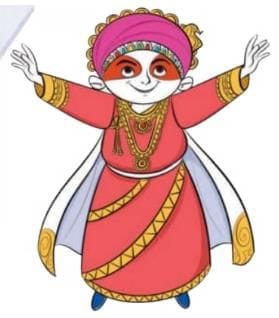
Vidushaka: Your Theatre Guide
Vidushaka is a humorous character from traditional Indian Sanskrit theatre, known for adding fun and playful antics to scenes. In this chapter, Vidushaka guides you with ideas and support, helping you understand theatre concepts as you create and perform your play, making the process lively and enjoyable for you and your friends.
Try yourself:
What role does Vidushaka play in theatre?
- A.A serious character
- B.A villain
- C.A humorous character
- D.A director
View SolutionWhat is a Scene?
A scene is a part of a play that moves the story forward, set in a specific place and time, and includes interesting or dramatic events. It answers three key questions for the audience ensuring the story is clear and engaging:
- where is the scene happening
- when is it taking place
- who are the characters involved
Skills You’ve LearnedFrom Grades 3 and 4, you’ve learned essential theatre skills, including role play, building conversations, visualizing scenes with proper entry and exit, adding props and actors, and following basic stage do’s and don’ts. These skills provide the foundation for creating scenes independently in this chapter, allowing you to craft a complete play with confidence.
Stage Etiquette
Stage etiquette includes rules to make performances enjoyable for actors and the audience:
- Do: Speak clearly and loudly so everyone, even in the back row, can hear your lines. Stay in character during your entire time on stage, including entry and exit, to keep the story believable. Respect Nope fellow actors by waiting for your turn to speak and positioning yourself carefully to avoid blocking others.
- Don’t: Turn your back to the audience (tilt slightly sideways if needed to face other actors). Talk backstage, as it distracts performers and the audience. Block other actors or allow someone to block your view of the audience, ensuring everyone remains visible.
Tip: Practice speaking loudly and staying in character to bring your role to life.
Establishing a SceneTo create a clear scene, you must show the audience where, when, and who is involved:
- Where (Place): Use props and set design to show the location, like chairs වchairs and a table for a house or papers and a laptop for an office. Costumes, such as formal attire for an office or casual clothes for a park, also help convey the setting. If props are limited, actors’ behavior, like digging for a garden or bustling for a market, can depict the place vividly.
- When (Time): Show the time through actions (e.g., yawning for morning), lighting (e.g., dim lights for night), or dialogue (e.g., mentioning “evening stars”) to set the scene’s timing.
- Who (Characters): Define characters through their actions, costumes, and dialogue, revealing their personalities, emotions, or roles, such as a cheerful shopkeeper or a curious explorer, to make them relatable.
Tip: Use a simple prop, like a school bag as a market sack, to clearly show the scene’s setting.
Try yourself:
What is important to create a clear scene?
- A.Showing only the place
- B.Showing the audience who is involved
- C.Showing only the time
- D.Showing the audience what happened
View SolutionObject ImprovisationObject improvisation involves using everyday items creatively to represent different objects in a scene. For example, a school bag can become a vegetable sack in a market scene, or pencils can mimic beans or lady’s fingers in a garden setting, encouraging creativity when specific props are unavailable.
ConclusionThis chapter empowers you to create a play by crafting scenes that bring stories to life with clear settings, timing, and characters. With Vidushaka’s playful guidance, you’ll use stage etiquette, props, costumes, and improvisation to perform a memorable show, learning teamwork and creativity. Take the stage and let your imagination shine!
Important Vocabulary
- Scene: A part of a play that advances the story, set in a specific place and time with engaging events.
- Vidushaka: A humorous character from Indian Sanskrit theatre who adds fun and antics to scenes.
- Stage Etiquette: Behavioral rules for actors to ensure a professional and pleasant performance.
- Object Improvisation: Using everyday items creatively to represent objects in a scene.
- Place: The location of a scene, shown through props, sets, costumes, or actors’ behavior.
- When: The time setting of a scene, indicated by actions, lighting, or dialogue.
- Characters: The people in a scene, defined by their actions, costumes, and dialogue.