Introduction
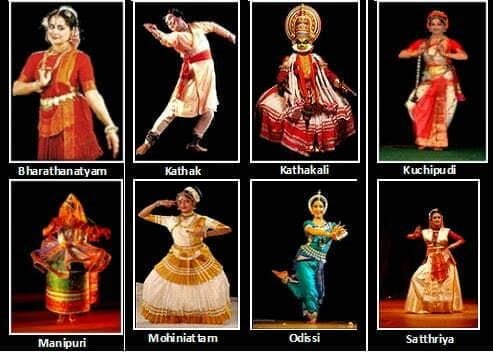
This chapter helps us to learn about the different dances of India. Each state and region has its own special dances. Some are folk dances, some are classical dances, and some are done during festivals or rituals. These dances show the culture and traditions of our country. They also bring people together and spread joy during celebrations. Through this chapter, we also connect dances with regions, songs, and festivals of India.
Dance Forms Across India
- Every part of India has more than one dance form.
- Some dances are very old and are called classical dances, like Kathakali, Bharatanatyam, and Kathak.
- Some are folk dances that people perform in villages and towns, like Bihu, Garba, Bhangra, and Ghumar.
- Dances can also be ritualistic, connected with traditions, beliefs, and festivals.
- Dance is one of the best ways to express feelings through movements, steps, and gestures.
Try yourself:
Which type of dance is Kathakali?
- A.Folk dance
- B.Classical dance
- C.Ritualistic dance
- D.Modern dance
View SolutionDances and Their States
- Bihu – Assam
- Bhangra – Punjab
- Ghumar – Rajasthan
- Garba – Gujarat
- Lavni – Maharashtra
- Jhumar – Haryana
- Chapeli – Uttarakhand
- Rauf – Jammu & Kashmir
- Kathakali – Kerala
- Yakshagana – Karnataka
- Chhau – Odisha, Jharkhand, West Bengal
Uniting with Dance
- Dance brings people from different regions and languages together.
- It helps us celebrate unity in diversity.
- For example, the song “Mile Sur Mera Tumhara” shows the dances, movements, and styles of different states of India.
- By combining steps and gestures from many dances, we can create one performance that shows national unity.
Dance in Celebrations
- Dance makes every celebration joyful and lively.
- National festivals like Independence Day and Republic Day are celebrated with patriotic dances.
- Through dance, we can show our love and respect for the nation.
- Patriotic songs like Vande Mataram or regional patriotic songs are performed with matching steps and movements.
- Such dances bring together children, families, and communities in celebration.
Try yourself:
What is often a part of celebrations?
- A.Sleeping
- B.Dancing
- C.Studying
- D.Cleaning
View SolutionConclusionThe dances of India show the rich culture and unity of our nation. Each dance tells a story of the people and their traditions. Whether classical or folk, every dance is full of joy, colour, and energy. Dance also teaches us teamwork and helps us celebrate important moments together. It is a beautiful way to express our feelings and show our pride in being part of one nation with many cultures.