Q3:Anil wants to find the parity of the 10th term of the Virahãnka sequence. What is the parity? A) 0 B) 1 C) 2 D) 3
Ans: The Virahãnka-Fibonacci sequence is: 1, 2, 3, 5, 8, 13, 21, 34, 55, 89, … Parities (odd = 1, even = 0): 1, 0, 1, 1, 0, 1, 1, 0, 1, 1. The pattern repeats every 3 terms: odd, even, odd (1, 0, 1). For the 10th term: 10 ÷ 3 = 3 remainder 1, so it corresponds to the 1st position in the cycle (odd, 1). Compute the 10th term: 89 (9th: 55, 10th: 55 + 34 = 89). Check: 89 ÷ 2 = 44.5 (odd). Parity = 1. Answer: B) 1.
Section B: Fill in the Blanks
Q4:Solve the cryptarithm: X4 + Y = Z11. The value of X is ______.
Ans:
X4 + Y = Z11: X4 (X tens, 4 units), Y (units), Z11 (Z hundreds, 1 tens, 1 units). Solve:
Units: 4 + Y = 1 (or 11 with carry).
Tens: X + carry = 1 (or 11).
Hundreds: 0 + carry = Z. Units: 4 + Y = 11, so Y = 7. Carry 1. Tens: X + 1 = 1, so X = 0. No carry to hundreds, Z = 0. Check: 04 + 7 = 11 (Z11 = 011, Z = 0, Y = 7).
Q5: Uneek wants to find all 5-beat rhythms (sums of 1’s and 2’s). The number of ways to write 5 as a sum of 1’s and 2’s is ______.
Ans: 8 Sol: The number of ways to write n as a sum of 1s and 2s is the nth Virahãnka-Fibonacci number: 1, 2, 3, 5, 8, … For n = 5, the 5th term is 8. List: 1+1+1+1+1, 1+1+1+2, 1+1+2+1, 1+2+1+1, 2+1+1+1, 1+2+2, 2+1+2, 2+2+1 (8 ways).
Q6: Ishan has number cards with values 1, 3, 5, 7, and 9. She wants to select 3 cards that sum to 21. The number of ways to select 3 cards summing to 21 is _______.
Ans:
Ishan selects 3 cards from 1, 3, 5, 7, 9 to sum to 21. List combinations:
Possible sums of 3 odd numbers (all cards are odd): Check combinations systematically.
Try: 9 + 7 + 5 = 21 (works).
Other combinations:
9 + 7 + 3 = 19 (too low).
9 + 7 + 1 = 17.
9 + 5 + 3 = 17.
9 + 5 + 1 = 15. 7 + 5 + 3 = 15.
7 + 5 + 1 = 13. 5 + 3 + 1 = 9. Only 9 + 7 + 5 = 21 is valid. Number of ways to select these 3 cards: 1 combination. Verify: No other triplets yield 21, as odd sums must be odd, and 21 is odd, but only this set works.
Section C: Word Problems
Q7: Priya and Rohan, two siblings born one year apart, celebrate their birthdays. Priya claims the sum of their ages is 25. Is this possible?
Ans: Since they are born one year apart, their ages are consecutive: n and n+1. We need n + (n+1) = 25. Solve: 2n + 1 = 25, so 2n = 24, n = 12. Ages: 12 and 13. Sum: 12 + 13 = 25, which is possible. Verify: Try other sums (e.g., 24: 2n + 1 = 24, 2n = 23, n = 11.5, not integer). Only 25 works for integer ages.
Q8:Write the next 3 numbers in the sequence: 1, 2, 3, 5, 8, 13, 21, 34, 55, 89.
Ans: The Virahãnka-Fibonacci sequence has each term as the sum of the two previous terms: 1, 2, 3, 5, 8, 13, 21, 34, 55, 89, … Calculate:
11th: 55 + 89 = 144.
12th: 89 + 144 = 233.
13th: 144 + 233 = 377. The next 3 numbers are 144, 233, 377. The second is 233. Verify: 55 + 89 = 144, 89 + 144 = 233, 144 + 233 = 377.
Q9: Two consecutive numbers in the Virahãnka sequence are 987 and 1597. What are the next 2 numbers in the sequence? Find the second of the next 2 numbers.
Ans: In the Virahãnka-Fibonacci sequence (Fn = Fn-1 + Fn-2):
Given 987 (Fn-1), 1597 (Fn), compute next terms:
Fn+1 = 987 + 1597 = 2584.
Fn+2 = 1597 + 2584 = 4181. The next 2 numbers are 2584, 4181. The second is 4181. Verify: 610 + 987 = 1597, 987 + 1597 = 2584, 1597 + 2584 = 4181.
Q10: A light bulb is OFF. A student toggles its switch 50 times. How many times is the bulb ON after 50 toggles? [Count ON state, 1 for ON, 0 for OFF.]
Ans: 25 Sol: Each toggle switches the bulb’s state (ON to OFF, OFF to ON). Starting ON: 1 toggle → OFF, 2 toggles → ON, etc. The state after n toggles is ON if n is even, OFF if n is odd. Here, n = 50 (odd, 50 ÷ 2 = 25 remainder 0). The light bulb is ON 25 times after 50 toggles.
Q11: Using the generalized form, find a magic square if the center number is 13.
Ans: 39 Sol: Odd numbers: 1, 3, 5, 7, … The nth odd number is 2n – 1 : n = 1 → 1, n = 2 → 3, n = 3 → 5. For the 20th odd number, n = 20: 2 × 20 – 1 = 40 – 1 = 39.
Q12: Vanshika wants to climb a 9-step staircase, taking either 1 or 2 steps at a time. In how many different ways can she reach the top?
Ans: 55 Sol: This is a classic Fibonacci-type problem. Let F(n) be the number of ways to climb n steps using 1 or 2 steps at a time. Then:F(n)=F(n−1)+F(n−2)
Because:
From step (n−1), she can take 1 step
From step (n−2), she can take 2 steps
Base Cases:
F(1) = 1 (only one way: 1)
F(2) = 2 (1+1 or 2)
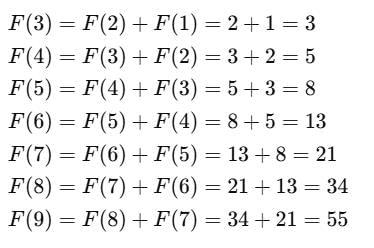
Compute up to F(9):
There are 55 different ways for Vanshika to climb a 9-step staircase taking 1 or 2 steps at a time.